David Rosenberg - Inside Pine Gap
Здесь есть возможность читать онлайн «David Rosenberg - Inside Pine Gap» весь текст электронной книги совершенно бесплатно (целиком полную версию без сокращений). В некоторых случаях можно слушать аудио, скачать через торрент в формате fb2 и присутствует краткое содержание. Город: Melbourne, Год выпуска: 2011, ISBN: 2011, Издательство: Hardie Grant Books, Жанр: Биографии и Мемуары, Политика, на английском языке. Описание произведения, (предисловие) а так же отзывы посетителей доступны на портале библиотеки ЛибКат.
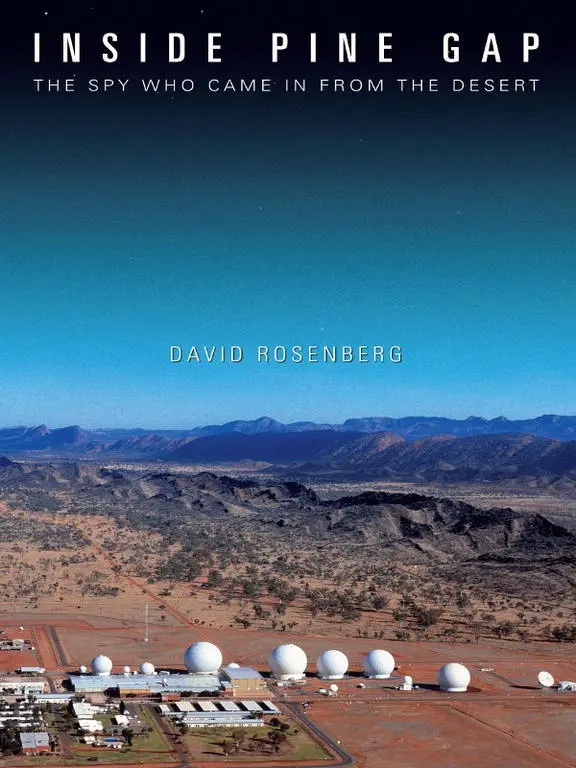
- Название:Inside Pine Gap
- Автор:
- Издательство:Hardie Grant Books
- Жанр:
- Год:2011
- Город:Melbourne
- ISBN:978-1-742-70173-8
- Рейтинг книги:4 / 5. Голосов: 1
-
Избранное:Добавить в избранное
- Отзывы:
-
Ваша оценка:
Inside Pine Gap: краткое содержание, описание и аннотация
Предлагаем к чтению аннотацию, описание, краткое содержание или предисловие (зависит от того, что написал сам автор книги «Inside Pine Gap»). Если вы не нашли необходимую информацию о книге — напишите в комментариях, мы постараемся отыскать её.
Author David Rosenberg details his career with an American intelligence agency during a tumultuous period in history that covered the terms of three American Presidents, four Australian Prime Ministers, the end of the Cold War, a peace treaty between Israel and Jordan, two wars in Iraq, genocide in Rwanda, as well as the ‘War against Terror’ and the emergence of North Korea as a nuclear-armed nation. This is a fascinating glimpse inside the top-secret world of military surveillance.
[This book contain a table.]
Inside Pine Gap — читать онлайн бесплатно полную книгу (весь текст) целиком
Ниже представлен текст книги, разбитый по страницам. Система сохранения места последней прочитанной страницы, позволяет с удобством читать онлайн бесплатно книгу «Inside Pine Gap», без необходимости каждый раз заново искать на чём Вы остановились. Поставьте закладку, и сможете в любой момент перейти на страницу, на которой закончили чтение.
Интервал:
Закладка:
I was at home when the attacks occurred, and I remember turning on CNN and seeing the Twin Towers turn surreal as smoke from the burning planes enveloped their upper sections. As I watched the story develop, I suspected who was responsible for carrying out these attacks, and I phoned a friend in the United States to talk about what had happened, staying on the line until the link from my telephone company was severed due to the overload of telephone calls in response to the attack. I told him this was most likely the work of Al-Qaeda. Coordinated attacks, maximum destruction on a large scale and an overt agenda against America were excellent indicators that this was the work of Osama bin Laden’s terrorist network.
As the Towers collapsed, my feelings of anger and revenge had me hoping that President Bush could quickly prove who was responsible—and retaliate with deadly force. But the United States’ response would come later, after conclusive proof was obtained that Al-Qaeda operatives were behind the attacks. Unfortunately, this necessary delay gave the Al-Qaeda and Taliban leadership time to move to secure hiding places.
I watched the news until about 3 am, then attempted to get some much-needed sleep before waking at 6 am. I was scheduled to work a twelve-hour day shift and was eager to find out what my role would be. Unsurprisingly, thoughts of the attack kept me awake all night, and in the end I headed into work running on adrenaline—sleepless but nevertheless wide awake.
It was the most sombre ride to work I had taken in eleven years. On the drive in, the terrorist attacks were the only topic of conversation and the driver had the news turned up louder than usual. Everyone was either listening to the latest reports or talking about what they had heard from their families. Our families in the United States were fearful of more attacks and they wanted to know what we at Pine Gap could tell them that they had not heard on the news; they were convinced we would know much more than what was broadcast on CNN. However, CNN found out about the attacks before we did, and besides saying that we believed Al-Qaeda was responsible, our advice in general was to keep watching CNN. This wasn’t very reassuring to those who believed the United States was always one step ahead of our adversaries—or, for that matter, CNN.
Like almost every United States Government and military facility, 9/11 forced Pine Gap to make security checks more thorough, and when I finally arrived in Operations the atmosphere was all business. As reported around the world, the intelligence community had a new goal—to hunt down those behind the attacks. My colleagues and I assisted in this task and in identifying specific threats. Make no mistake, Australia and America are blood brothers, and the Australians I worked with were as committed as the Americans to destroying the Al-Qaeda leadership and their network.
Afghanistan had been identified as bin Laden and Al-Qaeda’s base of operations, and they were supported and protected by the Taliban leadership. When the United States sought justice for the 9/11 attacks, Afghanistan would again bear the brunt of a large military invasion. Fortunately, war-torn Afghanistan with its outdated military equipment had no hope of fighting off the American and coalition forces, but the United States needed to neutralise its ability to launch SAMs, which would keep the skies relatively safe for bomber and surveillance aircraft.
President Bush would effectively rally the country to the call to destroy the terrorist organisation that had been the mastermind behind 9/11, and he was poised to garner world sympathy and military/ logistical aid for Operation Enduring Freedom—Afghanistan in the battle against Al-Qaeda and the Taliban. A small portion of the world was seen on the news rejoicing at the destruction within the United States, but the majority of world leaders knew that a similar attack was possible anywhere. The sobering terrorist attacks of 9/11 resulted in more than forty countries providing troops and logistical support [7] http://en.wikipedia.org/wiki/Operation_Enduring_Freedom
as the United States prepared its forces for battle in the mountainous land of Afghanistan with the goal to remove the Taliban and destroy the Al-Qaeda leadership and infrastructure.
Analysts at many agencies worked diligently assessing Afghanistan’s weapon systems and communications networks as those of us in the eavesdropping intelligence community prepared for the subsequent bombing campaign that began on 7 October. Soon after hostilities started, coalition aircraft neutralised any threats to overflights of Afghanistan, with bombings continuing unabated. With help from Northern Alliance ground troops, the Taliban collapsed on 9 December, and the United States and those countries providing troops to Afghanistan now had the job of occupying the country and rebuilding the government and infrastructure.
The hunt for Osama bin Laden, his deputy Ayman al-Zawahiri and the Taliban leader Mullah Omar, continued during the occupation. President Bush vowed ‘to smoke them out’, [8] http://www.nytimes.com/2001/09/19/news/19iht-t4_30.html
a threat he repeated on several occasions as US citizens demanded justice for the attacks. In order to destroy both the terrorist leadership and the cohesiveness of the Al-Qaeda network, it was important above all else that these three men be captured or killed quickly.
The American Government ultimately killed bin Laden in a daring military operation deep within Pakistan almost ten years after the horrible events of 9/11. But the inability of the intelligence community to find and capture or kill bin Laden (and, for that matter, al-Zawahiri and Mullah Omar) soon after 9/11 was a significant intelligence failure that allowed Al-Qaeda and the Taliban to remain intact, to continue to terrorise innocent civilians and to plan for successive leadership. The search for al-Zawahiri and Mullah Omar was still continuing almost ten years on.
With the newly declared ‘War on Terror’, Afghanistan would continue to consume a large number of intelligence resources for many years, but with no real military threat remaining within Afghanistan, our priorities shifted and we moved on to search for other threats.
Relatively early in the new millennium, one of my Aussie team members happened to find a new ██████████ signal. I was very familiar with this system and decided to examine the characteristics—immediately recognising that something about it didn’t look as I had expected. I alerted my co-workers on an adjacent position and asked them to confirm my observation and collect some data, which soon determined it to be a significant modification to a known threat system. We alerted another site in the United States and they confirmed our findings. We had worked well with them before and a strong sense of cooperation and collaboration existed between the two sites. Unfortunately, after our discovery a petty and unnecessary competition ensued between the two sites as we each tried to receive credit for the new discovery.
When I noticed the new characteristics, I thought they may have been seen before but I believed perhaps the operators working that day might not have noticed the subtle differences. So I reviewed some of our earlier data and, sure enough, we had seen it more than once, about one week earlier. Even our resident expert for this system had missed this modification after looking directly at the data! I immediately wrote a report on our earlier data, and after obtaining more information over the next two days, we decided it was sufficiently distinctive to warrant a unique name to distinguish the new system from its similar counterpart.
Meanwhile, the other site had read our report, reviewed some of their own previous data and found that they had seen this new emission a day or two before our initial intercept, and they hastily prepared a report assigning their own name as they wanted to beat Pine Gap to the punch! We then issued a much more detailed report using our unique name, which resulted in two names being used for the same system. When this happens in the intelligence community, the NSA is the deciding body that determines which name will be used and which will be cancelled. The other site claimed ‘first night’s rights’ as they had seen the characteristics before Pine Gap, although without input from Pine Gap they would have been clueless that they had intercepted anything new. But as Pine Gap had identified the characteristics first and immediately informed the other site, we believed credit for the new discovery should be given to us.
Читать дальшеИнтервал:
Закладка:
Похожие книги на «Inside Pine Gap»
Представляем Вашему вниманию похожие книги на «Inside Pine Gap» списком для выбора. Мы отобрали схожую по названию и смыслу литературу в надежде предоставить читателям больше вариантов отыскать новые, интересные, ещё непрочитанные произведения.











Обсуждение, отзывы о книге «Inside Pine Gap» и просто собственные мнения читателей. Оставьте ваши комментарии, напишите, что Вы думаете о произведении, его смысле или главных героях. Укажите что конкретно понравилось, а что нет, и почему Вы так считаете.