David Rosenberg - Inside Pine Gap
Здесь есть возможность читать онлайн «David Rosenberg - Inside Pine Gap» весь текст электронной книги совершенно бесплатно (целиком полную версию без сокращений). В некоторых случаях можно слушать аудио, скачать через торрент в формате fb2 и присутствует краткое содержание. Город: Melbourne, Год выпуска: 2011, ISBN: 2011, Издательство: Hardie Grant Books, Жанр: Биографии и Мемуары, Политика, на английском языке. Описание произведения, (предисловие) а так же отзывы посетителей доступны на портале библиотеки ЛибКат.
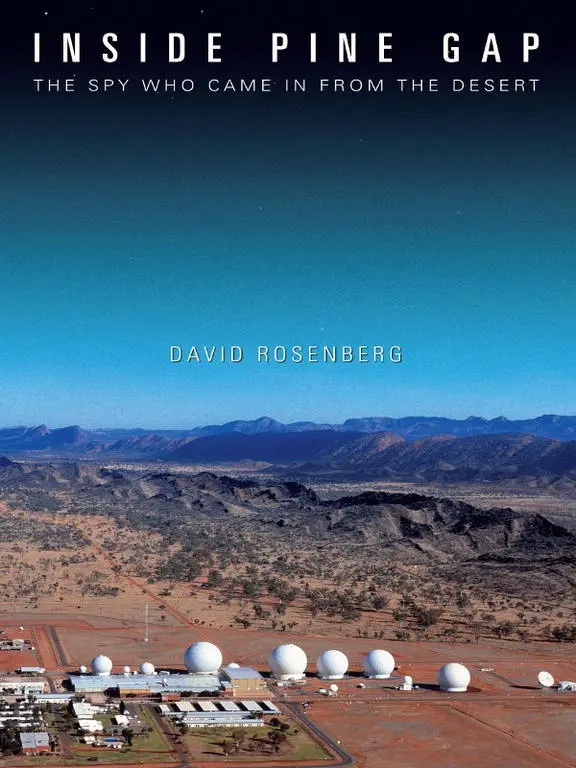
- Название:Inside Pine Gap
- Автор:
- Издательство:Hardie Grant Books
- Жанр:
- Год:2011
- Город:Melbourne
- ISBN:978-1-742-70173-8
- Рейтинг книги:4 / 5. Голосов: 1
-
Избранное:Добавить в избранное
- Отзывы:
-
Ваша оценка:
Inside Pine Gap: краткое содержание, описание и аннотация
Предлагаем к чтению аннотацию, описание, краткое содержание или предисловие (зависит от того, что написал сам автор книги «Inside Pine Gap»). Если вы не нашли необходимую информацию о книге — напишите в комментариях, мы постараемся отыскать её.
Author David Rosenberg details his career with an American intelligence agency during a tumultuous period in history that covered the terms of three American Presidents, four Australian Prime Ministers, the end of the Cold War, a peace treaty between Israel and Jordan, two wars in Iraq, genocide in Rwanda, as well as the ‘War against Terror’ and the emergence of North Korea as a nuclear-armed nation. This is a fascinating glimpse inside the top-secret world of military surveillance.
[This book contain a table.]
Inside Pine Gap — читать онлайн бесплатно полную книгу (весь текст) целиком
Ниже представлен текст книги, разбитый по страницам. Система сохранения места последней прочитанной страницы, позволяет с удобством читать онлайн бесплатно книгу «Inside Pine Gap», без необходимости каждый раз заново искать на чём Вы остановились. Поставьте закладку, и сможете в любой момент перейти на страницу, на которой закончили чтение.
Интервал:
Закладка:
The small military presence in Operations that began in 1990 wasn’t visually obvious because Pine Gap had (and still maintains) a No Military Uniform policy. When the soldiers first arrived, they were asked to ‘blend in’ with the local community and some assumed that this meant they could grow long hair and beards. Unfortunately a relatively unpopular United States Army sergeant told a visiting American officer about this practice, even though the soldiers had cut their hair to military standard just before the officer’s arrival. The officer, who preferred rules and regulations, banned long hair and beards, with the exception of a military-approved moustache. Thankfully commonsense prevailed and the No Uniform policy remains in place to the present day. To the local residents and tourists, soldiers walking around town in t-shirts and shorts attract much less attention than if they were in military dress.
As in most jobs, not everyone was a joy to work with. Early in my tour an American analyst arrived who had a good reputation for the work he produced, but was known as someone who wanted to work alone. I had worked with him in Maryland, where he had never made an effort to become part of the team. He was extremely ambitious and often took credit for the work of his fellow analysts, both Americans and Australians. Not only was this ethically wrong but it was highly embarrassing to have an ‘ugly American’ slowing the cooperative and collaborative progress with our Australian allies. I remember writing a report that this colleague reviewed and when he added an insightful two-sentence comment that significantly improved the conclusion, I was impressed and asked him where he’d sourced his information. He replied, ‘If I told you that, then you’d know everything I know’ and walked away. He later took credit for the entire report in an effort to help his promotion prospects, but the team at Pine Gap quickly decided to counter the tactic by then including the author’s name at the conclusion of every report. (Though not promoted while at Pine Gap, in later years this colleague was rapidly elevated to Grade 15, the highest level attainable before advancing to the Defense Intelligence Senior Level or the Defense Intelligence Senior Executive Service.) When he didn’t receive his promotion as he’d expected, he demanded that the Chief of Operations (COP), an American, retroactively promote him or he’d curtail his tour and go home. The COP pointed him towards the door and suggested he seek psychological counselling and training on ‘how to work well with others’. He was not missed.
A basic flaw in NSA’s promotion process was—and still is—that not all supervisors require proof of the contributions that subsequently appear on a promotion recommendation. An individual may often simply state that he or she has accomplished a particular achievement, regardless of whether the work was performed as described. The COP at Pine Gap recognised my colleague for what he was, but other senior officials at Ft Meade fell for his tricks, which allowed him to achieve a position where he eventually led others.
Floyd Paseman, one of the CIA’s ‘barons’ (overseas chiefs), has an insightful axiom about managers in his book A Spy’s Journey : ‘Axiom 8: Not everyone can or should become a manager. Our system has let us down. At a certain stage, officers are promoted into the ranks of management whether or not they have demonstrated that they are management material.’ [4] Paseman, A Spy’s Journey , p. 282.
Unfortunately, many individuals claim credit for the results of others in order to further their own advancement, and when these individuals are promoted into positions of authority through the merits of others, the lack of the basic leadership skill of acknowledging credit where it is due can cause much harm, with the interests of the individual being put ahead of those of the organisation. I am pleased to say this was a relatively rare occurrence within Operations.
As I settled into my new life in Alice Springs, I enjoyed the camaraderie between the Aussies and the American government workers, civilian contractors and military who all worked with me on the Operations floor. We worked a rotating eight-hour shift schedule of days (7.30 am to 3.30 pm), swings (3.30 pm to 11.30 pm) and mids (11.30 pm to 7.30 am) and spent time getting to know each other at our various work positions. Contrary to popular belief, in 1990 there were no work-related secrets between the Australians and Americans as all information in Operations was shared, and this contributed to a positive and trusting atmosphere.
It has been said that Australians weren’t allowed into the signals analysis section before 1980. [5] http://parlinfo.aph.gov.au/parlInfo/search/display/display.w3p;db=COMMITTEES;id=committees/commjnt/j0000053.sgm/0000;page=0;query=joint%20treaty%20pine%20gap;rec=1;resCount=Default
In those days, the apparent lack of collaboration and cooperation on intelligence issues would certainly have generated mistrust and inequality among some Australians, and this was a likely factor in the minds of many of those who, in the 1970s and 1980s, opposed the presence of Pine Gap and protested against it. I found the Australian contribution to the mission at Pine Gap to be exemplary, both in technical competency and in problem solving, with the accessibility of operational information to both countries helping to strengthen our allegiance as long-time allies.
One year before my arrival, a very good friend and professional mentor of mine, Joe, had arrived in Alice Springs with his wife Pat. Joe and Pat made me feel at home in Alice Springs, graciously inviting me to dinner almost every night for a home-cooked meal. I quickly took advantage of this as Pat was a very good cook, Joe knew his way around the barbecue and my flat was only a four-minute bike ride away.
When I first visited their home, I saw several pillowcases hanging from the carport with what I thought were potatoes inside. Then I saw one of the suspended ‘potatoes’ kick. It turned out Joe and Pat had many kangaroos hopping about their yard and had developed some notoriety around town for volunteering to care for the baby kangaroos (joeys) whose mothers had been killed after being hit by a vehicle or shot by hunters. Joe became known as the Kangaroo Man and his home eventually became known as the ‘roo zoo’.
It made for a memorable experience when they allowed me to hold some of the joeys and feed them formula from a bottle. It was just like feeding a baby with long legs and very big ears. In his backyard, Joe also had a couple of aviaries with many exotic parrots and budgerigars, and the number of birds and aviaries grew through the years to eventually take up most of the yard. The birds somehow managed to coexist harmoniously, albeit noisily, with the kangaroos—as well as with cats, dogs, chickens and even a turkey!
Joe and Pat were the closest thing to family that I had in Alice Springs, and I later also became friends with their son Wes, who stayed in Alice Springs for months at a time while on vacation from the University of Maryland and who later entered the United States Air Force as an officer.
I was fortunate to also make friends with some of the Alice Springs locals who worked at Pine Gap, including cooks, bus drivers, maintenance workers and security officers. Their contribution to the smooth running of the facility was appreciated, and we would often socialise together after a long day at the Base. It was common to have a midnight swim at the outdoor swimming pool, drinks at the Bull Bar or a game of pool or tennis with anyone, regardless of their rank or position, and this sense of equality and camaraderie was an appealing part of the lifestyle I experienced at Pine Gap. While I found that the Aussies were always professional, friendly and helpful to a new bloke like me at work, they were definitely more laid-back when not working.
Читать дальшеИнтервал:
Закладка:
Похожие книги на «Inside Pine Gap»
Представляем Вашему вниманию похожие книги на «Inside Pine Gap» списком для выбора. Мы отобрали схожую по названию и смыслу литературу в надежде предоставить читателям больше вариантов отыскать новые, интересные, ещё непрочитанные произведения.









Обсуждение, отзывы о книге «Inside Pine Gap» и просто собственные мнения читателей. Оставьте ваши комментарии, напишите, что Вы думаете о произведении, его смысле или главных героях. Укажите что конкретно понравилось, а что нет, и почему Вы так считаете.