David Rosenberg - Inside Pine Gap
Здесь есть возможность читать онлайн «David Rosenberg - Inside Pine Gap» весь текст электронной книги совершенно бесплатно (целиком полную версию без сокращений). В некоторых случаях можно слушать аудио, скачать через торрент в формате fb2 и присутствует краткое содержание. Город: Melbourne, Год выпуска: 2011, ISBN: 2011, Издательство: Hardie Grant Books, Жанр: Биографии и Мемуары, Политика, на английском языке. Описание произведения, (предисловие) а так же отзывы посетителей доступны на портале библиотеки ЛибКат.
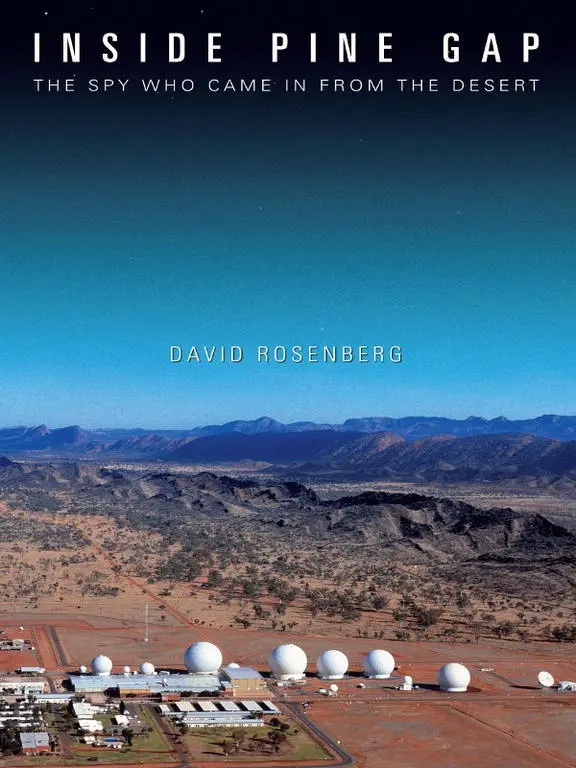
- Название:Inside Pine Gap
- Автор:
- Издательство:Hardie Grant Books
- Жанр:
- Год:2011
- Город:Melbourne
- ISBN:978-1-742-70173-8
- Рейтинг книги:4 / 5. Голосов: 1
-
Избранное:Добавить в избранное
- Отзывы:
-
Ваша оценка:
Inside Pine Gap: краткое содержание, описание и аннотация
Предлагаем к чтению аннотацию, описание, краткое содержание или предисловие (зависит от того, что написал сам автор книги «Inside Pine Gap»). Если вы не нашли необходимую информацию о книге — напишите в комментариях, мы постараемся отыскать её.
Author David Rosenberg details his career with an American intelligence agency during a tumultuous period in history that covered the terms of three American Presidents, four Australian Prime Ministers, the end of the Cold War, a peace treaty between Israel and Jordan, two wars in Iraq, genocide in Rwanda, as well as the ‘War against Terror’ and the emergence of North Korea as a nuclear-armed nation. This is a fascinating glimpse inside the top-secret world of military surveillance.
[This book contain a table.]
Inside Pine Gap — читать онлайн бесплатно полную книгу (весь текст) целиком
Ниже представлен текст книги, разбитый по страницам. Система сохранения места последней прочитанной страницы, позволяет с удобством читать онлайн бесплатно книгу «Inside Pine Gap», без необходимости каждый раз заново искать на чём Вы остановились. Поставьте закладку, и сможете в любой момент перейти на страницу, на которой закончили чтение.
Интервал:
Закладка:
As Steve and I drove into town, I was again struck by the ancient landscape of the Australian desert. My new home was very different to anywhere I had lived before. The large rock formations, the vibrant reds and greens of the desert stretching in all directions, and the red and white river gums standing starkly in the dry Todd River bed all made me eager to explore the striking sights around me. As we drove through a pass in the ranges known as Heavitree Gap, I craned my neck to see the rocks rising several hundred metres above us.
Just near my flat Steve pointed out a tall eucalypt. I later crushed the leaves between my fingers, smelling the stimulating scent of eucalyptus on my skin. It was hard to imagine a place more remote and of greater contrast to the life I had left behind near Washington DC.
My new flat was small and stocked with a survival kit of essential items such as linen, pillows and bathroom supplies while I waited for my household goods to arrive from Maryland. The housing team at Pine Gap had twenty years experience helping new arrivals adjust to life in their new home and I was grateful that they’d made my transition so easy. Funnily enough, one of the things that took some adjusting to was television in Alice Springs—it was certainly behind the times by US standards: Aussies in those days received only four channels, unlike the relatively large number of cable channels back home. It would take another six to seven years before satellite television finally arrived.
On my first evening in Alice Springs Steve kindly invited me to his home for dinner with his family, where I met his wife and children. I thoroughly enjoyed the home-cooked meal and talking about the various activities on offer in Alice Springs, but left early as I was tired from the flights.
At 7 am the next morning he picked me up for my first day as a permanent employee at Pine Gap. As we began the twenty-five-minute drive out to the Base, leaving the small township of Alice Springs behind, I saw several colourful hot-air balloons floating serenely above the red desert. As far as the eye could see, the tourists on the balloons were the only sign of human presence. Eventually we turned off the Stuart Highway and onto Hatt Road, which leads to only one destination.
The Joint Defence Facility Pine Gap sits on formerly private land acquired by the Australian Government during the short period when Harold Holt was prime minister. Once upon a time the land was occupied by the indigenous Arrernte people, and I couldn’t help but wonder what their ancestors would make of such a modern hi-tech facility operating on their ancient land, or what their descendants thought.
Ahead of us at the entrance, I saw large security gates that made my new workplace look like we were entering a prison. Steve parked and escorted me to the Security office where I had my photo taken for the badge that would allow me to enter the secure area of Operations. I was excited to be at my new workplace and had known that if a diplomatic solution to Iraq’s invasion of Kuwait wasn’t formalised, military action by the United States and a coalition of allies against Iraqi forces was certain. Tensions around the world had heightened as Iraq had taken control of the oil production facilities in Kuwait, and the possible disruption to global oil availability had many governments concerned. The United States wouldn’t allow Saddam Hussein’s influence and control in the region to expand. The United Nations condemned his unilateral annexation of Kuwait into the nineteenth province of Iraq, [1] http://en.wikipedia.org/wiki/gulf_war
but Saddam had no honourable way to leave Kuwait. As this stalemate continued, the United States and the coalition were both overtly and quietly preparing for military confrontation by mobilising forces into the region and gathering intelligence through clandestine means. As we parked outside and prepared to enter Operations, I was concerned that a war against such a large military would likely result in casualties for US and coalition soldiers. But I was also eager to find out exactly what my role would be as the United States and its allies prepared for what seemed to be an inevitable conflict in Iraq and Kuwait.
On the inside, the facility with its large computer network couldn’t have contrasted more strongly with the harsh land it sat upon. When I entered the secure building, I noticed two very large flags—Australian and US—mounted within a large display case with a commemorative plaque that told how the flags had been transported in a space shuttle carrying one of Pine Gap’s satellites into orbit. [2] Richelson & Ball, The Ties that Bind , p. 181.
As I walked onto the Operations floor, I noticed a hub of activity within my new workplace; technological advances had seen Operations grow to accommodate the numerous analysts needed to accomplish the daily tasks performed at the Base.
Looking around Operations, I was surprised to see a persistent cloud of cigarette smoke. The United States Government had banned cigarette smoking in government buildings before I left for Australia, but the joint Australian facility had yet to adopt the No Smoking policy. As a non-smoker, I was relieved when Pine Gap soon followed suit, although there was one defiant American mission director, Jim, who continued to smoke after the regulation took effect, brazenly lighting up at least every hour. As the highest authority on the Operations crew, he believed—and was right—that he wouldn’t get into too much trouble, and besides, he had only a short time remaining on his tour.
The entire Operations floor was dimly lit as the analysts needed low light to help them see details on their computer monitors. I saw signs above the various work areas indicating the type of activities being performed by these highly specialised operators.
Every analyst wore a headset that allowed them to communicate with the other analysts when collaboration was required. The headsets also blocked out extraneous noise, allowing them to hear, interpret and filter important signals from routine ones. Some analysts appeared to be highly focused: busily adjusting dials, interfacing with their monitors or writing reports. Others sat back in their reclining chairs chatting with each other while they watched their monitors, waiting for something of interest to happen. Operations was typically kept quite cool to help protect the ubiquitous racks of electrical equipment from overheating. Nevertheless, almost everyone dressed casually; many in shorts and t-shirts. The casual dress in Operations was one way to distinguish most shift workers from the day staff.
For an operator/analyst, a day on the Operations floor was a mix of the routine and the sometimes surprising and exciting events that made us eager to return for another day. Depending on world events at the time, Pine Gap focused on various ‘hot spots’ of military interest. My first duty when arriving for an eight-hour shift was to review the responsibilities of my section, where I worked alongside an Australian counterpart. Two operators on position allowed one of us to take breaks and attend meetings and classes if necessary while the other performed the work. Both Americans and Australians manned similar positions across Operations, providing an opportunity to exchange respective knowledge and build on the solid partnership that existed between the two allies.
On that first day, I noticed that the vast majority of analysts were male. [3] Approximately 20 per cent of Operations personnel were female in 1990.
This didn’t surprise me because in 1990 the type of intelligence work performed at Pine Gap was done by many former military men trained in signals analysis, but in later years many more women would be selected for work in Operations, until eventually there were almost as many women as men. As I walked to my work area I thought to myself, ‘How many Australians work here?’ ████████████████████████████████████████████████████████████████████████████████████████████████████████████████████████████████████████████████████████████. The Americans therefore provided more bodies and bore the greater financial cost. Consequently, the ratio of Australians to Americans remained fairly constant as Operations expanded.
Интервал:
Закладка:
Похожие книги на «Inside Pine Gap»
Представляем Вашему вниманию похожие книги на «Inside Pine Gap» списком для выбора. Мы отобрали схожую по названию и смыслу литературу в надежде предоставить читателям больше вариантов отыскать новые, интересные, ещё непрочитанные произведения.









Обсуждение, отзывы о книге «Inside Pine Gap» и просто собственные мнения читателей. Оставьте ваши комментарии, напишите, что Вы думаете о произведении, его смысле или главных героях. Укажите что конкретно понравилось, а что нет, и почему Вы так считаете.