Thomas Goltz - Chechnya Diary
Здесь есть возможность читать онлайн «Thomas Goltz - Chechnya Diary» весь текст электронной книги совершенно бесплатно (целиком полную версию без сокращений). В некоторых случаях можно слушать аудио, скачать через торрент в формате fb2 и присутствует краткое содержание. Город: New York, Год выпуска: 2011, ISBN: 2011, Издательство: Thomas Dunne Books, Жанр: Биографии и Мемуары, military_history, Публицистика, на английском языке. Описание произведения, (предисловие) а так же отзывы посетителей доступны на портале библиотеки ЛибКат.
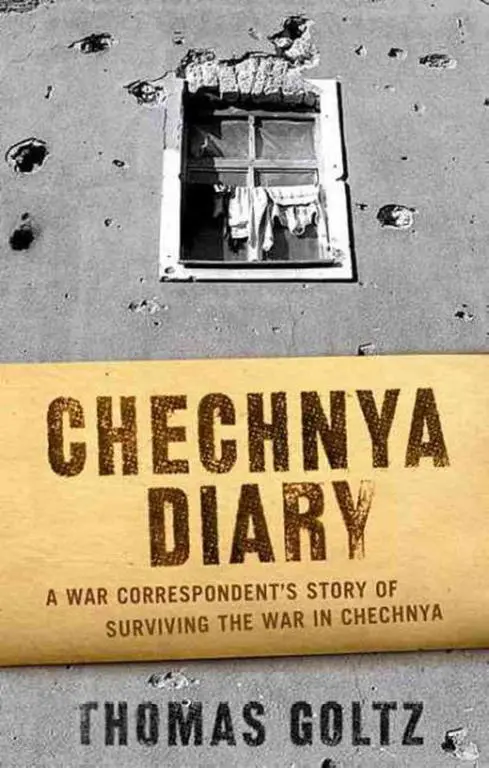
- Название:Chechnya Diary
- Автор:
- Издательство:Thomas Dunne Books
- Жанр:
- Год:2011
- Город:New York
- ISBN:0-312-26874-2
- Рейтинг книги:3 / 5. Голосов: 1
-
Избранное:Добавить в избранное
- Отзывы:
-
Ваша оценка:
Chechnya Diary: краткое содержание, описание и аннотация
Предлагаем к чтению аннотацию, описание, краткое содержание или предисловие (зависит от того, что написал сам автор книги «Chechnya Diary»). Если вы не нашли необходимую информацию о книге — напишите в комментариях, мы постараемся отыскать её.
is part of a larger exploration of the role (and impact) of the media in conflict areas. And at its heart,
is the story of Hussein, the leader of the local resistance in the small town that bears the brunt of the massacre as it is drawn into war.
This is a deeply personal book, a first person narrative that reads like an adventure but addresses larger theoretical issues ranging from the history of ethnic/nationalities in the USSR and the Russian Federation to journalistic responsibility in crisis zones.
is a crossover work that offers both the historical context and a ground-level view of a complex and brutal war.
Chechnya Diary — читать онлайн бесплатно полную книгу (весь текст) целиком
Ниже представлен текст книги, разбитый по страницам. Система сохранения места последней прочитанной страницы, позволяет с удобством читать онлайн бесплатно книгу «Chechnya Diary», без необходимости каждый раз заново искать на чём Вы остановились. Поставьте закладку, и сможете в любой момент перейти на страницу, на которой закончили чтение.
Интервал:
Закладка:
“Hey, you— out!!” my friend, or acquaintance, the baby-faced Colonel Sergei screamed at me. “Get the fuck out of here, now!”
I thought it prudent to take his advice, and moseyed down the road. After a brittle hundred yards or so, I ran into frustrated rescue workers.
“What’s up?” I asked an elderly man with a long white beard and orange skull cap.
“A double cross,” he grunted.
Then he looked at his watch and glanced at the sky, found an internal compass, and removed himself to the edge of the road to set about performing his ablutions. Others joined him, leaving me alone on the road as they began performing afternoon prayers.
Your town is being destroyed and your world is bombed and all you can do is praise God? Who were these people?
As the line of faithful bowed their heads toward Mecca, the Russians guns now stationed inside the twisted ruins of what had once been the primary source of building material in the Caucasus began dumping high trajectory shells on the wooded hills five hundred yards away.
KirVOOM! came the initial report from the factory.
A four-second pause, followed by a puff of white smoke in the forest.
The Russians were interdicting the escape routes that they had guaranteed to leave open, and not just with regular munitions. Beautiful, thick white smoke, cumulus clouds in miniature, now lingered over the trees like a blanket.
Phosphorus. While not expressly forbidden by the Geneva Conventions, the wicked weapons should be banned: They suck up all oxygen and suffocate anything in their vicinity; collateral effects include third-degree burns when the ash falls on naked skin. Fun.
The praying men prayed, and the shells continued to fall. Then, Ibrahim and the other rubble and relief workers emerged from the factory, walking in our direction with empty stretchers and ashen faces.
“There are no bodies in there,” said Ibrahim.
No bodies?
“Either the fighters have removed all the dead with them, or something else has happened,” said Ibrahim, trying to take control of the situation.
“Like what!?” some elderly man demanded.
“We cannot say for sure, but we think the Russian forces have collected the bodies themselves to use as bargaining chips for POW exchanges,” he said evenly. “We will look into the matter further tomorrow.”
It took awhile to sink in.
Colonel Sergei had kept the bodies for use as exchange currency in the future.
Who was that guy?
Distant shepherds twirling their staffs over a timeless mountain landscape. Kids playing King of the Haystack. A series of ancient stone towers, guarding access to the upper valleys of the Argun River, which turned from a sluggish stream into a white-water roar. Perhaps I thought of Montana, romantically and impossibly, if so. Because it was not the upper Yellowstone, Smith, or Gallatin, where a solitary white-water kayaker, or brace of trout fishermen in a drift boat might be expected around the next thundering gorge. This was the spinal column of Chechnya at war, the river route and highway leading into the mountains, that was (or should have been) the primary target for every piece of artillery and all the air power the Russians had to blast the rebels off the map, forever. They were trying, judging by the snarled, if no longer smoldering hunks of shattered metal pitched over the sides of the road, and sometimes still on it.
On and on through Chechnya at war.
Grozny, Vedeno, Shatoi, Gudermes, Shatoi (again) and back for another night in shattered Shali or neutral Novi Atagi as the guest of Rizvan Laylorsanov, or that basketball player who strummed the guitar and sang songs about peace while projectiles screamed overhead, and then, again, Stari Atagi for a funeral for eight.
“How were they killed?” I asked.
“Aviation last night,” came the response.
The graves were dug and only waited for the white shrouded corpses to arrive in reusable wooden litters. The mourners parted to let the bearers through; one by one, the bodies were lifted from their litters and placed in the graves. The bodies were positioned to face Mecca, and then wooden beams were placed across the shrouded corpses. The imam called out the Fatiha, while the mourners lifted the palms of their hands toward heaven and murmured the sacred words: Bismillah ARRahman ar Rahim.
In the name of the God, the Compassionate, the Merciful,
All Praise to The God, Lord of All The Worlds,
The Compassionate, The Merciful.
The burial rites were repeated twice, three times, four. After the fifth body had been gently placed in its final resting place, the prayers were not so much interrupted as counterpointed by the woop-woop-woop of helicopter blades churning through the sky. And then came another sound from behind a row of older gravestones, perhaps some fifty meters away: a baritone humming sound, above which rose the most melancholy, almost-lachrymose, spine-stinging tenor voice I have ever heard, ringing through the graveyard air.
“AlllAAAH Vidimo Xarjist O!”
It was a dirge circle, consisting of perhaps a dozen men, eyes closed, with tears streaming down their faces, singing the deceased into eternity.
“Vedeno Khankale Surmut Way, Bizteriq Khambundo Wansee yeq!”
Again, the sound of helicopters approaching; again, not a hint of movement from the men in the circle. But slowly, a change of pace, as if to give audio-witness to a complete lack of fear. First the fingertips began tapping on the upper leg, softly, gently, as the tenor continued his chant over the solid bass and baritone of the voices around him. Then full finger-tapping that actually resulted in a muffled beat. Then the full extended hand, fingers and palm, striking out a basic rhythmic pattern, as the chorus of dirge chanters moved from merely humming to mouthing real words to the beat.
La illah il Allah, La illah il Allah!
Distant explosions and with a sudden woosh, a jet overhead. But from the group of men squatting in the cemetery, not a flicker of movement, not a single eye peeped open to make a visual assessment of the situation, not a hint from anyone that maybe it just might have been better to move to some sort of shelter.
Who were these people?
The chant continued for another five or ten minutes; maybe an hour. I had long since turned the camera off, and was merely sitting as close to the circle as I thought decent for an outsider, desperately wanting to be inside it with them to get just a little closer to that ineffable thing that inspired and sustained them, to share in their spirit. Then the dirge slowed, the hands turned into tapping fingers, and then they stopped tapping altogether, and then it was over, because it was time for prayers. One by one, the men rose, removed their shoes, formed lines, and then lifted their palms toward heaven, their mosque the cemetery, their prayer mats the grass.
Ispotted him near the cemetery, a stooped old man scurrying back from Grozny’s fresh produce market, a bag of vegetables in his hand and a hero’s decoration dangling from his tattered suit coat. His name was Viktor, and I followed him home to his third-story flat on WhateverSkaya street, an apartment in one of those buildings found in virtually every Soviet city and usually called Dom Geroi, or Heroes’ Houses. The stairwell leading to Viktor’s abode was also standard for a Soviet structure dating to the 1940s or ’50s: flagstone steps, worn in the middle, working their way up through a maze of tangled electrical wires, graffiti, and general neglect for the common space shared by all tenants, including decorated veterans of WWII.
Читать дальшеИнтервал:
Закладка:
Похожие книги на «Chechnya Diary»
Представляем Вашему вниманию похожие книги на «Chechnya Diary» списком для выбора. Мы отобрали схожую по названию и смыслу литературу в надежде предоставить читателям больше вариантов отыскать новые, интересные, ещё непрочитанные произведения.







Обсуждение, отзывы о книге «Chechnya Diary» и просто собственные мнения читателей. Оставьте ваши комментарии, напишите, что Вы думаете о произведении, его смысле или главных героях. Укажите что конкретно понравилось, а что нет, и почему Вы так считаете.