Thomas Goltz - Chechnya Diary
Здесь есть возможность читать онлайн «Thomas Goltz - Chechnya Diary» весь текст электронной книги совершенно бесплатно (целиком полную версию без сокращений). В некоторых случаях можно слушать аудио, скачать через торрент в формате fb2 и присутствует краткое содержание. Город: New York, Год выпуска: 2011, ISBN: 2011, Издательство: Thomas Dunne Books, Жанр: Биографии и Мемуары, military_history, Публицистика, на английском языке. Описание произведения, (предисловие) а так же отзывы посетителей доступны на портале библиотеки ЛибКат.
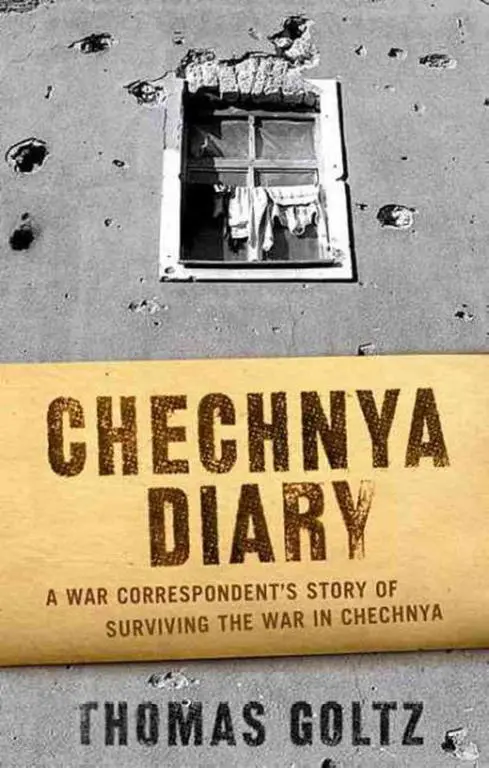
- Название:Chechnya Diary
- Автор:
- Издательство:Thomas Dunne Books
- Жанр:
- Год:2011
- Город:New York
- ISBN:0-312-26874-2
- Рейтинг книги:3 / 5. Голосов: 1
-
Избранное:Добавить в избранное
- Отзывы:
-
Ваша оценка:
Chechnya Diary: краткое содержание, описание и аннотация
Предлагаем к чтению аннотацию, описание, краткое содержание или предисловие (зависит от того, что написал сам автор книги «Chechnya Diary»). Если вы не нашли необходимую информацию о книге — напишите в комментариях, мы постараемся отыскать её.
is part of a larger exploration of the role (and impact) of the media in conflict areas. And at its heart,
is the story of Hussein, the leader of the local resistance in the small town that bears the brunt of the massacre as it is drawn into war.
This is a deeply personal book, a first person narrative that reads like an adventure but addresses larger theoretical issues ranging from the history of ethnic/nationalities in the USSR and the Russian Federation to journalistic responsibility in crisis zones.
is a crossover work that offers both the historical context and a ground-level view of a complex and brutal war.
Chechnya Diary — читать онлайн бесплатно полную книгу (весь текст) целиком
Ниже представлен текст книги, разбитый по страницам. Система сохранения места последней прочитанной страницы, позволяет с удобством читать онлайн бесплатно книгу «Chechnya Diary», без необходимости каждый раз заново искать на чём Вы остановились. Поставьте закладку, и сможете в любой момент перейти на страницу, на которой закончили чтение.
Интервал:
Закладка:
14
A few years later, while a Knight Journalism Fellow at Stanford University, a more sober Sheets penned an article comparing Russian media policy in Chechnya in wars One and Two. Referring to his own antics, he wrote: “I covered the first Chechen conflict from 1994-96 extensively. It was a ridiculously dangerous business. Nineteen of my fellow correspondents, both Russian and foreign, paid for that final story with their lives.” Cf. “Russia’s Media Policy in Chechnya” in Contemporary Caucasus Newsletter, no. 10, Fall 2000.
15
By All Available Means, pp. 24-25, based largely on the Akhmad Amaev diaries.
16
While a wondrous device at the time, technology rapidly made the SAT-phone obsolete. The advent of the cell phone in the late 1990s (and then videophones) completely transformed the communications environment in remote areas. But in 1995, reporters were still obliged to stay within range of expensive uplinks through local television stations, such as that at Ingush TV at Nazran. That meant that television crews had to time their days to collect news in Chechnya no later than early afternoon, and then dash back to Nazran to make a shaky feed from the local TV station by midnight, lest their product no longer be “news.” The alternative was to make a mad dash back to the Slepsovski airport and beg and bribe passengers to take film to Moscow—a truly nerve-wracking experience for the purveyor of exclusive news, due to the question of whether the courier would really deliver or not. Cf. my article of February 16, 1997 in the New York Times Magazine entitled “Uncle Fidel.” The original title was “Cigars as Bribes.”
17
Years later, at a Special Forces school in Florida, I was treated to a shooting display, including a demonstration of what types of shock plate in the modern American flak jacket can withstand what kind of shot from what kind of range. At the end of the program, we guests were invited to inspect the target vests, and most folks were mightily impressed with the absorptive powers of the fancy Kevlar ceramic plates. Not wanting to ruin everyone’s fun, I took one of the SF guys aside and asked about second-shot integrity. “We don’t use this shit in the field,” he admitted. “It’s too heavy and limits your ability to roll out of the way when you need to. The only folks we think need to wear it are Secret Service guys guarding the president, so they can leap in the way and take that one shot. After that, the vest is toast.”
18
Evidence of widespread drug use among the Russian assault troops came in the form of chemical analyses of the trace elements left in the scores, nay, hundreds of syringes found in the streets of the town by Voice of America correspondent Elizabeth Arnold. Even more interesting was a subsequent report by the Gorbachev Foundation that described the use of self-hypnosis video programs by crack assault troops that were basically designed to leach the last taint of human kindness from soldiers’ souls prior to an attack. The author does not have a direct citation for the report, but I had it in my hands and recall that it appeared in the Moscow News or Moscow Times sometime in mid- or late April 1995.
19
Umanova would improve with time, winning the “Stringers’ Choice” award in the annual Rory Peck Commemoration in 2000 for her incredibly brave coverage of the second Chechen war; she is now in exile.
20
Dmitry Balburov, Moscow News Weekly, English edition, No. 15, April 21-27, 1995. 21 Gillian Findley, ABC World News Tonight with Peter Jennings, April 12, 1995.
21
One was the American national Aukai Collins, who lost a leg in fighting. Cf. Amy Barrett, “Holy Warrior,” New York Times Magazine , August 4, 2002. Collins also wrote a book entitled My Jihad (Guilford, Conn.: Lyons Press, 2002).
22
Umar ibn Al Khattab, “How We Understand Monotheism,” trans. Joan Beecher Eichrodt. The excerpt quoted here is available on-line at http://groups.yahoo.com/group/chechnya-sl/message/147(accessed July 9, 2003).
23
“Many Civilians Killed in Samashki Village, Chechnya,” Human Rights Watch press release, November 4, 1999. Available on-line at http://www.hrw.org/press/1999/nov/checha1104.htm(accessed July 9, 2003).
Интервал:
Закладка:
Похожие книги на «Chechnya Diary»
Представляем Вашему вниманию похожие книги на «Chechnya Diary» списком для выбора. Мы отобрали схожую по названию и смыслу литературу в надежде предоставить читателям больше вариантов отыскать новые, интересные, ещё непрочитанные произведения.







Обсуждение, отзывы о книге «Chechnya Diary» и просто собственные мнения читателей. Оставьте ваши комментарии, напишите, что Вы думаете о произведении, его смысле или главных героях. Укажите что конкретно понравилось, а что нет, и почему Вы так считаете.