Gary Rivlin - Broke, USA
Здесь есть возможность читать онлайн «Gary Rivlin - Broke, USA» весь текст электронной книги совершенно бесплатно (целиком полную версию без сокращений). В некоторых случаях можно слушать аудио, скачать через торрент в формате fb2 и присутствует краткое содержание. Город: New York, Год выпуска: 2010, ISBN: 2010, Издательство: HarperCollins Publishers Inc., Жанр: Старинная литература, на английском языке. Описание произведения, (предисловие) а так же отзывы посетителей доступны на портале библиотеки ЛибКат.
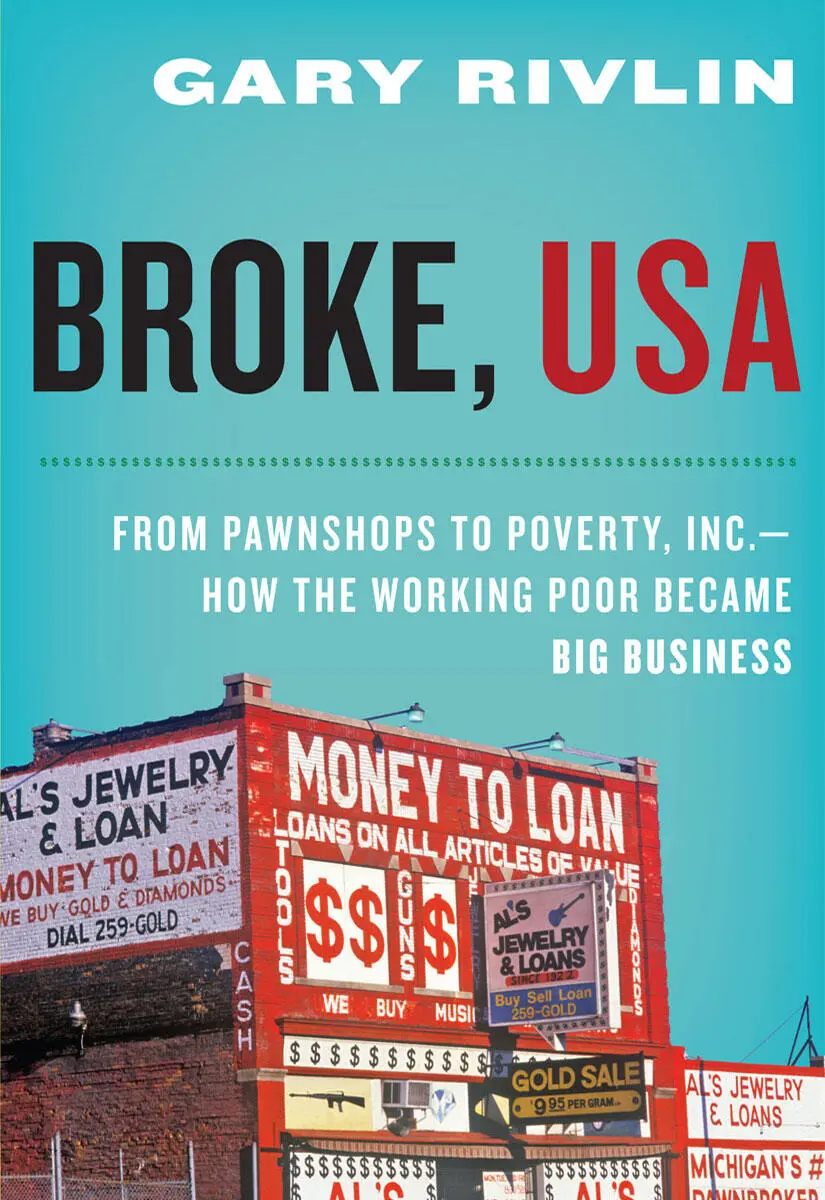
- Название:Broke, USA
- Автор:
- Издательство:HarperCollins Publishers Inc.
- Жанр:
- Год:2010
- Город:New York
- ISBN:978-0-06-199794-5
- Рейтинг книги:3 / 5. Голосов: 1
-
Избранное:Добавить в избранное
- Отзывы:
-
Ваша оценка:
Broke, USA: краткое содержание, описание и аннотация
Предлагаем к чтению аннотацию, описание, краткое содержание или предисловие (зависит от того, что написал сам автор книги «Broke, USA»). Если вы не нашли необходимую информацию о книге — напишите в комментариях, мы постараемся отыскать её.
Broke, USA — читать онлайн бесплатно полную книгу (весь текст) целиком
Ниже представлен текст книги, разбитый по страницам. Система сохранения места последней прочитанной страницы, позволяет с удобством читать онлайн бесплатно книгу «Broke, USA», без необходимости каждый раз заново искать на чём Вы остановились. Поставьте закладку, и сможете в любой момент перейти на страницу, на которой закончили чтение.
Интервал:
Закладка:
After conferring with Schmaltz, McCarthy plotted out a route and pointed his 2002 gray Ford Focus east. We visited a few of east Dayton’s more battered neighborhoods and then headed south to begin a loop around some of the city’s first-ring suburbs. When I noticed three or four boarded-up homes on a block in the first neighborhood we visited, McCarthy waved off my whistle. “This is nothing,” he warned. At the end of the 1990s, people in Dayton had been alarmed that the courts were seeing more than two thousand foreclosures a year in Montgomery County, which encompasses Dayton and some of the first-ring suburbs. But that number crossed four thousand in 2003 and then again in 2005. The city would be hit by another 5,200 foreclosures in 2008 and there were forecasts of five thousand more in 2009.
The various neighborhoods swim together. There’s not really a name to that first neighborhood—the East Third Street community is the best McCarthy can manage—but in a way it made no difference. Each white working-class neighborhood was more or less a carbon copy of the other, a passing montage of modest-sized homes broken up by corners crowded with representatives of the poverty industry. Census data showed that the people who lived in the second neighborhood we visited, Linden Heights, were generally better educated than people living in the first, but the real difference, at the street level at least, seemed to be the proportion of homes for sale and the particular names of the stores that had taken root there. Both had a Jackson Hewitt and a Cashland payday store but whereas the first neighborhood had two check-cashing outlets and a Rent-A-Center, Linden Avenue, the main drag through Linden Heights, was home to a Check ’n Go, a CheckSmart, as well as an Aaron’s and at least two instant tax shops.
Kettering was a lot like its city cousins except that the drive to or from a furniture rental store was a little leafier and more pleasant. Toby McKenzie opened the first payday store there in early 1997; Advance America and an outfit called Check Exchange opened stores the following year. Another four payday operators established a presence between 2003 and 2006, and Cash America, the pawn giant, opened a store in a Kettering strip mall. By the end of 2007, Ohio would rank first in the United States in foreclosure inventory and in Ohio (in short order, the state would be surpassed by Nevada, Arizona, and Florida) only Cuyahoga County (Cleveland) had a bigger foreclosure problem than Montgomery County (Dayton). Statistics like those helped to explain a fall in the average sales price of a home in Kettering from a peak of $160,000 to $100,000 in the first quarter of 2009. Not surprisingly, Kettering and Moraine and West Carrollton offered endless more views of neighborhoods studded with plywood and for-sale signs.
McCarthy took the scenic route along the river to head back north, but even a dramatic change in background offered only a partial respite from the gloom of our tour. He pointed to the vast empty space where for decades National Cash Register had operated a series of factory buildings. At that point, NCR, which did a robust $5.3 billion in business in 2008, still had its headquarters in Dayton but years ago it moved most of its manufacturing overseas—and then, in June 2009, the company abruptly announced it was moving its central offices to the Atlanta area. Other ghosts hover along the river, including a long list of tool-and-die makers that shut down years ago and a vast, six-story redbrick building now literally filled with junk, like loose mannequin arms and radio vacuum tubes collected by a company called Mendelson Liquidators. Farther north was an old GM radiator plant torn down to make room for something the city is optimistically calling “Tech Town.” At the end of 2008, though, it seemed little more than thirty empty acres of good intentions.
Back in the city, more familiar Poverty, Inc. names occupy strip malls and storefronts and even an abandoned Pizza Hut now serves as a Cashland payday outlet. Yet perhaps the most startling sight on this portion of the tour are the bloated carcasses left behind by big-box stores that have abandoned Dayton in recent years, including a Builders Square, a Sun Appliance, and a Walmart. The mammoth shell that Walmart left behind, surrounded by an ocean of asphalt, must have been particularly galling. Dayton city officials had put together an attractive package of tax breaks to draw Walmart to this corner of the city, McCarthy told me, but as soon as the deal’s term expired, the retail giant moved several miles north “in pursuit of another set of benefits from a different jurisdiction.”
We entered Santa Clara, a white neighborhood that the Dayton Daily News had recently featured in a series that took a closer look at the destructiveness of the subprime mortgage meltdown. Here Ken McCall, a reporter with the News , discovered a four-block stretch he dubbed the “ground zero” of the area’s foreclosure crisis. It’s here in Santa Clara where I learned why McCarthy had previously shrugged at the sight of a few boarded-up houses. On a single block in Santa Clara, fifteen of twenty-eight properties had been sold at auction in the previous thirty-nine months, and an average of ten families lost homes during that period on the other three blocks the News featured. This was once a solidly middle-class neighborhood seemingly built on bedrock. Now anyone can buy a 1,500-square-foot house there for $30,000—if they don’t mind the drug dealers who now brazenly sell their wares on a street corner.
McCarthy headed toward Wright-Patterson Air Force Base, a sprawling facility that employs some twenty-two thousand people, most of them young and modestly paid, many of them non-military. He wanted to make sure I saw Huber Heights, and not because this once model suburb built in the 1950s heralds itself as “America’s largest community of brick homes.” The concentration of name-brand Poverty, Inc. outposts in this one town, which McCarthy dubs Dayton’s only truly integrated neighborhood, is at once astonishing and overwhelming. A partial list includes Rent-A-Center, Jackson Hewitt, H&R Block, ACE Cash Express, Advance America, Check ’n Go, Check Into Cash, CheckSmart, QC Holdings, and Cashland. In all, the state has issued fourteen licenses to payday operators in Huber Heights. CitiFinancial has its offices a few blocks from the town border and it was at a Household Finance in Huber Heights where Tommy Myers said he got “took for a screwin’.”
McCarthy lives not far from here and can remember Huber Heights as a thriving community. But the nearby giant Delco factory shuttered its doors in 2007 and all those people he described as earning $75,000 or $80,000 with overtime could no longer make the payment on their $600-a-month gas guzzlers or the adjustable rate mortgages they could barely afford in flush times. “I hate to say it because it’s cliché, but it really was the perfect storm,” McCarthy said. “You had all this predatory lending going on at the same time all these people were living beyond their means and overconsuming.” When the job losses hit, he said, it all turned very ugly very quickly.
One perspective on how the poverty business has grown so vast in so short a period of time holds that corporate America has so thoroughly chewed up the nation’s once-solid middle class that the country’s poor and working poor were pretty much the last consumer segment left to exploit. Witness the credit card industry: The charge card is barely fifty years old but whereas the country was a collective $20 billion in debt to credit card companies in the mid-1970s, that figure would exceed $600 billion by the end of the 1990s. Looking for fresh fields to harvest and inspired by the profits posted by the pioneers of the subprime charge card, the big banks began peddling credit to those on the economy’s fringes.
Читать дальшеИнтервал:
Закладка:
Похожие книги на «Broke, USA»
Представляем Вашему вниманию похожие книги на «Broke, USA» списком для выбора. Мы отобрали схожую по названию и смыслу литературу в надежде предоставить читателям больше вариантов отыскать новые, интересные, ещё непрочитанные произведения.









Обсуждение, отзывы о книге «Broke, USA» и просто собственные мнения читателей. Оставьте ваши комментарии, напишите, что Вы думаете о произведении, его смысле или главных героях. Укажите что конкретно понравилось, а что нет, и почему Вы так считаете.