Gary Rivlin - Broke, USA
Здесь есть возможность читать онлайн «Gary Rivlin - Broke, USA» весь текст электронной книги совершенно бесплатно (целиком полную версию без сокращений). В некоторых случаях можно слушать аудио, скачать через торрент в формате fb2 и присутствует краткое содержание. Город: New York, Год выпуска: 2010, ISBN: 2010, Издательство: HarperCollins Publishers Inc., Жанр: Старинная литература, на английском языке. Описание произведения, (предисловие) а так же отзывы посетителей доступны на портале библиотеки ЛибКат.
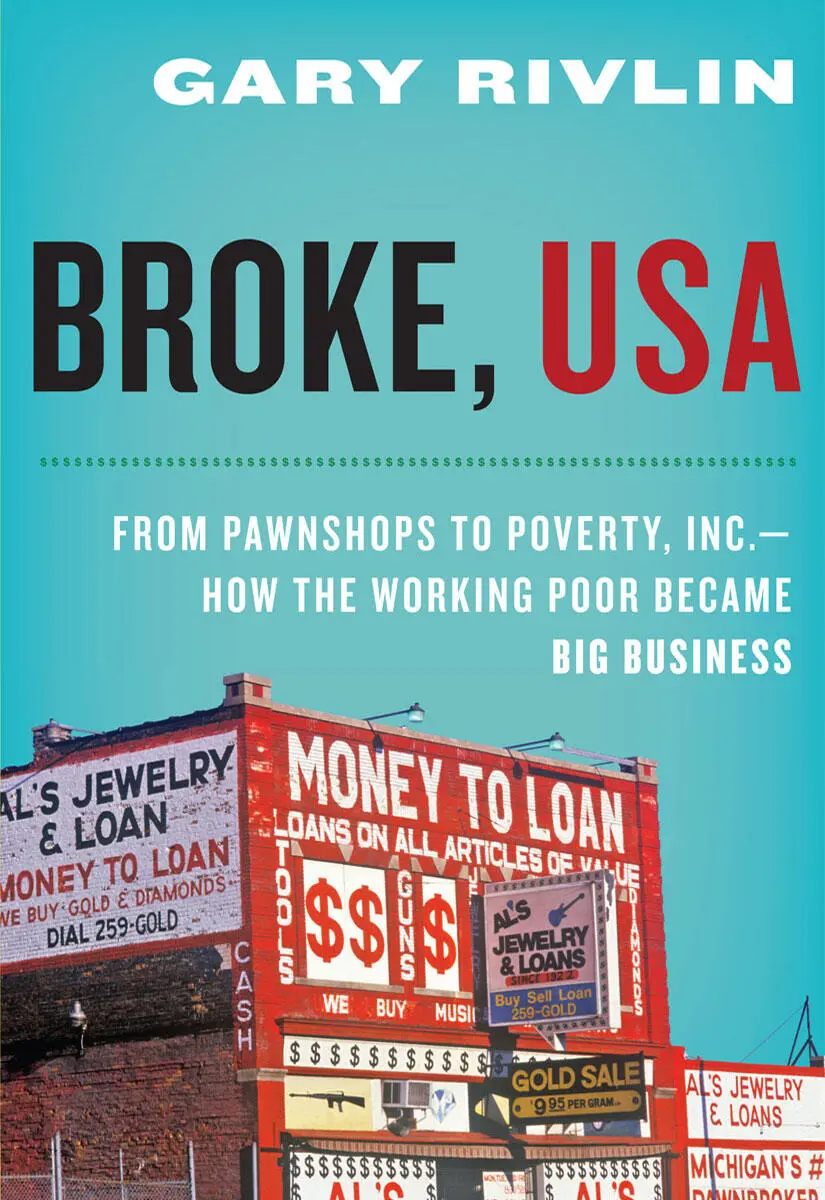
- Название:Broke, USA
- Автор:
- Издательство:HarperCollins Publishers Inc.
- Жанр:
- Год:2010
- Город:New York
- ISBN:978-0-06-199794-5
- Рейтинг книги:3 / 5. Голосов: 1
-
Избранное:Добавить в избранное
- Отзывы:
-
Ваша оценка:
Broke, USA: краткое содержание, описание и аннотация
Предлагаем к чтению аннотацию, описание, краткое содержание или предисловие (зависит от того, что написал сам автор книги «Broke, USA»). Если вы не нашли необходимую информацию о книге — напишите в комментариях, мы постараемся отыскать её.
Broke, USA — читать онлайн бесплатно полную книгу (весь текст) целиком
Ниже представлен текст книги, разбитый по страницам. Система сохранения места последней прочитанной страницы, позволяет с удобством читать онлайн бесплатно книгу «Broke, USA», без необходимости каждый раз заново искать на чём Вы остановились. Поставьте закладку, и сможете в любой момент перейти на страницу, на которой закончили чтение.
Интервал:
Закладка:
Ameriquest, of course, was hardly alone in its relentless, reckless pursuit of borrowers and profits. Massachusetts Attorney General Martha Coakley singled out Option One Mortgage in 2008 when she sued that company, alleging that it engaged in “unfair and deceptive conduct on a broad scale by selling extremely risky loan products that the companies knew or should have known were destined to fail to Massachusetts consumers.” The complaint also charged that Option One specifically targeted black and Latino borrowers in its marketing push and routinely charged them with higher points and fees than similarly situated whites. Agents for Option One, it seemed, were particularly fond of “no doc” (no documentation) and “low doc” loans and also so-called “2/28” adjustable rate mortgages, sometimes called “explodable ARMs.” Often borrowers could afford the monthly payments during the first two years because a teaser rate remained in effect but not once the interest reset at a higher rate. “Brokers and agents for Option One often promised borrowers they could simply refinance before the ARM adjustment,” the Massachusetts complaint read, “without disclosing that such refinancing was entirely dependent on continued home price appreciation and other factors.” Yet Option One did not even make the top three in customer complaints with the Federal Trade Commission. Ameriquest was the clear leader, with Full Spectrum Lending (Countrywide’s subprime subsidiary) in second and New Century in third place.
Which subprime lender ranked as the worst? I asked that question of a wide range of people, from the banking analysts I met at an FDIC event in Washington, D.C., to the wide array of consumer activists I encountered across the country. Ameriquest was the clear winner in my unscientific straw poll but Countrywide, a latecomer to the subprime sweepstakes, received more than a few votes, and many chose CitiFinancial (Jim McCarthy’s pick), New Century, and Option One. The CRL’s Mike Calhoun named Countrywide (“you wouldn’t believe some of the stuff they were pushing out the door,” he said). Kevin Byers, a CPA and financial consultant whom Kathleen Keest had commended to me as her “favorite forensic accountant” (“he’s the only person I know who reads SEC filings for fun,” Keest said), cast Countrywide as the “most aggressive” of all the aggressive lenders attacking the subprime market in the 2000s.
Countrywide CEO Angelo Mozilo, as tawny as a movie star, the George Hamilton of subprime mortgage lending, had initially resisted the temptations of the subprime market. But the profits were too alluring and once the company made the jump, Mozilo seemed determined to make his company number one. “Countrywide wanted to lead the market and so they adopted whatever product innovation was out there,” said Byers, who runs a consulting firm in Atlanta called Parkside Associates. They were happy to put people in a high-priced product nicknamed the NINJA loan (No Income, No Job, No Assets, also called a “liar’s loan” because it essentially invited a borrower to obtain a loan with virtually no documentation) and they paid what they needed to pay to convince brokers to steer borrowers to a higher-cost loan from Countrywide. In 2009, the Securities and Exchange Commission charged Mozilo with stock fraud, citing email messages in which Mozilo himself referred to some of his products as “toxic” and “poison.” Mozilo, who had received as much as $33 million in annual compensation and cashed in hundreds of millions in options, was also charged with insider trading.
There were other culprits, of course, starting with all those mortgage brokers willing to accept fees for steering clients into the 2/28 teaser loans they couldn’t possibly afford in year three. “The brokers were the drivers, as far as I’m concerned,” said Chuck Roedersheimer, a bankruptcy attorney I met in Dayton who specializes in cases involving home foreclosure. They worked on commissions, Roedersheimer said, that could reach 3 or 4 percent of the loan’s value if it included a generous yield spread premium—the bonuses a lender gave brokers who steered borrowers into higher priced, more profitable loans. Early on, Option One was among those lenders refusing to pay a yield spread premium, essentially a bribe for putting people into higher-priced loans. “But then brokers stopped sending them business,” the Center for Responsible Lending’s Mike Calhoun said. “So they turned around and endorsed yield spread premiums because that’s what they needed to do to compete.” (A study commissioned by the Wall Street Journal found that more than half of the borrowers taking out a subprime loan between 2000 and 2006 had a credit score high enough to qualify them for a conventional rate loan.) Mortgage broker might once have been considered an honorable profession, but by the start of the 2000s it seemed nothing more than a quick way to become rich. “Literally you saw people going from used car dealer to mortgage broker,” Jim McCarthy said.
Yet the system worked after a fashion—as long as home prices continued to rise at a brisk rate. The broker was happy to put a homeowner holding an adjustable rate mortgage about to reset into a new mortgage if a $300,000 house was now worth $350,000, as was the lender. Everyone earned another fee, and the ultimate stakeholders would even hold collateral that was appreciating in value. There would only be a problem if home prices fell. Without the ability to refinance, people would be trapped in adjustable rate mortgages they couldn’t really afford and as more families were forced into foreclosure, prices would fall further, widening the gap between the amount owed on a property and the price it would fetch at a sheriff’s sale. Only then would it seem as if everyone had been living in a perversely rosy world.
“Losses were remarkably low given the crazy lending they were doing,” Mike Calhoun said, “but that was because they were doing even crazier stuff, putting off foreclosures by refinancing people into even less sustainable loans.” The most maddening part, Calhoun said, was that the more lenders loosened their terms, the more it reinforced a perception that there was nothing wrong. Home ownership was on the rise, the stock market was soaring, and politicians on both sides of the aisle were happily accepting campaign contributions from these rich new benefactors. “It was a hard time to say this giant storm is building but it’s beyond the horizon,” Calhoun said.
In places like Ohio that weren’t experiencing the same boom in home prices as other parts of the country, consumer advocates started talking about another problem: appraisal inflation. For Beth Deutscher, an early member of the Predatory Lending Solutions Project that Jim McCarthy helped put together, the case that alerted her to the problem involved two sisters in their sixties, both legally blind and living on a fixed income. The sisters were in a house in such poor shape that the dining room sloped downhill, Deutscher said, and cracks were visible in the foundation. Yet somehow they owed a lender $100,000 after a broker sweet-talked them into signing papers they couldn’t read for a loan they couldn’t afford. Initially Deutscher, who by this time was running an organization she helped found called the Home Ownership Center of Greater Dayton, read the appraiser’s report and wondered if the crazy real estate inflation taking place in other locales had hit Dayton. The house to her seemed worth less than half that $100,000. But the case of the sisters taught her that as bad as waves one and two of the subprime mortgage fiasco had been, there were still new shocks to be had in wave three. Select appraisers, it seemed, were happy to enrich themselves by fabricating a report when a lender needed the justification for an outsized loan.
Читать дальшеИнтервал:
Закладка:
Похожие книги на «Broke, USA»
Представляем Вашему вниманию похожие книги на «Broke, USA» списком для выбора. Мы отобрали схожую по названию и смыслу литературу в надежде предоставить читателям больше вариантов отыскать новые, интересные, ещё непрочитанные произведения.









Обсуждение, отзывы о книге «Broke, USA» и просто собственные мнения читателей. Оставьте ваши комментарии, напишите, что Вы думаете о произведении, его смысле или главных героях. Укажите что конкретно понравилось, а что нет, и почему Вы так считаете.