Mila 18 - Leon Uris
Здесь есть возможность читать онлайн «Mila 18 - Leon Uris» весь текст электронной книги совершенно бесплатно (целиком полную версию без сокращений). В некоторых случаях можно слушать аудио, скачать через торрент в формате fb2 и присутствует краткое содержание. Жанр: Старинная литература, на английском языке. Описание произведения, (предисловие) а так же отзывы посетителей доступны на портале библиотеки ЛибКат.
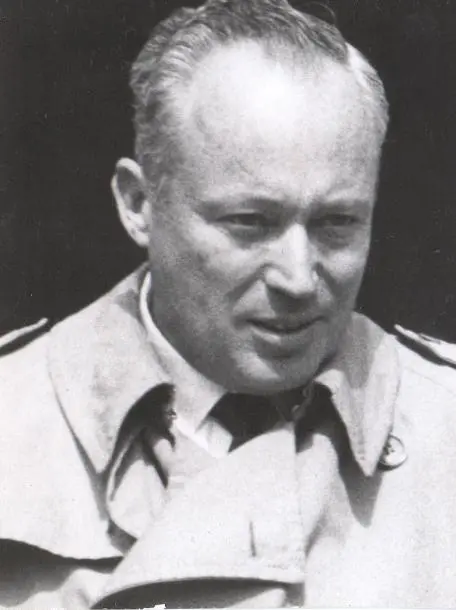
- Название:Leon Uris
- Автор:
- Жанр:
- Год:неизвестен
- ISBN:нет данных
- Рейтинг книги:4 / 5. Голосов: 1
-
Избранное:Добавить в избранное
- Отзывы:
-
Ваша оценка:
Leon Uris: краткое содержание, описание и аннотация
Предлагаем к чтению аннотацию, описание, краткое содержание или предисловие (зависит от того, что написал сам автор книги «Leon Uris»). Если вы не нашли необходимую информацию о книге — напишите в комментариях, мы постараемся отыскать её.
Review
"Not only authentic as history . . . . It is convincing as fiction . . . . The story of a sacrifice that had real meaning and will forever be remembered . . . . A fine and important novel." --
Leon Uris — читать онлайн бесплатно полную книгу (весь текст) целиком
Ниже представлен текст книги, разбитый по страницам. Система сохранения места последней прочитанной страницы, позволяет с удобством читать онлайн бесплатно книгу «Leon Uris», без необходимости каждый раз заново искать на чём Вы остановились. Поставьте закладку, и сможете в любой момент перейти на страницу, на которой закончили чтение.
Интервал:
Закладка:
Max’s interests became so large that he and his six minor partners leased a building on the corner of Pawia and Lubeckiego streets, opposite the Pawiak Prison, to direct their enterprises. The organization became known as the Big Seven.
When the Germans ordered registration of Jewish property, Dr. Franz Koenig became custodian of all Jewish-owned dwellings in Warsaw. The Big Seven became the agent for Koenig.
During the quarantine directives, Jews had to move from all parts of Warsaw into the new restricted area. Eighty thousand Christians who lived in the quarantine area were to be replaced by a hundred fifty thousand incoming Jews. In the two weeks of the move, with a quarter of a million people suddenly upheaved, the Big Seven made a killing.
Amid the frantic turmoil and the endless streams of wagons and pushcarts, there was a frenzied scramble to find living quarters for a hundred fifty thousand people in an area designed to hold eighty thousand.
Property was at a premium for the Jews. As agent for Koenig’s office, Kleperman was able to rent and sell at astronomical figures, even “doing a favor” to those wealthy enough to afford it.
Property values again jumped when the mass deportation of Jews from occupied countries into Poland began.
Dr. Franz Koenig and the other German heads preferred to deal with the Big Seven mostly because of the language barrier that existed with the Poles. Most Jews spoke Yiddish.
Toward the end of the summer of 1940, Max Kleperman was summoned to the city hall to the office of Dr. Franz Koenig. When he was ushered into the office he was surprised to find Rudolph Schreiker and Oberführer Alfred Funk there also. Max did not mind doing business with Koenig, but he did not like Schreiker and he knew that when Funk was in Warsaw trouble was brewing, for Funk carried the messages from Berlin. No matter how decent Max was to Schreiker, Schreiker always bullied him around. Kleperman had made a large donation to the German Winter Relief, yet this did not placate Schreiker.
Max betrayed his nervousness by incessantly squeezing his cigar. He deftly slipped the eight-carat diamond into a vest pocket lest it end up in German Winter Relief.
He had never met Funk before. Funk was arrogant. Max could see immediately the disdain Funk held for him.
Max’s upper lip dampened with perspiration, and ashes dropped on his trousers.
Rudolph Schreiker opened a map of Warsaw on a conference table. Max mopped his brow and studied it. A heavy black grease-pencil line was drawn encircling the areas which the Germans had placed under quarantine. Much of it followed the route of the barbed-wire rolls in “epidemic” streets.
“I have studied the past several weeks Warsaw and I am aghast,” Alfred Funk said. “You Jews have been guilty of the most blatant infractions of our regulations. We have notified the Jewish Civil Authority that the Jews are fined three million zlotys and they must collect it within a week.”
Kleperman nodded and squeezed his cigar.
“As you know, you are a filthy people,” Funk continued. “We cannot seem to do anything about your sanitation habits. Typhus is reaching epidemic proportions despite our delousing operations. Therefore, for the protection of the people of Warsaw, and in order to further segregate you dirty Jews, we have decided to build this enclosure around the quarantine areas.”
Max dared not take his eyes off the map.
“General Funk is willing to consider having an outside building group construct the enclosure. I suggest the Big Seven, provided your bid is in order,” Dr. Koenig said.
Max was able to pick up all the meanings of Koenig’s statement. Kickbacks down the line for the Germans. A continuance of the pattern of forcing the Jews to carry out German directives and thereby justifying the German claim that “Jews were doing this to Jews.”
Max had an infamously gained knowledge of construction. He clamped the cigar in his teeth, and his fat finger ran down the lines marked by the Germans.
“What type of an enclosure do you have in mind?”
“A brick wall, ten feet high. Triple strands of barbed wire on top.”
Max licked his dry lips. The line ran for eleven or twelve miles, more or less. He jotted down a page of figures to approximate the number of bricks, miles of barbed wire, mortar needed.
“About labor costs?”
“The Jewish Civil Authority will recruit three battalions of labor.”
Good, Max thought. Slave labor. They worked for rations. He went back to work on his figures. With slave labor, inferior materials, salvaged brick, he could bring it well under the fine of three million zlotys with a huge profit for himself.
“With the price of the zloty,” Max whined. “It was five to one—now it is a hundred to one and still climbing.”
“Don’t steal so much and it may go down,” Rudolph Schreiker snapped.
Max toyed with the figures and looked from one to the other. “I am sure I can come up with a satisfactory figure,” he said.
“Yes, I am sure you will,” Funk agreed.
Journal Entry
In ancient days Jewish slave labor built monuments to Egyptian glory. Now we build one to German glory. We pay for it with a fine. We watch it happen with a strange fascination. A lot of people are relieved that the ghetto is coming. Safety in numbers. Well, we’ve got numbers. The population has swelled to over a half million and they are still pouring in.
Each morning labor battalions are formed in various parts of the quarantine area. They split into a dozen or more smaller groups, all working in different places.
A row of bricks here ... a row of bricks there. Two rows, three rows. It seems aimless, without a plan. Now and then two groups connect.
The Krakow Gazette has stepped up its tirades on page four with the campaign about the uncleanliness of Jews, asserting that we “sub-humans” must be segregated.
The wall grows higher. Two feet, three, four. It follows a weird, unexplainable course. From the slums of Stawki Street and Parysowski Place, which is crammed with refugees, it follows south along the Jewish cemetery and stops at the fashionable Sienna Street, running there to Wielka Street, north again.
The wall is shutting off the Saxony Gardens and the Great Tlomatskie Synagogue. We are even denied the squalid Krasinski Gardens. I do not believe there will be a single tree in the ghetto.
For eleven crooked, reasonless miles. Who planned this? In some places the wall cuts right down the middle of the street, putting half of the houses in the ghetto and half outside. On Leszno Street it slices right through the middle of the courthouse. Chlodna Street is a finger of land on the Aryan side, splitting the ghetto into two parts. The big ghetto is on the north. A smaller ghetto is to the south, and this holds the elite — members of the Civil Authority, Militia, wealthy, German and Austrian deportees. A bridge covered with barbed wire crosses Chlodna Street, connecting the two ghettos. It has been named the “Polish corridor.”
Seven, eight, nine, ten feet. The wall is connected in all parts. Tens of thousands of jagged pieces of glass have been cemented on top to rip off the hand of anyone who tries to scale it. A triple strand of barbed wire is on top of the glass.
There are thirteen gates. Never has the unfortunate number had a more sinister use. There are guards at each gate. A few of the Reinhard Corps bossing the unarmed Polish Blue Police. There is a rumor that a Jewish police force will be formed inside the ghetto.
Irony. One Catholic church on Leszno has been included in the ghetto. The Catholics have put it to work. Franciscan Father Jakub has been sent in to take care of Jewish converts who are forced to live as Jews now but still carry on Catholic ritual.
Читать дальшеИнтервал:
Закладка:
Похожие книги на «Leon Uris»
Представляем Вашему вниманию похожие книги на «Leon Uris» списком для выбора. Мы отобрали схожую по названию и смыслу литературу в надежде предоставить читателям больше вариантов отыскать новые, интересные, ещё непрочитанные произведения.








Обсуждение, отзывы о книге «Leon Uris» и просто собственные мнения читателей. Оставьте ваши комментарии, напишите, что Вы думаете о произведении, его смысле или главных героях. Укажите что конкретно понравилось, а что нет, и почему Вы так считаете.