Mila 18 - Leon Uris
Здесь есть возможность читать онлайн «Mila 18 - Leon Uris» весь текст электронной книги совершенно бесплатно (целиком полную версию без сокращений). В некоторых случаях можно слушать аудио, скачать через торрент в формате fb2 и присутствует краткое содержание. Жанр: Старинная литература, на английском языке. Описание произведения, (предисловие) а так же отзывы посетителей доступны на портале библиотеки ЛибКат.
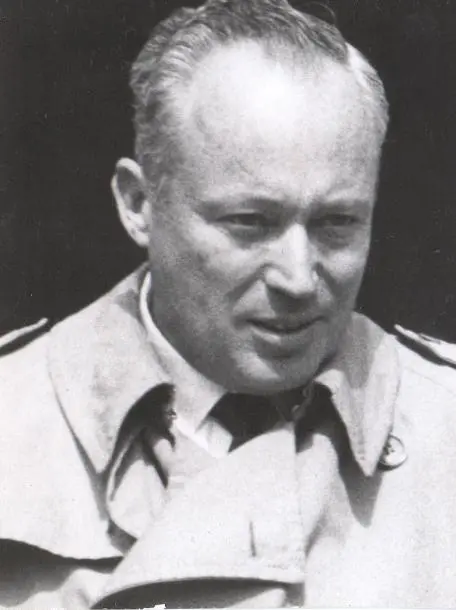
- Название:Leon Uris
- Автор:
- Жанр:
- Год:неизвестен
- ISBN:нет данных
- Рейтинг книги:4 / 5. Голосов: 1
-
Избранное:Добавить в избранное
- Отзывы:
-
Ваша оценка:
Leon Uris: краткое содержание, описание и аннотация
Предлагаем к чтению аннотацию, описание, краткое содержание или предисловие (зависит от того, что написал сам автор книги «Leon Uris»). Если вы не нашли необходимую информацию о книге — напишите в комментариях, мы постараемся отыскать её.
Review
"Not only authentic as history . . . . It is convincing as fiction . . . . The story of a sacrifice that had real meaning and will forever be remembered . . . . A fine and important novel." --
Leon Uris — читать онлайн бесплатно полную книгу (весь текст) целиком
Ниже представлен текст книги, разбитый по страницам. Система сохранения места последней прочитанной страницы, позволяет с удобством читать онлайн бесплатно книгу «Leon Uris», без необходимости каждый раз заново искать на чём Вы остановились. Поставьте закладку, и сможете в любой момент перейти на страницу, на которой закончили чтение.
Интервал:
Закладка:
That was the way Schoenfeld felt too. He was a brilliant lawyer. “No matter how complete the occupation. No matter how strong their authority, they have to base every action on cause. They gave you a cause with the excuse of a quarantine. A determined effort by us, and I am certain we can force them to adhere to the rules of basic decency. Make them negotiate.”
And Paul Bronski spoke. “We have no choice. To whom can we appeal? An outside world who won’t listen to us? Schoenfeld, you are a fool if you think we can negotiate them out of a ghetto. They want it, they’ve ordered it in Berlin, and they’ll have it. There is nothing we can do.”
“Yes there is,” Goldman answered. “We can behave like men.”
Boris Presser, the merchant, who had an art of being anonymous, said nothing except to vote with Paul Bronski and Seidman against making a protest to the Germans.
“It is voted five to three that we protest to Funk.”
A sudden wave of nausea hit Paul. He stumbled to his feet. “We are under no bylaws stating that we can vote. We are merely independent department heads. If you want to go to Funk with a protest, do it in the name of the others—not me.”
Was it an outburst of cowardice? Was it an outburst of self-preservation? Goldman wondered. He wondered if it was not all a useless gesture. There would be fifty more men like Paul Bronski to replace them and fifty more to replace them. What good would a protest do? Bronski was the realist there. The Germans would have what they wanted, regardless.
Emanuel Goldman was very tired. He was seventy-three years old. His children were all married. He lived alone with only his housekeeper.
He had had a good rich life. He had traveled and brought fame to his people and his country. A quirk of fate had put him into a position he did not wish, but he had accepted the position without protest. He had been made the chairman of the Civil Authority because Franz Koenig thought he was a weak man. Goldman was far from weak. He was an idealist who did not know how to back down from the things in which he believed.
He spent the night tying up all the loose ends of his business and took them to his friends, David Zemba of American Relief and Alexander Brandel. He left them knowing he would probably not see them again.
In the morning he reported to Oberführer Alfred Funk. He sat opposite the German very calmly, a picture of self-assurance, with the old flamboyance still in his mannerisms. Funk knew the moment Goldman entered the room, but his icy blue eyes did not betray the thoughts whirling behind them.
“You have drafted the directives?”
The old man shook his head.
Funk registered neither surprise nor anger.
“I won’t put my name on a ghetto order,” Goldman said.
“Do you speak in behalf of the entire board?”
“I suggest you ask them,” he retorted.
“I am curious,” Funk said. “Why are you doing it?”
Goldman smiled. “I am more curious. Why are you doing it?”
It was Funk who broke off the staring contest.
Goldman arose, bowed slightly, sending his long white silken hair awry. “Good day,” he said, and left.
Alfred Funk thought for a moment about the various possibilities, then shrugged to himself and methodically lifted his desk phone. “Find Sturmbannführer Stutze. Have him report to me instantly.”
Journal Entry
Emanuel Goldman was murdered last night. It appears to be the personal handiwork of Sturmbannführer Sieghold Stutze. He was beaten to death with a pipe. His body was dumped on the streets before the Civil Authority building as a clear-cut message.
Boris Presser, whom none of us know, has been appointed Civil Authority chairman and Dr. Paul Bronski given wider powers.
I must now deal with Bronski on all matters concerning the Orphans and Self-Help Society. We cannot expect from Bronski anything near what Goldman did for us.
ALEXANDER BRANDEL
Chapter Seventeen
Journal Entry
IT IS SUMMER OF 1940 already. News from the outside world, our one great source of hope, lists one disaster after another. Norway and Denmark have fallen. The Low Countries and the debacle at Dunkirk. Italy has been dragged into the war. German power is still on the rise, unchecked. France has paid for a decade of appeasement.
Rudolph Schreiker has no more trouble with the Jewish Civil Authority with Boris Presser as chairman. Paul Bronski’s co-operation with the Orphans and Self-Help Society is rigidly guided by German directives.
The poor Jews have had their personal property stripped and carted away. They have no choice but to register for slave labor in one of the dozens of new German factories and enterprises springing up all over the Warsaw area. Dr. Franz Koenig owns three or four factories outright. When short of labor they merely pull people off the streets in roundups and they simply disappear.
The rich are able to do better. There is wild trade in gold and jewelry and false Aryan papers. Everyone in the upper classes scrambles for himself. As for our countrymen, we do get superficial help from certain classes, but the bulk of the Poles show us nothing but apathy.
Any questions about who runs Poland? They are answered. SS Gruppenführer Globocnik in Lublin. It is known that Governor General Hans Frank protested to Hitler about having Jews deported from all over Europe into Poland. He was overruled. They are pouring in by the tens of thousands to the sixteen Jewish “reservations” in that curious master plan in Berlin calling for “resettlement’ of all Jews in occupied countries.
Some of the German and Austrian Jews are pretty haughty. They have been able to rent themselves nice flats and look down upon us poor Polish Jews as inferior. However, the vast majority arrive destitute. Dr. Glazer, who heads the medical staff of the Orphans and Self-Help, fears epidemic conditions and possibly mass starvation if we get another ration cut. Can Dave Zemba’s America Aid keep up with the massive new problems we face?
What is the ultimate aim of the Germans’ master plan? As German victories increase, their fear of world opinion lessens. I hear that the 4B section of the Gestapo on Jewish affairs under Adolf Eichmann on the Kurfürstendamm in Berlin is an empire within an empire.
A.B.
It was getting more dangerous for Andrei each time he traveled outside Warsaw. On his last trip he had a close call when a sudden inspection was pulled at a siding. He slipped the Pole who spotted his fake travel pass a three-hundred-zloty bribe and it worked. He always carried the bills folded and placed in his papers so the inspector could be bought on the spot.
When Emanuel Goldman headed the Jewish Civil Authority, Andrei was issued travel permits under the guise of Orphans and Self-Help business. Now that Paul Bronski was the liaison, he shut off all but legitimate permits.
Andrei had to travel with false papers as a non-Jew. His Kennkarte read “Jan Kowal.” Normal hazards were increased by bands of hoodlums who hung out around the train depots detecting hidden Jews, whom they either extorted or turned over to the Gestapo for rewards.
Andrei’s Aryan appearance and obvious physical prowess had got him through six false-permit trips. How long he could evade capture was a moot question.
He arrived at the central terminal on Jerusalem Boulevard and walked directly toward Mila 19 to report to Alexander Brandel. He had gone only a few blocks when he stopped and watched the surge of humanity pouring into the Jewish quarantine areas. First they had come from other parts of Warsaw, then from the surrounding countryside. Now they were being transported in from outside Poland. Barbed-wire accordions were laid across dozens of streets and placed under guard to define the quarantine districts.
Читать дальшеИнтервал:
Закладка:
Похожие книги на «Leon Uris»
Представляем Вашему вниманию похожие книги на «Leon Uris» списком для выбора. Мы отобрали схожую по названию и смыслу литературу в надежде предоставить читателям больше вариантов отыскать новые, интересные, ещё непрочитанные произведения.










Обсуждение, отзывы о книге «Leon Uris» и просто собственные мнения читателей. Оставьте ваши комментарии, напишите, что Вы думаете о произведении, его смысле или главных героях. Укажите что конкретно понравилось, а что нет, и почему Вы так считаете.