Mila 18 - Leon Uris
Здесь есть возможность читать онлайн «Mila 18 - Leon Uris» весь текст электронной книги совершенно бесплатно (целиком полную версию без сокращений). В некоторых случаях можно слушать аудио, скачать через торрент в формате fb2 и присутствует краткое содержание. Жанр: Старинная литература, на английском языке. Описание произведения, (предисловие) а так же отзывы посетителей доступны на портале библиотеки ЛибКат.
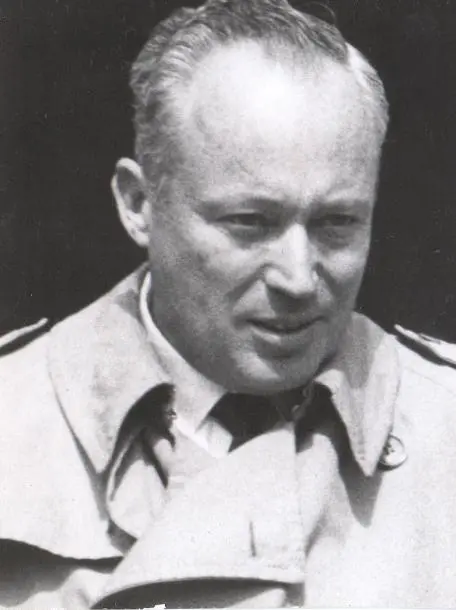
- Название:Leon Uris
- Автор:
- Жанр:
- Год:неизвестен
- ISBN:нет данных
- Рейтинг книги:4 / 5. Голосов: 1
-
Избранное:Добавить в избранное
- Отзывы:
-
Ваша оценка:
Leon Uris: краткое содержание, описание и аннотация
Предлагаем к чтению аннотацию, описание, краткое содержание или предисловие (зависит от того, что написал сам автор книги «Leon Uris»). Если вы не нашли необходимую информацию о книге — напишите в комментариях, мы постараемся отыскать её.
Review
"Not only authentic as history . . . . It is convincing as fiction . . . . The story of a sacrifice that had real meaning and will forever be remembered . . . . A fine and important novel." --
Leon Uris — читать онлайн бесплатно полную книгу (весь текст) целиком
Ниже представлен текст книги, разбитый по страницам. Система сохранения места последней прочитанной страницы, позволяет с удобством читать онлайн бесплатно книгу «Leon Uris», без необходимости каждый раз заново искать на чём Вы остановились. Поставьте закладку, и сможете в любой момент перейти на страницу, на которой закончили чтение.
Интервал:
Закладка:
“I’ll take care of you, dear. ...”
She unbuttoned his shirt and felt his chest and shoulders, and the knots of tension slowly melted away.
“I’ll take care of you,” she whispered.
“Gaby ...”
“Yes, darling ...”
“When you touch me like this it all seems to go far away. Why are you so good to me?”
“Shhh ... shhh ... rest, darling ...”
“Gaby, when will they stop? What do they want from us?”
“Shhh ... shhh ... shhh.”
Chapter Eighteen
Journal Entry
DON’T HIDE YOUR GOLD ring, Mother,
Your chances are quite nil,
That if the Germans do not find it,
Kleperman, the
goniff,
will.
That verse is attributed to Crazy Nathan, a half-wit who roams the ghetto making rhymes and some rather clairvoyant observations. No one knows where Crazy Nathan comes from, who his parents are, or even what his last name is. He wears filthy rags and sleeps in alleyways and cellars. Everyone looks upon him as a harmless goof and treats him with benevolent tolerance. Crazy Nathan shows up at the best cafés in the Jewish districts and, after a few new verses, earns his meal. He prefers fish so he can share it with the dozen or more alley cats who follow him. He has named his cats after the board members of the Jewish Civil Authority.
A.B.
Max Kleperman was a product of the slums. He learned at a tender age that it was easier to live off his fellow man than, God forbid, bend his back in honest labor.
By the age of five Max was a fast-hand artist. He could wander through the smelly, noisy trade in Parysowski Place and rifle wares off the pushcarts of the old bearded Jews with dazzling deftness. By the time he reached seven he was an expert in fencing his stolen goods.
While good Jewish sons like Andrei delivered chickens for their fathers and were robbed and beaten by hoodlums, naughty Jewish sons like Max Kleperman showed a natural aptitude as middlemen. He would purchase all stolen chickens and other goods from the hoodlums and resell them on the Parysowski open market at stunning markups.
By the age of fourteen he had been a guest of the Pawiak Prison three times. Once for theft. Once for extortion. Once for swindling.
By the age of sixteen he went to his natural habitat, to live in the Smocza area populated by the Jewish underworld of Warsaw.
At seventeen he was accepted as a full-fledged member of the Granada Night Club, the most notorious hangout for thugs and gangsters in Poland.
As Max grew older his varied talents expanded. He became the head of a gang of strong-arm men who muscled in on the building-trade area on Grzybowski Square. The square was lined with building-material shops, craftsmen, contractors, teamsters, ironworks, and brick shops. Plying his talent as a middleman with the help of husky friends, Max elbowed his way into the square until his “clearance” became standard for most normal operations. Only the opposition of the labor unions kept him from absolute czardom.
His hand was in every pie from blueprint to finished product. His little finger bore an eight-carat diamond and his cigar ashes dripped on half the building deals made in Warsaw.
Max was at home at the Granada Night Club or even with the goyim underworld in Solec, where he was respected; but strangely, he reached a point in life where he began to wonder what all his hard labor was for. He was, in fact, nothing but a bum.
Max Kleperman did not want to be a bum. He wanted to be as respectable as the “new rich” who promenaded on the Avenue of the Marshals on the Sabbath. He could not muscle himself into their affection, and this annoyed him. So he set about to purchase respectability. First the beautiful old mansion of a nobleman living in France. It did not help. His neighbors looked upon him as a social leper.
Max was determined. He hired an expensive lawyer with a three-word dictum, “Make me respectable.”
The lawyer’s first move was to buy a pair of seats in the Great Tlomatskie Synagogue. Max could parade in during the High Holy Days when the synagogue was filled to capacity and uniformed police held back the mobs of onlookers who “ohed” and “ahed” at the elite.
Max was put on a program of philanthropy. He donated to the poor and he patted orphans on the head and sponsored scholarships for students who never did amount to much.
His work was so good that he was accepted into membership by a half dozen professional societies. Then followed a series of lavish parties.
Soon Max Kleperman was so respectable he fired his lawyer.
To consolidate his hard-won position, Max had to get rid of his ignorant wife, who was constantly a source of embarrassment. She was delighted with the settlement. Max then shopped around through the professional match-makers for a nice homey girl from a good religious family.
One was found for him. Sonia Fischstein filled the bill. Her family was Orthodox, respectable, traditional, and acceptable to a settlement on their daughter. Rabbi Solomon was called in to negotiate the terms.
Rabbi Solomon saw right through Kleperman’s fraud. Max was enraged at the rabbi’s attitude. He even invited the notion of having him rubbed out. Then he learned that Rabbi Solomon was really respectable—in fact, the most respectable man in Jewish Warsaw. He set out to cultivate the great man.
Rabbi Solomon was not fooled. He considered everything. Max would never change, but his quest for respectability would keep him in check and there was some hope that a little of the decency he was exposing himself to would rub off on him. Besides, Sonia Fischstein was quickly running out of chances to marry. So he agreed to the match.
Rabbi Solomon became the earthly custodian of Kleperman’s soul. Max realized under his puffy jowls that his one link with the Maker was through the rabbi.
When the Germans invaded Poland, Max was sad because no one liked Germans. However, he was a realistic man. His past made him perfect for the type of business that was flourishing—black market, smuggling, money exchanging. In fact, opportunities were never so great. Moreover, the Germans could be dealt with. Before the smoke of battle had cleared, Max Kleperman got in touch with Dr. Franz Koenig and impressed him that his organization would be indispensable to the Germans.
At that time, Dr. Koenig had the problem of opening brothels for German soldiers, a venture in which the Jewish Civil Authority had refused to co-operate. Eager to prove his own mettle to Rudolph Schreiker, Dr. Koenig gave Max his first assignment, the rounding up of a hundred whores. Max had pimped in his younger days but not since he became respectable. Nevertheless, his contacts in the Solec were still active and he came through for Koenig in two days.
Dr. Koenig knew he had a real ally.
With a license to operate, Max Kleperman gathered around him the most immoral gang of chiselers in Warsaw. His tentacles spread everywhere.
When the Germans introduced slave labor, Max had at long last broken his enemy, the labor unions. He grabbed firm control of the building-trade industry and from there poached on dozens of legitimate businesses. With the strong arm of the Germans behind him, it became realistic to do business with Max and his partners.
The main windfall was the sale of protection. If a father or son was picked up off the street in a German roundup and taken to the slave-labor camps outside Warsaw, Kleperman could arrange a release for a price.
It was in this area that he posed as a benefactor of the people. When they came to him for a release of a relative, Max treated them with great sympathy, all the while appraising them for how much he could shake them down. He would tell them it took a lot of money to make a fix with the Germans. There is honor among thieves. Max refused compensation until he arranged the release. Dr. Koenig, Sieghold Stutze, and Rudolph Schreiker had also hit a windfall in kickbacks.
Читать дальшеИнтервал:
Закладка:
Похожие книги на «Leon Uris»
Представляем Вашему вниманию похожие книги на «Leon Uris» списком для выбора. Мы отобрали схожую по названию и смыслу литературу в надежде предоставить читателям больше вариантов отыскать новые, интересные, ещё непрочитанные произведения.











Обсуждение, отзывы о книге «Leon Uris» и просто собственные мнения читателей. Оставьте ваши комментарии, напишите, что Вы думаете о произведении, его смысле или главных героях. Укажите что конкретно понравилось, а что нет, и почему Вы так считаете.