Alexander Theroux - Darconville’s Cat
Здесь есть возможность читать онлайн «Alexander Theroux - Darconville’s Cat» весь текст электронной книги совершенно бесплатно (целиком полную версию без сокращений). В некоторых случаях можно слушать аудио, скачать через торрент в формате fb2 и присутствует краткое содержание. Год выпуска: 1996, Издательство: Holt Paperbacks, Жанр: Современная проза, на английском языке. Описание произведения, (предисловие) а так же отзывы посетителей доступны на портале библиотеки ЛибКат.
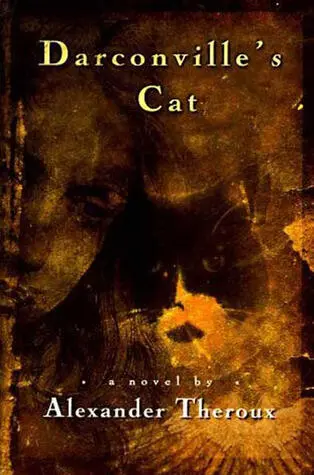
- Название:Darconville’s Cat
- Автор:
- Издательство:Holt Paperbacks
- Жанр:
- Год:1996
- ISBN:нет данных
- Рейтинг книги:3 / 5. Голосов: 2
-
Избранное:Добавить в избранное
- Отзывы:
-
Ваша оценка:
Darconville’s Cat: краткое содержание, описание и аннотация
Предлагаем к чтению аннотацию, описание, краткое содержание или предисловие (зависит от того, что написал сам автор книги «Darconville’s Cat»). Если вы не нашли необходимую информацию о книге — напишите в комментариях, мы постараемся отыскать её.
Darconville's Cat Its chapters embody a multiplicity of narrative forms, including a diary, a formal oration, an abecedarium, a sermon, a litany, a blank-verse play, poems, essays, parodies, and fables. It is an explosion of vocabulary, rich with comic invention and dark with infernal imagination.
Alexander Theroux restores words to life, invents others, liberates a language too long polluted by mutters and mumbles, anti-logic, and the inexact lunacies of the modern world where the possibility of communication itself is in question. An elegantly executed jailbreak from the ordinary,
is excessive; funny; uncompromising; a powerful epic, coming out of a tradition, yet contemporary, of both the sacred and the profane.
Darconville’s Cat — читать онлайн бесплатно полную книгу (весь текст) целиком
Ниже представлен текст книги, разбитый по страницам. Система сохранения места последней прочитанной страницы, позволяет с удобством читать онлайн бесплатно книгу «Darconville’s Cat», без необходимости каждый раз заново искать на чём Вы остановились. Поставьте закладку, и сможете в любой момент перейти на страницу, на которой закончили чтение.
Интервал:
Закладка:
“It frightens me just to say the word. Look,” he waved his hand, simultaneously downshifting to urge his old car up a hill, “trees wormed out, sloked ponds, ravaged groves and dark and forbidding swales. Do you realize that the real name of Treasure Island was Skeleton Island? Nature is at constant war — something fails as something prevails. And then half of the species that have survived the long ceaseless stupid struggle are parasitic in their habits, lower and insentient forms of life feasting on higher sentient forms; we find teeth and talons whetted for slaughter, hooks and suckers molded for torment, claws and cusps sculptured all for death — everywhere a reign of terror, hunger, and sickness, with oozing blood and quivering limbs, with gasping breath and eyes of innocence that dimly close in agonies of brutal torture. Take these woods. I never drive this road when I don’t think of the deeds of hellish cruelty, the secret wickedness, that goes on in there, year in, year out, and none the wiser. I mean, think of all the men whose bones have been bleached by the relentless blue of that cynically smiling sky. How manifold the dooms of earth! How singular that of the sea! A burst of gunfire — have you ever thought of this? — has all the colors of the rainbow. Nature? It’s grotesque, with confusion its intent and accident its specialty, a constant reminder — remember, Eve bore no children in Paradise — of what, having once, we had and yet having had we lost.” He paused. “There, lean back. Get the benefit. Are you all right?”
Darconville merely closed his eyes.
“It’s in the tilt of the planet,” continued Dr. Dodypol, a man with one of those special natures whose inner processes take place in that holy land of sensibility me border of which so often touches the marches of the kingdom of insanity. He was talking to himself. He didn’t mind. He was worried about his friend. “Figure, with no tilt, there’d be no seasons: no seasons, so no migrations, no color lines, no language differential, no land grabbing — no war!” He shrugged. “It’s all in the books. I mean, we’re all arse over tip, aren’t we? Swinish? Mechanically and sinfully dogged? Knitting guilty wool into the night?” Suddenly, Dr. Dodypol began waving crazily to the countryside. “Hello, Hobbes!” he shouted through the window. “Hello, La Rochefoucauld! Hello, Mandeville, fair grow the lilies on the river-bank? Hello, Vauvenargues! Hello, Schopenhauer! Christ, Darconville, they all said it. Jansen, Bayle, Buffon, all of them. Emeric de Crucé? St. Augustine? Dr. Foster of Gloster? The whole shooting match said it. I myself said it.
Nothing in nature is equal quite:
Jaws don’t match in a single bite.
My line. Doggerel, no doubt. Still, I suppose, it shows imagination of some sort.
“No, there’s no route back to the Garden of Eden, Darconville, except by the imagination. That’s why I believe in you ”—Darconville felt Dodypol’s hand steal into his to give it a reassuring shake—”and why I set off for Charlottesville the very minute you called. I may be speaking out of turn, but you weren’t the only one she let down, my friend, not by half. It wasn’t as long as two or three weeks ago that Thelma Trappe was asking the very same question: ‘Why didn’t Isabel ever visit me?’ She doted on her, for some reason. You’d know. Parents, wasn’t there something peculiar that way with both of them?” He shook his head and sighed. “A goosegirl ermined is a goosegirl still.” He touched his friend’s knee. “It’s too late now anyway, I should say.” Dodypol glanced over at Darconville and picked up speed. “Point taken?”
This further recognition of Isabel Rawsthorne’s disregard compounded his hurt, and yet, strangely, as one report followed another in such detestable proportion, it only seemed a cruel attempt by spiteful and fathomless rumor to effect a revision of her which was sham and not her at all; one day trying to lynch four years? It was not going to happen.
“I don’t think you understand what I’m talking about,” said Dr. Dodypol, staring straight on.
Darconville looked up.
“Last night Miss Trappe committed suicide.”
It was late afternoon when they pulled into Quinsyburg, with the last red streaks fading away in the western sky. Darconville never bothered to ask himself why he had returned, although he began to feel he found the recollection of her to be more pleasing than her presence; something he remembered of her seemed to be missing when he’d encountered her again, not only yesterday, he reflected, but over the last months back to June. But here he was in this bizarre world, again. Perhaps he hoped to experience again the feelings associated with a happiness he’d known there in time past? It was possible, but he began to realize, passing the countryside which bore so clearly the mark of the waning year, that the nature of time is loss, to be reviewed in memory, perhaps, but never to be regained, and suddenly he couldn’t put himself to review those memories that conspired for attention on every street, at every corner, for the past, once taken to be so immutable, had instantly been transmogrified by the present to the point of disfigurement — and what memory could now be singled out that didn’t lead in a single inflexible line straight toward the dissolution of it? The exertions of trying to probe into the purposeless series of tragedies so weighed on him that, to escape them and to avoid the bald amiabilities and questions which were sure to follow hard upon meeting anybody from the college, he asked Dodypol to put him up in a room at Ms house, where, after writing a swift retaliatory letter to Gilbert van der Slang — declaring with what industry he would fight for Isabel — he fell exhausted from thinking onto the bed and slept.
Later that night, there wasn’t a sound when Dr. Dodypol peeked into the bedroom. Darconville was so still he might have been dead, but as his friend was concerned that he hadn’t eaten for days he touched him awake. It was too late, whispered Dodypol, as Darconville immediately rose to telephone Isabel — but when he cried out in agony, Dodypol said no, no, he only meant it was midnight.
It was intolerable, this waking into facts, and Dodypol suggested a walk. The night air was heavy with the odors of fall, with rifts in the racing clouds that showed watery patches of color in the dark sky. Darconville mailed his letter, and they set off, Darconville walking swiftly, Dodypol trying to keep pace with his companion who was speaking now with a euphoria which revealed itself in unjustified optimism and grandiose plans, a compulsive chatter switching from one subject to another so rapidly that his listener couldn’t follow, and then slowing down in spells of ominous reflection. He would halt, deliberating. Then he would suffer a kind of hypomania, his thought processes, like film, running along at incredible speed: did she love him, not want marriage, or not love me? Or love me, fear marriage, so love him? Perhaps hate me, love him, and so want marriage? Did she love one more as she loved another less? If she loved me, he wondered, how could she love him? Then did she ever love me if she always knew him? If he didn’t love her, would she then have loved me still?
Half-truth is a despot. By entering into the arena of argument and counterargument, of technical feasibility and tactics, by accepting the presumption of the legitimacy of debate, Darconville felt he was only foundering more.
But why had she agreed to marry him? When exactly did she meet this other person and with what disposition informed by what cause? How was it he had never once seen her wedding dress? And what was behind those ridiculous errors in the wedding invitations? The paucity of her visits, when she had the only car, last summer? The months of unbearable silence when she could have simply told him the truth? But what was the truth? Why, for instance, had she bothered to be baptized? Engaged? And why that recent telegram expressing her love? Elle m’aime, un peu, beaucoup, passionnément, à la folie, pas du tout ? It was impossible. The torch casts no light upon its base.
Читать дальшеИнтервал:
Закладка:
Похожие книги на «Darconville’s Cat»
Представляем Вашему вниманию похожие книги на «Darconville’s Cat» списком для выбора. Мы отобрали схожую по названию и смыслу литературу в надежде предоставить читателям больше вариантов отыскать новые, интересные, ещё непрочитанные произведения.


Обсуждение, отзывы о книге «Darconville’s Cat» и просто собственные мнения читателей. Оставьте ваши комментарии, напишите, что Вы думаете о произведении, его смысле или главных героях. Укажите что конкретно понравилось, а что нет, и почему Вы так считаете.