Alexander Theroux - Darconville’s Cat
Здесь есть возможность читать онлайн «Alexander Theroux - Darconville’s Cat» весь текст электронной книги совершенно бесплатно (целиком полную версию без сокращений). В некоторых случаях можно слушать аудио, скачать через торрент в формате fb2 и присутствует краткое содержание. Год выпуска: 1996, Издательство: Holt Paperbacks, Жанр: Современная проза, на английском языке. Описание произведения, (предисловие) а так же отзывы посетителей доступны на портале библиотеки ЛибКат.
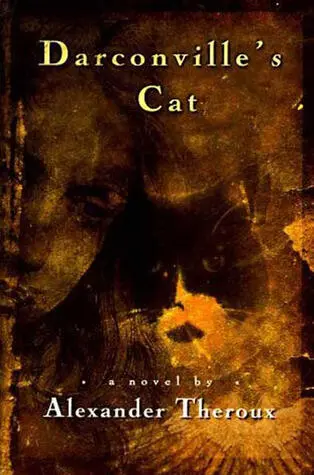
- Название:Darconville’s Cat
- Автор:
- Издательство:Holt Paperbacks
- Жанр:
- Год:1996
- ISBN:нет данных
- Рейтинг книги:3 / 5. Голосов: 2
-
Избранное:Добавить в избранное
- Отзывы:
-
Ваша оценка:
Darconville’s Cat: краткое содержание, описание и аннотация
Предлагаем к чтению аннотацию, описание, краткое содержание или предисловие (зависит от того, что написал сам автор книги «Darconville’s Cat»). Если вы не нашли необходимую информацию о книге — напишите в комментариях, мы постараемся отыскать её.
Darconville's Cat Its chapters embody a multiplicity of narrative forms, including a diary, a formal oration, an abecedarium, a sermon, a litany, a blank-verse play, poems, essays, parodies, and fables. It is an explosion of vocabulary, rich with comic invention and dark with infernal imagination.
Alexander Theroux restores words to life, invents others, liberates a language too long polluted by mutters and mumbles, anti-logic, and the inexact lunacies of the modern world where the possibility of communication itself is in question. An elegantly executed jailbreak from the ordinary,
is excessive; funny; uncompromising; a powerful epic, coming out of a tradition, yet contemporary, of both the sacred and the profane.
Darconville’s Cat — читать онлайн бесплатно полную книгу (весь текст) целиком
Ниже представлен текст книги, разбитый по страницам. Система сохранения места последней прочитанной страницы, позволяет с удобством читать онлайн бесплатно книгу «Darconville’s Cat», без необходимости каждый раз заново искать на чём Вы остановились. Поставьте закладку, и сможете в любой момент перейти на страницу, на которой закончили чтение.
Интервал:
Закладка:
They circled around the outer side of Quinsy College, walking down the empty streets in silence. The copses moaned and swung in the rising wind, and it wasn’t long before, up on that small hill overlooking the train tracks, Darconville stopped in front of the dead dark bulk of a house outlined against the sky and looking ghostly and barren under the leafless trees that stretched out their black fingers over its roof. It was Miss Trappe’s place. They paused by her garden patch where in the crooked drills lay the brown and lifelessly twisted stalks of her plants. Without a word, despite Dodypol’s pleas, Darconville was up on the porch and inside. He wanted to say goodbye.
The rooms were plain, with a stillness in them that bespoke the probity and simplicity of its lost tenant: an old bureau, faded rag rugs, and bargain-net curtains. There was always a painful temperance about the place, but now, in a way, it seemed overfurnished and musty with the absence of human life. Darconville clicked the switch: the electricity had been shut off. He lighted a candle. There in the back room was a tiny bed next to which stood a table holding a vaporizer, a sinus mask, and a snore-ball. A print of Latoney’s Funeral hung on the wall, and by either side of a window were shelves of books, most of which held leaves between the pages, or little round rings of dried larkspur blossoms pressed within. In the cramped kitchen quarters were rows of empty bottles, pincushions, tidies, and a pair of grape-scissors hooked to a little chart detailing frost dates and shrinkage ranges. The doorknobs were woolen with dust. He opened a closet: a bag of inactive shoes and piles of huge hats. And there on a bureau was a photograph of Isabel he had given her several years ago; by it lay the cameo — uncollected, unseen — she had promised the girl who had never come by, who had not kept faith, who perhaps in concentrating on trying to remember instead of remembering forgot. His sadness, as was often the case with Darconville, made him feel suddenly cold.
The last days of Miss Trappe, according to Dr. Dodypol, had been as lonely as ever. He said she simply went wandering about town in larger and larger hats meeting no one and stopping in the street only to look up at the sun and repeat, “Let me suffer, just keep shining! Let me suffer, just keep shining!” And then it happened. As no one had seen her for weeks, eventually they checked. They apparently found her, her old-fashioned nightgown with its high neck covering her slight frame with decent circumspection, buttoned to the full and sitting on a chair in a flexion of resignation, her skin in rigor and her grey lips buttered with light flecks; one of her thrawn hands was clutching a straight razor while the other, nearly severed, rested on the open Bible in her lap where a twiglike finger was still pointing to the text of Ephesians 6:12—
For our contention is not with the flesh and blood, but with dominion and authority, with the world-ruling powers of this dark age, with the spirit of evil in things heavenly.
The shadows, as he blew out the candle, closed in upon Darconville like a caress that killed. That night he crawled into a bed that seemed hot-forged in the furnaces of the lost angels. Eternity went by in an instant, and a second lasted forever. He looked for faces and saw masks. He sought nepenthe and found nitriol. The universe expanded and his heart contracted. Light utterly disappeared. And then all the heavens crashed headlong into hell, displacing sheets of flame that burnt him down into the unconsciousness of sleep for three whole days. It was time completely lost.
Darconville, upon awakening, found a revelation in the very act: time didn’t stop; it continued; and so what he lost, mightn’t then another? Stupor, which benignant fate sends by the side of extreme pain, conditioned him — and possibly deceived — but it cut through the hesitation of reason: it let him act. Defensively, his conception of self became consciously enormous. How? Why? To borrow some time from a part of the eternity to which it tends? To convince desperation, perhaps, that love is its reward? It was hard to say. But he became inspired with the absolute necessity for instant action. Miss Trappe was only Isabel who hadn’t been loved! He was no longer restrained by any sense whatever of modesty or decorum. He knew it; in one way, he needed it; and he was suddenly wakened to deal with the distress he could once but now no longer not deal with, for a blast blown to the hounds is no less a blast blown to the fox. He prepared for violent activity, to snatch out of the formal malfeasance that had taken place behind him what in refusing to see as treachery committed he could only see as innocence withheld.
It seemed a monomania, the fact becoming almost more important than its significance. He loved her! And all the gods, aerial and aquatic, would never prevent him from loving her! He rose quickly and once again asked Dr. Dodypol to drive him — this time, back to Fawx’s Mt. — and so away they went, racing once more up the road to Charlottesville and over those ragged hills where no phenomena, however uncanny, however evil, could now prevent him from reaching out to the one he loved. The morning dew, before settling, left rainbows shimmering in the tender light within various glades they passed. Dr. Dodypol, who’d have none of it, explained them away as nothing but concentric arcs with the common center on the line connecting the eye of the observer and the light source. Dr. Dodypol said, “A person cannot really stand at the rainbow’s end. Not at all.” It was a strange remark, perhaps, but no stranger a remark than the fact that no one else in the car would yet believe it.
They banked the wooden bridge and turned onto the road leading into the Blue Ridge mountains, but when they got to the Shiftlett house they found it empty — then Darconville remembered Isabel’s new lodgings down the road. There they proceeded, with one voice hushed and one spirit subdued, until Dr. Dodypol at some distance from the Watsons’ house stopped the car.
There was Isabel. She was wearing sneakers, jeans, and a green-and-white striped jersey and was carrying some articles into the small back house there when she happened to look up: she gave a violent start. Darconville crossed the lawn. He looked ghastly. From his gaunt wasted face his eyes showed the brightness of fever, and when he spoke to her his voice was crackling and spasmodic. He stepped to her; she bridled — the only time he had ever seen that verb. It was a deplorable spectacle, for she clearly wished he were a thousand miles away and conveyed it in her cold attendance to the few duties she refused to set aside (throwing unusables into a wastebasket: old letters, school notebooks, a carved Russian fife, etc.) while studiedly moving around him and, with a civility more deadly than violence, answering his questions with a poisonous gentleness of speech. There was an intensity of hatred in her white, set face. She took a handful of books — on nautical subjects, he saw — into the small house; he went to follow; she abruptly stepped out. She flung back her hair. What did he want? No, she would tell him nothing about Gilbert van der Slang! Darconville mentioned he’d written to him. Isabel pushed her face at him like a dark, blue thumbtack and said if he ever dared hurt him she’d—! The muscles of her mouth contracted, making her ugly. She lost her breath for a moment, but then self-contained and inflexible once again she showed the ethereal other-worldly face of the fanatic whose distant thoughts become the more remote as they become the more intransigent and replied nothing, did he hear, nothing was going to change! Let him do his worst, it was too late.
Her face lost its attractiveness in a smile of triumph that he saw no love, no pleading, no words, no peine forte et dure would ever change, and, although he loved her, a condition that might formerly have absolved in her personality whatever lessened it, he suddenly saw himself in the light of her aversion and actually began to share it. His lungs began to ache in the apprehension. An explanation, asked Darconville, would she give him that? For an instant, a convincing animation came into her countenance that prevented him from realizing how far away her thoughts had flown. He tried to take her arm, but, groaning, she waved his hand away — not touching him. She continued to regard him, beginning to feel that the moment was not only tense now but possibly dangerous. Yes, she answered, if he left she would send him an explanation. But, she added in a voice like wind from an iceberg, he must go! How extremes call to each other! It was flame and ice face to face. She went to step into the house. Darconville intercepted her. He took her waist, asking for one more minute, when Isabel tore away from him with cold cutting contempt, her eyes like a glass snake’s.
Читать дальшеИнтервал:
Закладка:
Похожие книги на «Darconville’s Cat»
Представляем Вашему вниманию похожие книги на «Darconville’s Cat» списком для выбора. Мы отобрали схожую по названию и смыслу литературу в надежде предоставить читателям больше вариантов отыскать новые, интересные, ещё непрочитанные произведения.











Обсуждение, отзывы о книге «Darconville’s Cat» и просто собственные мнения читателей. Оставьте ваши комментарии, напишите, что Вы думаете о произведении, его смысле или главных героях. Укажите что конкретно понравилось, а что нет, и почему Вы так считаете.