Alexander Theroux - Darconville’s Cat
Здесь есть возможность читать онлайн «Alexander Theroux - Darconville’s Cat» весь текст электронной книги совершенно бесплатно (целиком полную версию без сокращений). В некоторых случаях можно слушать аудио, скачать через торрент в формате fb2 и присутствует краткое содержание. Год выпуска: 1996, Издательство: Holt Paperbacks, Жанр: Современная проза, на английском языке. Описание произведения, (предисловие) а так же отзывы посетителей доступны на портале библиотеки ЛибКат.
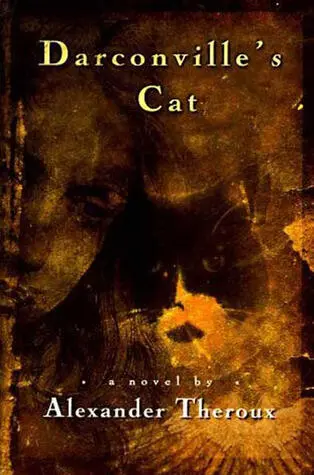
- Название:Darconville’s Cat
- Автор:
- Издательство:Holt Paperbacks
- Жанр:
- Год:1996
- ISBN:нет данных
- Рейтинг книги:3 / 5. Голосов: 2
-
Избранное:Добавить в избранное
- Отзывы:
-
Ваша оценка:
Darconville’s Cat: краткое содержание, описание и аннотация
Предлагаем к чтению аннотацию, описание, краткое содержание или предисловие (зависит от того, что написал сам автор книги «Darconville’s Cat»). Если вы не нашли необходимую информацию о книге — напишите в комментариях, мы постараемся отыскать её.
Darconville's Cat Its chapters embody a multiplicity of narrative forms, including a diary, a formal oration, an abecedarium, a sermon, a litany, a blank-verse play, poems, essays, parodies, and fables. It is an explosion of vocabulary, rich with comic invention and dark with infernal imagination.
Alexander Theroux restores words to life, invents others, liberates a language too long polluted by mutters and mumbles, anti-logic, and the inexact lunacies of the modern world where the possibility of communication itself is in question. An elegantly executed jailbreak from the ordinary,
is excessive; funny; uncompromising; a powerful epic, coming out of a tradition, yet contemporary, of both the sacred and the profane.
Darconville’s Cat — читать онлайн бесплатно полную книгу (весь текст) целиком
Ниже представлен текст книги, разбитый по страницам. Система сохранения места последней прочитанной страницы, позволяет с удобством читать онлайн бесплатно книгу «Darconville’s Cat», без необходимости каждый раз заново искать на чём Вы остановились. Поставьте закладку, и сможете в любой момент перейти на страницу, на которой закончили чтение.
Интервал:
Закладка:
In an instant, Darconville was suddenly standing in her room — and then desperately shaking her with pleas repeated to convince her of her mistake. Please, he begged. Please, he ordered: did she really love someone else? Wasn’t it all a mistake? Was she going to marry him? Had he touched her? Did she believe that one could love two people at the same time? Could he still hope? Had she ever worked on a wedding dress? Would she let him see it? Could he stay with her, talk to her, just be with her?
“ No, no, no ,” cried Isabel, pounding the bed, “ no, no, no, no !” And in spite of the fact that blind belief in one thing is often founded upon disbelief in another, Darconville at last could see in her face how much an object of detestation he had become for her, how constrained and oppressed he made her. She fell sobbing onto the blanket, trying to convince him now she wasn’t worth it, while of course, in spite of this piece of formal theater, believing she was, and when she looked up — for he’d grown silent from humiliation — her eyes were dry. She stood up and told him she would drive him to the airport. That was it .
“You said you’d be understanding,” said Isabel, wheeling her car back out of the driveway, stopping, and screeching forward in a lurch.
“Don’t call me you,” said Darconville.
She stared straight ahead, her eyes small and malignant now like bullets, close-set, with that protuberant root-vegetable look of her mother’s.
“Sometimes,” she said, “I think you’re the worst person in the world.”
“I doubt it,” he replied. “That would be too much of a coincidence.”
The fingers of her left hand spread on the wheel and tightened into a fist. Her eyes glittered cruelly.
“No,” interjected Darconville, fear vibrating in his voice, “I didn’t mean that. I’m sorry. I’m so sorry. I love you more than my own life, more than life itself. Please listen to me?” The car careened out of Fawx’s Mt. and turned north by way of the backroad. “But you don’t want to listen, do you? You want to be safe,” he said, “the bourgeois need to get through life with the least unpleasantness, is that it? That’s it, isn’t it? Even though you know you love me?” He turned to her, but there was a solitude within her now inaccessible to praise or blame, affection or accusation, a justice of her own devising completely beyond appeal.
“Please don’t. Don’t do this,” he implored, rocking forward to claim her attention. He fell back. “How could you have just met someone else, Isabel? I should like to know how, you know? Even if you convinced me, I wouldn’t believe it.” Isabel kept her eyes trained to the road. “Do you think I can live? Seriously. I will not live. I have been given another man’s life and cannot use it. I cannot live. Speak to me!”
Darconville was frustratedly clasping and unclasping his hands. “What can I say? What can I do? There’s no time left!”
They were speeding now.
“I’ve been trying to call you for a month, you, your parents, that nightmare down the road named Mrs. van der Slang, and where were you? Betraying me?” cried Darconville, his tear-blinded eyes blurring the landscape. “You said you loved me. Was that an explanation? An excuse? I think you should offer that bit of logic to the Museum of Human Imbecility.” He paused. “Look, I know love can be confusing. I know that. But it doesn’t matter, why should—”
Isabel banked a corner, swiftly, rushing the car dangerously off a shoulder and quickly into the road. Darconville saw how recklessly determined she was to be free of him.
“I should denounce you to the world, you”—he almost choked on the emotional throat-note—”you hypocrite.” He turned to her. “Your adrift-in-a-world-I-never-made pose disgusts me.”
One of Isabel’s eyebrows rose humorously, twitched a little, but, always, she gazed ahead with an expression of both relief and satisfaction on her face, and she seemed more like a professor of the equivocal sciences than anything else, showing an impassive, almost contemptuous air as she listened to the last of his desperate entreaties with an absent-minded smile.
“Isabel, forgive me,” cried Darconville, “I–I love you so much, I love you so much!” They turned into the airport road. He reached over and pulled her arm. “Do you believe me? When I say that, do you believe me?” He gripped her arm. She looked at him. Had he gone mad? He was praying, but it was a hopeless sort of thing — words spoken but without any sense or understanding. “Tell me, tell me you love me!” But they had reached the front of the terminal and stopped. Isabel, dreading this moment, wasn’t sure what to do; she didn’t move. He fumbled for her hand and took the white, spatulate, always slightly cold fingers. He waited in agony, but he had no more words, and overcome with the pity of it all, he kissed her with what almost seemed a question — one she alone, in returning, might have answered. But she did nothing. They false and fearful did their hands undo. And he was out of the car.
Isabel turned her head away, paused a moment, and drove away. With his throat constricted, Darconville stood staring after her into the blank and pitiless morning. The loss of love loured overhead. He was abandoned.
LXXIV The Empty Egg
The nothing experienced in anguish reveals eventually also the being.
— BARSANAPHIUS, the Recluse of GazaTHERE WAS A DESERT PLACE in Isabel, he saw for the first time, an emptiness smaller than Nauru and more lethal than the steady application of artifice or fraud: a cimmeria, a coomb, a cess. It sat below intuition in a theoretical sphere of fundamental brainlessness where nothing ever grew, ever existed, was ever felt, and no sally of genius or wit could be conveyed to the mind of whatever by it might be understood for its fatality lay precisely in its vacancy and ghastly implenitude. When she spoke from there or listened from there, she could agree with anything or not, say anything or deny it — it didn’t matter. Its residues of ashes and cinders had nothing in common with fire but lay slaglike in the deep of its pure apophatica, a not-something excommunicating both pleasure and pain from the zone of its utter barrenness. No awe gripped her there, and no grief — no emotion, no concern, no plaints, no wheedlings, no needlings; it had no reticule of tricks; it devoured every variable by its own abiogenetic instincts and lived on the unlimited possibilities of inconstancy and contradiction. It was a deathmouth, mortally neuter, with killing its ceremonial, mean-inglessness its motive. It was an empty egg. And there he was betrayed.
LXXV Lacerations
Nature is negative because it negates the Idea.
— FRIEDRICH HEGELTHE QUINSYBURG ROAD always left one with the distinct impression he had taken the wrong direction, a suspicion, even for habitual travelers, impossible to allay. A feeling of uneasiness sharpened at every curve of that lonely tract, a sense of oppression in no way commuted along the straight stretches that ran between russet slopes patched with twisted pines and stunted oaks into even wilder and bleaker downlands. The absolute stillness always seemed a preliminary, a shadowy presentiment, to some perilous undertaking of which one was unaware, and nothing perhaps better corroborated the threat than at that one point down the road where, blundering up in a kind of meretricious finale, was the wooden sign of the town which, instead of welcoming you, seemed to warn you off.
“Nature,” sighed Dr. Dodypol, peering out of his car window, “you know — to me, it’s evil.” He turned to Darconville, whose head lay fallen back, his eyes open but lifeless. It almost broke Dodypol’s heart.
Читать дальшеИнтервал:
Закладка:
Похожие книги на «Darconville’s Cat»
Представляем Вашему вниманию похожие книги на «Darconville’s Cat» списком для выбора. Мы отобрали схожую по названию и смыслу литературу в надежде предоставить читателям больше вариантов отыскать новые, интересные, ещё непрочитанные произведения.



Обсуждение, отзывы о книге «Darconville’s Cat» и просто собственные мнения читателей. Оставьте ваши комментарии, напишите, что Вы думаете о произведении, его смысле или главных героях. Укажите что конкретно понравилось, а что нет, и почему Вы так считаете.