Alexander Theroux - Darconville’s Cat
Здесь есть возможность читать онлайн «Alexander Theroux - Darconville’s Cat» весь текст электронной книги совершенно бесплатно (целиком полную версию без сокращений). В некоторых случаях можно слушать аудио, скачать через торрент в формате fb2 и присутствует краткое содержание. Год выпуска: 1996, Издательство: Holt Paperbacks, Жанр: Современная проза, на английском языке. Описание произведения, (предисловие) а так же отзывы посетителей доступны на портале библиотеки ЛибКат.
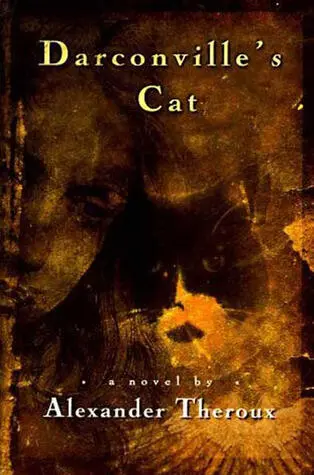
- Название:Darconville’s Cat
- Автор:
- Издательство:Holt Paperbacks
- Жанр:
- Год:1996
- ISBN:нет данных
- Рейтинг книги:3 / 5. Голосов: 2
-
Избранное:Добавить в избранное
- Отзывы:
-
Ваша оценка:
Darconville’s Cat: краткое содержание, описание и аннотация
Предлагаем к чтению аннотацию, описание, краткое содержание или предисловие (зависит от того, что написал сам автор книги «Darconville’s Cat»). Если вы не нашли необходимую информацию о книге — напишите в комментариях, мы постараемся отыскать её.
Darconville's Cat Its chapters embody a multiplicity of narrative forms, including a diary, a formal oration, an abecedarium, a sermon, a litany, a blank-verse play, poems, essays, parodies, and fables. It is an explosion of vocabulary, rich with comic invention and dark with infernal imagination.
Alexander Theroux restores words to life, invents others, liberates a language too long polluted by mutters and mumbles, anti-logic, and the inexact lunacies of the modern world where the possibility of communication itself is in question. An elegantly executed jailbreak from the ordinary,
is excessive; funny; uncompromising; a powerful epic, coming out of a tradition, yet contemporary, of both the sacred and the profane.
Darconville’s Cat — читать онлайн бесплатно полную книгу (весь текст) целиком
Ниже представлен текст книги, разбитый по страницам. Система сохранения места последней прочитанной страницы, позволяет с удобством читать онлайн бесплатно книгу «Darconville’s Cat», без необходимости каждый раз заново искать на чём Вы остановились. Поставьте закладку, и сможете в любой момент перейти на страницу, на которой закончили чтение.
Интервал:
Закладка:
She paused. “Don’t just look at me, please? It doesn’t help.” She waited, then shrugged exasperatedly and continued speaking with an increasing urge of mounting indiscretion and the kind of monotony in her voice which assumed that he, like herself, had rehearsed it all before. The tongue and the taste had memorized it for her.
“We dated a few times, not much. Then he went away to school,” she smiled. “The Naval Academy? You know? I didn’t break off with Govert, and, although I always liked his brother more, I tried to put him out of my mind. See? I had to, to survive.” She was not speaking to him, she was speaking to people who were not there, approving people, people who understood her and liked her and would believe her. “Summers, he returned to visit with his family at Fawx’s Mt., I knew that, but even though it turned out that he secretly cared, he intentionally stayed away from me,” she said with an admiring rale in her voice, “because of — well, us. He didn’t want to interfere, you could say,” she beamed, “he’s like that. And neither did his mother who didn’t know how I felt anyway, though I’m sure you think she did, don’t you?” Knowing herself to be a traitor, she read the accusation in Darconville’s eyes. “Well, you wanted to hear this. You wanted to know .”
A horrible noise, like that of something breaking, issued from Darconville’s mouth. It flashed suddenly into his head: My God, theologians know something they can’t tell us— Adam and Eve chose knowledge over life ! And instantly he knew where, in those nervous halts in Fawx’s Mt., she’d been staring all those years!
“Last summer, he told me later, he’d built a wall between us. Me,” she clarified, “and him. I’d always sensed that, I think. Somehow”— Isabel’s eyes flowered into a smile—”you just know. Anyway, I saw him around Labor Day, he was in uniform, when I was helping out at the farm—” She stopped short. “I see what you’re thinking, that all this had been planned way back during the summer and that like my real father I have no conscience! Well, it wasn’t in July! Or June!” A tragic contralto note came into her voice. “How could it have been those months,” she asked illogically, “I spent them trying to make my wedding dress! Oh, it doesn’t matter now, anyway. The point is, he could understand my doubts like no one else ever could, including—”
Darconville closed his eyes.
It all seemed like some resistless, inexorable evil, with the contrast in Isabel of what she once was as pronounced as the front of a portrait is from the back. Darconville’s skin was stone cold as she continued her explanation in a tone of concentrated resolution.
“He told me about a friend of his who’d just recently gotten married but was miserable. Miserable! Don’t you see, inevitably I had doubts about us? We talked. We talked a lot, about simple things: in plain language, no big visions, no big words — just walking around the farm, I don’t know, under the trees, with a few little animals around.” She lowered her head to contain a smile. “I’m just a country girl, I guess.” An expression of foolish diffidence and utter relief struggled for mastery in her face as she looked up. “I felt a kind of security I’ve wanted all my life. I felt safe,” she said with a supple-mouthed smile. “I guess I should have told you all this before, shouldn’t I?”
Darconville uttered a long sentence but no words were produced. As she spoke, she seemed by leaps to ruin the words that plodded in bewilderment out of his heart.
There was an exaggerated eloquence in her confession, as if it were necessary to focus in her mind, with indisputable fixity, on those satisfactions, adulterated by her own proofs, she spoke to savor — a story made the more incontrovertible, at least so she felt, by the very fact of its being recounted and yet one somehow bootless in the telling, so closely knit was it all with instincts of which, in having been accepted as so irrevocably true, her brain had in fact long ceased to take account. It was as if the facts became such only in collusion with their being told, reaching, nevertheless, to a greater degree of importance as they were, with an exactness forced upon each and every detail by nothing more than the formal decision that not only informed them but indeed had given them birth. She prepared what could have been to serve what should have been, so was.
“O my G-God,” whispered Darconville, from whose face every vestige of color had been drained. He was hunched in place, motionless, his fingers held so tightly they were but splints of pain. Struggling for words, trying to formulate a proposition, he began to stammer. She asked him what he was saying.
She sighed. “I don’t understand what you’re trying to say.”
Darconville felt ashamed, almost invisible. “I’m a-afraid.” He sank his face into his thin hands.
“That would be silly,” she said, frostily.
“But you’re my life,” he said in a strangled voice. “You’re all I have in the world.”
Isabel pulled her thumb — and without closing her mouth, which with the droop of her underlip took on an almost vacant look, she frowned a little as she fixed her steady gaze full open on him.
“Not you! Not you!” He looked up. “I can’t believe it. It’s not true , I know it isn’t.”
“I’m afraid it is.”
“Don’t,” pleaded Darconville, searching her eyes desperately. “Please d-don’t?”
She looked deedily into his face.
“I heard you were seeing another girl in Quinsyburg this summer.”
“No,” he said with low parentilism, “no, d-don’t say that.”
With full composure, Isabel got up and placed a glass of water and a blue pill in front of him. “You won’t say that again?” he pleaded.
“Drink that.”
Darconville took the pill with hands trembling. He wanted to, but couldn’t, ask exactly who Gilbert was, how in all these years she never once mentioned him; he was trying to shake free, literally extricate himself, from the horror of what was happening to him. With half-shut, malignant eyes, full of strange inward unction, she weighed him. As she removed the glass, he saw with utter disbelief that her face had been fully dispossessed of its natural sweetness by that mask of intransigence which, with the arrest of desire, horrifyingly implies a secret point de repère to a world forbidden to him and so reserved for another. It hadn’t been a choice between, but of. She turned sideways in her chair, waiting.
“Will you 1-look at me, Isabel? Please?”
“This just isn’t the end of the world,” she said, the contours of her countenance as imperturbable to his emotions as dark, slippery rocks to the wash of the sea. “Why can’t you see that?”
“I’ll leave Harvard.” She held her head very high at this, and her eyes grew defiant. “I’ll do anything for you. I’ll move down here, if you’d like, to live.” Coldly, she said that she was no longer living at home, that, in fact, he was lucky to have found her there when he did. The Watsons, down the street, had offered her a small house behind theirs to live in. He asked if he could live there with her. Isabel closed her eyes and exasperatedly whistled air. When will he go , she wondered, when will he go ?
It all seemed to Darconville like some weird, stupefying story that had been told to him long, long ago — a tale, ignored as fiction, so fashioned to be lived: the revenge of real dreams upon fake sleep. We can actually cause to exist, in the very act, what irrationally we fear, as perhaps we write less to get a second chance in life than to exorcise the demons peopling our minds. There was no real person named Dr. Crucifer, thought Darconville, I have created him!
Читать дальшеИнтервал:
Закладка:
Похожие книги на «Darconville’s Cat»
Представляем Вашему вниманию похожие книги на «Darconville’s Cat» списком для выбора. Мы отобрали схожую по названию и смыслу литературу в надежде предоставить читателям больше вариантов отыскать новые, интересные, ещё непрочитанные произведения.



Обсуждение, отзывы о книге «Darconville’s Cat» и просто собственные мнения читателей. Оставьте ваши комментарии, напишите, что Вы думаете о произведении, его смысле или главных героях. Укажите что конкретно понравилось, а что нет, и почему Вы так считаете.