Alexander Theroux - Darconville’s Cat
Здесь есть возможность читать онлайн «Alexander Theroux - Darconville’s Cat» весь текст электронной книги совершенно бесплатно (целиком полную версию без сокращений). В некоторых случаях можно слушать аудио, скачать через торрент в формате fb2 и присутствует краткое содержание. Год выпуска: 1996, Издательство: Holt Paperbacks, Жанр: Современная проза, на английском языке. Описание произведения, (предисловие) а так же отзывы посетителей доступны на портале библиотеки ЛибКат.
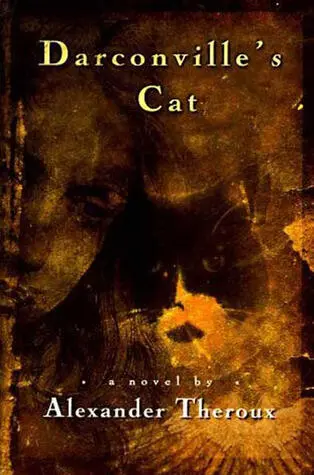
- Название:Darconville’s Cat
- Автор:
- Издательство:Holt Paperbacks
- Жанр:
- Год:1996
- ISBN:нет данных
- Рейтинг книги:3 / 5. Голосов: 2
-
Избранное:Добавить в избранное
- Отзывы:
-
Ваша оценка:
Darconville’s Cat: краткое содержание, описание и аннотация
Предлагаем к чтению аннотацию, описание, краткое содержание или предисловие (зависит от того, что написал сам автор книги «Darconville’s Cat»). Если вы не нашли необходимую информацию о книге — напишите в комментариях, мы постараемся отыскать её.
Darconville's Cat Its chapters embody a multiplicity of narrative forms, including a diary, a formal oration, an abecedarium, a sermon, a litany, a blank-verse play, poems, essays, parodies, and fables. It is an explosion of vocabulary, rich with comic invention and dark with infernal imagination.
Alexander Theroux restores words to life, invents others, liberates a language too long polluted by mutters and mumbles, anti-logic, and the inexact lunacies of the modern world where the possibility of communication itself is in question. An elegantly executed jailbreak from the ordinary,
is excessive; funny; uncompromising; a powerful epic, coming out of a tradition, yet contemporary, of both the sacred and the profane.
Darconville’s Cat — читать онлайн бесплатно полную книгу (весь текст) целиком
Ниже представлен текст книги, разбитый по страницам. Система сохранения места последней прочитанной страницы, позволяет с удобством читать онлайн бесплатно книгу «Darconville’s Cat», без необходимости каждый раз заново искать на чём Вы остановились. Поставьте закладку, и сможете в любой момент перейти на страницу, на которой закончили чтение.
Интервал:
Закладка:
* * * * *
Bis repetita placent : it had been one of the worst cold snaps in England, that Christmas. Nothing, however, would ever match it for the happiness he felt, especially during those hours at Heathrow airport waiting for Isabel’s plane to arrive — then there she was, breathless, snug in a short fur coat, her face shining! His throat filled, he loved her so much. It had been five long months since they’d last seen each other, and in this new, sudden context, for all her excitement, she’d grown silent, even shy. The bus-ride into London, a cab to Pont St., the walkup of four floors, it all tired her out, and in her exhaustion she but barely acknowledged the cake, the inscribed cups, and the welcoming trappings before she was soon asleep. Undaunted, Darconville sat by her in the dark almost all night, feeling himself to be the luckiest person alive.
The following week was a glorious round of dinners, plays, and sight-seeing, and, as Isabel had never been abroad before, Darconville took the occasion to rediscover all the places and things he loved through her young and happy eyes. It was blowing cold, and in boots, mufflers, and tightly buttoned coats they walked everywhere, down old crooked lanes, through quaint side-streets, and into off-beat lamplit passageways lined with bookshops and antique-and-junk stalls, galumphing home later in the darkness with all kinds of jumble. They visited museums, boated up to Greenwich and down to Hampton Court, and went on long strolls through parks strung around with sparkling lights where carolers-with-cherry-cheeks, gathered together, intoned white puffs of air which turned, magically, into the sweet songs of Christmas. They often went to the zoo — Isabel’s favorite! — and fed the tigers bits and pieces of cookies from the bag of them Isabel bought every morning in a special shop of hers on Beauchamp Place, and everywhere Darconville snapped pictures of her: not there, wait, over a bit, grand ! And then at nightfall, alone at last, always, they’d light the gas-heater, bury themselves in each other’s arms under a huge pile of blankets, and shiver in the close darkness until they met in each other’s eyes enough warmth to heat all the cold rooms in the British Isles and then some. “When you become a famous writer,” asked Isabel, “will you mention a night like this in your book?” They were children. It was paradise. “Yes,” he said.
The first snow fell on Christmas Eve. The city of London took it beautifully, becoming in the pure white snow a panstereorama of powdered buildings, glistening streets, frosted windows, and not a light shining anywhere without its attendant corona. They went out in the afternoon, with Isabel wearing positively huge mittens, and attended a lovely festival service at St. Giles Cripplegate, singing Christmas carols, with each of them holding a candle, and in the beauty of each and every moment they grew even closer and more in love. At dusk they had drinks at the Cadogan Hotel where, happier than Darconville had ever seen her, Isabel wore her golden hair down and the black velvet Russian dress he’d once given her, with multicolored flowers sewn in panels down the front. She was beauty appurtenant to grace itself, and for a moment he feared that a mortal such as she might, upon a thunderbolt, be suddenly spirited away from him and enviously taken up to the laps of the bosky gods.
And then they set off through the snow in the direction of Southwark for their Christmas dinner at the old Anchor Tavern, situated on an obscure but romantic waterside lane by the dark-working Thames. It was a night like nothing else on earth, not so much for the crackling fire and candles, nor the traditional rejoicing, nor the delicious fare of roast beef, Yorkshire, and Christmas pudding, but rather because it all touched to the heart of symbol itself, foreordained somehow by fate as if to assure at least two small insignificant people that the possibility of a supreme incomprehensible peace had not gone from the world and so perhaps never would: it was one with the other, one through the other, one in the other, one for the other, always. It wasn’t only love. God had visited them.
It was very cold and late when Darconville and Isabel left the inn and stepped into a blowing snowy wind that glanced even colder off the river. Inexplicably, he suggested that they walk up to London Bridge, but Isabel, as her feet were freezing, suggested they could postpone that and laughingly pulled him in the opposite direction; urging her, however, he somehow prevailed — and so up they went and, once there, looked over the water toward the reflecting lights of the dark city across the way. Without a word, he placed a small box in her hand. Her eyes filled with tears as she opened it: it was a diamond-ring. “I love you,” she whispered, her face outshining it by far, as he slipped it on her finger. “I will always love you.” And flushed with ardor, she kissed him, wrapping herself around him in an embrace, as ivy does an oak, so long it seemed she might get the heart out of him, and there they remained, hovering forever, holding each other so close no one could have known they lived, unmoving in the past perfect tense until the bells of Southwark pealed midnight to wake them to a new birth, whereupon, walking slowly across the bridge in a snowfall of fable, they went home together in silence hand in hand.
The time inevitably came a week or so later for Isabel to leave, a prospect that both of them, characteristically, preferred not only not to mention but to ignore entirely during the course of her stay. Darconville, however, could bear the thought of her absence no more, no longer; he needed her; and as long as he lived he would never forget how simply the fact of her needing him manifested itself and confirmed in him the decision he’d come so resolutely to make, for in the airport, as he watched Isabel from a distance walk through the crowds to embark, he saw almost despairingly, until he pointed, that she had turned the wrong way.
* * * * *
Darconville woke up with the roar of the plane taxiing into Washington, D.C. It was just past five, with the sun westering. There was no time to lose if he was to keep his appointment in Fawx’s Mt., and he went quickly to the Piedmont terminal, where he found out, luckily, a flight south — stopping at Charlottesville — would be leaving at 6:05 P.M. He waited at the departure door, grip in hand: not thinking of Spellvexit, not thinking of Harvard or his class, not thinking at all. And then he was aboard again, airborne, and after a short flight was soon coasting down over the Blue Ridge mountain range into the tiny airport on the outskirts of Charlottesville, Virginia. As he disembarked, Sol went dead on the horizon and sputtered angrily out, leaving a dirty light behind in the sky. At dusk, the trees, transfixed, stiffened. His hot heart hurt, so intensely did he want to see Isabel, and that she was suddenly near him caused a flood of indrawn, in-winding, inseverable emotions he couldn’t quite sort out. He forgot his suitcase and only because there had been so few passengers on the flight was that noticed. An attendant ran it out to the cabdriver who was asking double-the-fee to take him into Fawx’s Mt., but, thrusting a handful of bills through the window, Darconville banged the door shut — and the taxi shot off.
There was always a nameless air of desolation on that backroad to Fawx’s Mt. It was a stretch of gloomy, uninhabited land where life in whatever form seemed long ago to have become extinct, and yet if one looked closely — up the fire-roads, beyond the pamets, into the woods — certain wretched dwellings could be spied: shotgun shacks; ax-mortised cabins with flour-sacking in the windows; rabbit-box houses with wooden wings sticking out and draped over with old blankets and faded clothes. And there , Darconville noticed, was the infamous roadside diner: Klansman, I greet you! They passed into a semi-populated area where some fiddleheaded horses were cropping the mow-burnt fields, stubbled with straw and bits of corn-nubbin. Shikepokes flew across the sky which was growing ever greyer. The lowering October twilight silhouetted the ravines of rampikes, corruption, and bog, making a derisive comment, somehow, on the idea that the force that guided nature was benign. In the west, the very last of the tender light disappeared and was replaced by a misty belt of grey-green. Dar-conville was somehow only able to discern in the spooky hillsides and clawing branches styxes, birds of ill-omen, alastors. It could have been a rookery of pterodactyls or humpbacked, be-shawled creatures with red eyes, spined wings, and torturous cries, a world of agelasts and executioners and cannibals who sat ready to spring. If God created nature, thought Darconville, perhaps He Himself is not in nature, that depraved place, for want of another, wherein are foolishly fumbled up the apports of that bleak séance over which perhaps we credulously preside only to know Him. Another landmark. They were close now. Darconville rolled down the window. “Hurry,” he said, when over the hill a dusty little village came into view.
Читать дальшеИнтервал:
Закладка:
Похожие книги на «Darconville’s Cat»
Представляем Вашему вниманию похожие книги на «Darconville’s Cat» списком для выбора. Мы отобрали схожую по названию и смыслу литературу в надежде предоставить читателям больше вариантов отыскать новые, интересные, ещё непрочитанные произведения.










Обсуждение, отзывы о книге «Darconville’s Cat» и просто собственные мнения читателей. Оставьте ваши комментарии, напишите, что Вы думаете о произведении, его смысле или главных героях. Укажите что конкретно понравилось, а что нет, и почему Вы так считаете.