Alexander Theroux - Darconville’s Cat
Здесь есть возможность читать онлайн «Alexander Theroux - Darconville’s Cat» весь текст электронной книги совершенно бесплатно (целиком полную версию без сокращений). В некоторых случаях можно слушать аудио, скачать через торрент в формате fb2 и присутствует краткое содержание. Год выпуска: 1996, Издательство: Holt Paperbacks, Жанр: Современная проза, на английском языке. Описание произведения, (предисловие) а так же отзывы посетителей доступны на портале библиотеки ЛибКат.
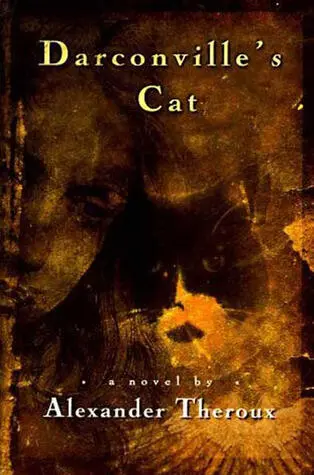
- Название:Darconville’s Cat
- Автор:
- Издательство:Holt Paperbacks
- Жанр:
- Год:1996
- ISBN:нет данных
- Рейтинг книги:3 / 5. Голосов: 2
-
Избранное:Добавить в избранное
- Отзывы:
-
Ваша оценка:
Darconville’s Cat: краткое содержание, описание и аннотация
Предлагаем к чтению аннотацию, описание, краткое содержание или предисловие (зависит от того, что написал сам автор книги «Darconville’s Cat»). Если вы не нашли необходимую информацию о книге — напишите в комментариях, мы постараемся отыскать её.
Darconville's Cat Its chapters embody a multiplicity of narrative forms, including a diary, a formal oration, an abecedarium, a sermon, a litany, a blank-verse play, poems, essays, parodies, and fables. It is an explosion of vocabulary, rich with comic invention and dark with infernal imagination.
Alexander Theroux restores words to life, invents others, liberates a language too long polluted by mutters and mumbles, anti-logic, and the inexact lunacies of the modern world where the possibility of communication itself is in question. An elegantly executed jailbreak from the ordinary,
is excessive; funny; uncompromising; a powerful epic, coming out of a tradition, yet contemporary, of both the sacred and the profane.
Darconville’s Cat — читать онлайн бесплатно полную книгу (весь текст) целиком
Ниже представлен текст книги, разбитый по страницам. Система сохранения места последней прочитанной страницы, позволяет с удобством читать онлайн бесплатно книгу «Darconville’s Cat», без необходимости каждый раз заново искать на чём Вы остановились. Поставьте закладку, и сможете в любой момент перейти на страницу, на которой закончили чтение.
Интервал:
Закладка:
“ I promised to go riding with Col. Watson ,” she said in a spitting whisper.
As the car sped away, Darconville turned back one final time and watched her disappear into the blurred, discolored distance that receded so fast into the blighted world it seemed literally gone even before it could say: I am the last picture of your life.
LXXVI Abomination of Desolation
A great horror and darkness fell upon Christian.
— JOHN BUNYANTHE LAST SIGHT of Fawx’s Mt. became too much to bear, and Darconville cried out terribly upon it. May it be cursed forever! May it wither into the grin of the dead! May flowers and children die in its shadow! May the birds of the air refuse to fly over it! May it henceforth stand a desert of recrimination, spawning hunchbacks to eat ashes for bread and to mingle tears with drink! May Satan pinch into the faces of its inhabitants the pain of hell that by them it be sown with salt and continue ever an abomination to sight! May the maiden that passes it become barren and the pregnant woman that beholds it abort! May its crops be given to the caterpillar and the fruits of its labor to the locust! May the winged monsters be reaved out of the infernal pit to dwell therein and demons sit high forever in its rébarbative trees to scourge it in satire and song! May the light of the sun be withheld therefrom and the light of the moon be hidden from it forevermore, with accursedness its perpetual condition and doom its eternal reward!
LXXVII The Nowt of Cambridge
Deux fois deux quatre, c’est un mur.
— DOSTOEVSKY, Voix souterraineADAMS HOUSE: the one accommodation with its shades drawn night and day had a melancholy fixedness about it, an aura of prohibition as if something terrible, having once taken place there, must now never be disclosed. There was neither light nor movement nor noise from within, and if the rooms were inhabited it was as though someone, in trying to acquire the power of invisibility, had lost sight of himself as he disappeared from the sight of others. It was like an impatible vacancy in the building, a statement of the saddest isolation, intimacy without commitment.
The rooms, in fact, were not empty. Someone still lived there who, keeping to the darkness all day, was waiting — he couldn’t explain it — for waiting to end. And when night fell it was always the same. Dar-conville rose and went out alone to wander through the deserted streets of Cambridge looking for his cat.
The search became an obsession, a desperate compulsion, only one of several he experienced after he returned to Harvard. At first, he looked by day, the search no less real for the parallel quest of which he was unaware, a desperate attempt at invalescence — an objective, however, separated totally from the consciousness of the subject who in the passing days was no longer sure what he was seeking, a cat, lost love, or himself. It became hardly bearable. He found himself walking mile after mile, astonished and saddened, wandering in a state of mind that seemed a parody of all value between two worlds, one dead, the other powerless to be born; worth disappeared. He would aimlessly pass his students in the street, leave his change behind in stores, and in the most unlikely situations actually begin to pray out loud. He often stopped before shopwindows he didn’t look into. Careless and sloven, he started to attract the attention of boys in the neighborhood. It soon became not only unbearable but frightening. He began to look for cars trailing him and to tremble suddenly for no reason and then he began to be afraid he’d start screaming in public places: often in the middle of crowded sidewalks he’d start to weep, biting his hands to stop. So time reversed: he disappeared from view, completely, leaving his room now only at night to roam through the Yard, wander along the banks of the Charles, or go miles out into old factory yards and back alleys and outlying areas of Cambridge. Several times, he sat up all night in Longfellow Park, and one morning in a puddle, rising in a mist, he saw Isabel’s face, now flushed with excitement, now mournful and pensive, but when he looked again it was gone.
Isabel Rawsthome’s face haunted him. He put a vigil light in front of her picture in his room, slept by it during the day, sat by it when he returned in the morning.
There were periods of delirium — from eating nothing, smoking too much, walking hour upon hour — when he dreamt he was moving through time into eternity, but in lucid moments, then, he saw he was going nowhere wherever he went, for just as eternity is not prolonged time, rather its negation, he realized in wandering he might extend his area but never abolish space, and the efforts, he saw, only became foolish failures. But the persecutory delusions haunted him, the morbid wariness, the unspeakable forebodings. The night seemed to distend reality even more. Streets sped under him, cars went motionless, bridges stretched out and broke in the middle of their arches — even noises began to become removed from their sources. Things seemed not to live but to exist all the same. He began to pore over Isabel’s letters and photographs, hundreds of them, trying to close out the actuality of time and change which he saw, however, simultaneously destroyed the possibility of expectation. Rapture without hope: it led either to desolation or a frightening kind of credulity; he experienced little fugues now — one in particular that touched a ghostly world whose symbols represented potentiality rather than reality: somehow, somewhere, he felt, his cat lived; somewhere, somehow he was loved— a superposition he repeatedly, self-hypnotically, began to construct for himself by projecting a hypothetical world where all possible outcomes could exist! He tried to will the fulfillment of his every desire by supreme efforts of concentration and at such moments would quickly hurry back to his rooms to see if his cat had returned, if the vigil light was still burning, if his telephone might ring, but it hadn’t, it wasn’t, it didn’t.
There was never any change — only the photograph of Isabel on the shelf, his enemy twin looking in cold penetrance through his emptiness toward someone else. Gilbert van der Slang, the merchant semen. But who was he? A great fly of Beelzebub’s, the bee of hearts, which mortals name Cupid, Love, and Fie for shame! And weren’t brothers, having carnal knowledge of the same woman, damned by Scripture? What found King Henry VIII but Arthur drowned in the depths of Catherine’s well, forcing him to spawn a dying nephew on his aunt and then sire in the belly of a six-fingered whore a most unnatural daughter as an excuse? A most unnatural act, then! But then what response? There but for the grace of God go I? But wasn’t the grace of God, thought Darconville, available to all? It wasn’t! It wasn’t !
The long days passed, each instant hideously widening the fact of separation, multiplying its significance, leaving him more and more isolated. He rehearsed everything over and over again in his mind — a mind that whatever its sorties into the world of experience always returned to sleep only with its dreams. He was literally sick with love. Obscurely, it had never really occurred to Darconville that Isabel would leave him, the purity of which assumption, with the passing days, he sadly came to reinterpret — for he began to borrow from the delights of love its implements of torture — as being motivated less by love or any medieval sense of courtesy than by the promptings of his own self-esteem. He hoped for what he needed to believe, aspiring to the measure of what he believed from the very measure of where he was, almost as if to prove to himself that one can see stars during the day from the bottom of a well. Still he would not abide a single thought against her but continued to wait, convinced somehow that waiting itself —as though to obtain love we need but confess our own, as though to perpetuate love we need only strangle jealousy — would bring her back. Bring her back! Bring—! He tried to set his face against emotion but broke down and wept bitterly, his tears blinding him not only for his own vanity and presumption but for the terrifying reoccurrences now of sudden, irrational behavior: he began to speak to whoever it was that lived in the same body with him, for there were two of them now talking to one another, a dual form paradoxically shaping to an individual he didn’t know!
Читать дальшеИнтервал:
Закладка:
Похожие книги на «Darconville’s Cat»
Представляем Вашему вниманию похожие книги на «Darconville’s Cat» списком для выбора. Мы отобрали схожую по названию и смыслу литературу в надежде предоставить читателям больше вариантов отыскать новые, интересные, ещё непрочитанные произведения.











Обсуждение, отзывы о книге «Darconville’s Cat» и просто собственные мнения читателей. Оставьте ваши комментарии, напишите, что Вы думаете о произведении, его смысле или главных героях. Укажите что конкретно понравилось, а что нет, и почему Вы так считаете.