Arturo Fontaine - La Vida Doble
Здесь есть возможность читать онлайн «Arturo Fontaine - La Vida Doble» весь текст электронной книги совершенно бесплатно (целиком полную версию без сокращений). В некоторых случаях можно слушать аудио, скачать через торрент в формате fb2 и присутствует краткое содержание. Год выпуска: 2013, Издательство: Yale University Press, Жанр: Современная проза, на английском языке. Описание произведения, (предисловие) а так же отзывы посетителей доступны на портале библиотеки ЛибКат.
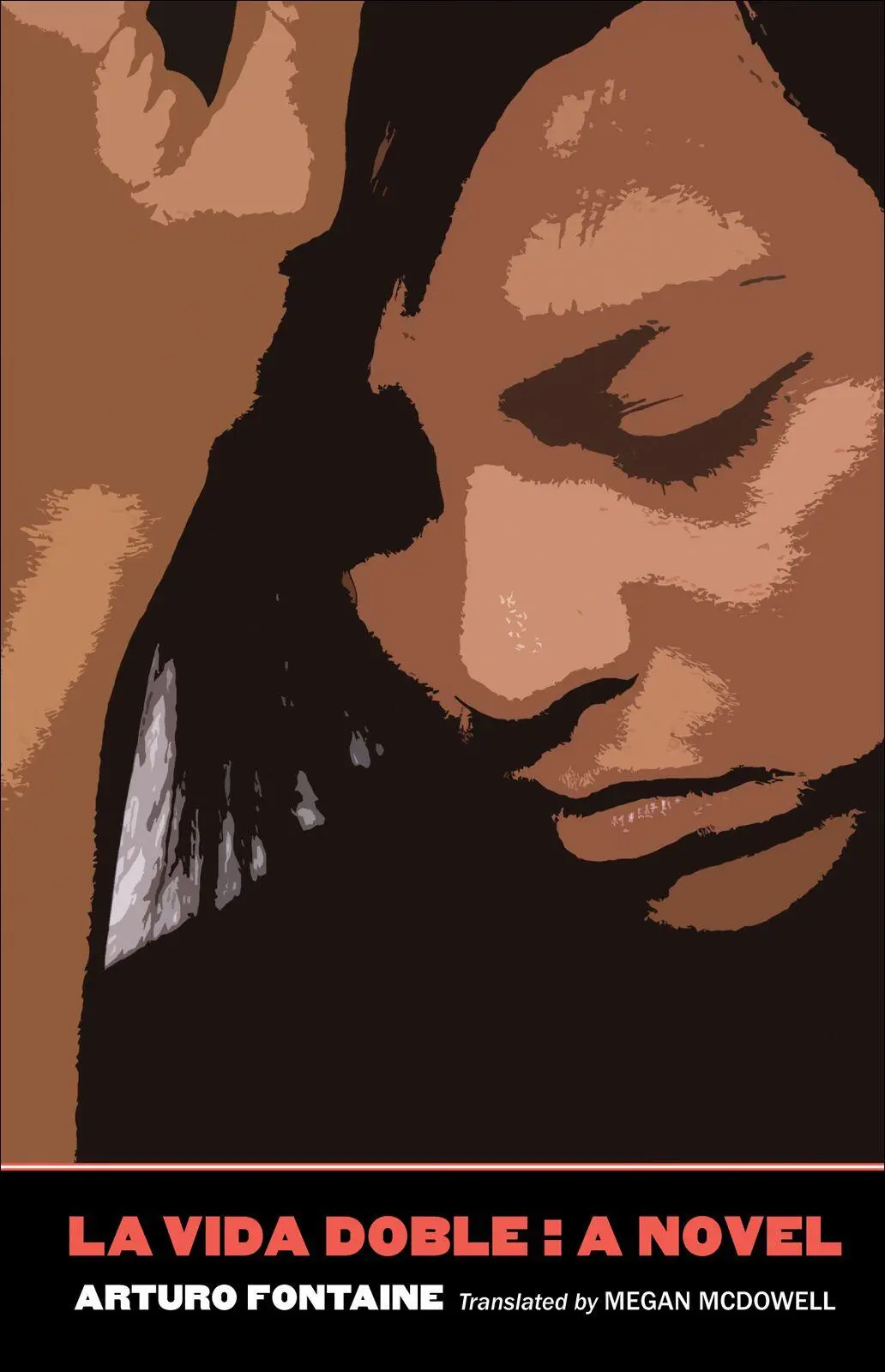
- Название:La Vida Doble
- Автор:
- Издательство:Yale University Press
- Жанр:
- Год:2013
- ISBN:нет данных
- Рейтинг книги:3 / 5. Голосов: 1
-
Избранное:Добавить в избранное
- Отзывы:
-
Ваша оценка:
La Vida Doble: краткое содержание, описание и аннотация
Предлагаем к чтению аннотацию, описание, краткое содержание или предисловие (зависит от того, что написал сам автор книги «La Vida Doble»). Если вы не нашли необходимую информацию о книге — напишите в комментариях, мы постараемся отыскать её.
is the story of Lorena, a leftist militant who arrives at a merciless turning point when every choice she confronts is impossible. Captured by agents of the Chilean repression, withstanding brutal torture to save her comrades, she must now either forsake the allegiances of motherhood or betray the political ideals to which she is deeply committed.
Arturo Fontaine’s Lorena is a study in contradictions — mother and combatant, intellectual and lover, idealist and traitor — and he places her within a historical context that confounds her dilemmas. Though she has few viable options, she is no mere victim, and Fontaine disallows any comfortable high moral ground. His novel is among the most subtle explorations of human violence ever written.
Ranking with Roberto Bolaño and Mario Vargas Llosa on Latin America’s roster of most accomplished authors, Fontaine is a fearless explorer of the most sordid and controversial aspects of Chile’s history and culture. He addresses a set of moral questions specific to Pinochet’s murderous reign but invites us, four decades later, to consider global conflicts today and question how far we’ve come.
La Vida Doble — читать онлайн бесплатно полную книгу (весь текст) целиком
Ниже представлен текст книги, разбитый по страницам. Система сохранения места последней прочитанной страницы, позволяет с удобством читать онлайн бесплатно книгу «La Vida Doble», без необходимости каждый раз заново искать на чём Вы остановились. Поставьте закладку, и сможете в любой момент перейти на страницу, на которой закончили чтение.
Интервал:
Закладка:
“Lots of them must be tourists,” said Pelao.
“Maybe there’s a future Lenin,” I said, laughing.
We had left Santiago traveling over land to Buenos Aires, and we entered France as husband and wife, which obliged us to sleep in the same hotel room though not in the same bed, of course. Even so, our compartmentalization kept me from knowing what Pelao’s task was in Paris, and him from knowing mine. The two-star hotel we’d been recommended was close to the Lafayette Galleries. Most important, there were two public telephones in the lobby. There were no phones in the room. A fat woman who was surely Moroccan checked us in. She handed Cuyano the key with what seemed like disgust. She demanded payment up front. The bathroom was at the end of the hall, she said. We squeezed into a wooden elevator. We had to put one suitcase on top of the other. On the way up, the machinery let out an exasperated noise as it trembled from the effort like an old, worn-out horse. The bedspread didn’t look clean. I pulled down the covers: used sheets. Cuyano went down and came back with the fat Moroccan. She didn’t show the slightest surprise and she changed the sheets and the bedspread. At least the shared bathroom looked clean. After a shower I eagerly persuaded Cuyano that we should go out to eat at a nice restaurant.
I don’t know why, as we were drinking a Sancerre de Bué that seemed marvelous to me — although for us, very expensive — we started to talk about the famous preface to the Critique of Political Economy, about its idea that was central to our “historical materialism”—the idea that ethics and aesthetics, religion and rights, culture and politics, are all just expressions of the reigning mode of production in any historical moment, and they are consequences of that basic material, economics. They make up, then, merely the “ideological superstructure” of the system. Cuyano was intrigued by the role of technology within the “infrastructure,” that’s to say, the economic base. He wondered about its exact function in the assemblage of productive forces and production relationships that configured, magister dixit, every one of the modes of production — feudalism, for example, or capitalism. I lost the thread of the conversation, but regained it when I saw Cuyano’s shining eyes. We were young and committed and we took ourselves so seriously. . “It’s a complicated issue, don’t you think?” Cuyano was saying to me, animatedly, talking quickly. And it sure was. But he dove zealously into those complexities. He moved in those deep waters not with the weight and scrupulousness of an academic but with the natural agility of a swift and nimble fish.
On the Closerie’s piano, “Good Morning Heartache.” On the plate, an exquisitely delicate house pâté. The travel allowance, of course, didn’t cover a meal in that brasserie. Cuyano asked me if, in my opinion, technology might actually be part of the “superstructure,” and not the “economic infrastructure,” as the Preface had taught us. “Because technology,” Cuyano conjectured, venturing out into the mined terrain of heresy, “depends on science, and on practices that are tied to ethics, and it emerges from a framework of a group of institutions, among them the protection of the right to intellectual and industrial property.”
If so, Cuyano maintained, it would dilute the primacy of the material base in respect to supposedly “superstructural” or “ideological” elements like ethics and rights. Because a mere right — the institution of industrial property — would then become a determining factor for the development of productive power. This posed thorny and disturbing questions of doctrine for us. To doubt “historical materialism” was to doubt everything. There was silence: “The Spartan would have had us playing chess a long time ago,” I said, and we burst out laughing.
The streetlights of Paris had come on and the streets were calling to me.
It was strange to get into bed and see Cuyano’s head beside me. I had trouble falling asleep.
It had rained and the dead leaves in the streets were wet. I wasn’t nervous. There was no danger in Paris. My first “meet” was at nine thirty at the Medici Fountain in the Luxembourg Gardens, next to Leda and the Swan . A young man with a Chilean accent and the look of a college student gave the countersign. While we walked along the rue de Médicis he offered me a cigarette, which, as instructed, I put into my pocket. I opened it in the hotel and read my next “meet,” which was written in invisible ink.
I got out one metro station early, took the rue de la Gaîté, turned right along boulevard Edgar Quinet and went into the Montparnasse cemetery through the main entrance. It was ten to twelve on that cold, gray morning when I stopped in front of Brancusi’s sculpture. The stone lovers kiss with their entire bodies. The legs are bent and they touch from the knee down. Their intermingled feet moved me, their tenderness. As if they wanted to belong to the other’s body, I thought to myself.
Someone coughed close by. A short young woman, with dark hair, moved decisively toward me. She gave the countersign, and in a Chilean accent she asked me if I could tell her how to get to Baudelaire’s grave. I answered as planned: “Avenue du Nord until you get to avenue de L’Ouest and there you turn left.” She took a package from her backpack that I immediately shoved into my leather bag. She said good-bye and left. I looked at the time: two minutes past twelve.
On the hotel bed I opened the package and went through the ten blank Chilean passports — they were impeccable — and hid them among the clothes in my suitcase, which I secured with a lock. Where were they forged? My nose told me: Berlin, GDR.
Pauline, the journalist from Le Monde, arranged to meet me at the Café Hugo in the Place des Vosges. It’s going to be full of tourists, I thought. I arrived half an hour early. I sat down at a table and ordered a cafè au lait. An Argentine accent made me turn my head toward the table to my right. Cortázar! I recognized him immediately. His beard, his giant body, his youthful face. He was gesticulating with outstretched arms as he talked. There were two women — one of them very attractive in whom I wanted to see la Maga — and the rest were mature men in their forties or maybe fifties, with long hair and casual, stylish clothes.
I thought about running to a bookstore to buy Hopscotch and asking him to sign it. And what if they were gone when I got back? I thought about going over, introducing myself, and asking him to sign a napkin. I thought I should let him know I was a clandestine combatant fighting the military dictatorship. That would get him interested. I looked down at my coffee. I imagined myself in a spacious apartment overflowing with books, his friends scattered on chairs and armchairs and me seated among them on a cushion, on the floor, listening to old jazz records and talking with him.
Just then I glanced at the table: it was empty.
I paid as fast as I could and went out to the square. They were walking slowly and their conversation was still animated. I checked the time. Six minutes until my appointment. I was bringing a dossier for Pauline with documentation of the repression. She was a person of great political importance for Red Ax, I’d been told. They didn’t explain why. Apparently she’d been in contact with our apparatus for years, but she only knew that we wanted to bring down the military. She was very anti-Soviet, I’d been warned, and didn’t care too much for Cuba, either. A “Menshevik,” they told me. I had to be careful answering her questions. A tremendously intelligent and well-informed woman, I’d been told. In the photo they gave me she looked attractive and severe.
Читать дальшеИнтервал:
Закладка:
Похожие книги на «La Vida Doble»
Представляем Вашему вниманию похожие книги на «La Vida Doble» списком для выбора. Мы отобрали схожую по названию и смыслу литературу в надежде предоставить читателям больше вариантов отыскать новые, интересные, ещё непрочитанные произведения.








Обсуждение, отзывы о книге «La Vida Doble» и просто собственные мнения читателей. Оставьте ваши комментарии, напишите, что Вы думаете о произведении, его смысле или главных героях. Укажите что конкретно понравилось, а что нет, и почему Вы так считаете.