Arturo Fontaine - La Vida Doble
Здесь есть возможность читать онлайн «Arturo Fontaine - La Vida Doble» весь текст электронной книги совершенно бесплатно (целиком полную версию без сокращений). В некоторых случаях можно слушать аудио, скачать через торрент в формате fb2 и присутствует краткое содержание. Год выпуска: 2013, Издательство: Yale University Press, Жанр: Современная проза, на английском языке. Описание произведения, (предисловие) а так же отзывы посетителей доступны на портале библиотеки ЛибКат.
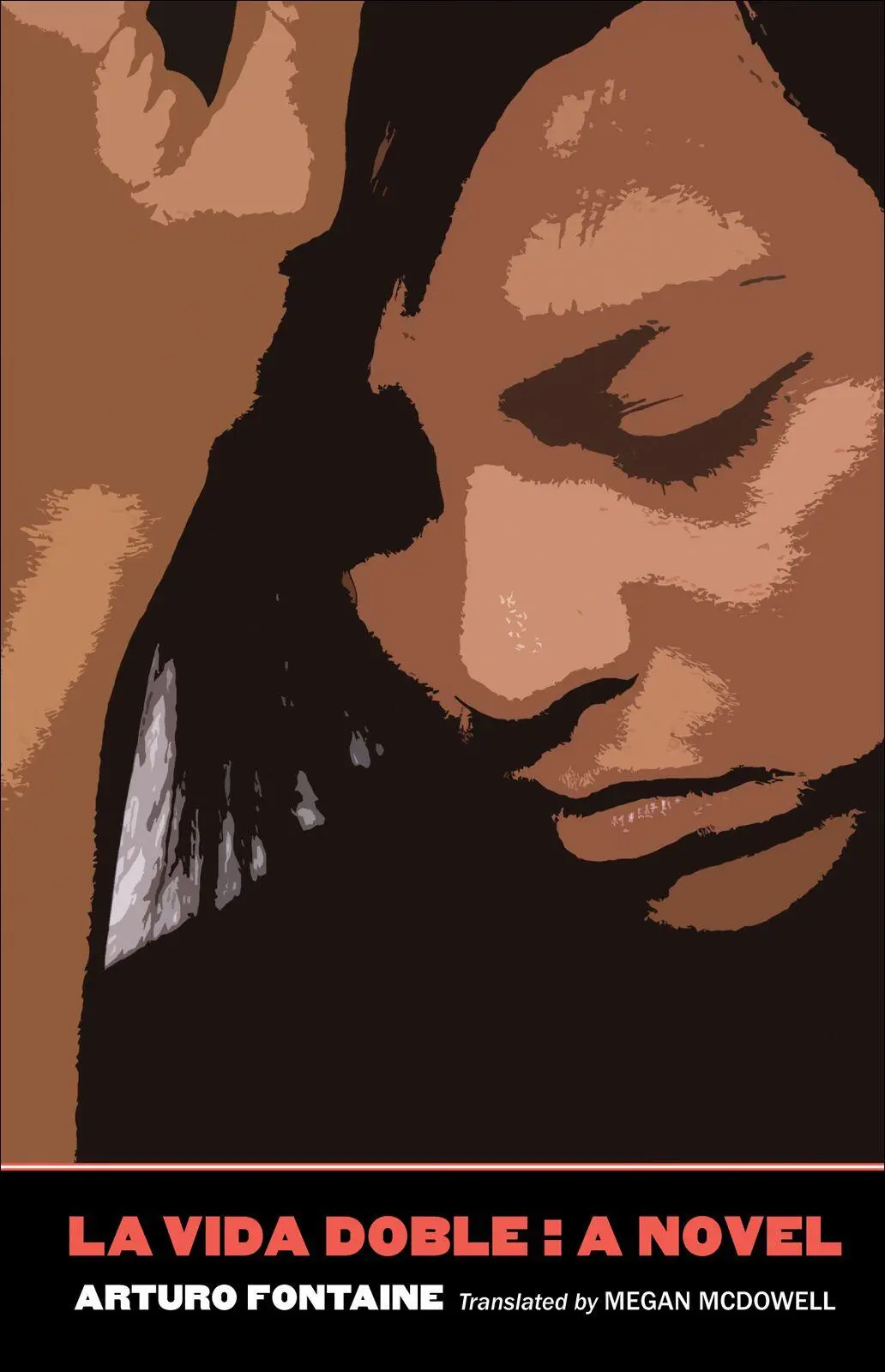
- Название:La Vida Doble
- Автор:
- Издательство:Yale University Press
- Жанр:
- Год:2013
- ISBN:нет данных
- Рейтинг книги:3 / 5. Голосов: 1
-
Избранное:Добавить в избранное
- Отзывы:
-
Ваша оценка:
La Vida Doble: краткое содержание, описание и аннотация
Предлагаем к чтению аннотацию, описание, краткое содержание или предисловие (зависит от того, что написал сам автор книги «La Vida Doble»). Если вы не нашли необходимую информацию о книге — напишите в комментариях, мы постараемся отыскать её.
is the story of Lorena, a leftist militant who arrives at a merciless turning point when every choice she confronts is impossible. Captured by agents of the Chilean repression, withstanding brutal torture to save her comrades, she must now either forsake the allegiances of motherhood or betray the political ideals to which she is deeply committed.
Arturo Fontaine’s Lorena is a study in contradictions — mother and combatant, intellectual and lover, idealist and traitor — and he places her within a historical context that confounds her dilemmas. Though she has few viable options, she is no mere victim, and Fontaine disallows any comfortable high moral ground. His novel is among the most subtle explorations of human violence ever written.
Ranking with Roberto Bolaño and Mario Vargas Llosa on Latin America’s roster of most accomplished authors, Fontaine is a fearless explorer of the most sordid and controversial aspects of Chile’s history and culture. He addresses a set of moral questions specific to Pinochet’s murderous reign but invites us, four decades later, to consider global conflicts today and question how far we’ve come.
La Vida Doble — читать онлайн бесплатно полную книгу (весь текст) целиком
Ниже представлен текст книги, разбитый по страницам. Система сохранения места последней прочитанной страницы, позволяет с удобством читать онлайн бесплатно книгу «La Vida Doble», без необходимости каждый раз заново искать на чём Вы остановились. Поставьте закладку, и сможете в любой момент перейти на страницу, на которой закончили чтение.
Интервал:
Закладка:
“But the critic,” she went on, with stubborn missionary conviction, “discerns and creates at the same time; he’s an inventor of inventors. It would be bragging to drop names. .” she tossed back a good swallow of Veuve Clicquot. “But those who know, know. And the day and the hour will come when we are recognized,” said Clementina. That “we” included her and no more than three critics who followed in her wake. Artists believed themselves to be creators, but really they were mere actors in a film directed by a handful of critics and some gallerists, Clementina maintained with a conviction that I found attractive. Because the power of that select group determined what was art at any moment. “Nothing is natural,” said Clementina. “There is no essential art that we contemplated in our beginnings in the Platonic cave, and that we later recognize in the real world. No.”
For my brothers and sisters, that world was my cover. Sometimes they congratulated me on it. Because through all this I continued to receive, on occasional afternoons, messages from the Spartan. Coded, of course. And I attended some unimportant meetings, and they gave me some unimportant tasks. I wanted to join a cell, take up arms once again. .
Days and weeks passed. I thought nostalgically about the old times. I remembered nights spent in groups in some safe house listening to tapes played with the volume turned low, Quilapayún, Silvio Rodriguez, Los Jaivas, Inti, Serrat, Violeta, while we drank a well-steeped mate, a habit a brother from Cuyo had introduced us to — Pelao Cuyano, we called him — and talking and talking in order to escape our fear, to forget about what we would do as soon as dawn came and the patrol cars watching over the night disappeared from the streets. Then Pelao Cuyano would start telling us stories about the Bolivian ELN; about the Tupamaros’ glory days in Uruguay, details about what the escape from Punta Carretas was really like; about the FMLN in El Salvador; about the great Santucho and the ERP’s heroic fight in Argentina, his collaboration with the Chilean MIR, his attempt to join forces with the Montoneros, and the building custodian who, under threat, knocked on Santucho’s door and told him to open up, about how Santucho, who didn’t have time to get his weapons out of their hiding place, seized the gun the enemy was pointing at his head and killed him with it, and then killed one more enemy before they got him; and then he would talk about the growing forces of the Shining Path in the mountains of Peru; and of FARC in Colombia. .
In November of ’73 in Buenos Aires, when he was very young, and later, in ’76, he went to Lisbon for meetings of the Revolutionary Coordinating Junta with representatives from MIR, ELN, the Tupas, and ERP. He had been part of an ELN containment team that never saw action. But he had heard stories, and we listened to them eagerly. He gave us a blow-by-blow account of the kidnapping of the Exxon executives in Buenos Aires. Exxon paid $14.2 million as ransom, which came from New York in six suitcases filled with bundles of hundred-dollar bills. And also about the managers of Firestone and Swissair, and how the ERP distributed the money in a spirit of Bolivarian solidarity. The ELN, MIR, and the Tupamaros got $2 million each. He knew a lot of stories, Cuyano. He told us, told us more than was necessary, more than we should have known, maybe. . He knew the details, he assured us, of some $100 million — others said it was $300 million — that Pepe, the Montonero commander, passed on to the Cubans for them to launder, after two of his men had been arrested in Switzerland trying to do it. And he told us that he had it on good authority that Tony de la Guardia and a Chilean managed to launder it in a complicated and risky operation in Libya and Switzerland. Do you think it’s true?
Cuyano talked to us with shining eyes about contacts with the ETA and the IRA, about combatants trained in Libya and Vietnam, about secret meetings in Algeria with Palestinians from the PLO. Once, he told us about the assassination of Roque Dalton, the revolutionary poet. Remember? What should revolutionary poetry be for? / To make poets / or to make the revolution?. . On May 10, 1975, his comrades (or was it his commander?) finished him off with a gunshot to the head in the safe house where he was hiding. Rivalry? wondered Cuyano. Fear that Dalton would become the movement’s caudillo, its strongman? Internal divisions? That time the Spartan got furious. He cut Cuyano off short. His eyes shone with rage. He grabbed Cuyano roughly by the arm and dragged him into the next room. The punishment was for all of us. He left us locked in that safe house for a week and we weren’t allowed outside. As if we were little children. On the second day the food stores ran out and we had to ration the rice, the only thing left. One would have to write the story of our morality, of our constant state of vigilance, both external and internal.
Later, Pelao told me that the Spartan’s anger had entirely passed. The Spartan, he told me, is in love with the cause, and love forgives all, see? He’d been annoyed that Pelao would tell those kinds of stories in front of us, when they would just weaken our conviction. Those kinds of things should be brought to him, to the Spartan, in private. Not in front of us. It wasn’t good to sow doubt, he told him. Those fits of rage weren’t unusual in the Spartan. There was another time when Kid of the Day forgot to put glue on his fingertips before a mission. Kid was a Mapuche; he’d been born in Santiago, in La Pintana. His father had a stall in the market. He could say some really funny things, and we all loved him a lot. But the Spartan, trembling with rage, jumped on him shouting: “Asshole! What are you thinking? You think it’s a game, leaving fingerprints behind? You want us all to be fucked?” And he got the kid in a hold and threw him in the air. Something cracked: he’d broken his finger. He was ferocious, the Spartan. Of course, he apologized immediately and personally made sure that a reliable doctor put a cast on it.
They asked me, sometimes, to recite a poem. I didn’t want to, but they always asked me for Neruda. And I, yet again, would give them: “Dwarfs concocted like pills / In the traitor’s drugstore. . they’re not, they don’t exist, they lie and / rationalize in order to continue, nonexistent, to collect.” And I would repeat: “He poured forth promises, / embraced and kissed the children who now / scour the trace of his pustule with sand. . / Wretched clown, miserable / mixture of monkey and rat, whose tail / is combed with a gold pomade on Wall Street.” And also: “Then I became. . order of combatant fists.” It was our motto: “Order of combatant fists.”
What I remember most from that time is the waiting. It’s a permanent spiritual state, because the revolution is always situated in the future, it’s always the second coming that lies ahead. Sometimes, many times, our orders were literally to simply wait. The action would be delayed. Then we would escape to my apartment and bottles of red wine would appear, and we would play the same cassettes over and over in the darkness broken by the red circle of a forbidden cigarette, and I would feel on my half-asleep lips kisses that held the force of fear and hope. Canelo would be with me, Kid Díaz or Kid of the Day was with Teruca for a few weeks, but that was incidental, because most nights Pelao Cuyano was with Teruca. . These were loves without promises or exclusions. We loved each other with ardor and the terror of losing each other tomorrow. We lived with the mantle always on the verge of falling and revealing the hidden combatant lying in ambush; we lived on the lam, fleeing from fear. Not the kind of fear that grabs hold of you suddenly, no. Our fear was our daily sustenance, tensing our jawbones, gnawing tirelessly at our insides, a bat that sneaks into your dreams. It was also food for the rage that drives revenge.
Читать дальшеИнтервал:
Закладка:
Похожие книги на «La Vida Doble»
Представляем Вашему вниманию похожие книги на «La Vida Doble» списком для выбора. Мы отобрали схожую по названию и смыслу литературу в надежде предоставить читателям больше вариантов отыскать новые, интересные, ещё непрочитанные произведения.




Обсуждение, отзывы о книге «La Vida Doble» и просто собственные мнения читателей. Оставьте ваши комментарии, напишите, что Вы думаете о произведении, его смысле или главных героях. Укажите что конкретно понравилось, а что нет, и почему Вы так считаете.