Arturo Fontaine - La Vida Doble
Здесь есть возможность читать онлайн «Arturo Fontaine - La Vida Doble» весь текст электронной книги совершенно бесплатно (целиком полную версию без сокращений). В некоторых случаях можно слушать аудио, скачать через торрент в формате fb2 и присутствует краткое содержание. Год выпуска: 2013, Издательство: Yale University Press, Жанр: Современная проза, на английском языке. Описание произведения, (предисловие) а так же отзывы посетителей доступны на портале библиотеки ЛибКат.
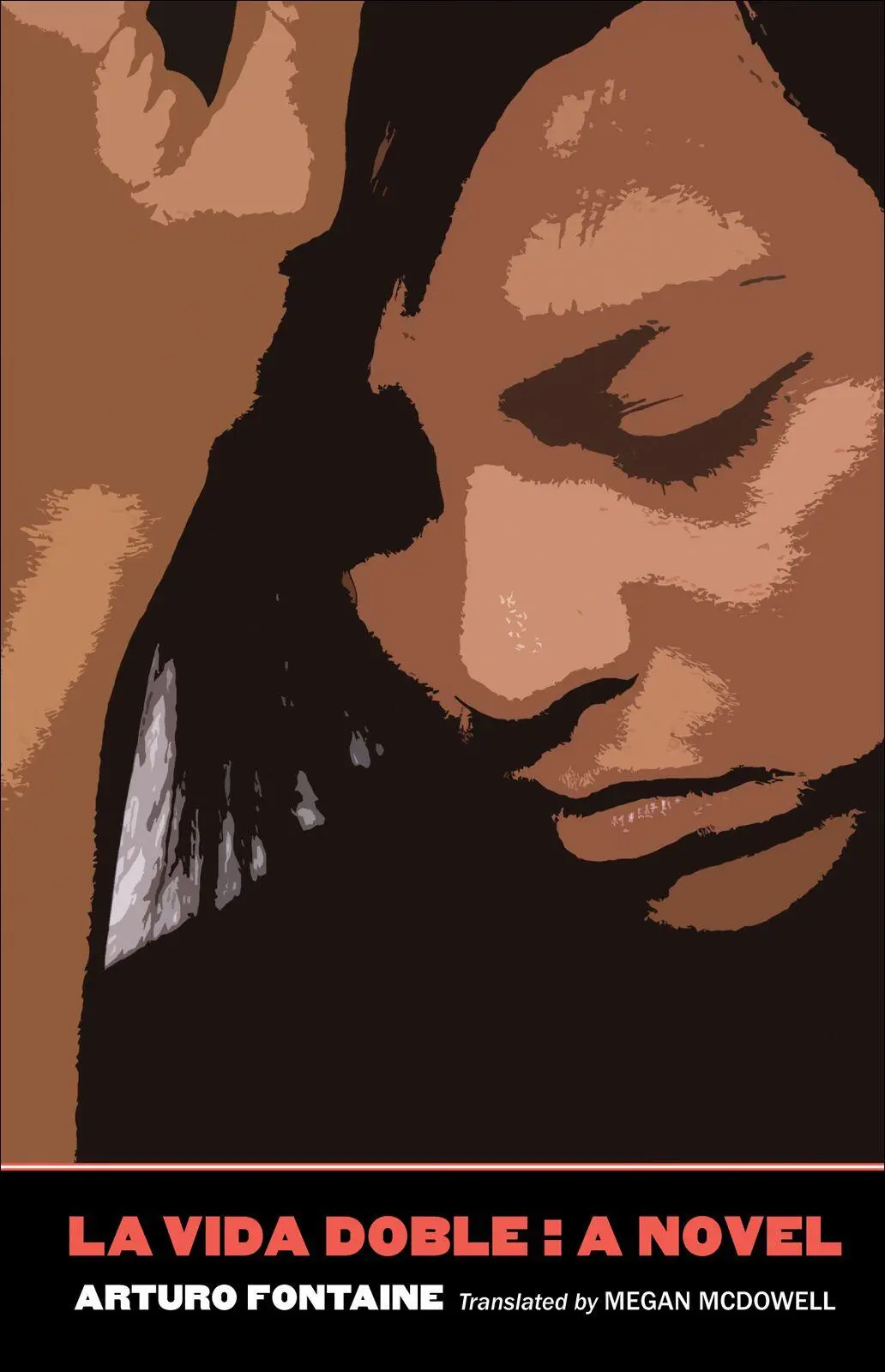
- Название:La Vida Doble
- Автор:
- Издательство:Yale University Press
- Жанр:
- Год:2013
- ISBN:нет данных
- Рейтинг книги:3 / 5. Голосов: 1
-
Избранное:Добавить в избранное
- Отзывы:
-
Ваша оценка:
La Vida Doble: краткое содержание, описание и аннотация
Предлагаем к чтению аннотацию, описание, краткое содержание или предисловие (зависит от того, что написал сам автор книги «La Vida Doble»). Если вы не нашли необходимую информацию о книге — напишите в комментариях, мы постараемся отыскать её.
is the story of Lorena, a leftist militant who arrives at a merciless turning point when every choice she confronts is impossible. Captured by agents of the Chilean repression, withstanding brutal torture to save her comrades, she must now either forsake the allegiances of motherhood or betray the political ideals to which she is deeply committed.
Arturo Fontaine’s Lorena is a study in contradictions — mother and combatant, intellectual and lover, idealist and traitor — and he places her within a historical context that confounds her dilemmas. Though she has few viable options, she is no mere victim, and Fontaine disallows any comfortable high moral ground. His novel is among the most subtle explorations of human violence ever written.
Ranking with Roberto Bolaño and Mario Vargas Llosa on Latin America’s roster of most accomplished authors, Fontaine is a fearless explorer of the most sordid and controversial aspects of Chile’s history and culture. He addresses a set of moral questions specific to Pinochet’s murderous reign but invites us, four decades later, to consider global conflicts today and question how far we’ve come.
La Vida Doble — читать онлайн бесплатно полную книгу (весь текст) целиком
Ниже представлен текст книги, разбитый по страницам. Система сохранения места последней прочитанной страницы, позволяет с удобством читать онлайн бесплатно книгу «La Vida Doble», без необходимости каждый раз заново искать на чём Вы остановились. Поставьте закладку, и сможете в любой момент перейти на страницу, на которой закончили чтение.
Интервал:
Закладка:
FIFTEEN
Our cell — I told you this, right? — reported to the Spartan. I never met anyone like him. I’d like to give you a picture of his soul. If only I could. I want to tell you about him. His character was constructed from books, you know? From certain books, of course. Something clearly incomprehensible amid the promiscuity of ideas that exists today. A Quixote, maybe, or a Bovary. He would say to us: “We must be professionals, revolutionary monks, as Lenin demands.” And he lived it day and night. “Everything else is a lie,” he would say. “Our example is Rajmetov, the main character in Chernyshevsky’s novel, a novel that Lenin”—he never tired of repeating it—“read five times.” None of us ever read Chernyshevsky’s novel. I started it twice. . I finally finished it here in Ersta, surrounded by these medicinal smells that they use in this place to hide the stench of age and its incontinence. I liked it. Pure metafiction, avant la lettre: it was published in 1862! What to do? It’s extraordinary. . The critics haven’t paid attention enough to its self-conscious narrator. It takes you from mise en abyme to mise en abyme. Did you know Lenin never wanted to read Demons? Neither did the Spartan. “I have no patience for reactionary books,” he explained to me. The truth is, he read very few books, but the few he read he was passionate about. Canelo was the same way. Men of action.
Let me tell you, the Spartan was a true ascetic. He deprived himself of all pleasures, including intellectual ones. He was ashamed to allow himself pleasures that the poor were excluded from. Today it’s hard for me to imagine being like that. Today it’s hard for me to imagine how I could admire him precisely for being like that. I’ve lost that purity. Maybe you’ll never be able to imagine someone like him. . Today’s atmosphere of complacency makes it difficult. We were so sure that the corrupt, cruel, and miserable world we knew was about to go all to hell. But it wasn’t a prediction that came from the laws of “historical materialism,” which we studied with apostolic devotion. It was much more than a theory. We felt it in our skin. We smelled it like someone who smells smoke in the house before they know where the flames are coming from. And there would be no stone on top of stone left. We hated everything that existed. Nothing would survive. Nothing had the right to. Only us, only us. But who were we? Not the wife of an everyday worker chosen at random leaving a market in Renca. No. So, who were the New Man and the New Woman? Wasn’t it Paul and his messianic Christianity all over again?
The Spartan lived his life in wait for the great day, the Apocalypse, the Revolution. Do you think there are any men like him left, missionaries and dreamers? Will there be any tomorrow? Always? His name was Jonathan, Jonathan Ríos, I think. Or Jonathan González, I never found out. But Jonathan. His father was a math teacher in a primary school. He had been a labor leader, an anarcho-syndicalist, but alcohol fucked him up. His mother was an evangelist, a member of the Dorcas, and his younger brother became an evangelical preacher in Valparaíso. I found all this out later, of course, from Canelo. The Spartan was single. He didn’t touch alcohol. He didn’t touch women. He wasn’t tied to anyone. The cause made it inconvenient. He repeated Bakunin’s famous definition to us insistently: “The revolutionary is a dedicated man. He has no interests of his own, no affairs, no feelings,” he’d stop to breathe and then would continue: “no attachments, no belongings, not even a name.” This last part, about the name, he emphasized more. “Everything in him is absorbed by a single exclusive interest, a single thought, a single passion — the revolution.” Then he’d smile, and there would be something childlike about his eyes. And he would say we were “the salt of the earth.”
The Spartan avoided music. He wasn’t very Cuban that way. It made him mushy, he said. His logic, though crude, was steely. “More than anything else, I despise,” he’d say with his lower lip sticking out, “those sissies and whiners who still believe in the Milky Way toward socialism. ” He loved that ironic phrase of Trotsky’s. “ The substitution of the bourgeois state by the proletarian state is impossible without an armed revolution ,” he’d say. “Lenin,” he’d say. The growing violence of the repression gave him hope. “The greater the repression, the greater the resistance. The process is dialectic,” he’d say. “ The worse it is, the better ,” he’d say. “Chernyshevsky,” he’d say. “ Insurrection is an art ,” he’d say. “Karl Marx,” he’d say. “ To your axes! Anyone who’s not with us is against us .” Zaichnevsky, he’d say. Like all revolutionaries, he was a tireless pedagogue. His instructions and interpretations deciphering our path forward from that ferocious present, supported with the usual citations, sometimes reached us in code and written in a script we had to read with a magnifying glass, on cigarette papers which we then rolled again with tobacco.
Cuyano and I used to get tangled up in long, theoretical discussions — peppered with quotations we recited from memory, since we couldn’t always consult books — about the Manuscripts of 44, fetishism, and labor as a commodity, about the Incan empire and the Asian mode of production or about Che’s focalism. We were troubled, as we shared the straw of a mate that Cuyano had brewed himself, by the tendency to tie the actions of a vanguard of professional revolutionaries to the proletariat, and the party to the apparatus, issues that were tackled in famous discussions by Rosa Luxemburg, Plekhanov, Lenin, and Trotsky — his thesis of the “permanent revolution”—and that were complicated even more by the function of the peasants in Maoism.
The Spartan would put a stop to these discussions, which he called “scholastic” and “paralyzing,” challenging us to games of chess on two or three boards, which he would always win. Or he would quote Martí: Today, when the verb is brought low before the putrefaction, the best way to speak is to act. He never missed a chance to incite us to action. He liked, he would tell us, cold and calculating courage, not the harebrained improvisation of the pistol-heads or the disguised lack of resolve that went by the name of political wisdom.
As I say, we didn’t have the books at hand, it wasn’t like before. We had to work more often by memory. Some safe houses had a few books hidden away as if they were weapons. They were, of course. I remember a little library hidden behind some kitchen shelves. That time, the Spartan himself showed us the hiding place and gave us permission to read them. They were wrapped in plastic bags. Moments like that you don’t forget. I held in my hands, as if it were a holy relic, a sky blue volume with the letters “M” and “E” in white. The selected works of Marx and Engels published by Política Press, in Havana, 1963. Then I thumbed the pages of the Selected Works of V. I. Lenin. Three fat volumes. Hardcovers with light green dust jackets. Progreso Publisher, Moscow, 1970. Of course, I used to have that edition. In the first volume there’s a photo of Lenin that I looked at for a long time. What did I feel? It was Lenin. That’s it. Canelo showed me Trotsky’s History of the Russian Revolution, The Basic Concepts of Historical Materialism by Marta Harnecker, with a prologue by Althusser, and a selection of works by Marx and Engels edited by Daniel Riazanov, the director of the Marx-Engels Institute in Moscow. That book had been published in Chile, during Allende’s time, by the state publisher Quimantú. I also remember a few issues of the magazine Soviet Literature, published by the writers’ union in the USSR. I have a good memory, I’m telling you, it’s like a stage actress’s; we were diligent students, and more than anything, we had great powers of recall. For a combatant like me, life was a script in the Great Theater of the World, a work in which I, as a character, was looking for my authors among the bearded saints looking back at us from the book covers. I read a note in the “Literary Report” section. In the House of Writers in Moscow, there had been a soirée to celebrate the seventieth birthday of Julius Janonis, the first proletarian poet of Lithuania. It told how Eduardas Miezelaitis, winner of the Lenin Prize, had given an inspiring speech about Janonis. . In another journal, an essay by the writer Nikolai Tikhonov: “Soviet literature, herald of the new morality.” I’m seeing a photo of a painting by I don’t know who. An enormous crane lifting a block of steel. The solderer’s flame could have been the halo of one of Fra Angelico’s saints. It certainly wasn’t the kind of work that would have interested Clementina.
Читать дальшеИнтервал:
Закладка:
Похожие книги на «La Vida Doble»
Представляем Вашему вниманию похожие книги на «La Vida Doble» списком для выбора. Мы отобрали схожую по названию и смыслу литературу в надежде предоставить читателям больше вариантов отыскать новые, интересные, ещё непрочитанные произведения.



Обсуждение, отзывы о книге «La Vida Doble» и просто собственные мнения читателей. Оставьте ваши комментарии, напишите, что Вы думаете о произведении, его смысле или главных героях. Укажите что конкретно понравилось, а что нет, и почему Вы так считаете.