Arturo Fontaine - La Vida Doble
Здесь есть возможность читать онлайн «Arturo Fontaine - La Vida Doble» весь текст электронной книги совершенно бесплатно (целиком полную версию без сокращений). В некоторых случаях можно слушать аудио, скачать через торрент в формате fb2 и присутствует краткое содержание. Год выпуска: 2013, Издательство: Yale University Press, Жанр: Современная проза, на английском языке. Описание произведения, (предисловие) а так же отзывы посетителей доступны на портале библиотеки ЛибКат.
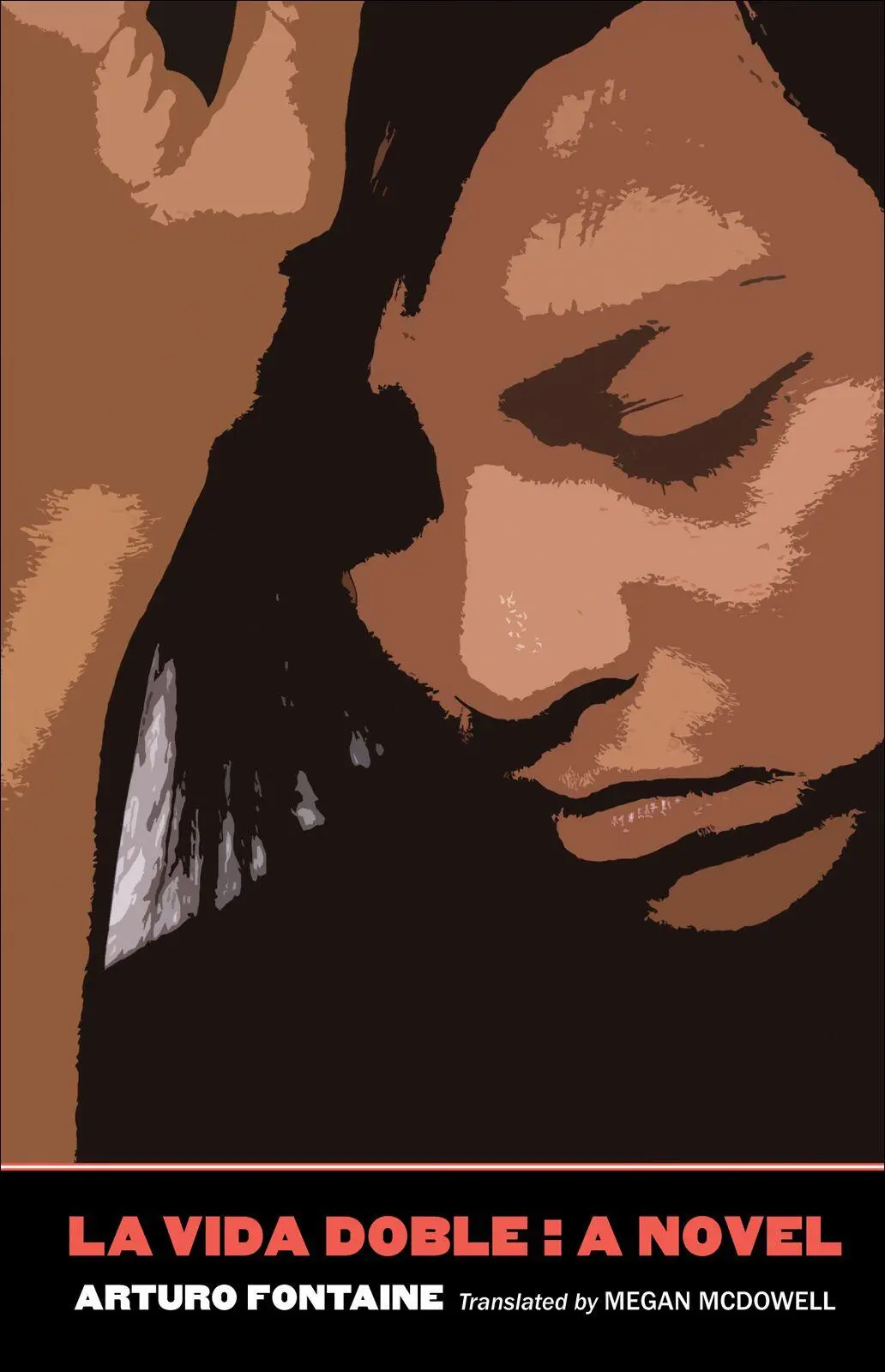
- Название:La Vida Doble
- Автор:
- Издательство:Yale University Press
- Жанр:
- Год:2013
- ISBN:нет данных
- Рейтинг книги:3 / 5. Голосов: 1
-
Избранное:Добавить в избранное
- Отзывы:
-
Ваша оценка:
La Vida Doble: краткое содержание, описание и аннотация
Предлагаем к чтению аннотацию, описание, краткое содержание или предисловие (зависит от того, что написал сам автор книги «La Vida Doble»). Если вы не нашли необходимую информацию о книге — напишите в комментариях, мы постараемся отыскать её.
is the story of Lorena, a leftist militant who arrives at a merciless turning point when every choice she confronts is impossible. Captured by agents of the Chilean repression, withstanding brutal torture to save her comrades, she must now either forsake the allegiances of motherhood or betray the political ideals to which she is deeply committed.
Arturo Fontaine’s Lorena is a study in contradictions — mother and combatant, intellectual and lover, idealist and traitor — and he places her within a historical context that confounds her dilemmas. Though she has few viable options, she is no mere victim, and Fontaine disallows any comfortable high moral ground. His novel is among the most subtle explorations of human violence ever written.
Ranking with Roberto Bolaño and Mario Vargas Llosa on Latin America’s roster of most accomplished authors, Fontaine is a fearless explorer of the most sordid and controversial aspects of Chile’s history and culture. He addresses a set of moral questions specific to Pinochet’s murderous reign but invites us, four decades later, to consider global conflicts today and question how far we’ve come.
La Vida Doble — читать онлайн бесплатно полную книгу (весь текст) целиком
Ниже представлен текст книги, разбитый по страницам. Система сохранения места последней прочитанной страницы, позволяет с удобством читать онлайн бесплатно книгу «La Vida Doble», без необходимости каждый раз заново искать на чём Вы остановились. Поставьте закладку, и сможете в любой момент перейти на страницу, на которой закончили чтение.
Интервал:
Закладка:
But however important Pauline was, I still had six minutes. Without thinking, I started to follow them. They went into an art gallery where there was an exhibition of Japanese prints. They stopped in front of one with a wave in the foreground that curved over and seemed to trap a boat, allowing a glimpse, far away, of Mount Fuji. Horacio Oliveira lit a Gauloises. He said something enthusiastically — or whenthusiastically , to continue with Hopscotch —about those “images of the floating world.” La Maga looked on disinterestedly, as if the charm of his intelligence was foreign to her. One of his friends — presumably Etienne, who was a painter — pointed to the trunk of a flowering cherry tree up above, said that this print had greatly influenced Van Gogh. Horacio then set off on a speculation about the close-up, the perspective of those Japanese prints, photography, impressionism, the fiction of representation. “It’s painting,” he said, “that has taught us how to photograph; never the other way around, never ever.”
And they left. I followed close behind. It was raining, so I couldn’t hear what they were saying. They went into another shop and I followed them in. It was an antique shop full of musical instruments. They spent a good while examining clarinets, bassoons, a tuba. . Until all of a sudden Horacio started playing an old trumpet. A second later, they were gone. When I stepped back over the threshold, they weren’t there. I looked disconsolately to the right, then left — nothing. I considered taking a taxi to scour the rue du Cherche-Midi, where Horacio’s apartment was.
I went running back to the Café Hugo. When I went in, an elegant woman of some thirty-five years, alone at a table, was looking anxiously at the time. It could only be Pauline. I was twenty minutes late.
To excuse my lateness I told her the truth. She enjoyed my story about Cortázar, and we became friends immediately. She was a woman with sharp features, distant when she was serious, warm when she laughed and showed her large teeth, and seductive when she only smiled. A few errant grays shone in her light brown hair. She was wearing a simple, navy blue silk blouse and a Cartier watch. She accepted my documents and asked general, cautious questions. She didn’t want to pressure me. I started to suspect, though, that her interest in Chile was perhaps instrumental. Maybe her heart needed to attack a monster of the right in order to make her attack on the monsters of the left credible. What was really important to her, I think, was to unmask those who gave orders from “behind the Wall” and who, with their tanks, had put an end to the “Prague Spring.” She was interested in the uprising of the unions that was starting in Poland. “It’s our greatest hope,” she told me.
I tried to get back to my subject, my mission: to convince her to come to Chile and write a report on the situation there. We had to show the world that the resistance was real; that, for example, Red Ax was in full operation. We had to increase international solidarity. That could be very meaningful for us. She agreed, but quickly went back to talking about Europe. “You know,” she said, “the Pope being Polish helps. Even though he’s a tireless reactionary when he pontificates about sex. What can you do?” she exclaimed, “Voilà l’homme providential,” that’s a providential man for you.
I turned on the light and went up the four flights of stairs. When I got there, the light went out. I started knocking blindly at doors. Suddenly, one opened up behind me, and I saw Pauline smiling in a stream of warm light. Now, at night, the silk blouse was raw and natural, dense, with a tasteful cut. A golden ring hung around her neck. She wasn’t wearing a bra, and her breasts made their weight and presence known. Her jeans were black and her high-heeled shoes showed her long toes with their rounded nails. I felt small. My green T-shirt. . I felt ugly, boring and provincial next to that sophisticated woman and her apartment in the rue de Bourgogne. What the hell was I doing there? I heard voices, peals of laughter. I left my umbrella dripping in the porcelain umbrella stand, smoothed my hair, and went in. The smell of pipe smoke.
After a quick introduction, I sat down on a big Chesterfield sofa with somewhat worn-out springs, next to Dorel, a Romanian sculptor who was smoking a pipe. Its smell was inviting. His wife, Clarisse, was enthralled as she listened to Giuseppe. Whatever he was telling her must have been very entertaining. His accent was Italian. “My fiancé,” Pauline told me. “Giuseppe is a documentarian,” she said. Dorel lived in Paris and considered himself an exile, though no one had forced him to leave Romania.
“It was a necessity of the soul,” he explained, blowing smoke toward the ceiling. “The truth is,” he told me, “an artist can’t breathe there.” I myself was feeling a certain agitation that, against my will, turned into a sigh. Not for anything in the world did I want Dorel to think I was bored. Giuseppe’s gaze had me perplexed; that’s what was troubling me. I didn’t notice anything else.
Dorel got up to change the music. He wanted to hear Brassens, “because there hasn’t been anything better than him in France in decades,” he said in a challenging tone. No one rose to the bait. Pauline had gone to the kitchen. I hid my eyes in the depths of the Bordeaux wine in my glass. I thought I felt her fiancé’s eyes on me: Giuseppe. I looked up and sought him out: he was laughing with Clarisse, who rested one bare foot on top of the other. The room we were in had high ceilings and the lighting was low and intimate. The Chesterfield sofa with beat-up leather went well with the brand-new Wassily chairs that reminded me of herons. Behind me a white beech shelf full of pocket edition paperbacks went up to the ceiling.
Brassens: Le singe, en sortant de sa cage / Dit: “C’est aujourd’hui que je le perds!” / Il parlait de son pucelage, / Vous avez deviné, j’espère! / Gare au goril. . le! 1Giuseppe was looking at me with a half smile. Brassens: Bah! soupirait la centenaire, / Qu’on puisse encore me désirer, / Ce serait extraordinaire, / Et, pour tout dire, inespéré! / Le juge pensait, impassible: / “Qu’on me prenn’ pour une guenon, / C’est complètement impossible. .” / La suite lui prouva que non! / Gare au gorille! 2
I couldn’t help but laugh, and I covered my mouth with my hand. Giuseppe pointed at me. We all moved to the greenish provincial-style dining table that was at one end of the room. Brassens in another song, sung in a grave and ironic voice: Mourir pour des idées, l’idée est excellente . . 3Giuseppe, across from me, refills my glass without asking. He doesn’t look at me. I observe his black velvet jacket, his abundant white hair falling over his ears, his forehead that wrinkles as he concentrates on my glass, the fine lines radiating from his eyes, his small mouth with full lips that rest one on top of the other, the protruding nose, audacious, thin, lively — a nose that differentiated itself from the apes billions of years ago. I return to the slight, elegant curvature of that nose that divides into two halves, the same as his chin. I’m twenty-four years old, I think to myself. He must be forty-three. He’s an old man, I think. Brassens: Mourrons pour des idées, d’accord, mais de mort lente . . 4
Pauline, in one of her comings and goings from the kitchen, invited me to talk about Chile. The soupe à l’oignon burned my tongue. I don’t remember what I said. I do remember that Giuseppe proposed an idea to me: I should invite Lech Walesa, the Polish labor leader, to speak in Chile about Solidarity. Everyone loved the idea, including me. But I loved even more Giuseppe’s Italian-accented French and, more than anything, the fact that he’d had the idea for me. Pauline assured me that the European press would all follow behind Walesa, and that of course she wouldn’t miss it. Would the dictatorship let him into the country? Everyone talked at once and I didn’t understand anything. In the hubbub I could only distinguish the donc ’s, bon ’s, quant meme ’s, and voilà’ s. Giuseppe let more Bordeaux fall into my glass. His gray eyes flitted around and came to rest on mine like a bird on a branch. The branch trembled, but held him.
Читать дальшеИнтервал:
Закладка:
Похожие книги на «La Vida Doble»
Представляем Вашему вниманию похожие книги на «La Vida Doble» списком для выбора. Мы отобрали схожую по названию и смыслу литературу в надежде предоставить читателям больше вариантов отыскать новые, интересные, ещё непрочитанные произведения.




Обсуждение, отзывы о книге «La Vida Doble» и просто собственные мнения читателей. Оставьте ваши комментарии, напишите, что Вы думаете о произведении, его смысле или главных героях. Укажите что конкретно понравилось, а что нет, и почему Вы так считаете.