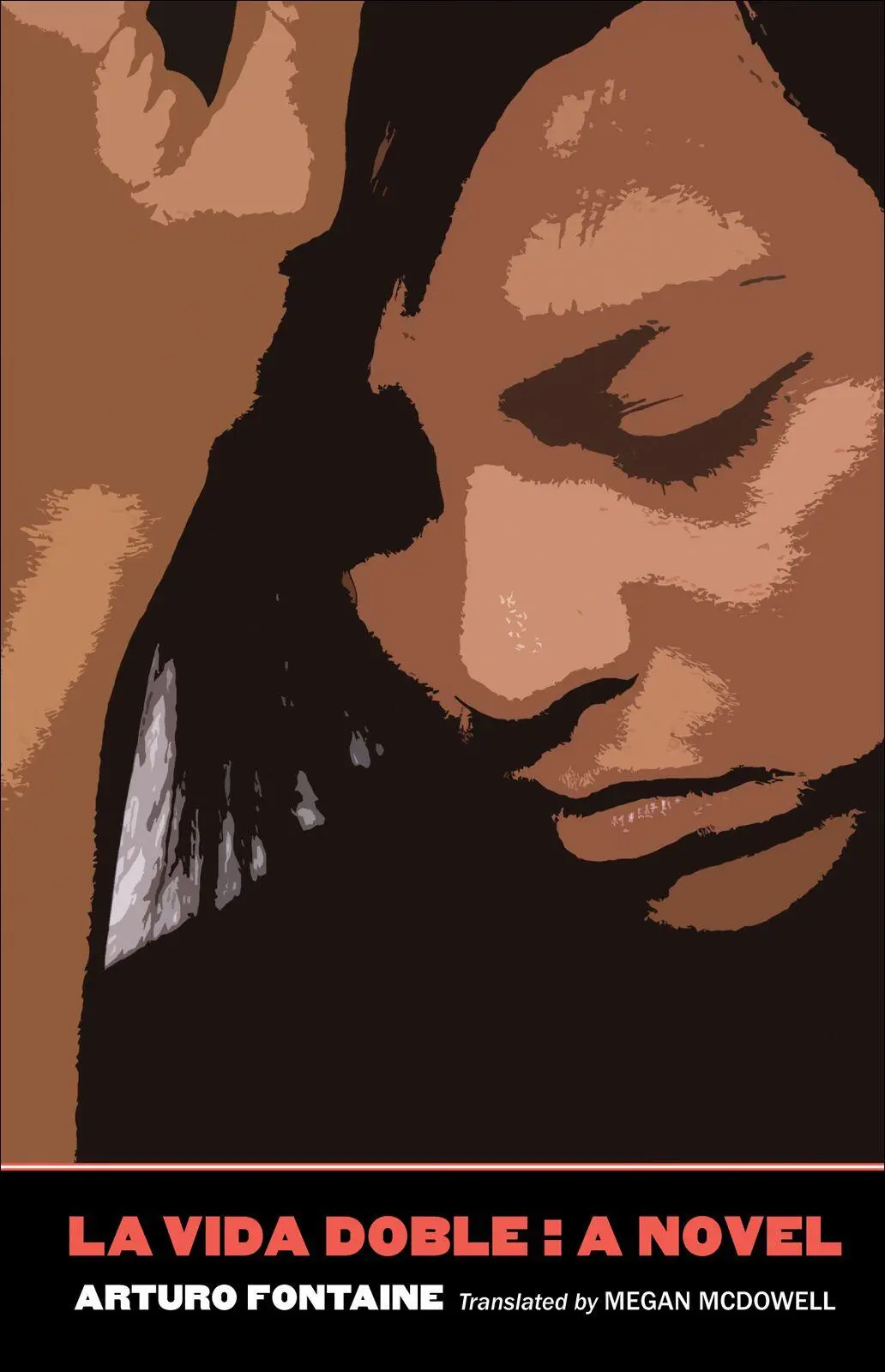
Arturo Fontaine - La Vida Doble
Здесь есть возможность читать онлайн «Arturo Fontaine - La Vida Doble» весь текст электронной книги совершенно бесплатно (целиком полную версию без сокращений). В некоторых случаях можно слушать аудио, скачать через торрент в формате fb2 и присутствует краткое содержание. Год выпуска: 2013, Издательство: Yale University Press, Жанр: Современная проза, на английском языке. Описание произведения, (предисловие) а так же отзывы посетителей доступны на портале библиотеки ЛибКат.
- Название:La Vida Doble
- Автор:
- Издательство:Yale University Press
- Жанр:
- Год:2013
- ISBN:нет данных
- Рейтинг книги:3 / 5. Голосов: 1
-
Избранное:Добавить в избранное
- Отзывы:
-
Ваша оценка:
La Vida Doble: краткое содержание, описание и аннотация
Предлагаем к чтению аннотацию, описание, краткое содержание или предисловие (зависит от того, что написал сам автор книги «La Vida Doble»). Если вы не нашли необходимую информацию о книге — напишите в комментариях, мы постараемся отыскать её.
is the story of Lorena, a leftist militant who arrives at a merciless turning point when every choice she confronts is impossible. Captured by agents of the Chilean repression, withstanding brutal torture to save her comrades, she must now either forsake the allegiances of motherhood or betray the political ideals to which she is deeply committed.
Arturo Fontaine’s Lorena is a study in contradictions — mother and combatant, intellectual and lover, idealist and traitor — and he places her within a historical context that confounds her dilemmas. Though she has few viable options, she is no mere victim, and Fontaine disallows any comfortable high moral ground. His novel is among the most subtle explorations of human violence ever written.
Ranking with Roberto Bolaño and Mario Vargas Llosa on Latin America’s roster of most accomplished authors, Fontaine is a fearless explorer of the most sordid and controversial aspects of Chile’s history and culture. He addresses a set of moral questions specific to Pinochet’s murderous reign but invites us, four decades later, to consider global conflicts today and question how far we’ve come.
La Vida Doble — читать онлайн бесплатно полную книгу (весь текст) целиком
Ниже представлен текст книги, разбитый по страницам. Система сохранения места последней прочитанной страницы, позволяет с удобством читать онлайн бесплатно книгу «La Vida Doble», без необходимости каждый раз заново искать на чём Вы остановились. Поставьте закладку, и сможете в любой момент перейти на страницу, на которой закончили чтение.
Интервал:
Закладка:
Let me tell you, that night was the best of my life. We parted at eight in the morning. It hurt my skin to pull my body away from his. And his eyes were full of tears.
Pelao and I flew back to Buenos Aires and traveled by land to Chile. It was safer that way. I never found out what Pelao did during those five days in France. Pauline never wrote her report and contact with her was cut off. I knew nothing more of Giuseppe until many years later.
1. “The ape, leaving his cage / says: “Today I will lose it!” / He meant his virginity / you will have guessed, I hope! / Beware the goril. . la!”
2. “Bah, sighed the ancient lady, / no one could still want me, / that would really be extraordinary, / and to be honest, unexpected! / The judge thought impassibly: / to be taken for a floozy, me! / it’s entirely impossible. . / Later, he was proven wrong! / Beware the gorilla!”
3. “To die for ideas, the idea is excellent. .”
4. “We shall die for ideas, all right, but let it be a slow death. .”
SEVENTEEN
Our organization functioned as a body fed by “ties” or “meet points.” If the “meet” was with our cell, the Spartan would arrive last of all, and he would always sit with his back to the wall in the spot with the greatest visibility in case of attack. He took orders from Max, his immediate superior, by means of a liaison. Who were they, these intermediaries? Where did they come from? Who recruited them? I never knew. The ones I saw were fragile women between sixty and seventy years old, who wore clothes that were neither luxurious nor poor, and who moved through the streets of Santiago with a dignified slowness. They almost always carried a purse on one arm and a bag with some vegetables, a wedge of cheese, a bottle of oil, a couple of apples, whatever. Many times I had to take from that bag a book or notebook that held an envelope with a coded message from the Spartan. The public telephone was used only in extreme cases. The old women gave the sign of recognition and then they would give the password. Of course, they never gave a name. They were the circulatory system. Most of them had belonged to the old forbidden party, they were retired, widows. . One might want to avenge her husband, another her brother, or a daughter who had been raped or murdered, another her own defeated dreams.
Who was above Commander Max? I don’t know. There was also Commander Iñaqui. He was important. That’s all I ever knew. At the top of the pyramid, Commander Joel. There was also a man who, as you know, had the job of “general liaison” and whom everyone called “Bone.”
We had instruction and indoctrination meetings, which we went to compartmentalized, for safety. They put us in a car with blindfolds over our eyes and they brought us to a house that we wouldn’t know how to find again. Sometimes, the entire meeting would take place with us blindfolded. In that case, when we came in, the brother who would talk to us was already waiting there. The opposite happened with our other leaders. They would say: Commander Iñaqui is here in the room waiting for you. And he would start talking very quietly, you could barely hear him, and little by little, he raised his voice without ever reaching a full-blown shout. His voice was insinuating, serene, intimate, and full of silence. An intensely personal voice. It had a hypnotic power. After a while it was impossible not to feel complicit. You were caught up and bowled over.
One afternoon he talked to us about the color red. I’ll never forget it. In Saint Petersburg, at the start of the revolution in February 1917, he told us, when people were going out into the streets to protest, the Cossacks were sent to restore the tsarist order. In Nevsky Prospect, not far from the Kazan Cathedral, a squadron held back the fevered crowd. Everyone thought a massacre was about to start. Then a young girl stepped out from the crowd and, dignified, slowly approached the Cossacks. Amid a silence full of expectation, the girl pulled out from under her shawl a stem of red roses, and she offered it to the official. The people looked on, stupefied. The official bent down from his horse and took the flowers. The crowd shouted enthusiastically. For the first time shouts were heard in favor of the “Cossack brothers.” Then they let the protestors pass into the center of Saint Petersburg. It was a decisive moment. That’s how the October Revolution began, with the red color of that bunch of roses, he said. Later, the red of spilled blood would come. The word “red” ( krasnyi , in Russian), he told us, is related to the word “beautiful” ( krasivyi ). The place for icons in a Russian house, the place for sacred objects, was red. “The red-beautiful,” he told us, “has power. Red will always be the color of the revolution: ‘krasnyi.”’
EIGHTEEN
The woman with glasses and the Bic pen examined the fake Argentine passport I handed her. Through the bars and without speaking, she showed me on her calculator the number of pesos I could buy with the two hundred dollars I’d given her. I nodded. She hit the buttons with fingers tipped with blunt, purple-painted nails, and she passed me the receipt through the drawer so I could sign it. Canelo was behind me; I could hear him breathing. I stared at my fingertips, at their transparent layers of dried adhesive, and I checked the time: one thirty. According to our information, every day at that exact time, a man with white hair and dark suit and a halting walk opened the heavy door that led to the two registers and protected them from the public, left the currency exchange with a faux-leather briefcase, and went straight to the Bank of Chile to deposit traveler’s checks and other documents.
At the other register, to my left, an elderly couple with German accents. They were calmly changing their money. A bald clerk about fifty years old was helping them. There were no other customers. The place had been well chosen by those who did the planning.
The German man coughed. “Smoker’s cough,” I thought to myself, and then Canelo’s harsh shout paralyzed me along with everyone else. I saw his ski mask covering his face and I put mine on, too; I imagined my sketch spread out on the kitchen table of the safe house, my bars, my pencil drawing of the door; I saw the white-haired employee drawn with a real pallor now in that real door, and he was looking at the drawn revolver with frightened eyes, eyes that no one would be able to sketch. He wavered for a second with the door shut before opening it and surrendering to Canelo, backing up with his hands raised and never taking his eyes from the barrel of the Smith and Wesson. The cashier followed his example without hesitation.
I felt like I was taking too long and I tried to hurry, but I couldn’t, I kept lagging behind like I was in a slow-motion movie, and there was a deceptive silence and I knew I needed to draw my gun right away but I couldn’t because my hand would not obey me. But finally I went in, I went in through the aisle behind the registers, following Canelo, and I found in my hand a trembling Beretta that was already threatening the cashier. She was watching in astonishment, without dropping her Bic pen. The silence was suddenly full of unbearable noise. The out-of-step orders from Canelo and Kid of the Day. And Kid of the Day came past shoving the German couple in front of him. But it wasn’t just that. Everything sounded too loud. The white-haired employee and the bald cashier and the German couple disappeared through the interior hallway, with Canelo pointing his gun at them. The plan was for him to lock them in the bathroom and stand guard. That must be what he was doing, I guessed. That’s what that brutal slam of the door must have been. I looked at my watch: I couldn’t read the time. I looked at the cameras sweeping the place, the red light always on. Kid of the Day passed by me and I saw the horrible scar they’d given him on his forehead as camouflage, and he seemed to jump suddenly. I was in a cloud, with no up or down. What was he doing? Oh, I remember, he was going back to keep watch at the entrance and to lock the front door. That was all according to plan.
Читать дальшеИнтервал:
Закладка:
Похожие книги на «La Vida Doble»
Представляем Вашему вниманию похожие книги на «La Vida Doble» списком для выбора. Мы отобрали схожую по названию и смыслу литературу в надежде предоставить читателям больше вариантов отыскать новые, интересные, ещё непрочитанные произведения.





Обсуждение, отзывы о книге «La Vida Doble» и просто собственные мнения читателей. Оставьте ваши комментарии, напишите, что Вы думаете о произведении, его смысле или главных героях. Укажите что конкретно понравилось, а что нет, и почему Вы так считаете.