Arturo Fontaine - La Vida Doble
Здесь есть возможность читать онлайн «Arturo Fontaine - La Vida Doble» весь текст электронной книги совершенно бесплатно (целиком полную версию без сокращений). В некоторых случаях можно слушать аудио, скачать через торрент в формате fb2 и присутствует краткое содержание. Год выпуска: 2013, Издательство: Yale University Press, Жанр: Современная проза, на английском языке. Описание произведения, (предисловие) а так же отзывы посетителей доступны на портале библиотеки ЛибКат.
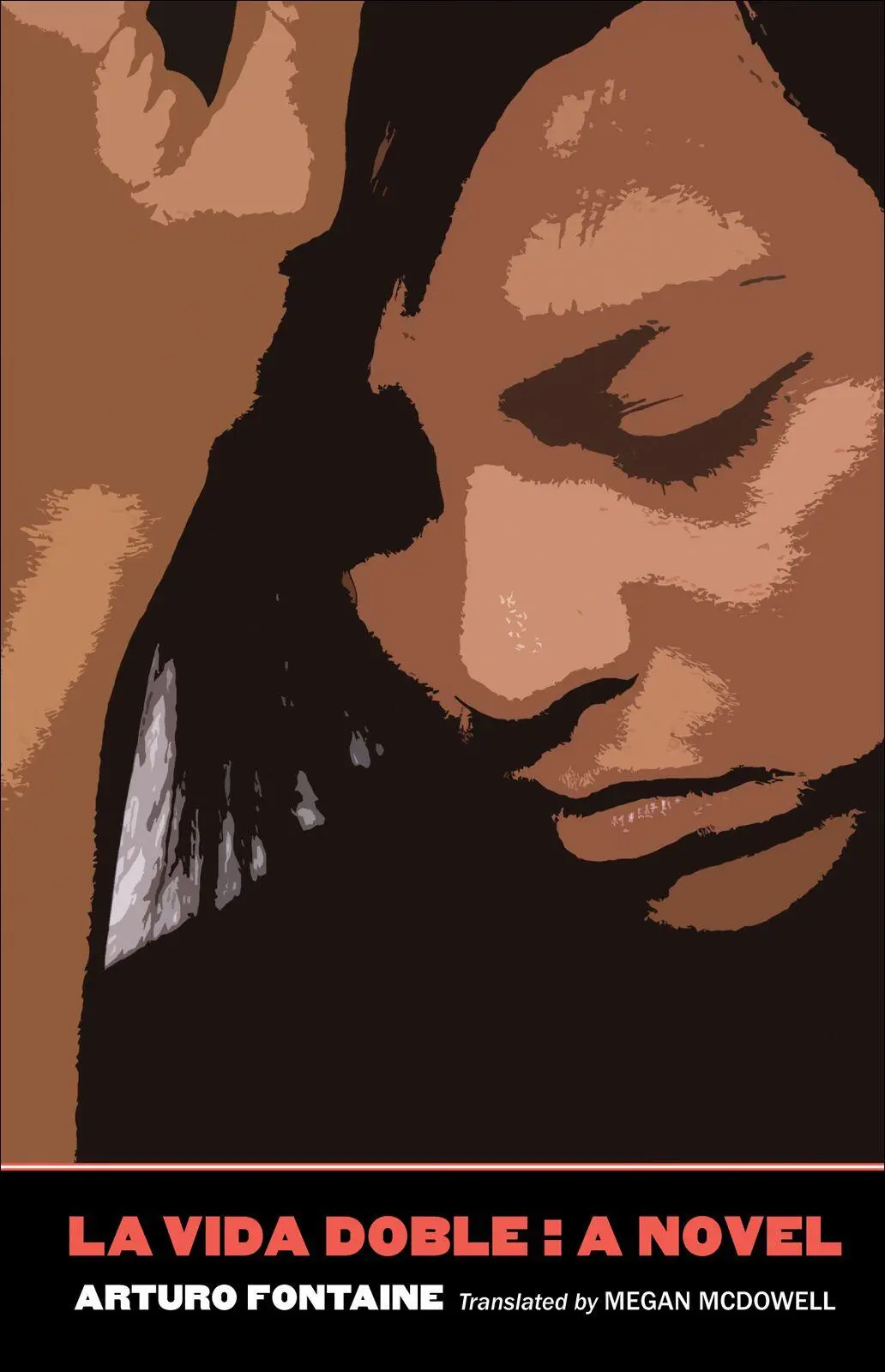
- Название:La Vida Doble
- Автор:
- Издательство:Yale University Press
- Жанр:
- Год:2013
- ISBN:нет данных
- Рейтинг книги:3 / 5. Голосов: 1
-
Избранное:Добавить в избранное
- Отзывы:
-
Ваша оценка:
La Vida Doble: краткое содержание, описание и аннотация
Предлагаем к чтению аннотацию, описание, краткое содержание или предисловие (зависит от того, что написал сам автор книги «La Vida Doble»). Если вы не нашли необходимую информацию о книге — напишите в комментариях, мы постараемся отыскать её.
is the story of Lorena, a leftist militant who arrives at a merciless turning point when every choice she confronts is impossible. Captured by agents of the Chilean repression, withstanding brutal torture to save her comrades, she must now either forsake the allegiances of motherhood or betray the political ideals to which she is deeply committed.
Arturo Fontaine’s Lorena is a study in contradictions — mother and combatant, intellectual and lover, idealist and traitor — and he places her within a historical context that confounds her dilemmas. Though she has few viable options, she is no mere victim, and Fontaine disallows any comfortable high moral ground. His novel is among the most subtle explorations of human violence ever written.
Ranking with Roberto Bolaño and Mario Vargas Llosa on Latin America’s roster of most accomplished authors, Fontaine is a fearless explorer of the most sordid and controversial aspects of Chile’s history and culture. He addresses a set of moral questions specific to Pinochet’s murderous reign but invites us, four decades later, to consider global conflicts today and question how far we’ve come.
La Vida Doble — читать онлайн бесплатно полную книгу (весь текст) целиком
Ниже представлен текст книги, разбитый по страницам. Система сохранения места последней прочитанной страницы, позволяет с удобством читать онлайн бесплатно книгу «La Vida Doble», без необходимости каждый раз заново искать на чём Вы остановились. Поставьте закладку, и сможете в любой момент перейти на страницу, на которой закончили чтение.
Интервал:
Закладка:
Dorel clears away the plates but doesn’t stop talking. He’s telling us about Broken Kilometer by Walter de Maria. He’d seen it before in photos, of course, but to have those rows of bronze rods lined up in front of you is another matter. “The purity,” he says, “of that folded distance.” Afterward he went with Walter, he told us, to a Chinese bar that you had to pass through a sushi restaurant to get to. “Trés New York, tu sais.”
Giuseppe disappears to make coffee. “Brassens is boring!” shouts Clarisse.
“Dorel loves this junk left over from the fifties!” laughs Giuseppe from the other room. Clarisse puts on Paco de Lucía. She starts to dance flamenco. She’s not bad, to tell the truth. You can tell she’s taken classes, but it’s not just that. She has grace. She pulls Giuseppe up by the hand. Giuseppe resists, and finally feints a dance to that soleá, his feet hint at a tapping, it’s just a glimpse and the flame is lit, the stance of his torso, the attitude of his arms and face are exact, the passion and intensity are there, but he practically doesn’t move, it’s just the possibility, the insinuation of a dance. He breaks off, laughing hard, and goes back to serving coffee.
“Giuseppe,” I tell him, “you’ve danced an imaginary dance for us.”
“Did you like it?” he asks me, his mouth full of laughter. The scent of his woody cologne reaches me. He’s just returned from making a documentary in South Africa. “There’s a protest in the streets,” he tells me, “the police come with enclosures that they put up quickly to cage the protestors right there, as if they were animals.” We’re talking now, as we eat a practically liquid Camembert on thin slices of apple. Giuseppe prepares them and hands them to me. Impossible for anything to pair better with the Bordeaux cabernet. No one interrupts us now. He talks to me about Kruger Park, about a lion couple he saw making love like lions, he tells me how he saw gay lions, pour tout dire inattendu , and yes, he tells me laughing, anche tra i leoni ci stanno i culatoni, even among lions there are fags, and he tells me about a program he’s seen on TV, about a she-lion who lives among the rocks with her mate and two cubs. Another male comes along. They fight. The female comes to her mate’s defense. The recently arrived one kills the other male and defeats the female. At some point, she gives in to him. Then he attacks the cubs — the mother gets up and defends them, but in the end she gives up again. The winning lion kills the other’s babies and stays with the mother. She accepts it. He says with perplexed eyes, the eyes of a child: “A drama from Sophocles, n’est-ce pas? Excuse me, I’ll be right back,” he says. “I’m going to the bathroom to have. . a lovely piss.” We laugh.
I look attentively at the Bordeaux in my glass. Giuseppe, who’s returned, asks me what I see in there. I shrug my shoulders. “I don’t know,” I say. “I like it,” I say. His smile makes me hide my gaze in the depths of the wine.
Suddenly, I’m the only one at the dining room table. I look around in alarm. Dorel and Clarisse are leaving, I say to myself. Yes. Did I say good-bye to them? Yes. Giuseppe and Pauline are seeing them to the doorway. I hear Giuseppe’s full, confident laughter. Pauline makes a silly face at me and goes into the kitchen. “Voilà la plus belle!” Giuseppe says and he sits down next to me. He leans in very close. Pauline is in the next room, I think to myself. Giuseppe’s hand on my face, his hand on my hip. I tremble like a child. Pauline will appear any second, I tell myself, and she’ll catch us. But with two fingers I follow his calf upward until his pants stop me. His hand grabs my head and we kiss.
“Why did you take so long?” I murmur in his ear. His smile enters through my eyes and reaches down into my stomach. It’s a vertigo I can’t resist. We kiss again. I jerk away from him roughly.
Pauline comes over to clear the table. Did she see us? I go help her. “Call me a taxi,” I tell him.
“Yes,” he says, “it’s raining and windy.” It comes right away. I pick up my umbrella. Giuseppe, behind me, is saying to Pauline that no, better not, he has things to do early tomorrow, it’s very late, and he’ll share the taxi with me. They’re in the doorway now and I see them kiss tenderly on the mouth. She closes the door, and he kisses me. We run down the stairs holding hands. We get into the taxi laughing like naughty children. The white hairs of his chest peek from under his shirt and he looks at me with smiling eyes. His happiness, I don’t know why, it moves me. Madam Bovary’s stagecoach, I think to myself, as we kiss and kiss again, borne along by a quick passion.
The light from outside the fogged window of his apartment was enough. The streetlight among the chestnut trees that were losing their leaves in the rain. I left my shoes on the rug. We kissed standing up, we bit each other gently on the ears, we looked into each other’s eyes for a long time. He was almost my height.
“Sei come una pantera,” he said to me, caressing my hair. “What makes you so attractive,” he told me, “is that you don’t realize how attractive you are.” He kissed me. He held me and kissed me lovingly, and I felt his lips playing with my nipples, and I fell backward with him holding my waist and I lost my balance, which was, I suppose, what he wanted, since the bed was right there, and I fell onto it and he fell hungrily on top of me, and I struggled beneath him to take off my pants and also his shirt, and I rolled over and once on top I managed to do it and I felt his muscles that were still firm and I felt his hands on my thighs and more and I felt him and I felt him slide a hand under my elastic and I practically felt a splash, and I was ashamed and I held his hand in mine and still I pushed him in and I was above him and I moved pressing myself tightly to him so I could feel him more, more, and then I came, like an idiot, I came suddenly, I couldn’t stand it anymore, I came, I swear, and I couldn’t hide it, because I came with everything I had.
Then we drank some water, and I took off all his clothes and kissed him from head to foot and he kissed me, and I stopped to kiss him where I thought he would like it most, but I kept changing my mind where that was; he sighed and at times he maybe groaned, or maybe I imagined that. And I got on top of him and I wanted him to come, and I started to feel again and I thought he had come and I got off but he hadn’t, and we went on loving like that until, sticky with sweat, he finally came and we fell asleep and it was already starting to dawn by then.
I got back to my hotel room a little after seven in the morning. Cuyano was waiting up for me and was very worried about me, he said. He asked for an explanation. I started to laugh and he understood. A couple of hours later I flew to Marseille, birthplace of Antonin Artaud. In the doorway of a café I met with an ETA contact. I brought a box with five cigarettes that carried a message. Of course, I never found out what they said. I only knew that there were always Mapuche comrades among us — like Kid of the Day. Many of them also participated in organizations of their people. The contact was close. That was what interested the ETA. And the ETA interested our Mapuches.
I went back to Paris that same day and went straight to Giuseppe’s apartment. “Voilà la plus belle!” He exclaimed when he opened the door. He uncorked a bottle of Moët et Chandon and in his miniscule kitchen he made an omelet with mushrooms that was delicious. “Je n’ai jamais aimé que vous,” he told me.
“You liar!” I shouted.
“It’s a line from that old guy Brassens you liked so much,” he protested, laughing. And as proof he put on the song “Il suffit de passer le pont.”
Читать дальшеИнтервал:
Закладка:
Похожие книги на «La Vida Doble»
Представляем Вашему вниманию похожие книги на «La Vida Doble» списком для выбора. Мы отобрали схожую по названию и смыслу литературу в надежде предоставить читателям больше вариантов отыскать новые, интересные, ещё непрочитанные произведения.







Обсуждение, отзывы о книге «La Vida Doble» и просто собственные мнения читателей. Оставьте ваши комментарии, напишите, что Вы думаете о произведении, его смысле или главных героях. Укажите что конкретно понравилось, а что нет, и почему Вы так считаете.