Uwe Tellkamp - The Tower
Здесь есть возможность читать онлайн «Uwe Tellkamp - The Tower» весь текст электронной книги совершенно бесплатно (целиком полную версию без сокращений). В некоторых случаях можно слушать аудио, скачать через торрент в формате fb2 и присутствует краткое содержание. Год выпуска: 2014, Издательство: Penguin, Жанр: Современная проза, на английском языке. Описание произведения, (предисловие) а так же отзывы посетителей доступны на портале библиотеки ЛибКат.
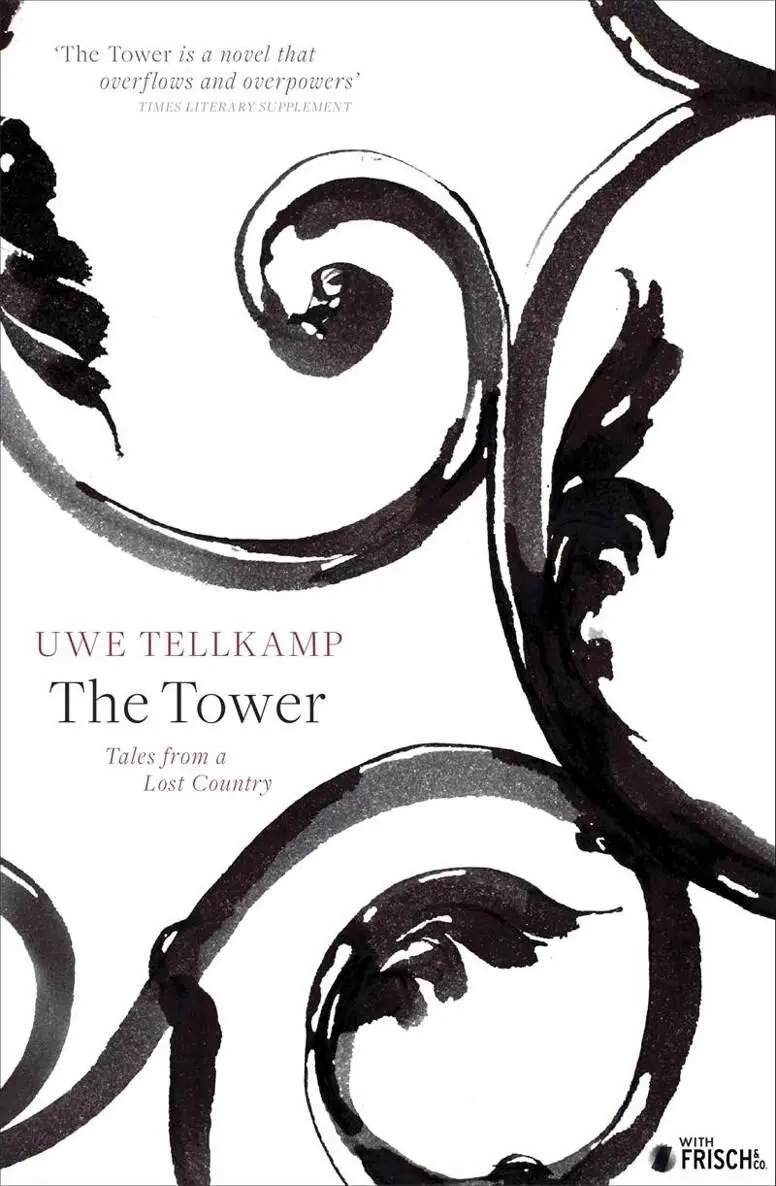
- Название:The Tower
- Автор:
- Издательство:Penguin
- Жанр:
- Год:2014
- ISBN:нет данных
- Рейтинг книги:5 / 5. Голосов: 1
-
Избранное:Добавить в избранное
- Отзывы:
-
Ваша оценка:
The Tower: краткое содержание, описание и аннотация
Предлагаем к чтению аннотацию, описание, краткое содержание или предисловие (зависит от того, что написал сам автор книги «The Tower»). Если вы не нашли необходимую информацию о книге — напишите в комментариях, мы постараемся отыскать её.
The Tower — читать онлайн бесплатно полную книгу (весь текст) целиком
Ниже представлен текст книги, разбитый по страницам. Система сохранения места последней прочитанной страницы, позволяет с удобством читать онлайн бесплатно книгу «The Tower», без необходимости каждый раз заново искать на чём Вы остановились. Поставьте закладку, и сможете в любой момент перейти на страницу, на которой закончили чтение.
Интервал:
Закладка:
‘Unfortunately not.’
‘Me neither. — Shall we risk it?’
‘Let’s risk it.’
Meno almost exclaimed, ‘You!?’ when he saw the Old Man of the Mountain come out of the door. The old man invited him into his room. ‘What would you like to drink? Tea, mineral water, lemonade? No, I know what you drink.’ Altberg reached under the desk and, with a sly grin, fished out a bottle with an oily, amber liquid. ‘Home-made, the recipe comes from my housekeeper. Nectar of the Gods. Please …’ Waving away Meno’s protests, Altberg poured some of the nectar into two glasses. ‘Prost!’
Meno took a sip: shards of fire went tumbling down his throat, merging into a fire-eel that slowly, bristling with spines, filled his gullet; Meno felt he was on fire and as if his eyes were being forced out of their sockets from inside. Then the blaze splashed back in a surging wave that went to the roots of his hair, to the tips of his fingers, electrified his nostrils and brought peace. The Old Man of the Mountain poured himself a second glass, tossed it back, chewed on the drink like a slice of bread. Then he took the reports out of the drawer and his friendliness vanished.
The old man tore, ripped, slashed almost the entire publishing plan to pieces. He made holes in a novel by Paul Schade that left it like a Swiss cheese; he made the pieces between the holes sound as if they had the taste of a rubber eraser, designating them ideologist’s puree, he crossed out the holes, sliced them lengthways, chopped them up crosswise, drew, after he’d downed a third glass of nectar, the slats of a blind in the air and shut them.
‘Do you know what would have happened to you in the past, after the Eleventh Plenary Session of the Party Central Committee, if you had ventured to present such a plan, such deviations from the Party line? Just ask your colleague Lilly Platané in Editorial Office 1 … A financial penalty in the form of a reduction in salary, a serious charge of endangering the targets of the plan, self-criticism before the editorial board … Just be glad I’m not attacking you personally. You can look over the cuts I prescribe when you get home.’ He put his reports in a folder and tossed it over to Meno.
‘But there’s something else. Herr Eschschloraque’s manuscript. That, my dear Rohde,’ the old man said, ‘I’m going to finish off for you well and good. My volume of stories is going to be chucked out, a good thing then that I’ve got a few more essays as well; and in place of that you want to publish this crap, this stilted celery, this …’ He struggled for words to drive his contempt for Eschschloraque, who was a blowfly, incapable of flight, crawling over plaster casts of the classics, forcibly into Meno’s ear while he, pale, was contending with the consequences of the nectar. Meno wondered if he should make the Old Man of the Mountain aware of Eschschloraque’s attitude but, stunned, he decided not to.
Three o’clock. Richard checked his wristwatch as the gong echoed. Regine had said goodbye, she had bravely and defiantly decided she was going to come back there in a fortnight’s time. No hysteria à la Alexandra Barsano, that only led to trouble and got you nowhere. Obstinate insistence, unwavering chipping away until you found the weak spot — ‘even if I have to spend the night here’. Richard leant against the wall, looked out of the window, wondered whether to steal one of the little copper watering cans or at least a sucker from one of the fleshy leaved plants, ate his last sandwich. The violin evaluated, the report with Pahl finished — a sensible and experienced man, you never knew which assessor you were going to get … That left the gas water-heater. The strange ticking noise there’d been this morning had gone. Meno had not turned up at twelve and the porter had refused to send out a call for ‘any old citizen, we’re not at the football stadium’.
Or the racecourse, Richard thought. Flurries of snow started. The derricks in the prohibited area of Coal Island were just visible, as if sketched with faint pencil lines. Crows winged down from the Marx — Engels memorial; the sentry in front of it, whom Richard could see obliquely from behind, stood there motionless, covered in snow, rifle at attention. A clunking meandered down the heating pipes that ran, uncovered, along the walls. Richard folded his sandwich paper, washed himself in one of the hand-basins and set off for the eleventh floor, G corridor, office CHA/5.
Meno looked at the clock: his next appointment was for 3.30 p.m. Ravenous, he ate the apple and the two pieces of cream cake he’d packed in his briefcase in the morning. Slalomon . He was the only one who still wrote his reports — extensive free-skating programmes with a scatter of cut flowers — by hand. His handwriting was clear and flowing, as in official letters from the nineteenth century. They looked strange among the office files, like jetsam from a long-ago age, and when he read Albert Salomon’s reports, with the roundabout style avoiding anything too direct, Meno had the same feeling as with the pre-war telegrams he saw at Malthakus’s, lines that read as if put together laboriously and against considerable resistance, arousing in him the urge to write an essay on the attraction of the ‘just-about’; it must have something to do with being saved, an innate desire for protection, that made such a document, rescued from the crypt of time, seem more valuable than modern, easy, newsy letters which gave the impression that neither their preparation nor their distribution had taken much effort.
A lengthy part of Salomon’s reports consisted of apologies: apologies for having to make a judgement; for recommending a cut here and there; for inconveniencing the author and editor; for the fact that he, Albert Salomon, existed.
Mrs Privy Councillor: Eschschloraque, in his role as dramatist, had once taken the liberty of making a joke and given himself a speech in one of his plays: ‘Censors! Who is it that becomes a censor if not someone / whose head is largely empty / even if the fellow’s read this line’ — that was what the whole play was like had been Karlfriede Sinner-Priest’s sole comment on this salutation from a fellow socialist. Meno was afraid of her. She was unpredictable, her opinion outweighed all others in the Ministry of Culture, she had been on Coal Island since time immemorial, her reports were looked upon as an ideological litmus test. No Hermes editor had ever managed to get a book accepted that she wanted to refuse ‘entry into literature’. She was gaunt and looked as if she’d been turned on a wood lathe, a doll that never laughed, who, depending on her mood, would kill off a book or a person with a single sentence, sharp as a sliver of glass, or go off on sparkling, sometimes self-ironic purple passages enthusiastically scrambling over each other. Her authority was Lenin, her interest free of prejudice. She had pencils stuck like Japanese pins in her wig that was always askew and made her face seem unnaturally long, giving her the look of something extinct; Meno sometimes imagined her at a castle ball, dancing ceremoniously to the sound of a spinet. She had been given one of the SS’s travel scholarships. She had survived Buchenwald.
Richard was astonished to see Albert Salomon at the office of the Communal Housing Administration. He was waiting on the sixth floor, C corridor, office H/2; office CHA/5 in G corridor on the eleventh floor was only for heating problems, insulating material, pumps and the maintenance of gas meters, but not for gas water-heaters, they were a sanitary problem, as Richard was informed. Albert Salomon kept looking at the clock above the office window and appeared to be getting increasingly nervous. Richard knew him, he was one of his patients. Before 1933 Albert Salomon had worked for Meissen Porcelain as a pattern maker and design painter but someone had informed on him and he had ended up in a Gestapo prison, then in Sachsenhausen concentration camp, where he was tortured and both his arms were crushed. His right arm, the one he used to paint and write with, had had to be amputated in the concentration camp. Only once, as far as Richard could remember, had Salomon talked about the camp: commenting on a passage in a Soviet novel in which he thought a detail was wrong — the boot-testing track with different surfaces along which prisoners had to go at a forced march for days on end to test out various materials for the soles of army boots; every surface ‘a city I thought about’.
Читать дальшеИнтервал:
Закладка:
Похожие книги на «The Tower»
Представляем Вашему вниманию похожие книги на «The Tower» списком для выбора. Мы отобрали схожую по названию и смыслу литературу в надежде предоставить читателям больше вариантов отыскать новые, интересные, ещё непрочитанные произведения.


Обсуждение, отзывы о книге «The Tower» и просто собственные мнения читателей. Оставьте ваши комментарии, напишите, что Вы думаете о произведении, его смысле или главных героях. Укажите что конкретно понравилось, а что нет, и почему Вы так считаете.