Uwe Tellkamp - The Tower
Здесь есть возможность читать онлайн «Uwe Tellkamp - The Tower» весь текст электронной книги совершенно бесплатно (целиком полную версию без сокращений). В некоторых случаях можно слушать аудио, скачать через торрент в формате fb2 и присутствует краткое содержание. Год выпуска: 2014, Издательство: Penguin, Жанр: Современная проза, на английском языке. Описание произведения, (предисловие) а так же отзывы посетителей доступны на портале библиотеки ЛибКат.
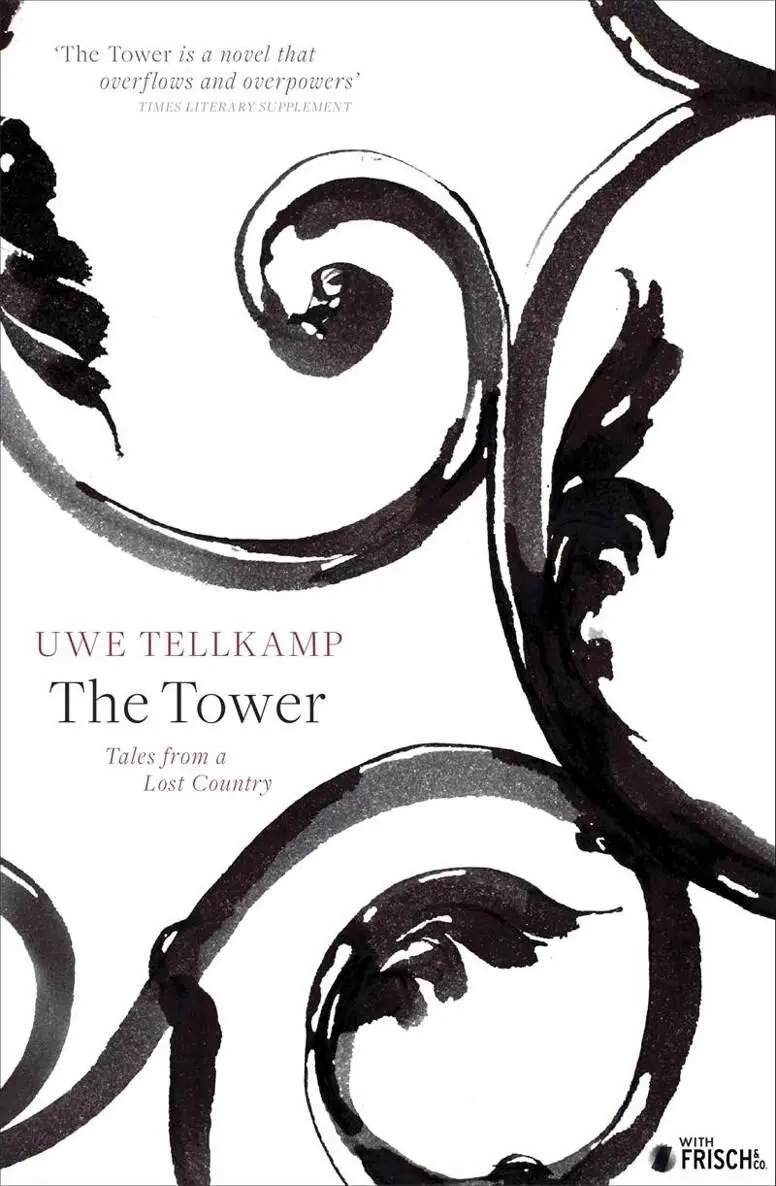
- Название:The Tower
- Автор:
- Издательство:Penguin
- Жанр:
- Год:2014
- ISBN:нет данных
- Рейтинг книги:5 / 5. Голосов: 1
-
Избранное:Добавить в избранное
- Отзывы:
-
Ваша оценка:
The Tower: краткое содержание, описание и аннотация
Предлагаем к чтению аннотацию, описание, краткое содержание или предисловие (зависит от того, что написал сам автор книги «The Tower»). Если вы не нашли необходимую информацию о книге — напишите в комментариях, мы постараемся отыскать её.
The Tower — читать онлайн бесплатно полную книгу (весь текст) целиком
Ниже представлен текст книги, разбитый по страницам. Система сохранения места последней прочитанной страницы, позволяет с удобством читать онлайн бесплатно книгу «The Tower», без необходимости каждый раз заново искать на чём Вы остановились. Поставьте закладку, и сможете в любой момент перейти на страницу, на которой закончили чтение.
Интервал:
Закладка:
‘Do come in, Rohde. Do you like tea? — Good to hear. Tea drinkers are mostly good people to talk with. They’re intelligent murderers into the bargain and they mostly have something to say. I need that for one of my plays, you should know. Is it not much more effective when a torturer sips a cup of tea than when he just downs a beer?’
‘Aren’t you making it too easy for yourself if you have the said torturer drinking tea. The critics will say, “Oh God, a torturer drinks beer, a proletarian touch! How does a crafty author avoid that? He makes him drink tea. That is such an unsurprising surprise, Herr Eschschloraque, that it’s become a cliché.” ’
‘You may well be right, my dear Rohde. Should I go back to beer, then? What our critics don’t realize is that this beer has been through all the pipes of the directorial drinks department and has reached a second innocence, a higher innocence so to speak. I would avoid the cliché by renewing the cliché … Hm. Interesting tactic, but you’d have to get the torturer to deliver a soliloquy on the innocence of beer. Despite that, I feel I can manage a tea. I can give you Earl Grey.’
‘I’ve brought a lemon, Herr Eschschloraque.’
‘Is it to have an acid taste? Acid corrodes but you don’t make anything wrong with it. I could have my torturer drink cocoa instead … Or a fizzy drink. Lemonade. I prefer people who love lemons to those who love melons, for example, basically a melon is nothing more than sugar and water and despite all the seeds is only the principle of the bellows transferred to horticulture. Anyway, you don’t need to offer me anything apart from arguments, up to now I have nurtured the illusion of being incorruptible. Sit down and let’s continue.’
Eschschloraque made the tea and started the ‘Conjuration of Snakes’ as the presentation of manuscripts and discussion of reports was called among the editors. Meno looked round, listened and observed Eschschloraque. He asked which manuscripts Meno was thinking of fighting for. Meno knew the ritual, made a gesture that could mean everything and said nothing: keep your cards close to you chest, editor. If you name a writer, the other person might hate him and finish him off with a smile. If you deliberately name a wrong one, in order to mislead them, the other person might be happy with that and confirm the name with a smile. Cover your flanks and protect your king — and be aware that your queen can never be brought into action too soon. Sacrifice a pawn, if it’s a knight or bishop that’s threatened, sacrifice your queen so that the last pawn can checkmate the king. And remember, the other person has studied your wiles and knows your ruses.
‘Right, then I will give you two names for which I will fight in the publishing plan. Let’s not fool ourselves, Rohde. You have fourteen titles, twelve of them are’ — Eschschloraque glanced through the telescope by the window of the room that was stuffed full of books and papers — ‘the way they are. Two will cause offence: Altberg’s essays and Eduard Eschschloraque’s slim volume of writings full of wittily mendacious truths and classic pesticide for the romantic rodents gnawing away at the vineyard of literature. You know just as well as I do that one of these projects has to die.’
But Eschschloraque’s smile vanished when he continued. Meno left his tea untouched and let his eyes wander round the room while the playwright, who seemed to Meno like a mixture between a clown and a sharp-witted old woman, exercised his wickedly mocking tongue on the more or less characteristic qualities of those colleagues whose manuscripts he had reported on in his quality of assessor. A copper engraving of Goethe on the wall, the old Weimar edition of his works in a glass-fronted bookcase, a bust of Goethe on the dramatist’s desk between a Soviet pennant and a signed portrait of Stalin; in front of them two neatly aligned typewriters: a black Erika and beside it a sign, like those saying ‘Reserved’ in restaurants, bearing the inscription ‘Mortal’; a second sign, beside the other typewriter, made by Rheinmetall, with ‘Immortal — when I’m fresh’; by this time Meno had shifted sideways up to the table and didn’t need to bend back much as the playwright strode up and down. ‘Hoary expressions, Rohde! And always with heartfelt’ — Eschschloraque drew the exclamation mark in the air with his finger — ‘good wishes … why not liverfelt or lungfelt once in a while? We all have to breathe, why should good things always have to come from the heart? Most people’s ticker is a clock, not a heart. The liver: the body’s chemical factory. Its potions and juices are much richer.’
His sarcastic thrusts broke off as if he’d hit a barrier when Eschschloraque got round to the Old Man of the Mountain’s book.
Meno was astonished at the seriousness, the knowledgeable, almost solemnly expressed love that warmed Eschschloraque’s remarks on those essays; he wouldn’t have believed Eschschloraque capable of it, wouldn’t have expected it of him. ‘Do you know what I see, my dear Rohde, when I look through this telescope? I see a classical land and Altberg is one of Goethe’s children. Goethe. Goethe! After all, he’s the father — and all the criticism merely the twitching of frogs’ legs.’ He had never, Eschschloraque went on, read such essays on writers and their works. That was European, indeed world, class.
Meno couldn’t believe his ears. Eschschloraque, that captious critic, that occupational shadow who ruthlessly pursued every careless slip, who openly spoke up for Stalin and the Stalinist system, for whom Richard Wagner’s music was a crime, the man was standing there by the door, disarmed, all his mockery, his caustic wit gone. ‘Don’t gawp like that, that’s your blasted lemon. Hm. So we’ll live and pray and sing, and tell old tales and laugh at gilded butterflies … but he misunderstands matters when he says that their relationships with each other are always created by people alone. Have you never encountered lifeless people? Have you never thought about the idea that you might have different shadows that take alternate shifts? — Now you know,’ Eschschloraque said brusquely, ‘or at least you think you do. The manuscript submitted by Eschschloraque needs to be revised and improved. It cannot be recommended for publication at the present moment. And now out you go, you’ve stolen enough of my precious time as it is. You’ll have it all in writing — and no sly tricks, Rohde.’
‘Left leg shorter by twelve centimetres,’ Dr Pahl wrote on the form and closed the handbook on assessing fitness for military service. ‘The man is entirely unfit for military service. At ten centimetres he could have been conscripted as a naval wireless operator or staff clerk without having to go through basic training. Of course, that leaves the question of what we do if there’s an appeal or if the orthopaedist for the regional military command should read the file. He’d immediately want to know what remedial measures were being looked at. Are there orthopaedic shoes with the soles built up by twelve centimetres?’
‘I don’t think so,’ Richard said. ‘We’d have to add that an operation to shorten the other leg is being planned.’
‘Hm.’ Pahl thought for a moment. ‘A bit thin. That would be a matter for Orthopaedics and at least I do know some colleagues there that we can trust. But what will happen if some overzealous military bone setter should simply summon this tyre repairer to have a look at the leg.’
‘And would he not also want to know how the man had managed to walk up to now? Twelve centimetres, Herr Pahl!’
‘Yes, he’s not just got a limp. Well, we’ll just say he’s made himself raised soles for his shoe out of old tyres. It’s crazy to conscript this man! We have to stop it. Do you know the orthopaedist for the local military command, Herr Hoffmann?’
Читать дальшеИнтервал:
Закладка:
Похожие книги на «The Tower»
Представляем Вашему вниманию похожие книги на «The Tower» списком для выбора. Мы отобрали схожую по названию и смыслу литературу в надежде предоставить читателям больше вариантов отыскать новые, интересные, ещё непрочитанные произведения.


Обсуждение, отзывы о книге «The Tower» и просто собственные мнения читателей. Оставьте ваши комментарии, напишите, что Вы думаете о произведении, его смысле или главных героях. Укажите что конкретно понравилось, а что нет, и почему Вы так считаете.