Uwe Tellkamp - The Tower
Здесь есть возможность читать онлайн «Uwe Tellkamp - The Tower» весь текст электронной книги совершенно бесплатно (целиком полную версию без сокращений). В некоторых случаях можно слушать аудио, скачать через торрент в формате fb2 и присутствует краткое содержание. Год выпуска: 2014, Издательство: Penguin, Жанр: Современная проза, на английском языке. Описание произведения, (предисловие) а так же отзывы посетителей доступны на портале библиотеки ЛибКат.
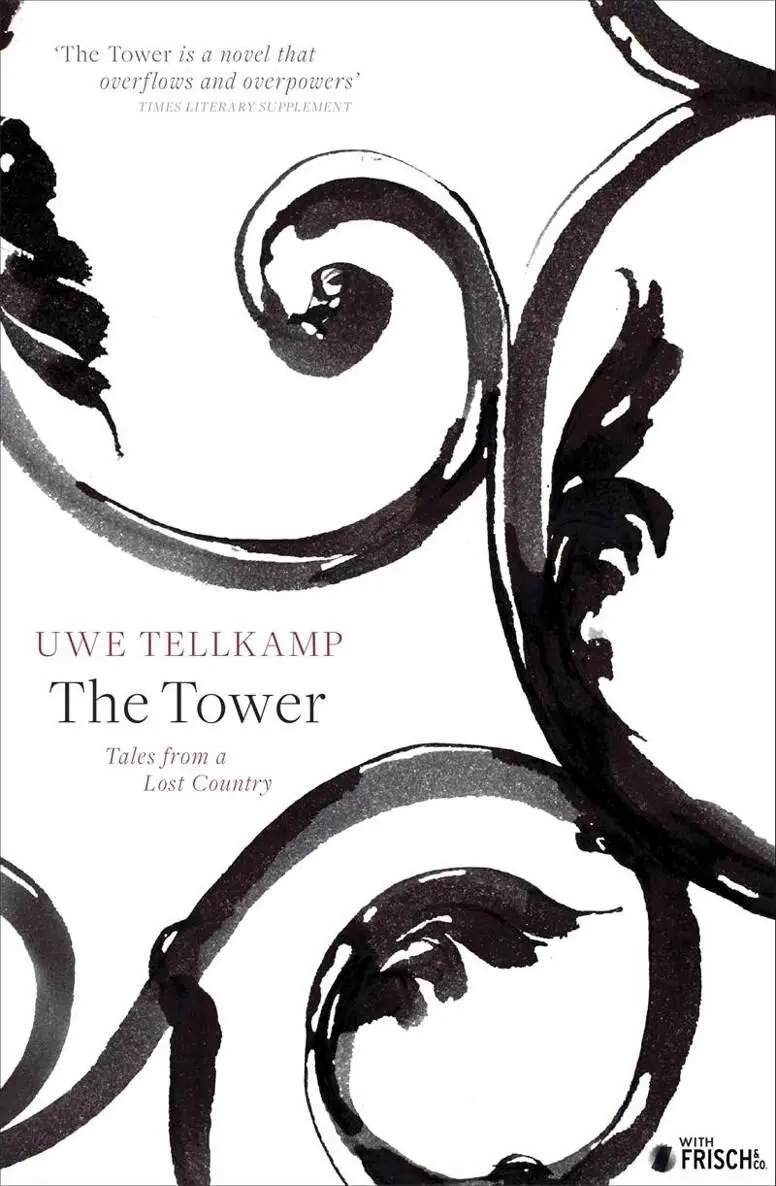
- Название:The Tower
- Автор:
- Издательство:Penguin
- Жанр:
- Год:2014
- ISBN:нет данных
- Рейтинг книги:5 / 5. Голосов: 1
-
Избранное:Добавить в избранное
- Отзывы:
-
Ваша оценка:
The Tower: краткое содержание, описание и аннотация
Предлагаем к чтению аннотацию, описание, краткое содержание или предисловие (зависит от того, что написал сам автор книги «The Tower»). Если вы не нашли необходимую информацию о книге — напишите в комментариях, мы постараемся отыскать её.
The Tower — читать онлайн бесплатно полную книгу (весь текст) целиком
Ниже представлен текст книги, разбитый по страницам. Система сохранения места последней прочитанной страницы, позволяет с удобством читать онлайн бесплатно книгу «The Tower», без необходимости каждый раз заново искать на чём Вы остановились. Поставьте закладку, и сможете в любой момент перейти на страницу, на которой закончили чтение.
Интервал:
Закладка:
‘One moment.’
‘Yes?’
The evaluator removed his glasses and took his time cleaning them. ‘As you will be aware, the bow goes with the violin. I have only certified that the violin is not part of our country’s cultural heritage. You have to get that certified for the bow as well.’
‘Oh, right.’ Richard fiddled with the violin case, was going to take the bow out there and then.
‘Sir,’ the evaluator said, ‘I am a certified specialist for string instruments and bows; according to regulations, however, string instruments and their bows are to be submitted for assessment separately.’
‘But I’m here and you could, I mean it would save time, and there are other people waiting behind me —’
‘According to regulations string instruments and bows are to be submitted for assessment separately.’
Richard lost his temper. ‘Now listen … what nonsense! You’ve just played the violin yourself. — And to do that you used the bow, otherwise you wouldn’t have been able to play it. Please have a look at it and put your stamp on the bumph —’
‘Are you threatening my colleague?’ another official asked, looking Richard disparagingly up and down. ‘In our state all citizens are equal before the law. Are you demanding special treatment? Who do you think you are?’
‘Just check his bow, this is ridiculous,’ a man behind Richard muttered. ‘I’ve got nothing against all citizens being equal and that, but I’ve got a violin and a bow to be assessed as well, so I’ll have to go to the back again too, and who knows how many others will be in that situation today. A load of nonsense!’
‘Yes, nonsense,’ Richard agreed. ‘I’m going to make a complaint.’
‘If you want to have the bow certified, please go to the back of the queue,’ the first evaluator said with official politeness. There was no point in continuing to object; if he did so Richard would have only been inconveniencing Regine, who would have had to come back another day. Richard stood aside, took a sandwich out of his briefcase, thinking about a bomb, and joined the queue at the back.
After the bow had been checked (‘not one of Tourte’s, not one of Pfretzschner’s, not one of Schmidt’s’), Richard went to the second floor, F corridor, to find Regine. Going up and down the stairs, he encountered acquaintances, said hello to Frau Teerwagen here, to Frau Stahl from the House with a Thousand Eyes there, had a brief chat with Clarens.
‘Not on duty either, Hans?’ Clarens shrugged his shoulders in silent impotence. ‘What’re you here for?’
‘Gas water-heater, report, favour’ — Richard waved the violin. ‘And you?’
‘Vehicle licensing office, increased coal allocation, burials office.’
‘Who’s died?’ Richard shouted from one staircase to the other. The psychiatrist waved his question away. ‘Let’s just say: hope, my friend, hope!’ and, smiling and waving goodbye, he slid back into the stream of supplicants, applicants, messengers and officials.
‘Where are you going?’ The attendant outside F corridor asked to see Richard’s identity card.
‘I’m waiting for someone.’
‘This is solely for people wanting to emigrate, those are the only ones I can let in.’
‘But as I said, I’m just waiting for someone, surely that isn’t forbidden?’
‘Hm. Who are you waiting for?’
‘Frau Regine Neubert.’
The attendant leafed through his documents. ‘Your name? — We could sort the matter out in the following way: I give you an entry permit. You leave your identity card here, you’ll get it back when you leave. You have one hour, then you must come and report to me again.’
Richard looked up, it was rare to be addressed in such a friendly manner here.
‘Hmm, Dr Hoffmann.’ Immersed in thought, the attendant riffled through the lists of names, one sheet after the other.
In F corridor the sewing machines were buzzing behind the doors. Here the queue stretched out into the rotunda. Richard, not finding Regine, stood by a window and waited, not without receiving suspicious, not to say hostile, looks — a man with a violin who didn’t join the queue, what was he doing here?
‘Hey, you there,’ a woman barked, ‘there’s no jumping the queue here. We all want to get out.’ Richard was about to reply that he had no intention of jumping the queue when a door was flung open and a woman stormed out, swearing and cursing loudly. ‘I’m Alexandra Barsano, you’ve presumably heard the name, this will cost you dear,’ she shouted back in through the open door. Soothing words were to be heard from inside. The waiting queue observed the scene that was being played out in front of them in silence. Richard remembered: years ago there had been photos in the press showing the powerful Party Secretary of the district, one arm proudly round the shoulder of his daughter; but the young woman, who was getting more and more worked up, swaying as if drunk and waving her arms around, clearly had nothing to do with the young girl in the old photos any more. A few shaggy black strands were hanging down either side of a Mohican hairstyle, the spikes of which were a lurid yellow, otherwise her head was completely shaven. Her eyes ringed in black, skull-rings on her fingers, a slashed leather jacket with a ‘Swords into Ploughshares’ symbol sewn on the back, leather trousers, studded belt; over her shoulder Alexandra Barsano had, attached to clinking silver chains, a chimney sweep’s weight. As she turned round, Richard saw the Party badge on her lapel. A man in a grey suit approached.
‘You’ll hear from me,’ Alexandra Barsano snarled. The man in the suit drew her to one side, talking to her quietly all the time. The door to the office slammed shut, opened briefly, someone hung an ‘Office closed’ sign on it. Alexandra Barsano ran to the door and hammered on it with her fists. Two men in uniform appeared and led her away, she didn’t resist, the chimney’s sweep’s weight hit her in the back. The man straightened his suit, ran a comb through his hair, jutted out his chin to the queue: ‘The office is closed.’
The muttering from the people in the queue grew louder.
‘I will have any troublemakers arrested for resistance to the authority of the state. Is that clear? This office is closed, shut, for the rest of the day.’ The man in the suit strode off. In disbelief, those in the queue waited for a while longer, then dispersed, grumbling and cursing. The daughter of our District Secretary at the office for exit permits, Richard was thinking, still dazed by the scene, when the office door opened and Regine came out, pale and tear-stained. Beside her was Philipp holding a packet of Ata out of which there came a trickle of white scouring powder. ‘Come by yourself the next time, Citizen Neubert.’ During a long discussion, in the course of which she had been strongly advised to divorce her husband, since he was a traitor and they had ‘proofs’ that he went to brothels in Munich, Philipp had wandered over to the washbasin of the soundproof discussion cubicle and, with scrubbing brush and duster, set off an Ata snow-fest in the whole room. The door slammed shut; as he walked away Richard could hear coughing inside.
The first censor, Meno thought, as he adjusted his tie in the mirror over one of the washbasins there were at regular intervals along the corridor. He was somewhere in the depths of the east wing of Coal Island. Up there, on the top floor, it was quiet; it was an area one needed a special permit to enter. Schiffner had made one out for Meno and signed it.
‘Come on in now,’ the writer Eschschloraque called, roguishly beckoning Meno with his index finger from the end of the corridor. Although the reddish wood of the purlins allowed a soft, reassuring light to filter into the corridor, Meno was somehow reminded of a visit to Frau Knabe, his dentist; in her practice, at least in the vestibule, there was the same forbearing, forgiving, peach-soft brightness (the mistake was that time passed, Meno had the impression that the ministering spirits, who camouflaged the anterooms of the pain-inflicters, knew this); even though the smell of coffee and cigarettes dribbled out of the keyholes of the doors he passed, the feeling of having to go down a tunnel with no turn-off came just as promptly as in Frau Knabe’s practice — only Meno had not expected the dramaticus (Eschschloraque wrote mostly plays). Today, on Schiffner’s behalf, he was supposed to be seeing all four senior assessors of the Dresden branch of the Ministry of Culture’s publishing section; he had previously only negotiated here with two of them, Albert Salomon, whom people called ‘Slalomon’ because of his reports that took account of every twist and turn of political developments, and Karlfriede Sinner-Priest, who was known as Mrs Privy-Councillor.
Читать дальшеИнтервал:
Закладка:
Похожие книги на «The Tower»
Представляем Вашему вниманию похожие книги на «The Tower» списком для выбора. Мы отобрали схожую по названию и смыслу литературу в надежде предоставить читателям больше вариантов отыскать новые, интересные, ещё непрочитанные произведения.


Обсуждение, отзывы о книге «The Tower» и просто собственные мнения читателей. Оставьте ваши комментарии, напишите, что Вы думаете о произведении, его смысле или главных героях. Укажите что конкретно понравилось, а что нет, и почему Вы так считаете.