Uwe Tellkamp - The Tower
Здесь есть возможность читать онлайн «Uwe Tellkamp - The Tower» весь текст электронной книги совершенно бесплатно (целиком полную версию без сокращений). В некоторых случаях можно слушать аудио, скачать через торрент в формате fb2 и присутствует краткое содержание. Год выпуска: 2014, Издательство: Penguin, Жанр: Современная проза, на английском языке. Описание произведения, (предисловие) а так же отзывы посетителей доступны на портале библиотеки ЛибКат.
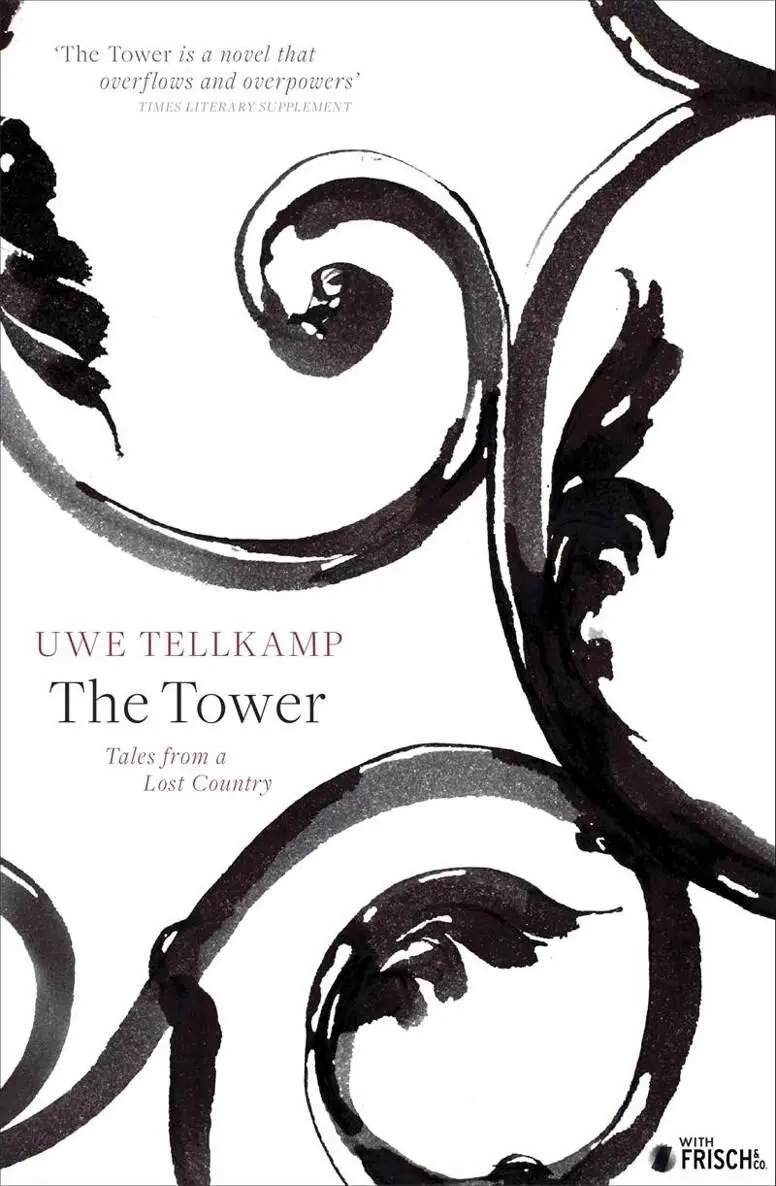
- Название:The Tower
- Автор:
- Издательство:Penguin
- Жанр:
- Год:2014
- ISBN:нет данных
- Рейтинг книги:5 / 5. Голосов: 1
-
Избранное:Добавить в избранное
- Отзывы:
-
Ваша оценка:
The Tower: краткое содержание, описание и аннотация
Предлагаем к чтению аннотацию, описание, краткое содержание или предисловие (зависит от того, что написал сам автор книги «The Tower»). Если вы не нашли необходимую информацию о книге — напишите в комментариях, мы постараемся отыскать её.
The Tower — читать онлайн бесплатно полную книгу (весь текст) целиком
Ниже представлен текст книги, разбитый по страницам. Система сохранения места последней прочитанной страницы, позволяет с удобством читать онлайн бесплатно книгу «The Tower», без необходимости каждый раз заново искать на чём Вы остановились. Поставьте закладку, и сможете в любой момент перейти на страницу, на которой закончили чтение.
Интервал:
Закладка:
Verena an informant … He sought her eyes, he must have given her a horrified look, her eyes slid away.
‘Perhaps you want to tell me afterwards.’ Schnürchel’s words were not a question but a closing statement. His stripy socks, his crossed feet — not funny at all.
‘I didn’t feel unwell.’ Verena’s voice was jagged, she had to clear her throat.
‘Verena.’ This time Schnürchel answered quickly, Christian sensed the surprise in the class at the restrained warmth of his tone. ‘Then I will have to call a meeting of the FGY leadership and inform your class teacher.’ Verena remained silent, and Christian couldn’t understand her, turned his head towards the door and whispered, ‘Why? Why?’ with a pointless intensity. He felt another burst of suspicion and thought he could also see it in Jens Ansorge’s expression, in Siegbert Füger’s thin smile, Reina Kossmann’s now chalk-white face.
The meeting of the FGY committee was arranged for three o’clock, after the last class, in the Russian room surrounded by pictures of Sputnik and the Artek Pioneer camp on the blackboards, sponsorship letters from their related Komsomol organization and a plaster bust of Maxim Gorki. The rest of the class waited outside.
Agenda, taking the minutes — Falk Truschler took out a pencil and paper — Dr Frank’s freckled hand opening and closing. ‘Go on, please.’ He nodded to Verena, who was staring to one side, the sheet of paper, blank apart from her name and the exercise, before her. ‘I didn’t know what I should write.’ Her voice was clear, tone curt, with a touch of contempt; Christian looked up but only met Frank’s eyes, the light brown of which he for some inexplicable reason now found disagreeable, as he did his helplessly opening and closing hand. ‘Then you had a blackout.’ Frank stated it in a murmur, it wasn’t a question. ‘That can happen.’
‘In this case you will have to be given an E.’ Schnürchel had spoken hesitantly but before Frank had stopped speaking. Again there was the silence, like something that couldn’t be switched off. Christian was wearing the blue Free German Youth shirt, as were Falk Truschler and Siegbert Füger and Svetlana Lehmann: Herr Schnürchel had asked all the boarders in the class to put them on.
‘I don’t agree with the way this discussion is going. In my opinion Verena has a negative attitude to the question set and didn’t answer it for that reason. It wouldn’t be the first time.’
Verena looked up and scrutinized Svetlana with startled fascination.
‘Yes, you got up to the same kind of thing back at the high school. Just like your sister.’
‘Svetlana —’
‘In my opinion it’s deliberate provocation, Dr Frank.’
‘I don’t believe that.’ Reina Kossmann, the treasurer on the committee, shook her head. ‘She said something to me beforehand.’ Verena had felt ill because of something that happened once a month –
‘She said she didn’t feel unwell,’ Svetlana insisted. ‘I’d be interested to know what standpoints the two of you have. My view is that the committee should pass a resolution and present it to the principal.’ Svetlana thought for a moment, tapped her lips with her finger. ‘To both principals. And to the Party committee.’
At this Siegbert Füger joined in: Svetlana couldn’t simply say ‘I don’t believe her’; in that case not only Verena, Reina too, would be under suspicion of lying, he himself didn’t know Verena from the high school but from sports lessons with Herr Schanzler here, there’d been a collision when they were playing dodgeball. Her lip had bled, but she hadn’t fainted, as usually happened, Verena was the kind of person who would just grit her teeth, as she had before the history test.
What did he mean by ‘as usually happened’, Reina wanted to know, straightening her back, it was the boys who were the quickest to start moaning and wailing, for example at the potato harvest. Christian remained silent because he could see in his mind’s eye Verena’s face contorted with pain after she’d hit her thumb with the hammer, but since Falk Truschler said nothing — he had to take the minutes — Svetlana fixed her eyes on him, while Dr Frank folded a piece of paper up small and Schnürchel took a tube out of his briefcase, squeezed out an inch of transparent cream and rubbed it over his hands. There was a pleasant smell of herbs.
‘Your position, Christian?’ At that moment he found himself thinking of Svetlana’s curly hair. It was beautiful and of a brown colour he couldn’t quite find a word for. ‘She isn’t in condition to do a test if she feels ill.’
‘She should have said so beforehand, of course. — That was her mistake,’ Schnürchel said reflectively. ‘We can’t withdraw the E grade. Not a good start, but I think that in your case it will just be a blip. There are oral tests as well and apart from this you’re good to very good.’
‘That’s all you have to say?’ Schnürchel’s contribution seemed to have gone right past Svetlana, like an insect you ignore because you’re concentrating on something. She fixed her eyes on Christian and it seemed to him that she was having to make an effort, her eyelids were fluttering almost imperceptibly, her look wasn’t steady. ‘Pity that the best positions were already taken, hm? The deputy Free German Youth secretary, the clerk and the treasurer. That would have done for acceptance at medical college, wouldn’t it? But the way things are … As agitator you’d have to show real commitment, wouldn’t you? Nail your colours to the mast.’
‘Svetlana, you’re not being objective. We can’t work together like that.’ It was Dr Frank who said that, his lips grey, and Reina Kossmann hissed, ‘To suggest I accepted an easy position just to get a few extra plus points in my file —’
‘But it’s the truth! The most important thing for you lot is getting to college, your career, that’s why you join the Free German Youth committee. Not as secretary or agitator, where it really matters, of course … Would you be here if it didn’t bring any plus points? What we’re trying to realize in this country is a matter of complete indifference to you!’
‘Svetlana! We’ll get nowhere like this. Dr Frank is right, that is not objective. It is not correct. Not correct. To conclude we should hear what Verena has to say. Please calm down.’ It was remarkable how gentle Schnürchel could be, fatherly, as if he had to save an unruly favourite daughter from herself; his left hand had shot forward: as if he wanted to grasp something, Christian thought. Perhaps it was a situation he had come across before, one he recognized.
‘What Reina said is right. I … had problems.’ Verena was pale now, she spoke quietly, her face turned away.
That evening Christian rang home. He had walked a long way, past the city castle, where there were still lights on, and past the cinema, along the embankment beside the Wilde Bergfrau to the tannery. The foaming, thundering river did nothing to calm him down, he kept seeing scenes from the afternoon in his mind’s eye and couldn’t clear his head. On the bridge he leant over the parapet and looked at the dark eddies with metallic spindles gliding through them at irregular intervals, but after a while he felt cold and the darkness was becoming a problem. A single lamp was hanging like a white pot above where the road along the embankment crossed the main road leading out that started at the bridge. He headed back into the town, towards the market, but went the wrong way and after an empty time found himself outside the cinema again, which confused him; but then he saw the telephone booth beside the path outside the porter’s lodge of the castle. The porter eyed him over a copy of Morgenpost . Christian strolled over to the telephone booth. That seemed to be enough for the porter, he turned back to his newspaper. The telephone in this booth was probably monitored. Nothing that might get us into trouble on the telephone, Anne had drummed into him. But perhaps things were different with this telephone … It was outside the Party headquarters. On the one hand. On the other there must be more telephones in the rooms of the dilapidated castle than anywhere else in Waldbrunn, so why would they need another one here … Was that not precisely the trap? They knew how people thought: hardly anyone used the telephone on the market square, in fact so far Christian had never seen anyone using it — everyone assumed that the booth would be monitored and since Security knew the way people thought, knew that even when someone made a call from there, aware it was being monitored they would only say harmless things, Security might perhaps regard that booth as useless and leave it untapped, while here, smiling at how clever they were, people walked straight into the snare.
Читать дальшеИнтервал:
Закладка:
Похожие книги на «The Tower»
Представляем Вашему вниманию похожие книги на «The Tower» списком для выбора. Мы отобрали схожую по названию и смыслу литературу в надежде предоставить читателям больше вариантов отыскать новые, интересные, ещё непрочитанные произведения.


Обсуждение, отзывы о книге «The Tower» и просто собственные мнения читателей. Оставьте ваши комментарии, напишите, что Вы думаете о произведении, его смысле или главных героях. Укажите что конкретно понравилось, а что нет, и почему Вы так считаете.