Uwe Tellkamp - The Tower
Здесь есть возможность читать онлайн «Uwe Tellkamp - The Tower» весь текст электронной книги совершенно бесплатно (целиком полную версию без сокращений). В некоторых случаях можно слушать аудио, скачать через торрент в формате fb2 и присутствует краткое содержание. Год выпуска: 2014, Издательство: Penguin, Жанр: Современная проза, на английском языке. Описание произведения, (предисловие) а так же отзывы посетителей доступны на портале библиотеки ЛибКат.
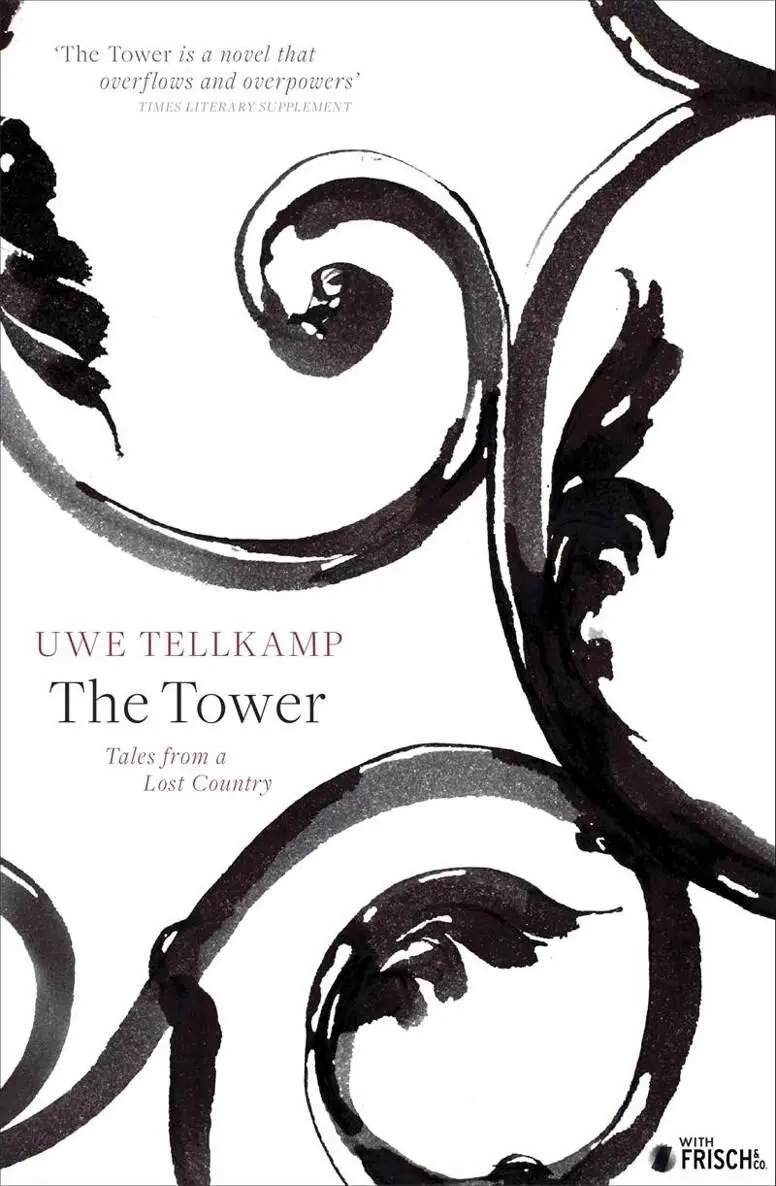
- Название:The Tower
- Автор:
- Издательство:Penguin
- Жанр:
- Год:2014
- ISBN:нет данных
- Рейтинг книги:5 / 5. Голосов: 1
-
Избранное:Добавить в избранное
- Отзывы:
-
Ваша оценка:
The Tower: краткое содержание, описание и аннотация
Предлагаем к чтению аннотацию, описание, краткое содержание или предисловие (зависит от того, что написал сам автор книги «The Tower»). Если вы не нашли необходимую информацию о книге — напишите в комментариях, мы постараемся отыскать её.
The Tower — читать онлайн бесплатно полную книгу (весь текст) целиком
Ниже представлен текст книги, разбитый по страницам. Система сохранения места последней прочитанной страницы, позволяет с удобством читать онлайн бесплатно книгу «The Tower», без необходимости каждый раз заново искать на чём Вы остановились. Поставьте закладку, и сможете в любой момент перейти на страницу, на которой закончили чтение.
Интервал:
Закладка:
Second floor, F wing. Corridors enlivened by threadbare red runners and smelling musty. The distant roar of a vacuum cleaner, the clatter of typewriters behind closed doors, queues outside open ones.
The thud of stamps, whispering, the creak of thick piles of paper having holes made by office punches, the hum of sewing machines. Certain files were sewn into the binders, something that had been taken over from the Soviet Union, where it had been the custom of the Okhrana, the Tsarist secret police, as Richard had learnt from a patient who worked on Coal Island.
‘And you think we can go straight to this office?’ Richard asked doubtfully. ‘Normally you have to go to Central Registration first.’ ‘The invitation is direct and I know where I have to go, I don’t need to go to Central Registration for that,’ Regine said. The official at the desk at the entrance to F wing knew better, however. ‘You’ve no slip from Central Registration, you can’t be allowed in just like that, Citizen Neubert —’
Regine protested that this registration was a pure waste of time, why should she register downstairs when her appointment was up here –
The official reminded her of the regulations, which she, as a citizen, had to observe!
Regine shrugged her shoulders. Richard followed her, she hurried on ahead, unfazed by the junctions that led to other corridor systems, all of which looked the same. Not even the indoor plants on the window ledges were noticeably different: well-fed exotic plants with spoon-shaped, carefully dusted, fleshy leaves. One little copper watering can with a spout like an ibis beak per floor.
They passed a rotunda and Richard was already thinking they’d lost the way and gone back to the first — the same icicle chandelier with thousands of bits of opaque paste frippery dangling from it, the same pillars on the rotunda’s balustrade, the same threadbare reddish-pink runner — but the statues, although similarly armed with swords and shields, had different expressions on their faces. Amusingly, one of the stone knights had stuck his sword between his knees and was blowing his nose on a handkerchief. The sculptor, in whose name Richard was now interested, had done the folds with delicate meticulousness and kept them as thin as a communion wafer.
Central Registration was a hall with counters all round buzzing with voices, Job-like patience, the noise of conveyor belts. In the middle a Christmas tree, still decorated with snail-shaped decorations, Narva lemons and little wooden horses from Seiffen, was quietly shedding its needles and in cordoned-off solitude, which didn’t seem to bother the overalled messengers pushing their carts through the queues without looking anyone in the eye. Regine joined the queue at the counter with the letters ‘L, M, N’, Richard that at ‘H’ and when he looked round he saw Meno, who, like them, had been overhasty and had to register at the ‘R’ counter, which had the second-longest queue after ‘S, Sch, St’.
After an hour it was Richard’s turn. He had two pieces of business: in the first place he had to collect a second medical report on the case of a car tyre repairer who, although he was the sole specialist of that type in the southern area of Dresden, had been sent his call-up papers (upon which Richard, at the behest of Müller, whose Opel Kapitän was sorely in need of such a specialist, had written a first report attesting the man’s absolute unfitness for military service because his left leg was ten centimetres shorter); in the second, the gas water-heater in Caravel was nearing the end if its life and Richard wanted to apply for a new one.
‘Fourth floor, E corridor, HM office — Housing Matters — forward slash, Roman two,’ the man behind the counter informed him. Regine also had two things to see to: firstly she had to get a certificate attesting that Hansi’s violin was not part of the state’s cultural heritage and that its export would not damage the interests of the state in any other way, secondly she had an invitation to a ‘personal discussion’ with the official in charge of her matter. ‘The valuation section is also on the fourth floor, though in B corridor, but we can go up together,’ Regine said. In the HM — Housing Matters — office Richard was told that the employee at Central Registration had made a mistake and that the office for requesting communal gas water-heaters was on the eleventh floor, G corridor, CHA — Communal Housing Administration — office, Arabic five. He went back to Regine. She was looking nervously at the clock. She had an appointment at nine thirty and there were about two dozen people waiting at the Valuation Section. Could Richard get the violin valued for her?
‘But you’ll have to get a certificate confirming that, my dear lady,’ a man in front of them in the queue warned her. ‘Firstly you’ll have to get a certificate confirming that you are the person requiring an article to be assessed, secondly that it belongs to you, thirdly that you have given this gentleman here the power of attorney. — I speak from experience.’
After he came back from the certification procedure Richard remembered that recently there had been certain rumours circulating about this valuation section. Wernstein had told him about one case that he had heard from a nurse who was engaged to an assistant doctor in Internal Medicine. A technician in the department had inherited a Guarneri violin, but wasn’t sure if it was genuine and had had it examined here, at the Valuation Section. The instrument was actually a genuine Guarneri, a rarity on which her late aunt had quietly and modestly bowed her way through several decades in the ranks of the second violins in the Dresden Philharmonic; no one apart from the aunt, who was single, had known what a special instrument it was; the first mention of the name of the Italian instrument maker was in her will. In the Valuation Section a man in a grey suit had appeared who, after the evaluator had pored over a few catalogues, repeatedly looked inside the violin with a dentist’s mirror and, for safety’s sake, consulted a colleague, picked up the telephone and had a long conversation. A few days later the technician, who thought her worries were over, was sent a letter from the Coal Island finance department. She couldn’t pay the sum that was demanded in inheritance tax and so the violin was taken away from her. That was the story Wernstein had told; but Niklas Tietze, whom Richard asked, had also heard about it; as had Barbara, who had picked it up at Wiener’s, the hairdresser’s.
The evaluator glanced at Richard’s power of attorney, shuffled back to his table, which was covered in green billiard cloth, and started to study the violin.
At first he twisted and turned it with jaunty, elegant movements, the violin whirled, stopped — a look through a lens; more turning, a few pencilled notes; more turning. He didn’t look inside the body, didn’t open a catalogue. Scroll, pegbox, fingerboard, shape of the F-holes; then he put the violin under his chin, took the bow out of the case and began to play Bach’s Chaconne. He let its solemn, stately tones ring out clearly for a good minute, so that the other officials of the Valuation Section interrupted their work and listened to him. The muttering in the queue stopped, the crackle of sandwich wrappers, the rustling, the shuffle of feet. But no one clapped when he put the violin down. Richard observed his crisp, precise movements; there was no superfluous nor even jerky action; in his mind’s eye he could see his father repairing a clock at his workbench in Glashütte, Malthakus sorting postage stamps, the same precise, finely adjusted movements, and that made him think.
The evaluator put a form in the typewriter and typed a few lines. Then he replaced the instrument and closed the lid. However much of an effort the violin maker had made — he spoke the name with mocking contempt — who, as far as the secrets of the ribs and purfling were concerned was at least more than just an amateur, his violins would never be part of the cultural heritage of the German Democratic Republic. There, he had it in writing. The evaluator stuck a revenue stamp on the certificate and pushed it across the flap in the door. Richard paid, was about to leave.
Читать дальшеИнтервал:
Закладка:
Похожие книги на «The Tower»
Представляем Вашему вниманию похожие книги на «The Tower» списком для выбора. Мы отобрали схожую по названию и смыслу литературу в надежде предоставить читателям больше вариантов отыскать новые, интересные, ещё непрочитанные произведения.



Обсуждение, отзывы о книге «The Tower» и просто собственные мнения читателей. Оставьте ваши комментарии, напишите, что Вы думаете о произведении, его смысле или главных героях. Укажите что конкретно понравилось, а что нет, и почему Вы так считаете.