Uwe Tellkamp - The Tower
Здесь есть возможность читать онлайн «Uwe Tellkamp - The Tower» весь текст электронной книги совершенно бесплатно (целиком полную версию без сокращений). В некоторых случаях можно слушать аудио, скачать через торрент в формате fb2 и присутствует краткое содержание. Год выпуска: 2014, Издательство: Penguin, Жанр: Современная проза, на английском языке. Описание произведения, (предисловие) а так же отзывы посетителей доступны на портале библиотеки ЛибКат.
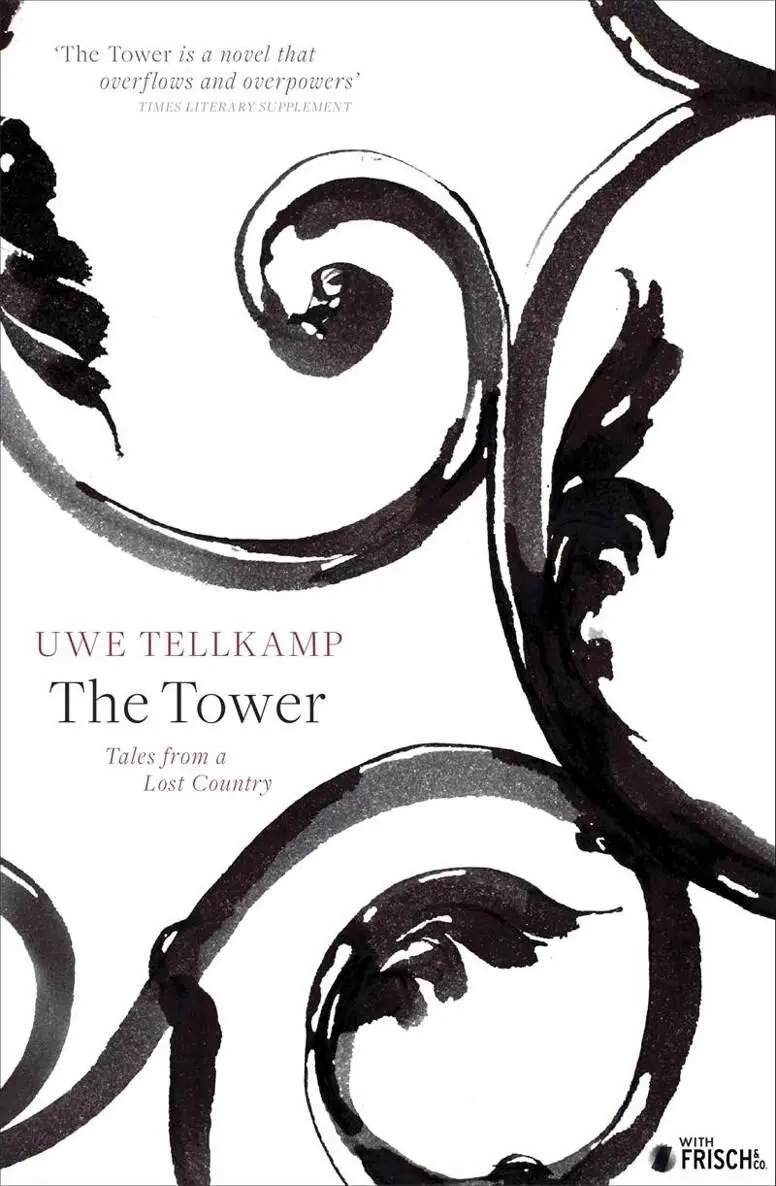
- Название:The Tower
- Автор:
- Издательство:Penguin
- Жанр:
- Год:2014
- ISBN:нет данных
- Рейтинг книги:5 / 5. Голосов: 1
-
Избранное:Добавить в избранное
- Отзывы:
-
Ваша оценка:
The Tower: краткое содержание, описание и аннотация
Предлагаем к чтению аннотацию, описание, краткое содержание или предисловие (зависит от того, что написал сам автор книги «The Tower»). Если вы не нашли необходимую информацию о книге — напишите в комментариях, мы постараемся отыскать её.
The Tower — читать онлайн бесплатно полную книгу (весь текст) целиком
Ниже представлен текст книги, разбитый по страницам. Система сохранения места последней прочитанной страницы, позволяет с удобством читать онлайн бесплатно книгу «The Tower», без необходимости каждый раз заново искать на чём Вы остановились. Поставьте закладку, и сможете в любой момент перейти на страницу, на которой закончили чтение.
Интервал:
Закладка:
Arbogast Castle appeared in all its glory. Castle wasn’t the official designation; the Baron preferred the more modest ‘House’ and that was what was written in high relief on a metal plate over the main entrance with the sweeping flight of steps. Many of the Tower-dwellers called it ‘Castle’, a designation that another property up there had: ‘Rapallo Castle’ below Sibyllenleite. But Rapallo Castle looked Mediterranean, had the bright lines of the south, a Riviera building in northern exile with stone scrolls and an elegantly curved roof, not a palace jagged with pinnacles and needlepoint ridge turrets like the one Meno was facing that made him think more of prehistoric animals, extinct dinosaurs with armoured scales and dragon’s spikes, than of a home with hot and cold running water.
Lights were going on and off, cutting changing stage sets out of the garden: the three flagpoles beside the steps appeared: the Soviet flag in faded red, the black-red-and-gold one with the hammer, compasses and wreath of grain, and the third flag, a yellow one with a black retort. Meno had never seen that flag before, perhaps it bore the coat of arms of the Lords of Arbogast. When windows in the east wing lit up, they illuminated the large Arbogast observatory, which, clad in white stone, looked like an owl’s egg in the sloping part of the garden. There were still a few minutes to go until five o’clock, the time for which Arbogast had invited Meno. He grasped the wrought iron of the gate, unsure whether he should ring now. At that moment an alarm bell began to blare, sirens joined in with their wail; lights burst on in the garden, flooding the paths with white brightness. A camera on a tubular stand rose like a ghost out of a flap in the ground, searched for a moment, then shot a flash at his face that looked as baffled as it was terrified. He staggered back, and it was a good thing too, for at the next moment two snarling bodies thumped into the gate; Meno thought, once he had recovered his sight, he recognized one of the two dogs as Kastshey. The camera hummed back into the ground. Once more Meno heard the shrill ‘heigh-ho’ boatman’s whistle, the dogs immediately left the gate and raced back with long bounds into the depths of the garden, where, after a few seconds, they silently disappeared. An intercom beside the gate crackled and a rusty female voice said, ‘Baron Arbogast is delighted you have come. Please use the little door in the wall beside the intercom.’ Until now Meno hadn’t noticed this door; it was less a door than a heavy steel bulkhead that slid up like the blade of a guillotine. Clutching his briefcase with his manuscript to him, Meno leapt through the opening. At the entrance he was received by a female dwarf in an apron, the pockets of which were packed full of clothes pegs. ‘Good evening, Herr Rohde. My name is Else Alke, I am Baron Arbogast’s housekeeper. He apologizes for not being here to welcome you himself and for keeping you waiting a little while. An important meeting. For Baroness Arbogast?’ The housekeeper pointed to the rose, which Meno quickly unwrapped. ‘Give it to me.’ She took the paper, raised her head and stared at Meno out of toad-green eyes. ‘The Baroness loves roses.’
I thought she would, Meno said to himself. While Alke was taking his coat and hat and putting them away, he looked round. He had taken his best suit out of the wardrobe, put on the best of the few shirts he owned, but the polished chessboard floor, the flame-patterned columns to the right and left separating gallery corridors from the hall, the heavy oak table: a black dragon carrying the top on its outspread wings, two solid-silver candelabra the height of a man on it flanking an oil painting, the rock-crystal chandelier filling the hall with soft light — all that made it clear to him that he was poor. He had also had that feeling when he had visited Jochen Londoner, Hanna’s father, but it wasn’t as strong as here, this was wealth that shouldn’t exist in socialism. Meno had already seen a few apartments of big-selling authors, of Party functionaries — never a house like this, however. The Party functionaries mostly had dubious taste, clearly deriving from their lower-middle-class background; it had also struck him that Party functionaries had no time for comfort without recognizable usefulness. The poor food at Barsano’s was notorious and the apartment he had furnished for himself in the extensive Block A complex was spartan. Here on the other hand … A door banged at the end of the left-hand colonnade, a man in a white coat came out and went, with echoing footsteps, bent over papers, without taking any notice of him, to the staircase. It was made of white marble with black spots, like a Dalmatian’s coat, and split into two wings that rose in an elegant curve to the first floor, where they came together in a balcony with a balustrade. On a thin-legged stand, like an easel, was a mirror that, as Meno realized when he went closer, was not made of glass but of metal. Meno adjusted his tie.
He heard the housekeeper’s rusty voice behind him. ‘The Baroness.’ Hurriedly he looked round at her, Else Alke nodded to him and pointed to the staircase. At the top a door opened and a woman in a hunting outfit came down to him.
‘Frau von Arbogast.’ My God, I really did sketch a kiss on the hand.
‘Herr Rohde. What a beautiful rose.’ She was visibly pleased.
‘Thank you very much for your invitation.’ How old can she be, fifty, sixty? Older? A face as brown as leather, a tough, supple figure. I wouldn’t want to go through the fires that have melted away every superfluous gram. And she does indeed have lilac hair.
‘It’s my husband you must thank. We’re delighted you’ve found the time to come and see us.’ Could she offer him something? Her husband was unfortunately still occupied, an urgent unscheduled meeting such as often cropped up in the stages of the formulation of the five-year plan. He had asked her to express his regret at his lack of punctuality, all the more so as he had explicitly requested that Herr Rohde be there as early as five o’clock. Would Herr Rohde be happy with her company until then? ‘Can I offer you something?’ They were standing at the bottom of the stairs and when he nodded, she made a gesture that he only understood when the housekeeper appeared. ‘Please put the rose in a vase and in my room. Something to drink for Herr Rohde.’ She raised her brows questioningly.
‘A glass of water, please.’
‘Oh, Herr Rohde. A glass of water. I’d like to give you something especially delicious. Bring us two glasses of pomegranate juice, please.’ They had been sent the fruit from the Black Sea, from Georgia, the Institute still had connections there. ‘There are various stories about us going round the district here. We are aware of that. The truth is that we worked in Sinop for ten years. It was good work and it was right that we did it.’ Was there anything else he wanted. He said no, observed her. How concerned she is. She’s like a ringmaster while the bareback riders are performing. That suit she’s wearing didn’t come from Exquisit. ‘That picture.’ He pointed to the oil painting over the dragon table. Frau von Arbogast couldn’t say. She handed Meno a glass and filled it and one for herself out of a carafe of blood-red pomegranate juice; the housekeeper held the tray and stared straight ahead as the Baroness drank with little hurried sips. Meno drank some, praised it. The juice was icy cold, of a velvety consistency and tasty; Meno closed his eyes, it was as if his throat were being coated in metal. The man in the white coat walked past again. ‘Herr Ritschel.’ The man stopped and turned round slowly, as if in slow motion or like someone who has to control an old rage, to face the Baroness. ‘Would you please tell my husband that I’m going to show Herr Rohde round the house for a while.’ Herr Ritschel turned round again, slightly more quickly, and plodded up the stairs.
Читать дальшеИнтервал:
Закладка:
Похожие книги на «The Tower»
Представляем Вашему вниманию похожие книги на «The Tower» списком для выбора. Мы отобрали схожую по названию и смыслу литературу в надежде предоставить читателям больше вариантов отыскать новые, интересные, ещё непрочитанные произведения.


Обсуждение, отзывы о книге «The Tower» и просто собственные мнения читателей. Оставьте ваши комментарии, напишите, что Вы думаете о произведении, его смысле или главных героях. Укажите что конкретно понравилось, а что нет, и почему Вы так считаете.