Uwe Tellkamp - The Tower
Здесь есть возможность читать онлайн «Uwe Tellkamp - The Tower» весь текст электронной книги совершенно бесплатно (целиком полную версию без сокращений). В некоторых случаях можно слушать аудио, скачать через торрент в формате fb2 и присутствует краткое содержание. Год выпуска: 2014, Издательство: Penguin, Жанр: Современная проза, на английском языке. Описание произведения, (предисловие) а так же отзывы посетителей доступны на портале библиотеки ЛибКат.
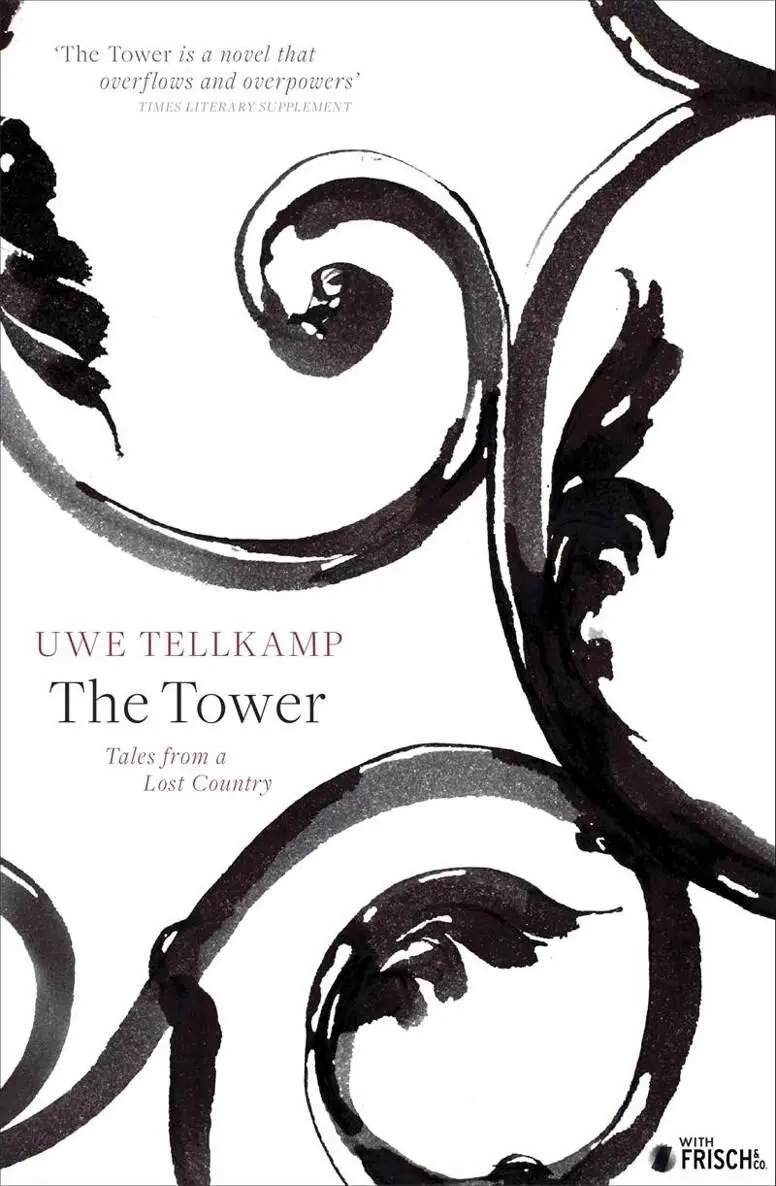
- Название:The Tower
- Автор:
- Издательство:Penguin
- Жанр:
- Год:2014
- ISBN:нет данных
- Рейтинг книги:5 / 5. Голосов: 1
-
Избранное:Добавить в избранное
- Отзывы:
-
Ваша оценка:
The Tower: краткое содержание, описание и аннотация
Предлагаем к чтению аннотацию, описание, краткое содержание или предисловие (зависит от того, что написал сам автор книги «The Tower»). Если вы не нашли необходимую информацию о книге — напишите в комментариях, мы постараемся отыскать её.
The Tower — читать онлайн бесплатно полную книгу (весь текст) целиком
Ниже представлен текст книги, разбитый по страницам. Система сохранения места последней прочитанной страницы, позволяет с удобством читать онлайн бесплатно книгу «The Tower», без необходимости каждый раз заново искать на чём Вы остановились. Поставьте закладку, и сможете в любой момент перейти на страницу, на которой закончили чтение.
Интервал:
Закладка:
‘The models, series D,’ Herr Ritschel murmured, giving each syllable the same emphasis. In the cart were several A4-size blocks of some transparent synthetic material, all veined with coloured lines.
‘You’re a zoologist, Herr Rohde,’ said Arbogast, waving him over, ‘you will be interested in this.’ There were eyes with nerve fibres and visual pathways each leading to a piece of the cerebral cortex, coloured light blue, the visual cortex where the brain creates an image of the world from the optical impressions pouring in.
‘Dingo, dogfish, dolphin, donkey, dove, dromedary, duckbilled platypus,’ said Herr Ritschel in his strange, equal-emphasis tones. ‘The donkey’s eyes are strikingly similar to those of the Minister of Science and Technology.’ Arbogast picked up one of the blocks and turned it over and over, scrutinizing it. ‘I can’t help it, Ritschel, but I’m sure these eyes have looked at me quite often. You did do them from real life …’
‘Of course, Herr Professor. They are from Bileam, our pet donkey that unfortunately died last summer. I asked to have its eyes as a model.’
‘He’s my best man for synthetic materials, Herr Rohde, invaluable.’
Ritschel bowed slightly.
Meno had never before seen anything like these eyes in the transparent blocks, even in the zoological institutes of Leipzig and Jena, where outstanding specialists were working. The preparations had been cast with the greatest precision in the blocks of synthetic material, though not to scale, however, for they were all the same size, the pupils looked like table-tennis balls with a colourful glaze. In each a single eye had been let in beside the visual pathway, sections showed the internal arrangement: iris ring, control muscle for the iris, corpus vitreum, retina, choroidea and from that a further section with rod and cone.
‘One of my hobby horses.’ Arbogast had sat down again and was looking at the stick with the gryphon handle; he nodded to Ritschel, who put the blocks back in the cart and trundled it out again. ‘Another is, as you will have noticed, the physics of alarm systems. Do you know, even I have felt what it is like to have to earn your daily bread — even if it doesn’t look like that. I grew up during the inflation years. It was with alarm systems and cameras I’d constructed myself that I earned enough to gain the knowledge I needed to build my physics laboratory. I started off in a lumber room, in the bad years around 1923 in Berlin. I was just sixteen, Herr Rohde, and an independent entrepreneur. If you like I’ll show them to you afterwards. But, Rohde’ — Arbogast spread out his arms and invited Meno to sit down again as well — ‘let us talk about you instead. When I do have guests, I like to get to know them better. One gets too caught up in one’s daily work and I enjoy evenings such as this, look forward to them weeks in advance. What do you say to Ritschel’s skills?’
‘Amazing, Herr Arbogast.’
‘Well, von Arbogast. Yes, you’re right, it really is amazing. Ritschel is a master of his art … As a former zoologist you will know how much as a scientist one is dependent on one’s craftsmen. They it is who construct our apparatuses and what would even a Röntgen have been without his laboratory mechanic … These eyes: they are looking at us, Rohde, my friend. It is the eyes that see and are seen. “What is most decisive happens in our looks,” said the optical illusion — a little physicist’s joke in passing. It is a particular delight for me in the evening, after the day’s work is done, to stroll round my eye-room and feel my heart start to pound at the hundreds of mute questions … Not a pleasant feeling, certainly not, but helpful. It seems to set off certain synapses, cause an increase in hormonal activity, I’ve had my best ideas there lately. — But let’s talk about you. You come from the countryside south-east of here?’
‘From Schandau.’
‘Any brothers or sisters?’
‘One sister, one brother.’
‘We’ve had business with your brother-in-law … An open-minded man. We have certain projects that require cooperation with a clinic. We’ll contact him again at some point. — You like my pencils?’
Meno had been staring at his desk, trying to count the pencils, which were arranged precisely according to size, in one of Ritschel’s transparent blocks, a battery of sharply pointed little lances.
‘There are precisely three hundred and fourteen. Pi, you understand. Three point one four pencils would have been too few for me, so I moved the decimal point back two places. But unfortunately I can’t give you a pencil. There always have to be exactly three hundred and fourteen, the Ludolphine number, the relationship between circumference and diameter. And it must always be these same pencils. Genuine Faber pencils. The dark green is soothing, it’s a real little pine forest I have before me here, the colour is fresh and young, too; the Czech ones you can buy in this country use poorer-quality wood, it splinters and breaks. Moreover they’re yellow. That never happens with these. I don’t want to be confronted with an autumnal deciduous wood. That’s why I have a special standing order with Faber … I could put you on our list of potential pencil-recipients, if you like.
‘Very kind of you.’
‘My deputy, my two sons, and the head of our gas discharge laboratory are in front of you in the queue, however. — As a zoologist how did you manage to end up as editor in a literary publishing house, if I might ask. That’s something I wondered about.’
Yes, Meno thought, that was in Leipzig, 1968. It’s the little things you remember first before they let what’s behind them shine through: a match, perhaps, a swimming cap with something written in ballpoint pen on it, a pattern on a piece of clothing. Perhaps the match with which the Party Secretary lit his cigarette — was it an F6 or a Juwel, or did he smoke Karo, which was considered a worker’s brand? — and then his voice, matter-of-fact, slightly disappointed: As long as you’re a member of that society you can forget about your PhD, Rohde. Socialist zoology demands people who are committed to it. You’re one of Professor Haube’s students, you should take him as your model in that respect too. That gang of Protestant students is a collection of counter-revolutionary subversives, keep away from them! We’ll soon have eradicated them. Just think what’s going on in Prague! — I wasn’t the only one thinking of that, nor the students and assistant professors at the Institute; Talstrasse and Liebigstrasse were abuzz with the whispers, the cafés, it was what people were talking about wherever you went. Socialism with a human face … It was what we all wanted.
‘There were problems. I was in the Protestant Student Society, in Leipzig, in ’68.’
‘I understand. Yes, those regulations. They were not necessarily to our advantage. When you remember how many valuable people, talented scientists … I know there’s this stipulation that the mark for your degree dissertation must not be more than one grade higher than that in Marxism — Leninism. That, I would say, is not very productive. But perhaps it was necessary at the time … We have largely overcome that now. You must put yourself in the mind of the decisionmakers at the time, we were threatened on all sides, the situation was getting out of control in Czechoslovakia, drastic measures had to be taken. Which is not to say that in individual cases, probably in yours as well …’
Meno remained silent.
‘There were misunderstandings and overheated reactions, and yet …’ Arbogast made a conciliatory gesture. ‘You know how it is. I can understand you. And I have been told that you are an excellent editor. So you were expelled from the university?’
Читать дальшеИнтервал:
Закладка:
Похожие книги на «The Tower»
Представляем Вашему вниманию похожие книги на «The Tower» списком для выбора. Мы отобрали схожую по названию и смыслу литературу в надежде предоставить читателям больше вариантов отыскать новые, интересные, ещё непрочитанные произведения.



Обсуждение, отзывы о книге «The Tower» и просто собственные мнения читателей. Оставьте ваши комментарии, напишите, что Вы думаете о произведении, его смысле или главных героях. Укажите что конкретно понравилось, а что нет, и почему Вы так считаете.