Uwe Tellkamp - The Tower
Здесь есть возможность читать онлайн «Uwe Tellkamp - The Tower» весь текст электронной книги совершенно бесплатно (целиком полную версию без сокращений). В некоторых случаях можно слушать аудио, скачать через торрент в формате fb2 и присутствует краткое содержание. Год выпуска: 2014, Издательство: Penguin, Жанр: Современная проза, на английском языке. Описание произведения, (предисловие) а так же отзывы посетителей доступны на портале библиотеки ЛибКат.
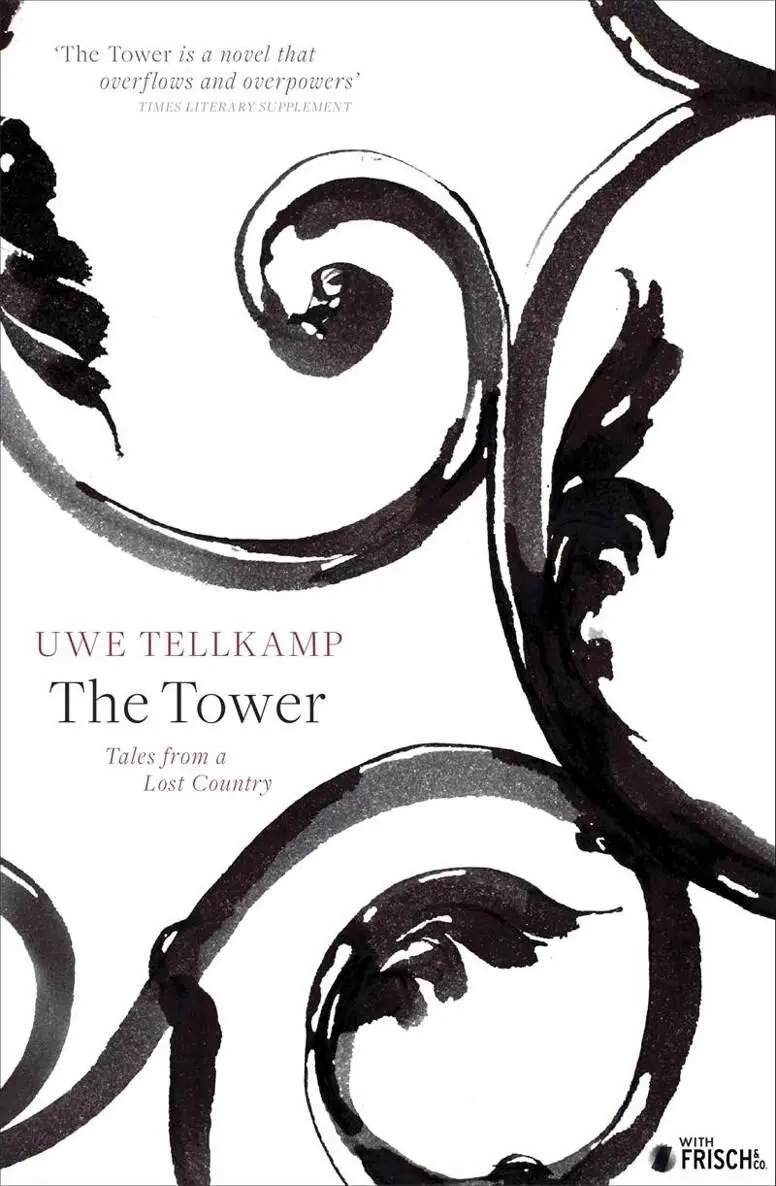
- Название:The Tower
- Автор:
- Издательство:Penguin
- Жанр:
- Год:2014
- ISBN:нет данных
- Рейтинг книги:5 / 5. Голосов: 1
-
Избранное:Добавить в избранное
- Отзывы:
-
Ваша оценка:
The Tower: краткое содержание, описание и аннотация
Предлагаем к чтению аннотацию, описание, краткое содержание или предисловие (зависит от того, что написал сам автор книги «The Tower»). Если вы не нашли необходимую информацию о книге — напишите в комментариях, мы постараемся отыскать её.
The Tower — читать онлайн бесплатно полную книгу (весь текст) целиком
Ниже представлен текст книги, разбитый по страницам. Система сохранения места последней прочитанной страницы, позволяет с удобством читать онлайн бесплатно книгу «The Tower», без необходимости каждый раз заново искать на чём Вы остановились. Поставьте закладку, и сможете в любой момент перейти на страницу, на которой закончили чтение.
Интервал:
Закладка:
‘The signature was illegible, an “R” was recognizable. I thought of you at once. But surely you’re not going to slip away now. Perhaps you’re afraid I’ll strangle you?’
‘Then the cigarette was an offer of reconciliation?’
Schevola blew out a cloud of smoke, stared out into the garden. ‘Have you seen the dogs? He’s got kennels down there. A funny guy. Sometimes I wonder whether he believes what he says. Or whether he’s only here because they gave him an institute. — Do you like bullfighting?’
‘Only in Hemingway and Picasso.’
‘Do you find it too brutal? Too bloody?’
‘Too cruel. The crowd bawls because a living creature is being slaughtered.’
‘Slaughtered? How melodramatic. The torero and the bull are equal opponents. Each of the two has a chance and the one that dies goes down fighting and in full public view. Neither the torero nor the bull can hide anything, neither a moment of bravery nor one of cowardice. That’s honest and it’s a good death.’
‘Maybe. But I still find the ritual repulsive.’
‘You can’t bear the thought of death. And that we have to fight if we want to live. That is the idea bullfighting makes clear and I find that honest. But many people refuse to face up to that truth. And get outraged instead. And never ask themselves where the leather for the shoes they’re wearing comes from while they’re getting outraged.’
‘It may be honest to accept death and display it. But it isn’t great.’
Schevola looked up and surveyed him in surprise. ‘Then for you to lie is great?’
‘Send me your manuscript.’
Her expression darkened abruptly. She broke out into an ugly laugh. ‘Tell me, do you think I’m chatting to you in order to palm my stuff off on you?’
‘I’m sorry, I didn’t mean it like that.’
Schevola put her hands to her temples and started to massage them. ‘You’re tired and I’m being a nuisance …’
‘May I join you?’
‘Of course,’ Meno said, ‘Herr Doktor Kittwitz, physicist — Frau Schevola, writer.’
‘We know each other from previous Urania meetings,’ the physicist said. He’d brought three glasses and a bottle of champagne. ‘Crimean champagne, the very best. The old man’s really pushed the boat out. No expense spared. Don’t you want to eat something, Herr Rohde? You’ve earned it and people are already asking where you are. Herr Altberg and Herr Sperber would both like a few words with you, your boss as well. You’ve got a little interview list already. Cheers, Judith, Herr Rohde.’ They clinked glasses, drank. ‘In cases like this Arbogast takes off his watch, puts it down where he can see it and says: Please excuse me but I can’t give you more than four minutes and thirty-one seconds.’
‘You seem to like him a lot again, Roland.’ Judith gave one of her ugly, grating laughs. ‘How’s your project going?’
‘I really do like him. You could say he’s got his little quirks, but you have to give him one thing: he takes trouble. We handed it in for publication. Two weeks later they called to say they couldn’t print it at the moment since their paper allocation is limited and they first of all have to see where they can get some for the next issues. How does this sound to you: In the Institute here we make a fundamental discovery …’
‘Oh, my dear Roland’s getting modest in his middle age and says “we”?’
‘Judith … please don’t. A fundamental discovery! But only something that gets published is recognized, Herr Rohde, and the priority goes to whoever is published first … And do you know what’s happened? There’s a group in Bremen. A few days ago Arbogast took me to one side and told me he’d spoken to a colleague there. They’ve made the same discovery as us, four weeks after us, but it will be published sooner … Just because there isn’t any paper in this country again … I really hit the roof, believe you me.’ He hastily gulped down some champagne and poured himself some more. ‘It was our, it was … my discovery, Judith. And it’s being taken away from me.’
‘Didn’t he tell them, on the telephone, that you were quicker?’
‘Of course he did. Answer: My dear Arbogast, we know the equipment you have at your Institute and, by and large, we know your colleagues … Surely you’re not trying to dispute our right to priority. Of course we’ll have to accept it if you publish your results before we do! Arrogant arseholes! We can’t do any top-level research here, this is the useless Zone … And do you know what we get told here? Funding? For flow research? Of what concrete benefit is that to the national economy? We’re sorry, but we can’t see the benefit. Huh.’ Kittwitz went to the edge of the balcony and grasped the balustrade. ‘D’you know what I’d like to do? I’d like to get away.’
‘There’s supposed to be a billion-mark loan from the Bavarian State Bank coming. In return we’re to drop the minimum currency exchange requirement for children.’
‘How incredibly humane. Yes, our state was always good to children. Franz-Josef Strauss, the arch-imperialist, loans us a billion in hard exploiter’s currency. Suddenly the road to the promised land goes right through Catholic Bavaria … So that’s what their principles are worth!’
‘Moreover they say they’re going to make it possible for citizens of the GDR and foreigners to marry, also for them to make a complaint if that should be refused. Now if that isn’t progress!’
‘Then you can hook yourself a capitalist millionaire at the Leipzig Trade Fair. Shouldn’t be difficult with your charm, Judith. And if you don’t get your class enemy, you can write a complaint. Or how about a gunrunner, buying supplies for Iraq from us. Cheers.’
‘You’re drinking too much, Roland. Just remember: “But scarce those words my lips had ’scaped —” ’
‘ “I wished I’d kept them in my breast.” Schiller, or something like that. As Herr Rohde knows. No offence meant.’ With a black look, he raised his glass and drank to Meno.
‘Oh, there you are, Herr Rohde. Do come in, you’ll get cold out there.’ Frau von Arbogast waved from the study window. ‘And Fräulein Schevola and Herr Kittwitz. Young people stick together, of course. But do come and join us, otherwise they’ll be talking of nothing but politics, cars and prostate glands in here.’ She closed the window.
‘Fräulein!’ Judith Schevola muttered indignantly. Kittwitz laughed. ‘For some reason she seems to like you. Come on, we’ll finish this bottle together.’
‘My God, lilac-coloured hair. Do you know what she asked me, Roland? Why I didn’t have mine dyed. Whether it was some disease. Of course I said it was just that there was too much ash in the air.’
Inside, Frau Knabe, a tall woman with short black hair, morello-cherry lipstick and a necklace of blue wooden beads slung several times round her neck, was talking about the advantages of matriarchy and the Feldenkrais method. Her husband was standing beside her, head bowed, fingers intertwined, staring at a pineapple that Professor Teerwagen and Dr Kühnast had approached to within a few fractions of an centimetre. ‘… all it comes down to is the oppression of women, for centuries and centuries, oh, since the beginning of time. And of course it’s a woman we have to thank for the expulsion from paradise and there’s this rule I’ve learnt: mulier tacet in ecclesia ! Women are to keep silent in church, it says that in the Bible. The cheek!’
‘Perhaps the prophets will have had their reasons?’
‘Your smile doesn’t improve your joke one bit, Herr Däne. What do you have to say about it, Frau Schevola? Isn’t it about time to put an end to the rule of men? Especially of old men!’
Читать дальшеИнтервал:
Закладка:
Похожие книги на «The Tower»
Представляем Вашему вниманию похожие книги на «The Tower» списком для выбора. Мы отобрали схожую по названию и смыслу литературу в надежде предоставить читателям больше вариантов отыскать новые, интересные, ещё непрочитанные произведения.







Обсуждение, отзывы о книге «The Tower» и просто собственные мнения читателей. Оставьте ваши комментарии, напишите, что Вы думаете о произведении, его смысле или главных героях. Укажите что конкретно понравилось, а что нет, и почему Вы так считаете.