Uwe Tellkamp - The Tower
Здесь есть возможность читать онлайн «Uwe Tellkamp - The Tower» весь текст электронной книги совершенно бесплатно (целиком полную версию без сокращений). В некоторых случаях можно слушать аудио, скачать через торрент в формате fb2 и присутствует краткое содержание. Год выпуска: 2014, Издательство: Penguin, Жанр: Современная проза, на английском языке. Описание произведения, (предисловие) а так же отзывы посетителей доступны на портале библиотеки ЛибКат.
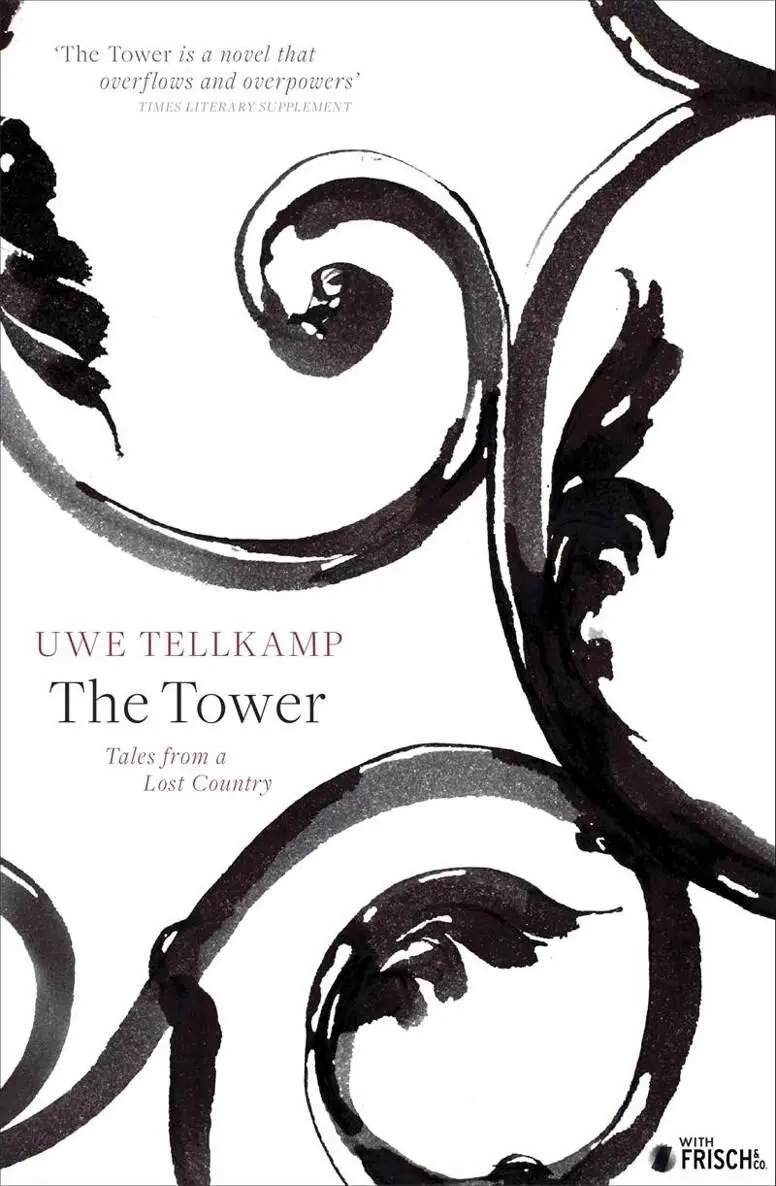
- Название:The Tower
- Автор:
- Издательство:Penguin
- Жанр:
- Год:2014
- ISBN:нет данных
- Рейтинг книги:5 / 5. Голосов: 1
-
Избранное:Добавить в избранное
- Отзывы:
-
Ваша оценка:
The Tower: краткое содержание, описание и аннотация
Предлагаем к чтению аннотацию, описание, краткое содержание или предисловие (зависит от того, что написал сам автор книги «The Tower»). Если вы не нашли необходимую информацию о книге — напишите в комментариях, мы постараемся отыскать её.
The Tower — читать онлайн бесплатно полную книгу (весь текст) целиком
Ниже представлен текст книги, разбитый по страницам. Система сохранения места последней прочитанной страницы, позволяет с удобством читать онлайн бесплатно книгу «The Tower», без необходимости каждый раз заново искать на чём Вы остановились. Поставьте закладку, и сможете в любой момент перейти на страницу, на которой закончили чтение.
Интервал:
Закладка:
‘Oh yes.’ Arbogast drummed his fingers on the desk. He drew the visitors’ book to him, leafed through it, took the pen, looked at Meno reflectively. ‘In the garden, you say?’
‘Yes, Herr Baron.’
‘Has anything been affected? The heating plant? The greenhouses?’
‘As far as we could tell, no, Herr Baron.’
Arbogast screwed the lid back on the pen, stroked the visitors’ book. ‘Herr Londoner asked me to tell you that he and his wife would be delighted if you were to visit them again. Once more, many thanks for coming, Herr Rohde. We’re going to the observatory now, but you’ll be tired.’ He stood up and shook Meno by the hand.
20. Dialogue about children
‘To have children is a great responsibility …’
‘They aren’t toys one can acquire when one feels like it and throw away when one doesn’t like them any more.’
‘One has to think about these children. Wouldn’t one be prepared to give them everything? To do everything for them? So that they are brought up to be decent people. Can blossom out?’
‘Well, Herr Doktor, I’m not telling you anything new there, although it’s difficult to be a good father to all one’s children at the same time.’
‘You don’t know what I’m talking about. But we know where you go … On Thursdays. — Your wife, does she know too?’
‘We were talking about children. Do you smoke? Would you like something to drink?’
‘We want to try and keep this conversation calm. Calm and matter-of-fact. Part of that, however, is that in future you must be more careful with our invitations. When a letter’s left opened, it does invite people to read it, however ordinary it might look, it’s the way things are, a natural human instinct.’
‘Some nurses, some colleagues are interested in whom their senior doctor corresponds with. And a secretary’s job is to deal with letters, opened and unopened ones …’
‘Are you a hundred per cent sure of your secretary? — We are talking calmly, perfectly calmly, Herr Doktor. — Look, among other things I’m responsible for the hospitals in this district. The health services are — you know that as well as I do. But how can one improve something?’
‘That is the question. Grumbling and grousing will get us nowhere, your boss is absolutely right there. That’s something else you know just as well as I do. But perhaps there are disruptive influences?’
‘I’m a qualified electrician, you know, and if one thinks of one of these hospitals as a complex circuit … You only need one break and the current stops flowing.’
‘The current is still there, the circuit is the right one, but somewhere in this complex network there’s a blockage, whether it’s arisen by chance or not …’
‘Do you think that hospitals that work, factories that work are not in our interest? There was a time when you thought differently about these things — about interests. Once you were completely on our side. Oh, no, no. As a student one is no longer an child, no longer a silly little boy …’
‘At nineteen one is grown up, responsible for one’s thoughts and actions … You studied and were active in Leipzig, we know that. And you knew that lip service is not enough, that fine words are nothing in themselves.’
‘You were ready for more. May I show you something …’
‘That’s right, Herr Doktor. With your declaration of commitment. And reports. Most of them are rather wordy, in that I agree with my colleagues in Leipzig. But these reports definitely contain substantial information.’
‘At nineteen … you were a good observer; at nineteen others were officers in the war, partisans, I knew one person who at nineteen was a commander in Budyonny’s army … How angry you could get! What a low opinion of the workers you had, in nineteen fifty-three … And by then you were twenty … And a fighter, Herr Doktor, fully on the side of our cause. If you had had your way, Herr Weniger would have been thrown out of the university.’
‘Fortunately my colleagues were rather more circumspect than you and have kept a good gynaecologist for our country. You hated him, him and his secure position, him and his defeatism, that wasn’t consistent, since Herr Weniger stayed here after all, his naked realism that refused to believe in anything … Just as much as you adored his girlfriend of the time. But then you didn’t write anything about that, about the four times you went to see her … If you should happen to be interested in what Herr Weniger was doing during that time …’
‘Quite right, he was being questioned. Not for his diploma. That was the version his girlfriend told you. — But we digress. If these children have particular talents, it would be negligent of a father not to support them to the best of his ability. Just suppose your sons were musically gifted, wouldn’t you do everything in your power to obtain the clarinet or cello for which they show such talent? See that they have lessons?’
‘And then it is often the case that children who are musically gifted have talents in other areas as well, they’re not stupid, they have no problems at school.’
‘Perhaps they could become outstanding scientists. Engineers. Technologists.’
‘Or doctors. Of which our country has such great need. — You would like what? Well we do need a little light, Herr Doktor.’
‘But that kind of university course costs money, a lot of money. And the senior high school beforehand. Money that belongs to our state and that it generously disburses for those who, through their qualifications and profession, will at some time in the future occupy privileged positions. Does our state not then have the right to find out who it is who wants to go to university, where they come from and so on?’
‘Whether he intends to employ the knowledge he has acquired here and, as I said, at the state’s expense for the good of that state and in the service of the people who, by their work, have made his studies possible. We consider that a legitimate interest.’
‘So we ought not to be in such a hurry to close your file as our colleagues in Leipzig believe. Your wife seems to have diverted you from our course … Think my proposal over, sleep on it.’
‘Take your time. Oh, and one more thing: as you know, doctors are needed in our country. It would be a betrayal of the patients in your care. — Comrade Sergeant, show the Herr Doktor out.’
21. Caravel
The Santa Maria had lateen sails with red crosses, the Nina was fat-bellied, curving over the waterline like a Turkish sabre, Robert said: It’s floating on its hump, and then came Magellan’s ships, sea spray splashing up at the bow, yards torn off in the horse latitudes, the Roaring Forties, masts eaten away with salt and rigging leached dry; Magellan with his telescope on the afterdeck and it was the void into which he was staring, the void explored by Spain and Portugal, wave-torn rocks, dead bays, black holes that kept on swallowing up horizons, suns, moons, signs of the zodiac over the wind-creased sea, and despite everything Magellan looked like a man who had time, that struck Christian as odd and he would spend ages observing the Commander as he circumnavigated the world on a poster opposite the bed. His journey was a string tied round the globe, the equator a cord holding the world together at its fattest place; once right round, from then on there were borders. And beside the bearded seafarer, Gagarin was waving, a man in a space capsule and that, too, had encircled the earth with an invisible string. The colours were slightly faded already, how old was the photo, had they cut it out of a copy of Army Review , out of Sputnik ? Ornella Muti and Adriano Celentano next to them, photos from Film Mirror, Boot Hill with the, as Ina said, ‘incredibly’ blue-eyed Terence Hill; Captain Tenkes, the heroic Hungarian freedom fighter. For a moment the ticking of the alarm clock on a shelf above Christian’s head was as loud as the click of a metronome, tock, tock, tock, or was it the wooden leg of a buccaneer walking up and down on the deck of his death-trap of a ship, staring at Tortuga, a sharp-tongued parrot on his shoulder? … It must be hot on Tortuga, the mysterious island off Venezuela, as hot as in this bed: Christian threw back the quilt and put his arm over his forehead. Doctor Fernau had come on Sunday afternoon, had auscultated and percussed him with fingers flattened by a hundred thousand percussions, the pleximeter middle finger on the left, the percussion middle finger on the right, as Richard explained (and no one understood), and all of Fernau’s fingers had bristly hair, they had felt or, rather, kneaded Christian, which hurt quite a bit on his muscles so that Fernau had frowned, told him to Shut His Trap, and continued to knead unmoved, to examine his lymph glands, which he did unexpectedly gently so that Christian, who had anticipated being short of breath, swallowed in astonishment. Then Doctor Fernau scratched his unkempt, iron-grey hair, put his hand to his left breast but found nothing, since he wasn’t wearing his white coat but a loose jacket to go with his grey flannels with the broken zip and coarse felt slippers: he lived not far away from the Hoffmanns, on Sonnleite, the road that wound its way down the steep slope on the east side of the district. Keeping two fingers between Christian’s jaws, he rummaged round in his worn doctor’s bag that was coming apart at one of the seams, growled, ‘Right’, when he found a wooden spatula and rammed it, grunting ‘Aah’, into Christian’s mouth. ‘A bit furred, the lingua. But, my God, as long as it’s not festering … What have we here …?’ and screwed up his right eye, the left turned into a blue eyepiece behind the lens of his glasses, peered down his throat, the look presumably microscoping round his uvula, that was jiggling up and down apprehensively; Fernau tapped the spatula on his tonsil: ‘Out with the rubbish!’ Christian gave a rasping cough, saw Fernau’s gigantic eye as a monster’s and laughed on the doctor’s lenses, the Cossack moustache widened and slanted: ‘What we have here — clearly nothing at all. Spots of irritation, Waldeyer’s ring inflamed, but what of it, no need for the hospital, the lung’s rattling a bit, is there an important class test in the offing, young sir?’ Dr Fernau said, handing the spatula to Anne. ‘The lad has a bit of a temperature, it happens at his age, hormones sloshing round, you know, and so on. Keep him in bed, if you like, Frau Hoffmann, the compresses on his legs were a good idea, tea with honey, yes, something to bring his temperature down, yes, has he been sick? Well there you are.’
Читать дальшеИнтервал:
Закладка:
Похожие книги на «The Tower»
Представляем Вашему вниманию похожие книги на «The Tower» списком для выбора. Мы отобрали схожую по названию и смыслу литературу в надежде предоставить читателям больше вариантов отыскать новые, интересные, ещё непрочитанные произведения.


Обсуждение, отзывы о книге «The Tower» и просто собственные мнения читателей. Оставьте ваши комментарии, напишите, что Вы думаете о произведении, его смысле или главных героях. Укажите что конкретно понравилось, а что нет, и почему Вы так считаете.