Uwe Tellkamp - The Tower
Здесь есть возможность читать онлайн «Uwe Tellkamp - The Tower» весь текст электронной книги совершенно бесплатно (целиком полную версию без сокращений). В некоторых случаях можно слушать аудио, скачать через торрент в формате fb2 и присутствует краткое содержание. Год выпуска: 2014, Издательство: Penguin, Жанр: Современная проза, на английском языке. Описание произведения, (предисловие) а так же отзывы посетителей доступны на портале библиотеки ЛибКат.
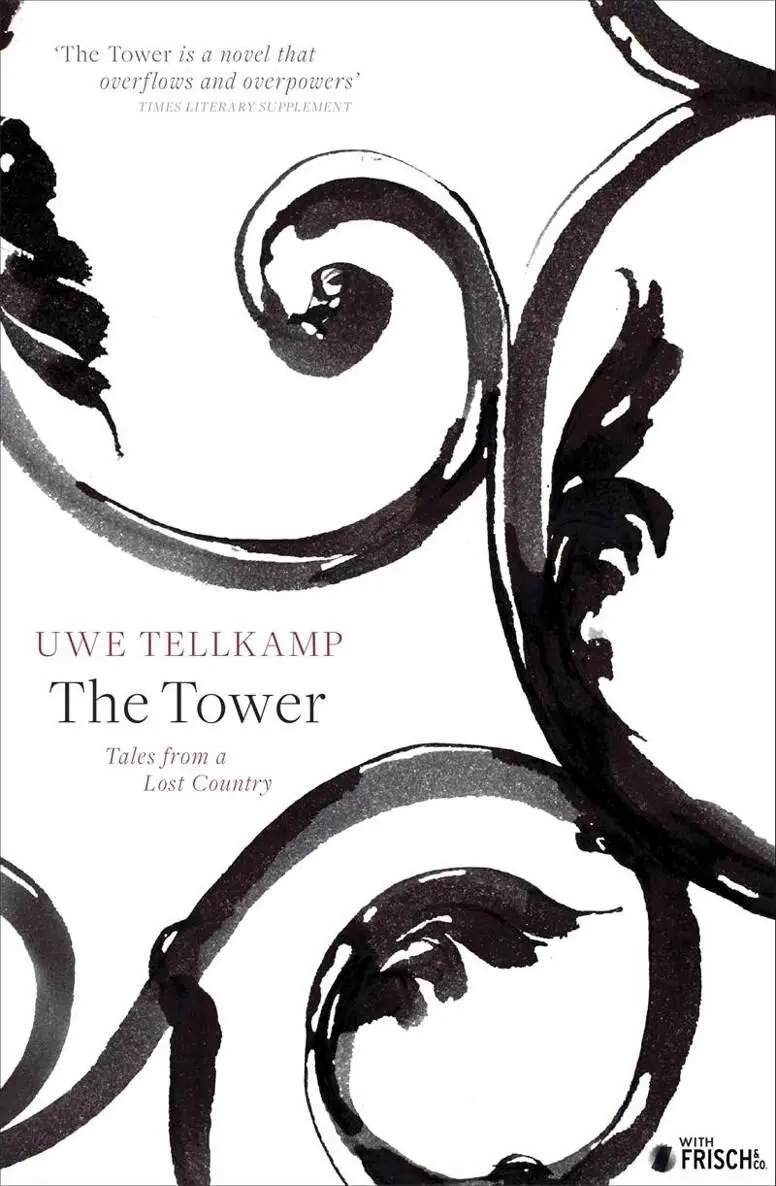
- Название:The Tower
- Автор:
- Издательство:Penguin
- Жанр:
- Год:2014
- ISBN:нет данных
- Рейтинг книги:5 / 5. Голосов: 1
-
Избранное:Добавить в избранное
- Отзывы:
-
Ваша оценка:
The Tower: краткое содержание, описание и аннотация
Предлагаем к чтению аннотацию, описание, краткое содержание или предисловие (зависит от того, что написал сам автор книги «The Tower»). Если вы не нашли необходимую информацию о книге — напишите в комментариях, мы постараемся отыскать её.
The Tower — читать онлайн бесплатно полную книгу (весь текст) целиком
Ниже представлен текст книги, разбитый по страницам. Система сохранения места последней прочитанной страницы, позволяет с удобством читать онлайн бесплатно книгу «The Tower», без необходимости каждый раз заново искать на чём Вы остановились. Поставьте закладку, и сможете в любой момент перейти на страницу, на которой закончили чтение.
Интервал:
Закладка:
Influenza infection, Fernau had written, two or three days in bed on a light diet. ‘Could I have an appointment with you, Herr Hoffmann. I’ve got an ingrowing toenail that’s bothering me.’
‘A bit of a temperature?’ Anne asked in a quiet voice once Fernau had left. ‘He’s got forty point three. He calls that a bit of a temperature? Shouldn’t we get them to examine him at the clinic?’
‘Fernau’s been a general practitioner for thirty years, I think he knows what he’s doing,’ Richard replied. — The grandfather clock chimed: a quarter past ten. Anne had let the blind down, but arranged the slats so that a dim light seeped through into the room, pale grey and dismal, in which the heroes of the sea on the wall lost their attraction and Tortuga all its mystery; no ship’s hull bobbing along lethargically in a lagoon with the brass of a sextant glinting on the seabed, no roar of the waves against the prow of the building, as he had sometimes imagined he could hear on windy nights, no navigation lights to starboard or port; and the expressions of Robert’s football heroes said that Italy against Germany, Mexico ’70, had not been a truly world-shattering event, just a football match, in the days when Italy didn’t just play defensively; Uwe Seeler’s expression was blank, not that of a folk hero; World Cup, ’74: Paul Breitner’s hair looked like an electrified feather duster.
Christian got up, put on his dressing gown, staggered into the kitchen to have a drink of the tea Anne had set out for him in two Thermos flasks. In the larder he found an opened packet of Hansa biscuits, he tried one, the biscuits were damp and tasted like soggy cardboard. In Waldbrunn they would be having physics with Herr Stabenow. He didn’t look much older than the pupils with his boyish face and metal-rimmed glasses that kept on slipping down his nose; he would push them back up with the middle finger of his right hand, to which the class, despite its closeness to the gesture of giving someone the finger, paid less attention than to the set-up for the experiment: two chromium-plated spheres on slanting rods, a rubber band and a crank-handle, and when Stabenow turned it, sparks crackled between the two spheres — middle finger, metal-rimmed spectacles; magnets the size of ice-hockey pucks, Stabenow scattered iron filings between them that formed patterns of the electromagnetic field and glittering sheaves at the poles — middle finger, metal-rimmed glasses; but at some point or other they forgot the gesture, forgot their grins and followed, spellbound, Stabenow’s operations that never seemed uncertain; his experiments, which he set up and tried out meticulously in the little preparation cubicle next to the physics room, always worked and that naturally impressed them, for they could put themselves in Stabenow’s place and sensed their own cruel sharpsightedness that no teacher’s idiosyncrasy could escape, they knew that he could well be thinking that they were secretly waiting for him to make a mistake. Christian drank Anne’s strong fennel tea, annoyed that he was here in bed, sick, while the others could do experiments. At the high school he hadn’t liked physics, it was a subject that had too much maths for his taste; it was only when they got onto nuclear physics that he sat up and took notice, but only as long as it didn’t involve calculations — and when Arbogast, as patron of the Louis Fürnberg High School, had come and talked about his own life and about leading scientists he knew. With Stabenow it was different. He was passionate about his subject, the pupils could feel that. His whole body doubled up when he explained the principles behind the construction of a radio and, almost incoherent with enthusiasm, followed the tortuous route of the human voice through all the tubes, transistors, coils and resistances. At the end of the lesson his tie had slipped out of place — one of the so-called ‘bricklayer’s trowels’ you could buy in Waldbrunn and which, so it was said, his landlady chose for him as she did his socks: Herr Stabenow rented a room in one of the lanes leading off from the market. The blackboard was covered with sketches and formulae in his genius’s scribble and the remnants of several pieces of red and white chalk were scattered at an exuberant distance around the classroom. He had sparked off a real fever for physics among the boys, they all suddenly wanted to go in for splitting uranium, do great things in the field of microelectronics, invent pocket calculators with a hundred functions … first of all, however, to learn to smoke a pipe, for all the physicists of genius they saw in the photographs Stabenow brought smoked pipes: Einstein, Niels Bohr, Kapitza … Max Planck had smoked a pipe … or was it Heisenberg? The Nobel Prize at thirty-one … that left them fourteen years, that was piles of time, they’d surely manage it too. They just had to smoke a pipe all the time and learn to be significantly absentminded, like the physicist who one morning leapt onto his bicycle and, eyes fixed, pipe in his mouth, started to pedal, until someone asked him: Where are you going? — I’m going to the Institute. — Without a chain?
The fennel tea tasted horrible, Christian poured it down the sink. He looked out of the window, at Griesel’s garden, which was still in bare hibernation; Marcel, the Griesels’ black poodle, was jumping up and down in his kennel, barking, because the neighbours’ fat, grizzled tomcat, Horace, accompanied by his feline lady, Mimi, white with black paws, happened to be sniffing at the tomato sticks in the bed in front of his run and Mimi was elegantly licking her rolled-up right paw; Marcel howled and savaged his toy, a long roll of rags, but it had no effect.
Briquettes were being shovelled in the coalyard behind Griesel’s garden, familiar noises: shovels digging sharply into the pile, metal rasping over concrete, then the coal clattered into large metal scales, the shovels, briefly tapped to clear them of dust, scraped up slack, took a slithering run-up, dug sharply into the coal again, a little angrily, a little deviously, a little obsessively in the self-assured horny hands of Plisch and Plum, as the labourers were generally called in the district, after Wilhelm Busch’s mischievous pair of dogs, Christian had never heard their real names, one was tall and spindly, the other short and square, a suitcase on two legs, as Aunt Barbara said; and when there was a full hundredweight, the briquettes rumbled down the shiny chutes into gunny sacks that Hauschild, the misshapen, gnarled coal merchant with watery blue eyes shining in his blackened face, would lug round to the shed at the front, on Rissleite, where the customers were waiting.
Christian went back to bed. The light had moved on, the cloud-loom that since Saturday had been weaving a blanket of grey wool over the sky tore open in one place, sending sunbeams into the room: there was Robert’s table, the scattered football pictures, the Olympic photo books he’d borrowed from Niklas, beyond it, placed at a right angle to the window, his own table with the sloping writing top on it he’d made himself from left-over bits of wood and two drawing boards he’d bought from Mathes’s, the stationer’s on Bautzner Strasse, and immediately behind the table the case with his books, hardly three feet away. The tall, solid wood-veneer cupboards, standardized house furnishings, the RUND 2000 model from the state-owned Hainichen furniture works, five of which stood along the walls, leaving just enough space for a sofa, the desks and the bed — Robert’s had to be pulled out — weighed down on the room in their dark solidity. He didn’t like the room, consisting as it did of these heavy cupboards arranged square-on to each other and the carpeted void between them that could immediately be seen into from the door; there was something of a cage about it, the contents of which could be grasped at a glance. The posters on the wall seemed like foreign bodies, tolerated rather than welcomed by Anne, similarly the net with footballs, handballs and Robert’s football boots hanging from a hook over the end of the bed nearest the door. Christian closed his eyes, listened, must have fallen asleep, for he woke with a start when the living-room clock struck the hour. The garden gate slammed and immediately the Griesels’ bell rang: that was Mike Glodde, the mailman with the squint and the hare-lip who was engaged to the Griesels’ middle daughter and brought their mail to their apartment, but only theirs, for the others there were the central lockers at the far end of Heinrichstrasse that the Post Office had set up to make their delivery men and women’s route shorter; anyway, who wanted to be a postman now, in this phase of transition, according to the law of dialectical materialism, from ‘Soc.’ to ‘Comm.’? Christian smiled when he heard Glodde calling for ‘Mar-tsel’; eleven o’clock: the physics lesson was over and Stabenow would be closing it with his standard concluding exhortation: ‘And just think all this over — why! Why! Why!’
Читать дальшеИнтервал:
Закладка:
Похожие книги на «The Tower»
Представляем Вашему вниманию похожие книги на «The Tower» списком для выбора. Мы отобрали схожую по названию и смыслу литературу в надежде предоставить читателям больше вариантов отыскать новые, интересные, ещё непрочитанные произведения.



Обсуждение, отзывы о книге «The Tower» и просто собственные мнения читателей. Оставьте ваши комментарии, напишите, что Вы думаете о произведении, его смысле или главных героях. Укажите что конкретно понравилось, а что нет, и почему Вы так считаете.