Uwe Tellkamp - The Tower
Здесь есть возможность читать онлайн «Uwe Tellkamp - The Tower» весь текст электронной книги совершенно бесплатно (целиком полную версию без сокращений). В некоторых случаях можно слушать аудио, скачать через торрент в формате fb2 и присутствует краткое содержание. Год выпуска: 2014, Издательство: Penguin, Жанр: Современная проза, на английском языке. Описание произведения, (предисловие) а так же отзывы посетителей доступны на портале библиотеки ЛибКат.
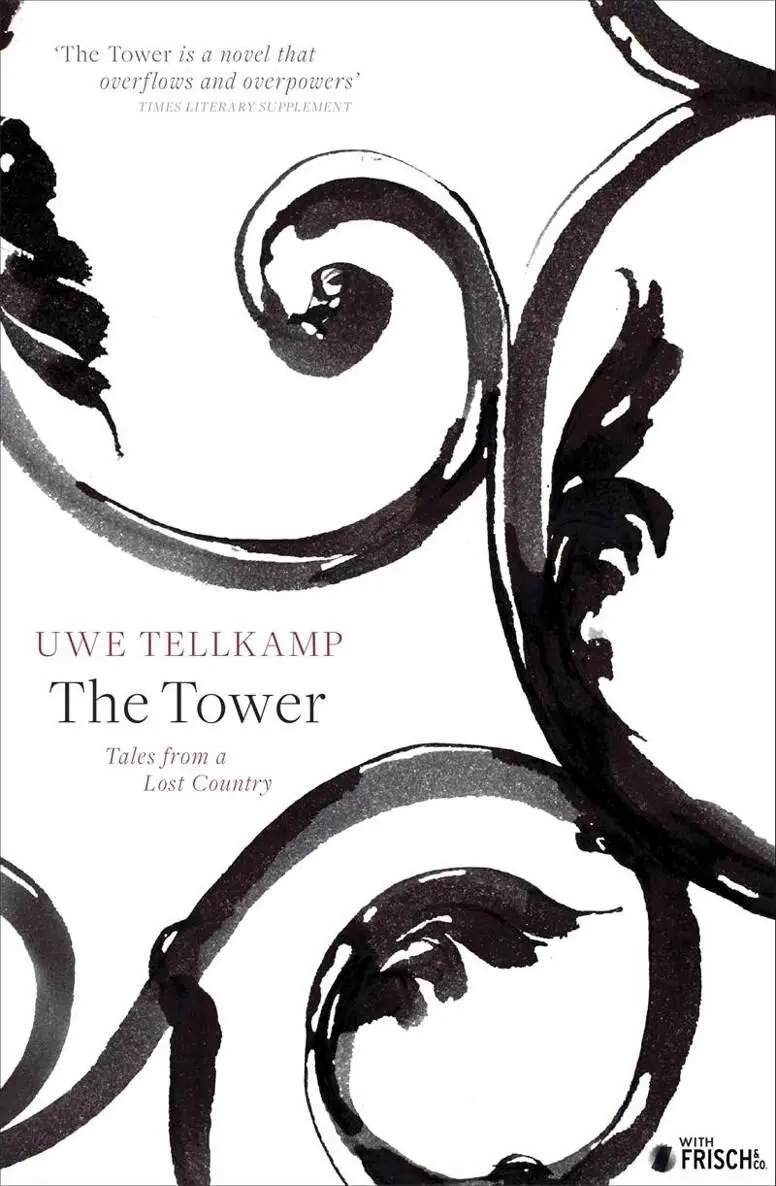
- Название:The Tower
- Автор:
- Издательство:Penguin
- Жанр:
- Год:2014
- ISBN:нет данных
- Рейтинг книги:5 / 5. Голосов: 1
-
Избранное:Добавить в избранное
- Отзывы:
-
Ваша оценка:
The Tower: краткое содержание, описание и аннотация
Предлагаем к чтению аннотацию, описание, краткое содержание или предисловие (зависит от того, что написал сам автор книги «The Tower»). Если вы не нашли необходимую информацию о книге — напишите в комментариях, мы постараемся отыскать её.
The Tower — читать онлайн бесплатно полную книгу (весь текст) целиком
Ниже представлен текст книги, разбитый по страницам. Система сохранения места последней прочитанной страницы, позволяет с удобством читать онлайн бесплатно книгу «The Tower», без необходимости каждый раз заново искать на чём Вы остановились. Поставьте закладку, и сможете в любой момент перейти на страницу, на которой закончили чтение.
Интервал:
Закладка:
There was no baptism. Five of them tried to overpower Pancake; Christian, who was duty NCO, woke from his doze with a start when they flung open the door to the drivers’ room; the first Pancake threw out of the open window (a coarse-voiced loader who was ready for any brawl or booze-up, even when it was an NCO — otherwise the various ranks were strictly separated); then Pancake put on a knuckle-duster, sat down at the table, an open clasp-knife in front of him, had a drink of tea and calmly asked if there was anyone else who wanted a go. He seemed to be thinking while the others stood, uncertain what to do, in the doorway, then, smiling, he raised his forefinger and pointed to his locker, letting it circle round a block wrapped in silver foil, gave the bed in which Burre slept a kick and bellowed, ‘Up you get, Nutella, serve us the steaks.’
The new arrivals: among the commanders a man whose cheesy, acne-ridden face creased like a glove puppet when there was something he didn’t like and who was running off all the time to the political officer, who dampened his ardor with a variety of commendations. A taciturn goldsmith, who used a serviette when eating and folded it before throwing it away. There was an argument about the allocation of areas to be cleaned, Burre wanted to keep the toilet. Christian knew it wasn’t the filthy enlisted men’s toilet he was concerned about but the officers’ toilet, which could be locked. But Pancake said he just wanted to get out of the way there and it would be enough if he stayed at the personal disposal of the drivers.
‘But I want to do the toilet,’ Burre insisted. A short, stocky driver refused to give in as well.
‘Aha, you slaves want something. OK.’ Pancake put two dolls on the table, carved from wood, one red, one green. ‘I see things this way. There are basically two kinds of people: those at the top and those at the bottom, those with dough and those without. Those who give orders and those who receive them, and if one wants something and the other doesn’t, God, what happens then? If two want to scrub the loo but only one can do it, they’ll have to fight for it.’
‘We could get them to compare dicks,’ Karge suggested. ‘But that would be unfair. Nutella’s is swollen from all those hand jobs.’
‘It has to be fair,’ Musca crowed. ‘Clever Dicks always have small ones! And who knows whether this mucky pup here will polish my loo seat as well as Nutella does?’
‘Oh man,’ Popov sighed, ‘that I should live to see this. Two earholes sluggin’ it out over who’s to scrub the shithouse. Right, I want to see blood.’
‘They’re to lift weights. A fair competition.’ Pancake went over to his bed, rolled out the bar with the two 50 kg weights. He came from a circus dynasty, his ancestors had bent iron rods, juggled with 25 kg balls, wrestled and taken part in eating competitions; he himself had worked as a smith with the Aeros and Berolina circuses; there had been an argument, ‘some business, sorted out’, as he put it with his malicious grin; for some time he’d been dealing in cars and it was said he’d gone to ground in the army for three years because of some shady affair (there were targets here as well, what did a recruiting officer care about the past if he got a useful recruit because of it). Pancake lifted the weights with no problem. The driver tried first; his head wobbled like a baby with a weak neck but eventually he got his arms stretched. Burre stepped forward and as he bent down Christian knew he’d never lift the weights. His thin arms dangled over the barbell, then Burre put his glasses on the table, spat on his hands and made a show of jogging about a bit, a kind of voodoo or conjuration; perhaps it would help; at last with a vigorous jerk he lifted the weights up to his chest — Christian would never have believed the chubby, clumsy Burre capable of it; it was followed by a shout, like those made by weightlifters on Today’s Sport , then a sidestep to the right, his knees still bent, he puffed, his hands turning white under the bar, concentrated, his right leg, stuck out at an angle, began to tremble, Musca said, ‘Just no one laugh now’; Burre closed his eyes, struggling, his face went red, then he uttered a dull cry, it sounded like casual disappointment, mixed with surprise, this ‘Oooh’, damning his own limited body and weakness, from Burre, whom, at the moment of the change of grip, of the decisive effort to lift the weights, all his poems did nothing to help.
At night, before going to sleep Christian had the feeling his body was floating away, was breaking up in the area where he took breath, something was fraying (he thought of his cello, only briefly, pushed it out of his mind: dead, dead, what are the old ghosts to me , to his inner eye his cello seemed to be smouldering like a hot strip of celluloid film); a bridge collapsed and dark water swept away the voices (Verena’s, Reina’s), the warming memories of Dresden, which might at the moment be as mysteriously and richly filled with conversation, music, old plays as Ali Baba’s cave with treasure; open sesame. But the catfish on the fountain outside Vogelstrom’s fortress wouldn’t take off its mossy cloak of silence, the sound of a porcelain coffee cup being put down on its saucer in Caravel, cut in two by the to and fro of the pendulum of the grandfather clock and the constant violet glow of the amethyst druse, wouldn’t change. He thought of home, had difficulty calling up the images. Did they exist at all, Caravel, the House with a Thousand Eyes, the Rose Gorge, from which at that very moment sleep could be flowing over the city, Evening Star, where Niklas was cocooned in music and voices and his archives, sick with longing for the Nuremberg of the Mastersingers? Christian moved and was back in his bed in the tank commanders’ room of the 2nd Battalion of the 19th Armoured Regiment, which would likewise disappear as soon as he closed his eyes.
The company was sleeping. Dreams and visitations had taken hold of them. Those with a pass wouldn’t come back until shortly before seven, when duty officially started, they would be sitting in the Dutch Courage, the only bar in Grün that didn’t shut at midnight. The worn-out women who hadn’t got married went there after the second shift in the metal works, the late girls of the town, ready for a drink and with ready tongues: they didn’t say ‘a man’ but ‘a guy’ or ‘a dude’. And Christian heard; listened: there was the quiver of the flower water in the plastic vases on the bar tables, two or three waves of a napkin got rid of the smells, the crumbs, the food-filled presence of the previous customer before the waiter gestured with his thumb at the still-warm seat of the chair, next please, dealt with at thirty-minute intervals, only the regulars’ table with, in the middle, the carefully painted sign with a border of oak leaves, was left in peace; and if in Schwanenberg it had been the noises of the brown-coal excavators, the distant screech (or was it cries? Squeals? Feeling hungry? Being tortured?) of skeleton-armed primeval giants that performed their lumbering sumo wrestler change of stance against a sky ranging from burgundy-, piano-, chocolate-, fire-hydrant-red, flamingo- and tongue-pink, islands of matchstick- and vaccination-drops-red, close-your-eyelids-orange to cat’s-paw- and love-letter-rosé; animals buried beneath chains of buckets, burrowing in the treadmills of the open-cast mines, the sounds of tortured creatures that Christian couldn’t forget — here in the small town of Grün it was the shimmering whistles of the goods trains that mostly travelled through the provincial station at night, rumbling tapeworms of carriages filled with the products of the metal works, with coal, with wood from the surrounding spruce monocultures, eaten away by acid rain, with ore from the mountains out of which the people in the works to the west of the town still managed to boil a few grammes of nonferrous metal, with chemicals, an indigestible brew drawn by a landlord lying in a coma. He thought of the Danube delta and the hoopoe on a postcard Kurt had sent him that he had pinned up in the private compartment of his locker, where others had a picture of their wife or girlfriend, a photo from Magazin . He thought of the constellations on Meno’s ten-minute clock, the Southern Cross that he would never get to see, nor the sky into which it had hammered its silver nails.
Читать дальшеИнтервал:
Закладка:
Похожие книги на «The Tower»
Представляем Вашему вниманию похожие книги на «The Tower» списком для выбора. Мы отобрали схожую по названию и смыслу литературу в надежде предоставить читателям больше вариантов отыскать новые, интересные, ещё непрочитанные произведения.


Обсуждение, отзывы о книге «The Tower» и просто собственные мнения читателей. Оставьте ваши комментарии, напишите, что Вы думаете о произведении, его смысле или главных героях. Укажите что конкретно понравилось, а что нет, и почему Вы так считаете.