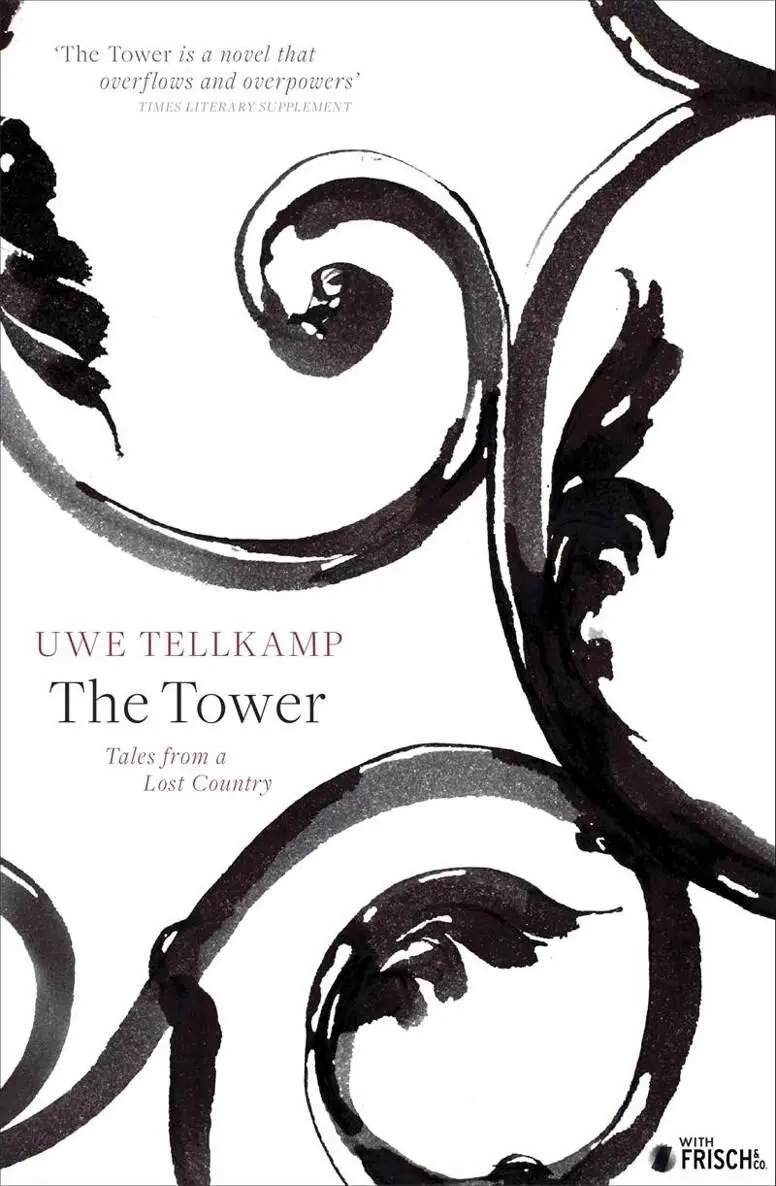
Uwe Tellkamp - The Tower
Здесь есть возможность читать онлайн «Uwe Tellkamp - The Tower» весь текст электронной книги совершенно бесплатно (целиком полную версию без сокращений). В некоторых случаях можно слушать аудио, скачать через торрент в формате fb2 и присутствует краткое содержание. Год выпуска: 2014, Издательство: Penguin, Жанр: Современная проза, на английском языке. Описание произведения, (предисловие) а так же отзывы посетителей доступны на портале библиотеки ЛибКат.
- Название:The Tower
- Автор:
- Издательство:Penguin
- Жанр:
- Год:2014
- ISBN:нет данных
- Рейтинг книги:5 / 5. Голосов: 1
-
Избранное:Добавить в избранное
- Отзывы:
-
Ваша оценка:
The Tower: краткое содержание, описание и аннотация
Предлагаем к чтению аннотацию, описание, краткое содержание или предисловие (зависит от того, что написал сам автор книги «The Tower»). Если вы не нашли необходимую информацию о книге — напишите в комментариях, мы постараемся отыскать её.
The Tower — читать онлайн бесплатно полную книгу (весь текст) целиком
Ниже представлен текст книги, разбитый по страницам. Система сохранения места последней прочитанной страницы, позволяет с удобством читать онлайн бесплатно книгу «The Tower», без необходимости каждый раз заново искать на чём Вы остановились. Поставьте закладку, и сможете в любой момент перейти на страницу, на которой закончили чтение.
Интервал:
Закладка:
Wernstein was at the Charité Hospital in Berlin, he hadn’t been replaced.
‘You’re always demanding staff, more staff!’ Scheffler, the Rector, raised his hands after Müller had stated his case. Gorbachev’s plump peasant’s face, friendly and unretouched, looked down on the meeting from the place where Andropov and Chernenko had previously hung. Josta brought documents; in the sixth or seventh month, Richard guessed after a look at her stomach.
‘We have none! You know that as well as I do. The planning of requirements —’
Rykenthal, the head of the Paediatric Clinic, broke in, scornfully repeating ‘planning of requirements’. The Paediatric Clinic was falling down, the roof was not watertight; on the top floor the damp patches had now joined hands by their amoeba-like finger processes; black mould was sprouting like a strong growth of beard in the rooms closed down by the authorities. Naturally Rykenthal, a stocky man with the aura of a hippopotamus, a magician’s bow tie and butterfly-blue paediatrician’s eyes, demanded that an end should finally be put to this deplorable state of affairs (‘I don’t know, colleagues, how often I’ve had to make this point already’); at that Reucker became restless and emphasized the, in his opinion, more urgent problems in Nephrology; Heinsloe, the head of Administration, was asked for his opinion but all he could do was, as usual, spread his arms regretfully. ‘The funds, gentlemen, we lack the funds. And the building resources, where do we find them!’ Material, gentlemen, he couldn’t wave a magic wand.
‘There has been an application for a room for hand operations for over five years now,’ Richard broke in, furious when he noticed the looks of pleasure following Josta. ‘It’s surely not possible that in the whole of Dresden we cannot find the means for that minor matter.’
‘All due respect for your private ambitions, Herr Hoffmann, but I have to remind you that the Ear-Nose-and-Throat section has had an application for a new operating theatre in for thirteen years —’
‘What are you calling private ambitions?’
‘You can continue to do operations on the hand in Outpatients, as you have until now, Herr Hoffmann, but it’s preposterous that my patients have to have their dialysis in the ward corridor, because the extension, which was promised years ago —’
‘Please, gentlemen! Our resources are limited. Let us think what is the best use we can make of them. Most urgent, it seems to me, are the repairs to the Paediatric Clinic. My grandson was in there recently, there are drips from the ceiling on the top floor, the nurses have to put bowls underneath them …’
Clarens was sitting quietly in a corner, stroking his beard; he said nothing and was asked nothing. A frail man, Richard thought, whom people automatically wanted to do something for, give him an orange, for example, less in order to be friendly than from a feeling of embarrassment and in order to be noticed by him — Clarens, sitting there as if he were counting their sins, found it impossible to fight, almost disappeared beside the broad-shouldered representatives of the various surgical fields, all fully convinced of their own importance and of that of their requests. Leuser’s urologist’s jokes seemed to cause him physical pain, his hands and ears went an indignant sky-grey, then paled to the colour of synthetic honey when the full-time Party Secretary of the Medical Academy spoke. A humorously down-to-earth workaholic, more interested in doing than talking, who liked to see everyday detail from the perspective of a Party youth camp morning ceremony, whose Chto delat? — What is to be done? — and Kak tebya zovut? — What are you called? (difficulty or enemy) — had stuck with him from a reservoir construction site in Siberia where, during his (‘heart-stirring! heart-stirring!’) days as an official of the Free German Youth, he had had hands-on experience of communism.
‘Always the same,’ Richard moaned outside, ‘lots of talk, nothing done.’ Having left the Administration building, Clarens and he were walking down the Academy road. Clarens talked about suicide. He was an internationally renowned expert on suicide and sometimes said he was lucky to be able to pursue his passion in this country, only the old Austro-Hungarian Empire had had more plentiful material. ‘Oh to be a Viennese psychiatrist,’ Clarens sighed. The suicide cases in the Austrian Empire had shown greater imaginativeness, a tendency to grotesquely droll and out-of-the-way methods, while the Germans mostly ‘ended it all’, at which Clarens put his hand to the back of his neck, jerked it up and stuck his tongue out as he made the death rattle. There were those who used gas, of course, with their peaceful expressions and delicate cherry cheeks; peaking in May and at Christmas; sleeping pills, of course, mostly women, men preferred harder methods. A hammer drill, for example, straight into the heart. Richard remembered the case: the man, a railwayman with long and honoured service, had turned up in Outpatients the night after his retirement party, with all his medals on and the drill in his chest; like all the others, he’d waited at the duty sister’s desk and, when his turn came, made his request. Or the foreman at the garden centre who for his supper one day ate a bowl of chopped-up dieffenbachia with salad dressing and ended up in Intensive Care the next day with his stomach pumped out. Clarens’s enthusiasm suddenly turned into frustration: he was respected throughout the world — at home, on the other hand … plenty of material, true, but also plenty of obstacles and hurdles. Above all when he wanted to pursue research into the causes. Abruptly he changed the subject. ‘Are you still in contact with Manfred?’
‘For a while now we haven’t seen very much of each other.’
‘He seems to hold something against you. He doesn’t have a good word to say for you. — Oh, this November weather! It makes you quite melancholy. And what use is a melancholy psychiatrist to my patients? And they say there’s going to be a frost.’
Richard didn’t respond. He was thinking about the contradictory nature of his companion: sparse appearance — and robust joviality when he got onto his favourite topic … Clarens had other favourite topics as well, he loved the fine arts, sculpture less than drawing, which he called the ‘chamber music of the visual arts’, he was a regular visitor to some studios, knew Meno’s boss very well, also Nina Schmücke and her circle. A further favourite topic was the history of Dresden, in pursuit of which Clarens, who lived in Blasewitz, would often cross the Blue Miracle on foot to go up on the funicular or cable-car to the Urania meetings or Frau Fiebig’s soirées in Guenon House.
‘Did you get a new geyser?’ he asked, clasping his arms round his body. On their way to the meeting in Administration they still hadn’t been able to see their breath. Electric carts clinked and clattered past, shivering students headed for the canteen.
‘No. I know an engineer who improvised something.’
‘The one you’re tinkering at your vintage car in Lohmen with?’
Richard looked up in surprise. ‘How do you know about that?’
‘I recently went to see Dietzsch and bought a little print. Money well invested, I should think.’ Clarens told him that a kind of second market had grown up among a number of artists. Now gallery owners from the Federal Republic regularly visited the studios, looked at this and that, bought this and that. And had no inhibitions about talking to other ladies and gentlemen who also looked at this and that and, by now, were also buying this and that.
‘What is it Manfred’s saying about me?’
‘Oh, it’s not good, not good. I thought you were friends?’ Clarens breathed in deeply and, as it seemed to Richard, with relish. He refused to say what it was that was ‘not good’. Was he slandering Weniger? What would happen if he grabbed Clarens by the tie and shook him … what would appear? A hideous face, a goblin with features distorted with malice? If only one could see behind the masks, explore the mines inside people.
Читать дальшеИнтервал:
Закладка:
Похожие книги на «The Tower»
Представляем Вашему вниманию похожие книги на «The Tower» списком для выбора. Мы отобрали схожую по названию и смыслу литературу в надежде предоставить читателям больше вариантов отыскать новые, интересные, ещё непрочитанные произведения.






Обсуждение, отзывы о книге «The Tower» и просто собственные мнения читателей. Оставьте ваши комментарии, напишите, что Вы думаете о произведении, его смысле или главных героях. Укажите что конкретно понравилось, а что нет, и почему Вы так считаете.