Uwe Tellkamp - The Tower
Здесь есть возможность читать онлайн «Uwe Tellkamp - The Tower» весь текст электронной книги совершенно бесплатно (целиком полную версию без сокращений). В некоторых случаях можно слушать аудио, скачать через торрент в формате fb2 и присутствует краткое содержание. Год выпуска: 2014, Издательство: Penguin, Жанр: Современная проза, на английском языке. Описание произведения, (предисловие) а так же отзывы посетителей доступны на портале библиотеки ЛибКат.
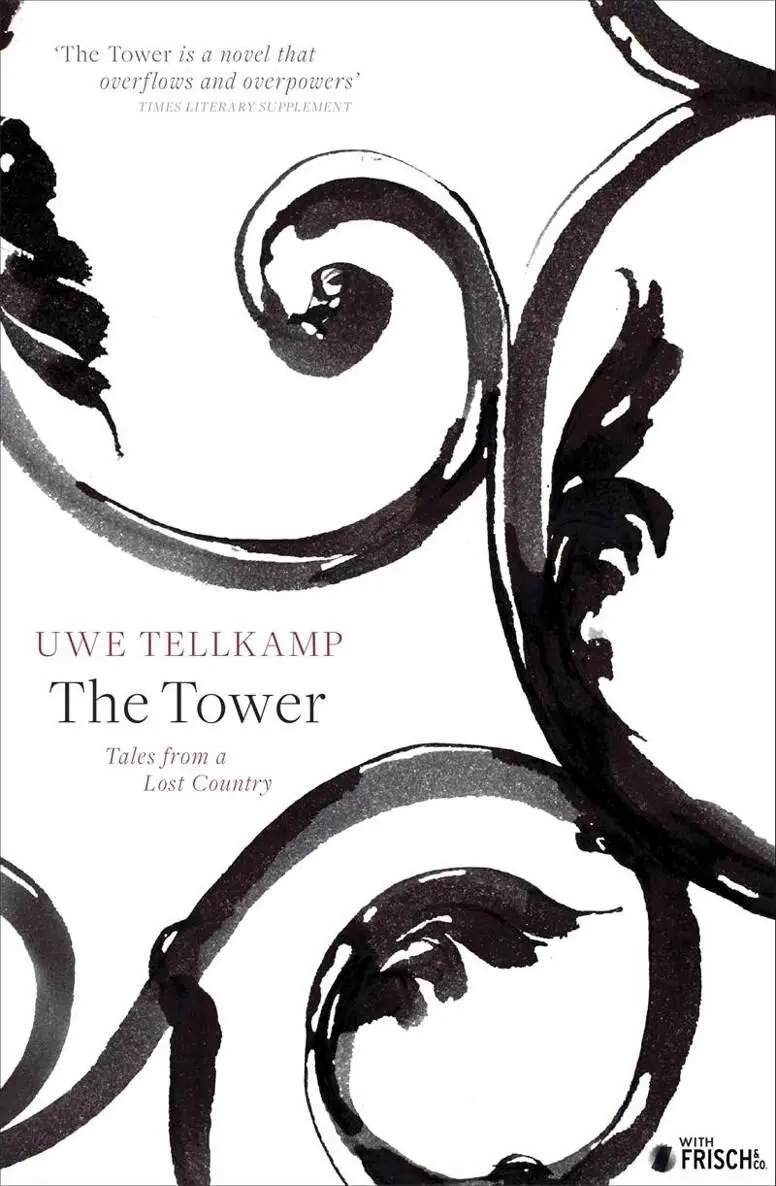
- Название:The Tower
- Автор:
- Издательство:Penguin
- Жанр:
- Год:2014
- ISBN:нет данных
- Рейтинг книги:5 / 5. Голосов: 1
-
Избранное:Добавить в избранное
- Отзывы:
-
Ваша оценка:
The Tower: краткое содержание, описание и аннотация
Предлагаем к чтению аннотацию, описание, краткое содержание или предисловие (зависит от того, что написал сам автор книги «The Tower»). Если вы не нашли необходимую информацию о книге — напишите в комментариях, мы постараемся отыскать её.
The Tower — читать онлайн бесплатно полную книгу (весь текст) целиком
Ниже представлен текст книги, разбитый по страницам. Система сохранения места последней прочитанной страницы, позволяет с удобством читать онлайн бесплатно книгу «The Tower», без необходимости каждый раз заново искать на чём Вы остановились. Поставьте закладку, и сможете в любой момент перейти на страницу, на которой закончили чтение.
Интервал:
Закладка:
Ruden strolled over, said nothing. Rogalla explained it was nothing to do with him any more; Ruden, who probably had been going to say something, nodded, happy at this neat solution that relieved him of responsibility; he followed Rogalla out, holding up the spoon with the green side showing.
‘They were the worst,’ Costa said, ‘they’re leaving in five days’ time. Then he’ll be over the worst.’ Burre’s mother didn’t respond, she hadn’t taken her headscarf off, was still sitting there in her trenchcoat, one of those putty-grey ones with buttons the size of pocket watches, which were still available in the shops alongside green and forest-brown parkas, the sole difference between the men’s and women’s styles being (Barbara claimed) that the women’s buttoned on the left, the men’s on the right.
After a while she turned to Musca. ‘Haven’t you got a mother?’ she asked.
‘No,’ he replied. ‘And if I did have one she wouldn’t come strolling in with five hundred marks in an envelope.’
‘You have no mother?’
‘No, I haven’t! I come from a home, you see, my old lady drank herself to death. I drove her nuts, when I was little she put red wine in my bottle. I was quiet once I’d had it. But you — you just come barging in here with your money and fine words: a sensitive boy — I’m sensitive too, gentlemen. If you only knew how sensitive I sometimes am and how my comrades here sometimes really piss me off —’
‘Heeheehee.’
‘Shutyertraparsehole. — So, what do you have to say to that?’
But Burre’s mother didn’t answer, for her son had come in. At first he didn’t seem to understand, looked irritatedly from one side of the table to the other, then, when he saw the envelope, he abruptly turned round, lowered his head, as if to think, fingering his pack frame with the pockets for his reserve magazine and his water bottle that, against regulations, he’d hooked on to it. ‘You shouldn’t have come here, I asked you not to. And certainly not with money, have we got a golden goose?’ He didn’t turn round, spoke agitatedly, shoulder raised, to an uncomprehending spot on the floor, from which his mother’s answer could reach him by ricochet.
‘But you told me he wouldn’t come,’ Burre’s mother murmured to Costa in a weary, monstrously sad voice.
When autumn came, the DCs left. Not after having given advice: Keep your tank water bottle clean. Your field pack in order. Tell the new ones they should get some material for slings and motorbike goggles.
The new ‘earholes’ arrived, stuffed with rumours, from ‘outside’ and from the cadet schools; they approached with trepidation, panting under the weight of the packed groundsheets, driven by a taskmaster with his hands behind his back, and dispersed into the various companies, like one of those lines of ants that resemble a procession of walking leaves — with one exception: Steffen Kretzschmar, who, because of his baker’s hands, his round face, his short, wiry black hair and ears that stuck out like handles, was immediately dubbed ‘Pancake’. Pancake was pulling a handcart in which he had his things (only the more senior servicemen had sailor’s kitbags, diverted from navy stores): a Weltmeister accordion with cracked mother-of-pearl buttons, a barbell and a box of juggler’s balls. When Musca exulted, he did it with childlike openness, he pushed his cap onto the back of his head so that his protuberant eyes formed a lilac-blue centre in a face creased with laughter lines: widened by knowledge or ideas that were still in the state of chortling anticipation and only after a few seconds would send out shudders all over his skinny body, like a kind of nettlerash.
‘Just look at that dogface! Pullin’ a handcart, have y’ever seen anythin’ like that before!’ He went to his locker, put on his belt, aimed a cherry pit, still a pleasing red, at Karge on his bunk. ‘Hey, Wanda, get your finger out, the virgins are coming and one we can show what’s what.’
Even Christian was actually too tall for the tank, the limit was one metre eighty; but Pancake was at least one metre ninety. ‘The hatch’s goin’ to knock his head into his shoulders,’ Popov said, ‘well, perhaps that’s why they put him in the cavalry. How’s he going to park those spindle-shanks of his between the gear lever and the brakes … and a cap to fit that noddle just don’t exist.’
Musca drew himself up to his full height in front of Pancake, which looked rather ridiculous: he was a whole head shorter and looked like a buzzing insect that, in order finally to attract the attention of the giant explorer — Christian observed Pancake looking down on Musca, at first puzzled, then with increasing interest — had transformed itself into a dancing spider, a raving frog, a double-bass player during the ‘Flight of the Bumblebee’; except that after a while Pancake asked, ‘What d’you want?’
‘… anyway!’ Musca was waving his hands about; Pancake lifted him up with one arm, over his head, popped a cigarette between his lips with his left hand, lit it with the long flame of a red Bic lighter (Musca squealed, the flame was licking round the crotch of his trousers), waited until Musca’s boots had fallen off, then gently put him down in a November puddle, skilfully avoiding his fists flailing round in the air. Karge almost died laughing. ‘Great balls of fire!’
Costa said it served the bigmouth right. Irrgang came from the depot and shouted that if that was one of the privileges accorded discharge candidates, then count him in.
Pancake accepted his nickname, even seemed to be happy with it and look on it as flattery, for he didn’t object to it, on the contrary, sometimes when he was on duty he would report as ‘Private Pancake’, grinning maliciously at the confusion he caused. During the first few days, Christian thought, he was trying things out, giving the officers a look-over: he respected Nip, who, giving him a look from his yellowed sclerotics, breathed out an alcohol-reeking, ‘Imtheonewhodecidesonthefunnybusinessizzatclearcomrade’, looked the battalion commander, Major Klöpfer (whom all the soldiers in his battalion thought totally incompetent), up and down, listened to the political officer with half-closed eyes, observed Christian, who was his tank commander. Pancake seemed to possess an intuitive knowledge of human nature that came to rapid conclusions, a cool ability to see through bluster and poses and assess people as ‘useful’ or ‘no use’, ‘dangerous’ or ‘harmless’, a crude but probably tried-and-tested classification on which he based his behaviour. He seemed to have problems fitting Christian into this classification for more than once Nemo, as Pancake also called him, felt the grey-flecked eyes under their sleepy, heavy lids on him. After a few days Pancake had declared poor Burre his ‘slave’ (what surprised Christian was that none of the other drivers protested; perhaps the performance he’d put on with Musca had convinced them?); Nip’s ‘humming top’ he dismissed with a twitch of his fleshy lips; the company commander did not interfere in the business of the lower ranks and Pancake was in the platoon leader’s good books because he was the best driver the battalion had ever seen. He was better than Popov, for Pancake had the confidence to reverse into the tank shed in the technical depot at full throttle (and without a guide, that was the game when a fractional movement on the steering lever could decide the fate of a Double-T carrier); on the old Wehrmacht practice course, which had been adapted to Russian conditions, he lowered the company record that had been set by a legendary reserve officer in the early seventies; in Pancake’s fist the right-angled steel hook to open the hatch bolt looked as delicate as the handle of a lady’s hatbox.
Читать дальшеИнтервал:
Закладка:
Похожие книги на «The Tower»
Представляем Вашему вниманию похожие книги на «The Tower» списком для выбора. Мы отобрали схожую по названию и смыслу литературу в надежде предоставить читателям больше вариантов отыскать новые, интересные, ещё непрочитанные произведения.




Обсуждение, отзывы о книге «The Tower» и просто собственные мнения читателей. Оставьте ваши комментарии, напишите, что Вы думаете о произведении, его смысле или главных героях. Укажите что конкретно понравилось, а что нет, и почему Вы так считаете.