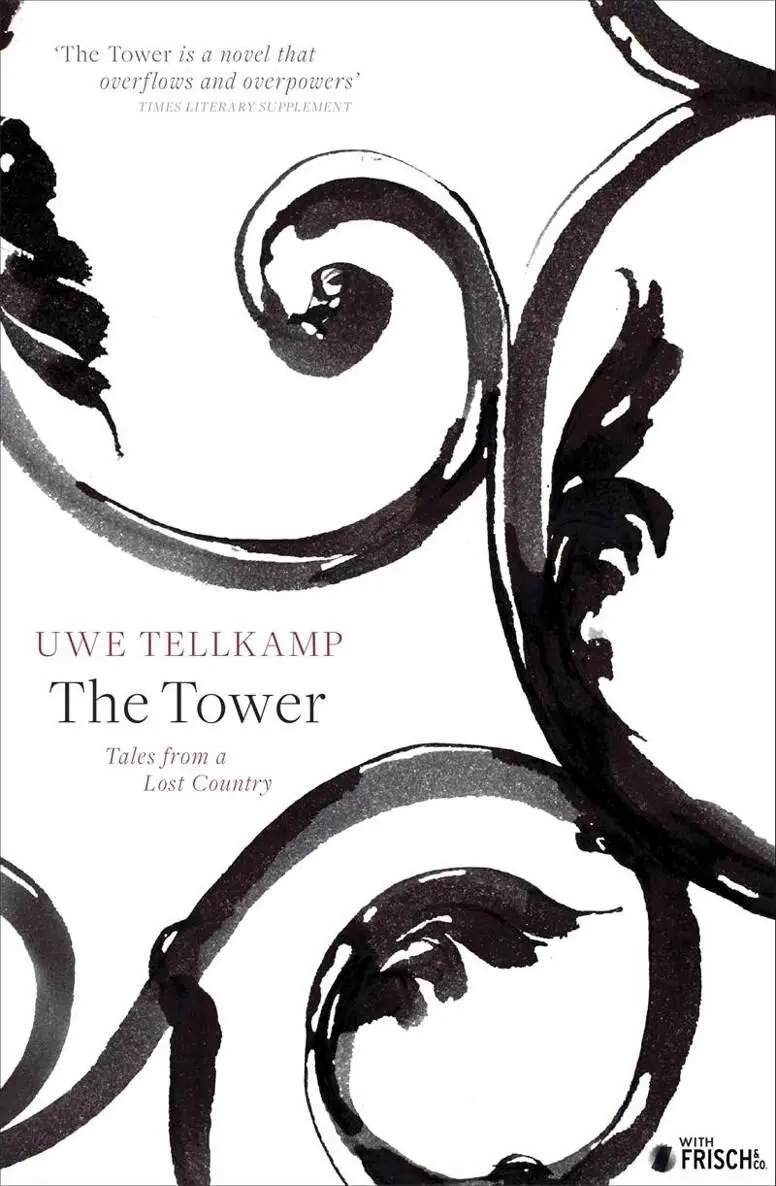
Uwe Tellkamp - The Tower
Здесь есть возможность читать онлайн «Uwe Tellkamp - The Tower» весь текст электронной книги совершенно бесплатно (целиком полную версию без сокращений). В некоторых случаях можно слушать аудио, скачать через торрент в формате fb2 и присутствует краткое содержание. Год выпуска: 2014, Издательство: Penguin, Жанр: Современная проза, на английском языке. Описание произведения, (предисловие) а так же отзывы посетителей доступны на портале библиотеки ЛибКат.
- Название:The Tower
- Автор:
- Издательство:Penguin
- Жанр:
- Год:2014
- ISBN:нет данных
- Рейтинг книги:5 / 5. Голосов: 1
-
Избранное:Добавить в избранное
- Отзывы:
-
Ваша оценка:
The Tower: краткое содержание, описание и аннотация
Предлагаем к чтению аннотацию, описание, краткое содержание или предисловие (зависит от того, что написал сам автор книги «The Tower»). Если вы не нашли необходимую информацию о книге — напишите в комментариях, мы постараемся отыскать её.
The Tower — читать онлайн бесплатно полную книгу (весь текст) целиком
Ниже представлен текст книги, разбитый по страницам. Система сохранения места последней прочитанной страницы, позволяет с удобством читать онлайн бесплатно книгу «The Tower», без необходимости каждый раз заново искать на чём Вы остановились. Поставьте закладку, и сможете в любой момент перейти на страницу, на которой закончили чтение.
Интервал:
Закладка:
‘Oh, it’s you,’ Marisa said. By now her German was almost accent-free .
‘Yes. Lovely T-shirt you’ve got on, Frau Sanchez.’
‘From Santiago de Chile. May I go and clean my gloves first? I was stupid enough to eat a sticky ice cream. Hello, Herr Rohde.’ I took the stethoscope out of my ears .
Judith: ‘I’ve got a knife.’
Marisa: ‘A good one?’
Judith handed it to Marisa, who unclasped it and examined it with an expert eye. ‘A good knife,’ she said, giving it back to Judith, ‘where did you get it? And do you also know where your thrust should go?’
‘Where it hurts, I assume. It’s a genuine French Laguiole, a present from a reader.’
‘Please — give it to me. You don’t know how to handle it.’
‘I’d love to give you one now. There.’ Judith raised her fist and stopped just short of Marisa’s cheekbone .
‘Not very effective, even though it looks spectacular. Don’t deceive yourself, most people find it more difficult than they think to hit someone in the face. I’d be quicker than you, ward the blow off upwards, like this’ — Marisa demonstrated how she would do it — ‘and then hit you there.’ Marisa stopped her little fist in its white glove short of Judith’s Adam’s apple .
‘First the man, then the knife.’ Judith regarded the open, stick-insect-slim blade .
‘You’d use it for Philipp?’
Judith looked round at Philipp, who’d put his book down and, sitting astride the branch, had started to cut his fingernails. Now and then he cried, ‘Stupid’, pushed his cream hat back but didn’t come any closer, and I looked for the Old Man of the Mountain, who was now sitting at his typewriter in the sun, glue pot, draft paper and scissors beside him, working away at his mountain project and not looking up. Judith said, ‘You can have the knife. Your demand is so outrageous that I’m beginning to like you again. I like it when a balance clearly tips down on one side. If I have to lose, then properly, the other pan says. At least it’s empty and free.’
‘You want to stab from outside but that’s quite wrong. Come on, I’ll show you.’ Marisa took the knife out of her hand, linked arms with Judith and they headed for Lietzenburg, deep in conversation, their heads close together .
The Old Man of the Mountain started when the clock struck; there was no one in the library of Lietzenburg apart from himself and Meno. He took off his reading glasses, stood up, groaning, put the Apollodorus book back on the shelf beside the stack of Sibylle magazines from which, in the evenings when the watchtower on the Dornbusch sent segments of light feeling their way over land and sea, Karlfriede Sinner-Priest read out stylistic bloomers; they were hours pampered by the tick-tock of the grandfather clock and, since it was already getting cold when evening fell, the approving puffs of the stove with the windmill tiles. Two censors sitting together, she in a crocheted stole, he in a knitted cardigan, both with flushed cheeks, for when her rocking chair went ‘creak’, his rocking chair went ‘croak’.
‘Time, Herr Rohde. One doesn’t keep Barsano waiting.’
Marisa and Philipp joined them on the beach. They had guitars slung over their shoulders on brightly coloured, folksy woven straps and looked like adventurers with their hair stiff with salt under straw hats casting frayed star-shadows on their feet that, as they waded along the back-and-forth of the water’s edge with its unconsciously stumbling shells, they let glittering hands run over. They were heading for the Cape, the cliffs of which were already gathering the red of sunset, climbing one of the steep paths leading up from the shore. Agrimony and yarrow, black mullein and woody nightshade grew along the path; to Meno’s surprise the Old Man of the Mountain identified them without having to think for long. ‘A pharmacist’s son, Herr Rohde, ought to have sufficient botanical knowledge —’ The rest of the sentence was drowned out by the roar of engines. Beyond the Cape, beach buggies were tearing through the waves and up the dunes that sandslips had rendered less steep there. Philipp shaded his eyes. Meno recognized the Kaminski twins, in the other three buggies were members of the Central Committee of the Socialist Unity Party of Germany. One of the twins roared up the slope, stopped in front of Philipp. ‘Well, Herr Londoner, in which column of your table does this activity come.’
‘Impudence,’ Philipp said without thinking; Meno grasped his arm.
‘Watch your tongue, Master Londoner, we’ve told you that before. Ah, Herr Rohde, you’ve been invited too? How are things at home? Frau Honich will be sorry you’re not there.’
Kaminski — Meno still couldn’t say which was Timo and which René — grinned, glanced briefly at Marisa, ignored the Old Man of the Mountain.
‘I thought motor vehicles were forbidden on the island?’ Philipp stared at Kaminski, who was coolly taking off his suede openwork racing-driver gloves. ‘Fancy a ride? I’m called Timo.’
‘Thanks, but no, compañero .’ Marisa tried to get Philipp to move on but Barsano was already waving them over. Timo Kaminski put two fingers to his baseball cap in salute. With a roar of the engine, the buggy shot back off towards the beach. Philipp swore at his departing back. His father, he said, was a highly placed cadre in the nomenklatura, a genuine fighter still, but his spawn, Philipp said, spitting on the ground out, were betraying the ideals of the revolution; they were wastrels, exploiting their connections. ‘An apartment — who gets one at that age, single students, huh!’
‘You too,’ Meno ventured to object, but that only exacerbated Philipp’s rage.
‘It’s different with me. I got my flat through people I know … by fighting for it. Yes, you can certainly call it that. Moreover I’m not a student any more!’ Philipp’s tendency to fly off the handle, to become obstreperous; Philipp’s blindness for parallels (that he shared with Hanna); Meno said nothing, he was thinking what Judith Schevola had said on the way to East Rome: the Red aristocracy.
‘I can well imagine what you’re thinking.’ Philipp gave a bush, quietly dreaming of the peak of its aspirations, a kick. ‘And I’d like to remind you that without Father’s intervention you’d never have got the apartment on Mondleite. No question about it. But these guys … they’re gangsters, they have no scruples and belong to our Party — it’s been totally corrupted by bastards like that!’
‘He might be able to hear you, Philipp,’ Meno warned, nodding towards Barsano, who had got out of his buggy and was climbing up the dune. The Old Man of the Mountain whispered that it was impolite to stand around when the First Secretary was approaching, especially from below; he stooped and went to meet Barsano.
‘ They’re the ones who have power in the Party, not the honest comrades who’re pinching and scraping at the base in order to preserve at least something … Now, don’t tell on me,’ Philipp said abruptly, outwardly composed again. They followed the Old Man of the Mountain, but Philipp held himself proudly upright.
‘A few toys’ — the First Secretary made a dismissive wave — ‘Father Kaminski had them delivered to the Central Committee’s holiday house. Wouldn’t have thought it was such fun to drive them. Where’ve you left Schevola? We don’t want to see her any more. We can forget her. Pity, we don’t see pretty women that often,’ he said to Marisa, holding out his gloved hand to her with a remark on the work of the Chilean Solidarity Committee. ‘They’re from the Federal Republic, those things. We ought to build them here too. Perhaps Arbogast can manage it. — Off you go up there now, comrades, there’s something to drink at the top.’
Читать дальшеИнтервал:
Закладка:
Похожие книги на «The Tower»
Представляем Вашему вниманию похожие книги на «The Tower» списком для выбора. Мы отобрали схожую по названию и смыслу литературу в надежде предоставить читателям больше вариантов отыскать новые, интересные, ещё непрочитанные произведения.


Обсуждение, отзывы о книге «The Tower» и просто собственные мнения читателей. Оставьте ваши комментарии, напишите, что Вы думаете о произведении, его смысле или главных героях. Укажите что конкретно понравилось, а что нет, и почему Вы так считаете.