Uwe Tellkamp - The Tower
Здесь есть возможность читать онлайн «Uwe Tellkamp - The Tower» весь текст электронной книги совершенно бесплатно (целиком полную версию без сокращений). В некоторых случаях можно слушать аудио, скачать через торрент в формате fb2 и присутствует краткое содержание. Год выпуска: 2014, Издательство: Penguin, Жанр: Современная проза, на английском языке. Описание произведения, (предисловие) а так же отзывы посетителей доступны на портале библиотеки ЛибКат.
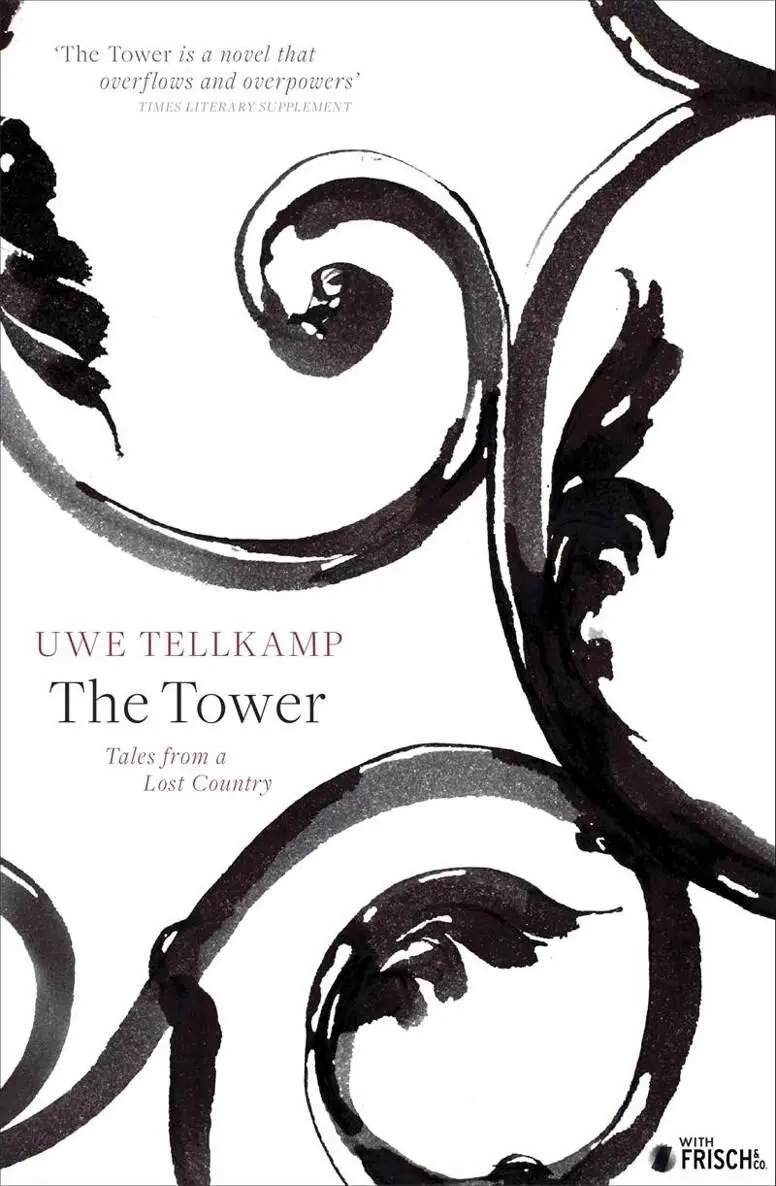
- Название:The Tower
- Автор:
- Издательство:Penguin
- Жанр:
- Год:2014
- ISBN:нет данных
- Рейтинг книги:5 / 5. Голосов: 1
-
Избранное:Добавить в избранное
- Отзывы:
-
Ваша оценка:
The Tower: краткое содержание, описание и аннотация
Предлагаем к чтению аннотацию, описание, краткое содержание или предисловие (зависит от того, что написал сам автор книги «The Tower»). Если вы не нашли необходимую информацию о книге — напишите в комментариях, мы постараемся отыскать её.
The Tower — читать онлайн бесплатно полную книгу (весь текст) целиком
Ниже представлен текст книги, разбитый по страницам. Система сохранения места последней прочитанной страницы, позволяет с удобством читать онлайн бесплатно книгу «The Tower», без необходимости каждый раз заново искать на чём Вы остановились. Поставьте закладку, и сможете в любой момент перейти на страницу, на которой закончили чтение.
Интервал:
Закладка:
DIARY
(Tuesday)
By now her hair is more ash blonde than grey. Kim Novak’s hair in Vertigo. Hydrogen peroxide. Don’t think Judith uses that. She asked me about Christian — and whether I’d brought my Dawn alarm clock with me. Then we talked about plums (the Old Man of the Mountain’s brought some Zibarten schnapps, a delicious speciality). I told her the Zibarte was a wild plum variety from the late Celtic period. She shrugged her shoulders. Me: ‘Best of all I like plums when they’re young and still almost green; they’re already juicy, plump but without grubs.’ She: ‘But when they’re ripe they’re sweeter, heavier, more intense. These young things, don’t they give you stomach ache?’ Me: ‘Only when you’re insatiable.’ She: ‘You’re not insatiable — as far as plums are concerned?’ I continued my lecture on the Zibarte plum, an interesting excursion into botany. Judith turned away, bored (?). And round here there are cherry plums, bigger and lovelier than I’ve ever seen on the slopes above the Elbe. As a name ‘cherry plum’ shows an odd lack of imagination; I would have called Prunus cerasifera a peach. The Old Man of the Mountain shook his head slowly from side to side, explaining that one did not rechristen something that bore the name myrobalan from the depths of time. — How does Judith know I have an alarm clock?
(Wednesday)
One word about breakfast, for all I have to say about early-morning exercises that here (I have to be fair) are recommended rather than compulsory is: since so far I’ve still managed to get up at five for my lauds and snip off a bit of the day’s work with the scissors of my willpower, I can observe the gathering of keep-fitters on the sports field behind Lietzenburg with an easy eye. You can borrow the army tracksuit — you have to sign for it, of course. Later on in the day the man in charge of Fun and Games (as the official name has it) is the house electrician — they say Günter Mellis, when he’s staying here, is generous in his offers of help — caretaker, messenger and boilerman in winter as well. I spent ages wondering where I’d seen him before: when I met Arbogast on the way to see the Old Man of the Mountain. The man leading the students from the House of the Teacher. Our F&G leader insisted he’d nothing to do with him, he’d always worked here, at Lietzenburg. Similarly Frau Kruke, housekeeper, charwoman and watchdog, Judith’s ‘house dragon’. She insists she’s never heard of Else Alke, even though she’s the spitting image of her. A dwarf shuffling along in slippers. — To get back to breakfast, which she’s in charge of. As Judith takes her plastic plate with the standard two slices of Tilsiter cheese, two slices of blutwurst, two slices of bologna, one little slab of hotel butter, two slices of pumpernickel (Saturdays rolls from Kasten’s bakery, Sundays a piece of cake), Lührer, the writer, who’s in front of her in the queue, says, ‘Enjoy your meal’, and apologizes that ‘recently’ he voted for her expulsion, she must understand that he had four children to provide for. — That’s all I needed! (Judith) Breakfast starts on the dot of eight. At the moment there are thirty-three of us in the house. In the canteen eight tables, each spread with a red-and-white-checked cloth and decorated with a light-green, transparent plastic vase, stand silent. In each vase there is water rising to a line marked one centimetre below the rim and pierced by a single artificial flower, style: red marguerite, from the workshops in Seibnitz. All the stems are ground like a cannula and slightly curved, inclined, as seen from the canteen door, to the right, so that the blooms all look to the east and at eight o’clock on the dot they all (assuming it’s a good day) don a little cap of light the size of your thumbnail. On every table the latest copies of Neues Deutschland, Junge Welt and the Ostsee-Zeitung , in aluminium napkin holders in the shape of a half-sun, await the guests; in addition, on the men’s tables there is Magazin and on the women’s Für Dich and Sowjetfrau. The copy of the satirical weekly Eulenspiegel is chained and on such a short chain that it can only be read at the occasional table by the entrance. There is a board with slots for strips of paper (blue and pink, typewritten) and each morning you have to check where you’re sitting. In order to make us mingle as much as possible and to ‘assure the maximum communicative contact’ (quoted from house regulations) the men and women — always separate — go from table to table. But what is the use of that when the Old Man of the Mountain spreads out his personal napkin, Philipp brings his own cutlery, Judith responds to Karlfriede Sinner-Priest’s comment that Fräulein Schevola actually had no right to be there by sweeping her plate off the table and strolling out of the room, and Lührer, the writer, all too pointedly places a jar of Nutella between himself and the poor editor, Rohde ?
(Wednesday evening)
Notions –
Prague ’68. The third way. Stony monumental faces on the canyons of Sacred Theories. The bare You or I that, like everything unavoidable, is not without its comic side, nor without its boring side. There, in ’68 in Czechoslovakia, a humane society seemed possible, a society that does not forget that it consists of individuals. Democracy and open discussion. Criticism, publicly expressed but not simply for its own sake .
Schevola: ‘A dream, Herr Rohde. Crushed by tanks.’
The Old Man of the Mountain: ‘Perhaps Dubček and his friends were just lucky.’
Philipp: ‘You a heretic? Go on.’
The Old Man of the Mountain: ‘The most radiant dreams are those that never need to become reality. Do you, Herr Londoner, seriously consider a capitalist socialism a possibility? Freedom of production, of reaction to the market, demands freedom of thought. Your father had something interesting to say about that recently.’
Philipp: ‘Thought does not have to be unfree in socialism. Unfree socialism isn’t socialism. A genuinely socialist society will develop by openly naming and overcoming its contradictions.’
Schevola: ‘That means we’re not living in socialism.’
The Old Man of the Mountain: ‘Don’t say that so emphatically, my dear. — Dubček has become a martyr, Prague ’68 a legend. It could become a myth because it was spared failure. That was the fault of the fraternal states and we’re left with a fairy-tale flower that never had to prove in the soil of reality that its bloom would be as beautiful as promised. — You think me an opportunist. Maybe that’s what I am. Maybe I’m a coward. I’m on publishers’ advisory boards, now and then the Minister for Books listens to me — and I didn’t dare to speak up loudly for your book, Judith. I’m even prepared to look inside myself and to admit I found a nasty little piece of envy down there. I’m a censor, and not an easy-going one. I was in the SA. I was a soldier in the Wehrmacht. I was in the camp. Despite everything I saw, I believed in the good in people. I’ve remained a child. I’m afraid. For this country as well. I’m no longer young and my life’s consisted of broken dreams, day after day. I don’t believe in anything any more.’
Schevola: ‘Amen to that.’
Philipp: ‘You’re old, that’s all. Indigestion, itchiness, you’ve seen it all before … the whole business! But you’re making things difficult for us. There are lots of people like you in this country and, unfortunately, often in senior positions. Waving things away, weary hands, weary blood — but we need strength, encouragement, it’s not easy —’
Читать дальшеИнтервал:
Закладка:
Похожие книги на «The Tower»
Представляем Вашему вниманию похожие книги на «The Tower» списком для выбора. Мы отобрали схожую по названию и смыслу литературу в надежде предоставить читателям больше вариантов отыскать новые, интересные, ещё непрочитанные произведения.




Обсуждение, отзывы о книге «The Tower» и просто собственные мнения читателей. Оставьте ваши комментарии, напишите, что Вы думаете о произведении, его смысле или главных героях. Укажите что конкретно понравилось, а что нет, и почему Вы так считаете.