Uwe Tellkamp - The Tower
Здесь есть возможность читать онлайн «Uwe Tellkamp - The Tower» весь текст электронной книги совершенно бесплатно (целиком полную версию без сокращений). В некоторых случаях можно слушать аудио, скачать через торрент в формате fb2 и присутствует краткое содержание. Год выпуска: 2014, Издательство: Penguin, Жанр: Современная проза, на английском языке. Описание произведения, (предисловие) а так же отзывы посетителей доступны на портале библиотеки ЛибКат.
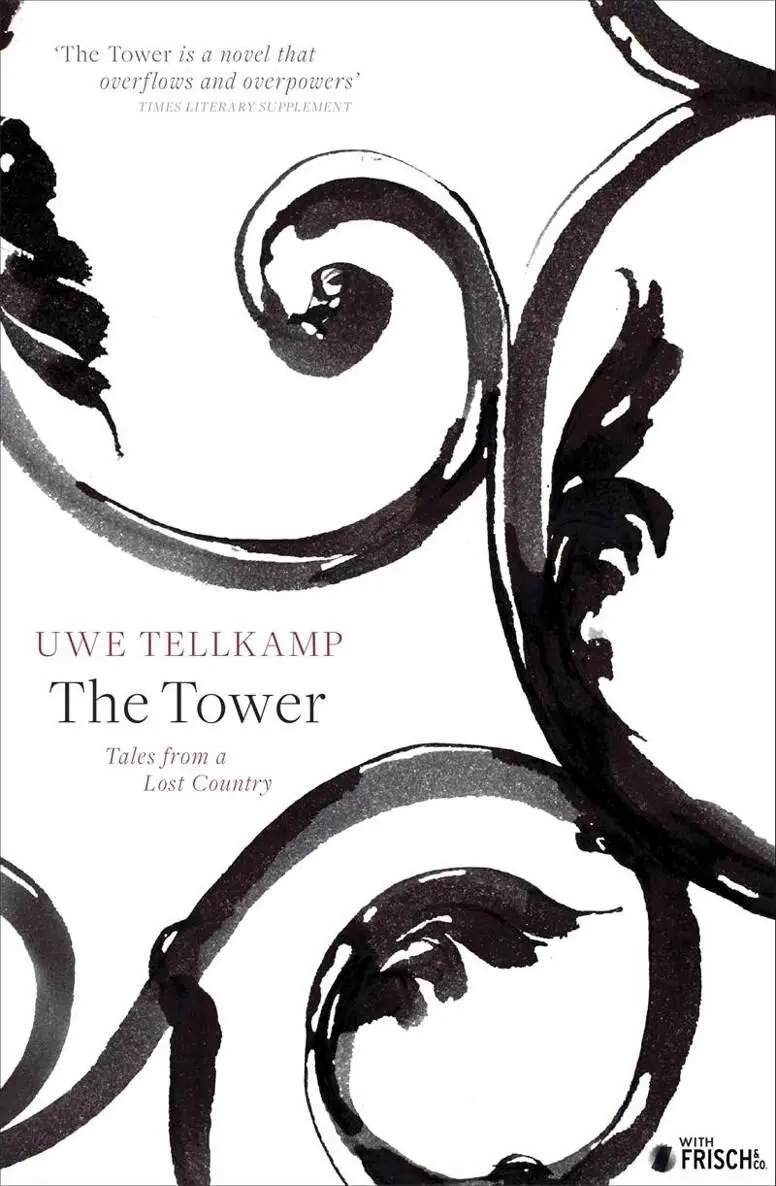
- Название:The Tower
- Автор:
- Издательство:Penguin
- Жанр:
- Год:2014
- ISBN:нет данных
- Рейтинг книги:5 / 5. Голосов: 1
-
Избранное:Добавить в избранное
- Отзывы:
-
Ваша оценка:
The Tower: краткое содержание, описание и аннотация
Предлагаем к чтению аннотацию, описание, краткое содержание или предисловие (зависит от того, что написал сам автор книги «The Tower»). Если вы не нашли необходимую информацию о книге — напишите в комментариях, мы постараемся отыскать её.
The Tower — читать онлайн бесплатно полную книгу (весь текст) целиком
Ниже представлен текст книги, разбитый по страницам. Система сохранения места последней прочитанной страницы, позволяет с удобством читать онлайн бесплатно книгу «The Tower», без необходимости каждый раз заново искать на чём Вы остановились. Поставьте закладку, и сможете в любой момент перейти на страницу, на которой закончили чтение.
Интервал:
Закладка:
‘You won’t believe it. I’m a nightwatchwoman now.’
‘What hare-brained idiot appoints a woman to a job like that?’
‘Someone who can’t even get pensioners to do it. — At a crematorium and graveyard. “Too much future, too many acquaintances,” my seventy-year-old predecessor said as he gave me the keys.’ Taking off her shoes and socks, she threw them into the cart, which Meno was helping to pull, rolled up her jeans and splashed though a puddle. Horse-drawn carriages came in the opposite direction. Cyclists rang their bells for them to make way. It was getting cool, the wind came off the sea. The mosquitos buzzed, with an oath, Philipp slapped his neck, examined what he’d killed with an expression of disgust. The old chestnut trees along the main street of Kloster mingled their scent with that of cow dung and hay coming from the extended meadows between Kloster and Vitte. A Schwalbe moped approached, stopped the three of them; the section representative demanded to see their room confirmation. When he read Lietzenburg, he reminded them that no kisses from the muses were allowed after 8 p.m. The road became a sandy track when they turned off north from the main street, past Kasten’s bakery. Holidaymakers came towards them, bronzed creatures from another age. Women in flowing batik dresses, lots of wooden ornaments, bangles made from coloured leather straps, sandals with strings of glass beads; pipe-smoking men with artists’ locks, the Jesus look, less often short hair and proletarian donkey jackets à la Brecht. Reed-thatched houses beneath the spreading chestnuts, the first lights flashed on.
He could have gone out and perhaps Anne wouldn’t have followed him. Christian sensed that she wanted to talk to him but he hated sentimentality: tears, confessions of weakness, despair — all that women’s stuff, he thought; he imagined his mother on a walk like that, softening him up with sobs and moans or, even worse, with nothing like that, just with sympathetic silence : why? What difference would it make? They were sitting outside the bungalow with a lantern but not enough light for Regine’s letter that Richard wanted to read out; Niklas switched on the light over the door.
Christian didn’t go. He was tired, it was nice that no one asked him anything, it was a mild evening, crickets were chirping sleepily, it was comfortable lying in the lounger. Gudrun suggested they visit Ina on their way back to Berlin, little Erik was over the worst, visitors weren’t a nuisance any more. Anne had made some tea. The shrill of a whistle chopped up the calm of the holiday camp, children came out and stood in two rows in front of the bungalows. Richard didn’t read any louder.
‘… the door was slammed shut from outside. The train was already setting off. We stowed the luggage away. No embraces before the frontier, we were superstitious. The train stopped between stations. Outside there were little men in uniform running up and down, I thought, they’re Russians: lots of scurrying and pattering, already there was one in the compartment. “Passports and customs”, in the Vogtland dialect. The fear returned: is everything going to be all right? First of all he rummaged round in my handbag. “What’s this then?” It was Philipp’s wish list, I’d written it out for him. It said: Papa. A peach as big as a football. The uniform put the piece of paper in his pocket. “And this?” I’d made a driving licence for Philipp with a passport photograph and a stamp drawn on it for his Liliput three-wheeler (he was a master on his scooter, could park backwards better that I can in the car). I stammered out an explanation, I was pretty overwrought. He shut the little folder, put it back in my bag, handed it to me. “Have a good journey”, and he was gone. For a while longer there was noise out in the corridor, clattering, disgruntled voices. Then the train started again. Hansi was annoyed that the guy had stolen the wish list. Philipp slept calmly through everything. We were so exhausted we both dropped off too. The screech of brakes, “Landshut”, from outside, Bavarian dialect this time. Around 11 o’clock the family was reunited in Munich Central Station.’
Robert went into the bungalow; he wanted to do some night fishing in the lagoon. The lantern crackled with diving, fluttering insects. The toadstool lamps lit up, one after the other, each one pouring out brightness, Christian thought, like milk out of a jug in a girl’s hand. There was a vortex in the wall of pines beyond the holiday camp, a frenzy of dissolution on the sky that was being dragged into darkness. Christian felt uneasy. Niklas lit his pipe. Gudrun gargled with tea, leant back, both arms on the arms of her deckchair, began to recite, lines Christian didn’t know:
‘ “Sleeplessness. Homer. Taut sails. I read
The catalogue of ships but halfway through:
That youthful brood, the cranes in retinue
That Hellas saw, once long since, overhead.” ’
Said, ‘Mandelstam.’
Now Niklas took his pipe out of his mouth and declaimed:
‘ “A golden frog, the moon’s bright ring
Floats in the lake’s dark night.
Like apple blossom in the spring
My father’s beard is turning white.” ’
Said, ‘Yesenin.’
Said Anne:
‘ “Like that wedge of cranes to distant lands,
Your princes’ heads becrowned with godly spray,
You sail. Had Helen not been torn away,
What would Troy be to you, Achaean band?” ’
Said, ‘Mandelstam.’
Said Robert, ‘Now I’m going fishing.’
Christian said nothing.
Richard fetched his accordion, sang:
‘ “Goodbye, my friend, no hand nor word,
And let not tears your cheeks bedew.
To die is nothing new, I’ve heard,
And living, yes, that’s old hat too.” ’
Broke off, said, ‘Yesenin.’
Said Gudrun:
‘ “The sea and Homer — both by love impelled.
Which shall I listen to? Now Homer’s fallen silent,
And the black sea, with its heavy swell,
Breaks on my pillow, thunderously eloquent.” ’
Said, ‘Mandelstam.’
Christian said nothing. Anne cried.
49. On Hiddensee
Was that not one of the grey sisters, as Falkenhausen had called them, floating down? Common spider to you, garden spider to me. Or was it a winged fruit from one of the shady trees that surrounded Lietzenburg, only allowing the sun to tiptoe in? The spider scuttled up the window frame, paused, raised its rear end (now it was presumably releasing its gossamer thread, you couldn’t see it), waited until the pull told it that it could let go — and off it went. Meno looked up at the sky: clear, cloudless days, a dry blue, Our Lady’s weather as the old people in Schandau used to call it. Summer’s surface scraped away, hot days paid for with chilly nights; already an extravagance of blossom and insect activity, a burden pulling down upward-striving forces. He thought of the cliffs at the north end of the island. There the god Svantevit vented his swirling fury, boiling current and mud, flowing over sticky loam, the smooth-washed, putty-white flesh of the beach, turning potters’ wheels in the swell, grating on water-organs, binding fast wave-frisbees that swept every swimmer along, sharpening the breakers into knives that cut deep into the island’s body, clawing up shingle and clay, tirelessly paring away, in ever-new upswings of rage, grooves, tunnels and caves in the steep faces that were sagging, eroding, crumbling; sappers’ trenches edged forward between two projecting rocks that marked the line of terra firma, long since gnawed away, and, heralded by trickling, rolling rubble and clouds of dust, collapsed into the sea or onto the remaining narrow strip of sand. Meadows tore off from the overhang like wet paper. Pines, brave and tenacious in the carousels of wind and hurricane, tumbled over. The sparse vegetation on the cliff flanks was scraped off. The tidal runnels gurgled, raged, lashed, sobbed, fizzed, drummed, pounded, depending on the strength and direction of the wind; in the autumn squalls, said the Old Man of the Mountain, who had the room opposite Philipp Londoner’s at the end of the corridor, it sometimes sounded like a ship being wrecked: creaking wood, splintering masts, drowning bodies whirled down into the gullet of the sea surrounded by the howling, growling tarantella of the storm orchestra. A garden spider on the fan of the spokes. So they were already flying, the young spiders. The Indian summer was early this year. For Judith Schevola just one more reason to borrow other people’s clothes (despite the half-dozen pieces of luggage — ‘I always find someone to lug my stuff’), to wear Meno’s pullover with Philipp’s suit when they were sitting round the hall fire in the evening. There was a knock at the door.
Читать дальшеИнтервал:
Закладка:
Похожие книги на «The Tower»
Представляем Вашему вниманию похожие книги на «The Tower» списком для выбора. Мы отобрали схожую по названию и смыслу литературу в надежде предоставить читателям больше вариантов отыскать новые, интересные, ещё непрочитанные произведения.


Обсуждение, отзывы о книге «The Tower» и просто собственные мнения читателей. Оставьте ваши комментарии, напишите, что Вы думаете о произведении, его смысле или главных героях. Укажите что конкретно понравилось, а что нет, и почему Вы так считаете.