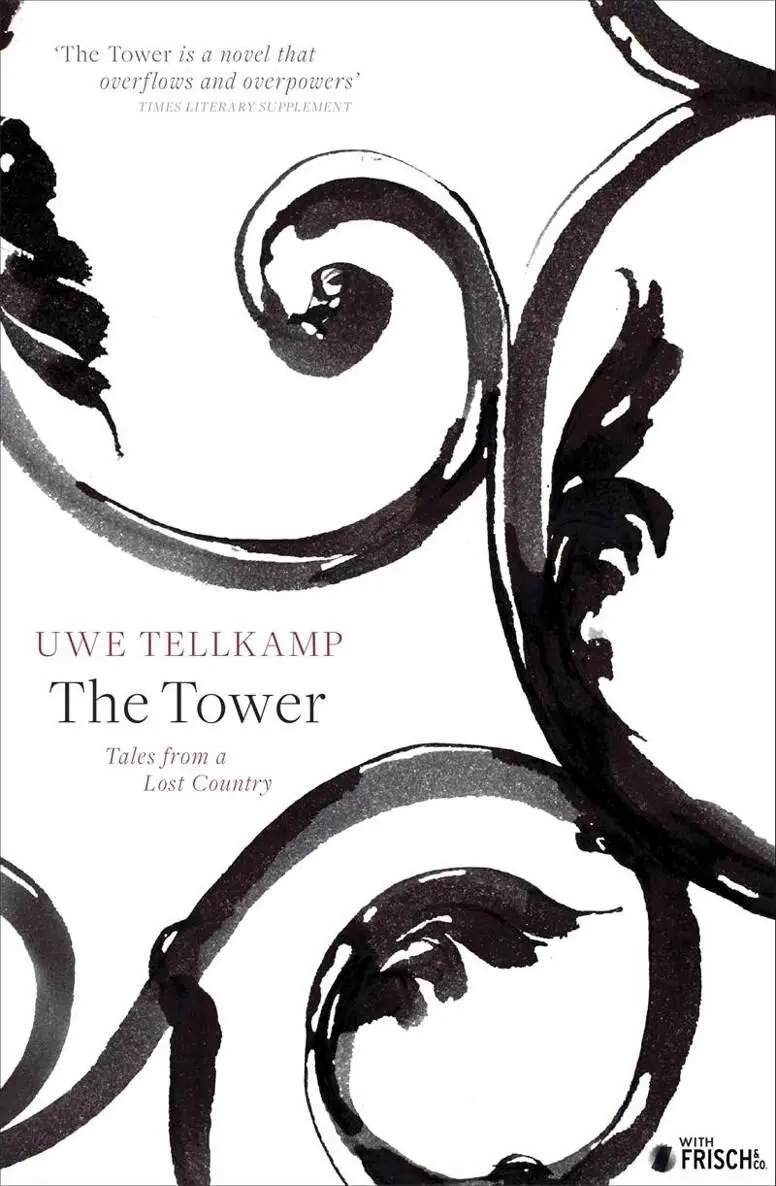
Uwe Tellkamp - The Tower
Здесь есть возможность читать онлайн «Uwe Tellkamp - The Tower» весь текст электронной книги совершенно бесплатно (целиком полную версию без сокращений). В некоторых случаях можно слушать аудио, скачать через торрент в формате fb2 и присутствует краткое содержание. Год выпуска: 2014, Издательство: Penguin, Жанр: Современная проза, на английском языке. Описание произведения, (предисловие) а так же отзывы посетителей доступны на портале библиотеки ЛибКат.
- Название:The Tower
- Автор:
- Издательство:Penguin
- Жанр:
- Год:2014
- ISBN:нет данных
- Рейтинг книги:5 / 5. Голосов: 1
-
Избранное:Добавить в избранное
- Отзывы:
-
Ваша оценка:
The Tower: краткое содержание, описание и аннотация
Предлагаем к чтению аннотацию, описание, краткое содержание или предисловие (зависит от того, что написал сам автор книги «The Tower»). Если вы не нашли необходимую информацию о книге — напишите в комментариях, мы постараемся отыскать её.
The Tower — читать онлайн бесплатно полную книгу (весь текст) целиком
Ниже представлен текст книги, разбитый по страницам. Система сохранения места последней прочитанной страницы, позволяет с удобством читать онлайн бесплатно книгу «The Tower», без необходимости каждый раз заново искать на чём Вы остановились. Поставьте закладку, и сможете в любой момент перейти на страницу, на которой закончили чтение.
Интервал:
Закладка:
One day Nip ordered Christian to come to his room. He ran his thumb over a bundle of postcards. ‘This letter is confiscated, Hoffmann. It has marks from a non-socialist country. From the class enemy! In a facility of the National People’s Army!’
Christian recognized Ina’s handwriting on the envelope. ‘Cuba is a socialist country, Comrade Staff Sergeant. My cousin was there on her honeymoon.’
‘It’s been franked in Hamburg. There are two alternatives. We make a fuss about it, you complain … or the letter disappears. You should be grateful. According to regulations …’
Christian stared at Nip’s collection of pot plants. Anne would have advised him to let the matter drop. Meno, with his coolly observant scientist’s manner, would presumably have waited to see what his nephew would do. Robert would have said, Sell him the letter, you can see how keen he is on it, the poor slob. Try to get something out of it. Only Richard would have lost his temper.
Richard, from whom Christian had inherited his mania for justice, as Barbara put it. But his father wasn’t there. Christian was certainly interested in what would happen if he insisted on having the letter. The Hoffmanns’ daredevil recklessness. Spin the ball and see what turns up on the roulette wheel. ‘Yes, Comrade Staff Sergeant.’
48. ORWO black-and-white
Chug-chug-chug and put-put-put, rumbling and grumbling, baboom, baboom,
‘Something’s rattling, shut the door, Robert.’ — ‘It is shut.’ — ‘I said something’s rattling’, baboom, baboom,
crawling (the traffic jams on the Berlin ring road) and jolting (the hot Pneumant tyres over asphalt bulging out of the joins in the concrete slabs) lip-smacking (hard-boiled eggs, liver sausage on bread, Golden Delicious, peeled cucumbers and carrots at the concrete tables of the autobahn picnic areas) pissing (as Niklas said, there was no other word for it when you had to go into the scraggy pine trees beside the picnic areas where plastic bags, empty bottles, swarms of flies round the traces left by your predecessors — for the women there was a path leading deeper into the little wood — tons of toilet paper all seemed to say, Oh God, how happy we were) baboom, baboom,
Plastics from Schkopau baboom,
Faster — higher — further baboom,
Plastics from Schkopau babang (pothole),
Forward to the XXth Party Conference baboom,
Plastics from Schkopau badong (deep pothole),
fill the tank ( VK 88 the fuel that takes you further ) boom
(bomb crater — Niklas drove onto the shoulder and checked — the bumper was still attached),
and give thanks (survived it once again, Gudrun groaned in Stralsund, as we straightened ourselves out):
thus one drove away on holiday across the German Democratic Republic.
Stralsund was a sad town. No proud Hanseatic flags any more, no noble regattas. Störtebecker, the pirate, was dead. After being beheaded he walked until he stumbled over the leg of one of the officials. Crumbling brick, dilapidated roofs. The sun was grey, enveloped in clouds of rubbish, hung low over the Sound. They parked the car but left Meno’s luggage in it. He was going to travel on alone. There were a few hours before the ferry for Hiddensee left. Gudrun suggested they wander round the town; Anne and Niklas wanted to go and see the churches; Christian, Robert and Richard were hungry; Meno wanted to go to the Museum of the Sea. The market square was belly-up like a dead fish, gleaming in the fatty air rancid with kitchen fumes; all that was left of the light was some brownish dross that stuck to the walls like traces of tartar. The few people in the market square, which no longer seemed to be the centre of town, kept their heads down and disappeared hurriedly along side streets, as if they were being pursued. The town hall with its pointed Gothic gables seemed glaringly alien; the town was being eaten away by mould and acid discharge from brown coal. There was a long queue at an ice-cream stall offering vanilla ice in a wafer for fifty pfennigs and a cone for a mark; those queuing had the poor, pale skin of holidaymakers from inland before their holiday. Christian and Robert joined the queue. Meno, who had last been in the town as a student — youth hostel, excursions to the Museum of the Sea — wanted to go round by himself.
‘Back at the car in two hours,’ Anne, who seemed to distrust his sense of direction, told him.
In the side streets yellowing curtains were raised and lowered. The window frames had splits, cracked panes were held in place by screws or replaced by plywood. Meno stopped outside a butcher’s; there were two sides of bacon and one sausage hanging in the window, he couldn’t understand why there was still a queue outside. As soon as he bent down to look in the window, where a poster with ‘Long live Marxism — Leninism’ hung over piled-up cans of meat, a woman started to scold: he should kindly join the queue at the back like everyone else. ‘Tourists!’ he heard someone else moan. ‘Probably from Berlin, eh? Buy up everything here then put on airs!’ — ‘Clear off.’
The way to the Museum of the Sea was signposted. Meno slowed down once he could no longer hear the vituperation. He thought about Judith Schevola. He hadn’t seen her since the events at the annual general meeting; she was probably at some machine doing a job no one else wanted. After she’d been expelled from the Association there was hardly anything else left for her. Perhaps Philipp knew more details. At least the book had been printed, in the West, by Munderloh’s publishing house. A few smuggled copies would certainly already have found their way through customs and be passed round the nomenklatura or as typewritten parts stapled together like school exercise books in the Valley of the Clueless. Those in the senior ranks of the Party and favoured officials of the various associations had no need of such subterfuges, they could acquire books from the West quite legally. Perhaps Jochen Londoner had the book and could lend it to him.
An odd idea, housing a museum of the sea in a former monastery. And equally odd that the brickwork of the monastery and the aquariums harmonized, that disciplined drawing, a Gothic silver pencil and unfettered painting, the play of colours, soiled by reality and never to be found in an entirely pure state, should live together so peaceably. The skeleton of a finback whale with a gigantic shoe-shaped mouth and jawbones as thick as your arm hung down from the vaulted ceiling. Children, probably from a holiday camp, were making a racket under the shrill-voiced supervision of two teachers. That, Meno felt, was the unpleasant aspect of natural-history museums: there were always children scurrying around, especially when there was no school, shouting and playing the fool with no consideration, no feeling for the fawn-like stillness, waking the corals from their sleep, making even snails moulded from plastic or alone in jars of formalin pull in their horns. Why could people not stand silence? Zoology was a quiet science and as he walked past preserved dolphins and aquariums bubbling with oxygen, he recalled scenes from his student days in Jena under Falkenhausen, the fraught and taciturn interpreter of the world of central-German spiders who called his predecessor, Haeckel, a fool, though a commendable one, and the Phyletic Museum in Jena a Planet Goethe. Art Forms in Nature . Dried plants, dust-encrusted chandeliers in the shape of jellyfish in blown glass, drawings of diatoms the size of a saucer, Radiolarians, Amphoridea: a stranded kingdom gradually fossilizing.
No more noise, the children had gone; there was no one to be seen, apart from an attendant dozing in a chair. Someone licked Meno’s hand; in the aquarium by which he had stopped there appeared the guileless, panting face of a black dog.
Читать дальшеИнтервал:
Закладка:
Похожие книги на «The Tower»
Представляем Вашему вниманию похожие книги на «The Tower» списком для выбора. Мы отобрали схожую по названию и смыслу литературу в надежде предоставить читателям больше вариантов отыскать новые, интересные, ещё непрочитанные произведения.




Обсуждение, отзывы о книге «The Tower» и просто собственные мнения читателей. Оставьте ваши комментарии, напишите, что Вы думаете о произведении, его смысле или главных героях. Укажите что конкретно понравилось, а что нет, и почему Вы так считаете.