Uwe Tellkamp - The Tower
Здесь есть возможность читать онлайн «Uwe Tellkamp - The Tower» весь текст электронной книги совершенно бесплатно (целиком полную версию без сокращений). В некоторых случаях можно слушать аудио, скачать через торрент в формате fb2 и присутствует краткое содержание. Год выпуска: 2014, Издательство: Penguin, Жанр: Современная проза, на английском языке. Описание произведения, (предисловие) а так же отзывы посетителей доступны на портале библиотеки ЛибКат.
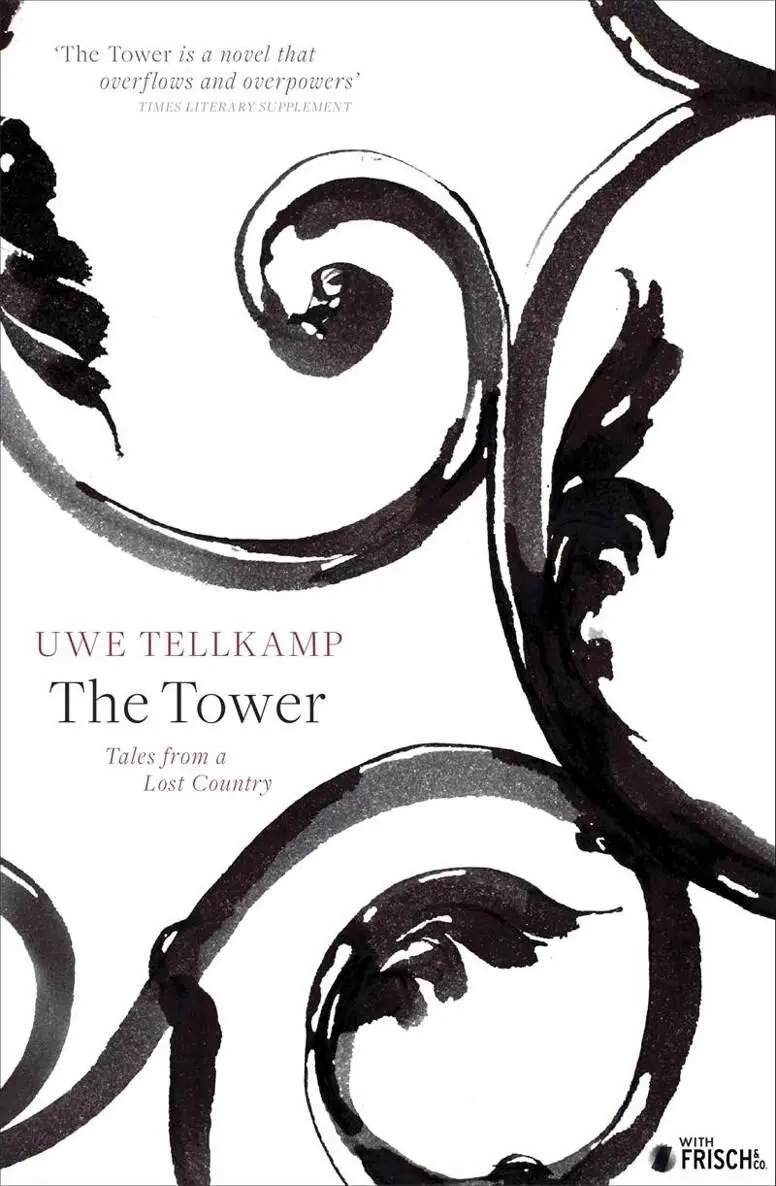
- Название:The Tower
- Автор:
- Издательство:Penguin
- Жанр:
- Год:2014
- ISBN:нет данных
- Рейтинг книги:5 / 5. Голосов: 1
-
Избранное:Добавить в избранное
- Отзывы:
-
Ваша оценка:
The Tower: краткое содержание, описание и аннотация
Предлагаем к чтению аннотацию, описание, краткое содержание или предисловие (зависит от того, что написал сам автор книги «The Tower»). Если вы не нашли необходимую информацию о книге — напишите в комментариях, мы постараемся отыскать её.
The Tower — читать онлайн бесплатно полную книгу (весь текст) целиком
Ниже представлен текст книги, разбитый по страницам. Система сохранения места последней прочитанной страницы, позволяет с удобством читать онлайн бесплатно книгу «The Tower», без необходимости каждый раз заново искать на чём Вы остановились. Поставьте закладку, и сможете в любой момент перейти на страницу, на которой закончили чтение.
Интервал:
Закладка:
After he’d bought the car, Richard went to Lohmen as often as he could. Stahl had more time; he worked in a department for rationalization and innovation and most of his suggested rationalizations and innovations were not accepted by the management. On weekdays when he wasn’t on call, Richard would drive out in the evening, at weekends at dawn. He left the money for Daniel with Nina Schmucke.
47. … count the sunny hours alone
Therefore you must never shut yourself off from your group, crew or unit. It is only among your comrades that you can develop and maintain a socialist soldier’s character.
What It Means to be a Soldier
He couldn’t stop thinking about the frog Siegbert had cut the legs off at the training camp. The animal struggling desperately in the darkness of its lack of language, its slow, as if indifferent movements of resistance — was that any concern of his, could one not say: it’s only a frog? And who knows whether it does actually feel pain? Christian could hear the voices in the block, the coarse laughter when they were chasing someone again. Burre didn’t lack language. Burre wrote poems. Weak, sentimental poems, but he did express himself. He would actually be someone to be friends with, Christian thought. Would be. For he didn’t want to be friends with Burre. Burre was weak and he thought about why that gave him a low opinion of Burre. And he, what was he himself? Couldn’t they do what they wanted with him? But Burre was submissive. Or so it seemed. They tormented him because there had to be someone to torment. They had to find a release for their own torment. But for him, Christian, that wasn’t necessary, and they knew it. To torment Burre was necessary.
They went out to the field camp and came back, they hadn’t washed for ten days and to clean your teeth there was dew from the pines or drops of water, mixed with diesel, from the tank of the tank-tractor, the commander of which, a grumpy lance corporal, called them a load of dirty buggers he wouldn’t give his precious water to. They bashed him about the face a bit, did a bit of sursum corda , as Ruden called it, and Christian smiled as he recalled his contorted face when Ebert, ‘in order to improve abilities and skills’, twisted the guy’s nose with fingers like a vice; he did look funny, the grotesque way his flabby cheeks twisted, and the noise they made when Ruden and Rogalla hit them — poff, botch, gump — made you want to laugh … Christian discovered it could be fun when someone was beaten up; God, the absurd way their eyes rolled, their mugs twisted, the way they grunted like little pigs as they wailed, the way they stumbled along in the poor light made you snort with laughter … Power. When the tanks started up, when the driver closed his hatch, pushed the lever down to lock the hatch, the sheer power you needed for that movement — at the cadet school, deafened by the bawling of the driving instructor in the command tower, they’d hardly been able to do it with both hands and pushing down with their whole weight — when the oil pump could be heard, the driver pressed the starter, the thunder of steel, then the twelve-cylinder engine would give a roar, a dark beast, ready to attack; when the caterpillar tracks made the ground sing and they ripped along over stump and stone, through hedge and ditch: that was power. Smash it in the face . Sometimes a tree got in the way that looked just ripe for shooting. A fish flapping terribly on dry land. A buck with so many points on its antlers that, a monument to horribly useless virility, it could hardly take a step for the weight. What could one do with a buck like that? It was screaming for a Kalashnikov. Safety catch off your automatic and fire, shoot the buck to pieces . Buck, buck, he chewed on the word. It had a hard, harsh sound. Like fuck . He would never be allowed to say a word like that at home. He would never have said a word like that at home. Now, here, almost everyone used it, by now he’d got used to it. It cropped up in every second or third oath. A woman, he learnt here, was not loved or kissed or simply left in peace, a woman was fucked. Go and fuck your old woman, you filthy ponce. Yes. Get fucked to hell. Go and fuck yourself, you little shit. I don’t talk like that. It’s not me, Christian thought. All the things that aren’t me. Shooting. Until the ground around you’s spattered with cartridge cases. At the windowpanes. The whole magazine. And the one taped to it, as the Russians had taught them, after that. Sustained fire. Until the whole damn’ barracks was in ruins. And to fuck. Need to fuck a woman . Sleep with her, he thought. Go out with her. Talk to her.
They loaded ammunition onto the tanks, they unloaded ammunition off the tanks. Did guard duty in the heat, listened to the rustling of the pinewoods when the wind got up. They slept in tents they erected on black sand. At night it was so hot the hands of the older soldiers slipped off the mouths of their victims and the whimpering, the cries, could be heard, panting and desperately relieved groans of relief. Christian kept his knife beside him. Musca drank Dur, Rogalla Tüff aftershave. The Russians, with whom their battalion was on manoeuvre, had vodka and coolant. They didn’t use the ramp to unload the tanks from the goods wagons but turned a steering lever until the tank was sideways on, stepped on the throttle and let it flop down backwards. Crash bang, went the axles. Eat dirt, went the Russians. Parni , they said to their GDR brothers-in-arms, spat and waved, a tank doesn’t need all its axles. Konechno . When they were drunk they took out their Makarovs, stuck them in a pile of sand and proved that they could fire even then. Ochen horosho! Then they sang, danced round the fire, tossed tracer bullets onto it, were delighted at the sparks flying up. There were problems with the local farmers, the Russians were starving, you could tell from the way they looked. They took food wherever they could get it. For example, from the field kitchen of their brothers-in-arms. They were very skilled at plucking chickens. They danced like crazy. One of them challenged Ruden. Ruden was good, but not as good as the Russian. He taught the German parni close-combat tricks from Afghanistan. How to bump off a guard with a knife when you were on reconnaissance. Christian was translating. He didn’t know the word for ‘bump off’. How to ‘take out’ a village, sparing the women as far as possible. A gesture was enough for ‘fuck’.
Talk to her.
They sang well and then all the bad words, the filth, simply vanished. Lots of them could recite Pushkin by the yard; afterwards it got dangerous; once one of them emptied the magazine of an anti-aircraft MG into a pile of ammunition boxes. The soldiers only managed to contain the forest fire that followed the explosion because they leapt into the tanks and flattened wide breaks round the blazing pines. At night, when the wind was calm or in the right direction, we could hear talking, then laughter, then sounds of intercourse from a nearby campsite by a lake. Musca said he reckoned he could get a bite of a cherry or two. The others said he should keep his trap shut, they couldn’t hear a thing. ‘Don’t let me catch any of you tossing off here, you goddamned filthy bastards,’ Ruden, who was mounting guard, bawled.
Ruden. Who wanted to study classical languages. Who knew Nietzsche. Praised be whatever makes us hard. What does not kill me makes me stronger. Ruden had a girlfriend who left him in the summer of ’85. He stood there looking at the photo in the ‘personal compartment’ of his locker, the tall, brawny discharge candidate, sergeant, possessor of the sports badge in gold and various shooting awards, holding the letter in his hand and saying nothing. He wanted to go on leave, there was an exercise coming, the company commander cancelled his leave. Ruden ranted and raved a bit, out in the corridor. The company commander kept his cool. To bawl out Ruden in front of the soldiers would have meant that all the other DCs would have immediately downed tools: farewell top mark for socialist competition. Ruden read Caesar and Xenophon, descriptions of battles. ‘What are you called?’ he asked Christian during ‘baptism’.
Читать дальшеИнтервал:
Закладка:
Похожие книги на «The Tower»
Представляем Вашему вниманию похожие книги на «The Tower» списком для выбора. Мы отобрали схожую по названию и смыслу литературу в надежде предоставить читателям больше вариантов отыскать новые, интересные, ещё непрочитанные произведения.







Обсуждение, отзывы о книге «The Tower» и просто собственные мнения читателей. Оставьте ваши комментарии, напишите, что Вы думаете о произведении, его смысле или главных героях. Укажите что конкретно понравилось, а что нет, и почему Вы так считаете.