Uwe Tellkamp - The Tower
Здесь есть возможность читать онлайн «Uwe Tellkamp - The Tower» весь текст электронной книги совершенно бесплатно (целиком полную версию без сокращений). В некоторых случаях можно слушать аудио, скачать через торрент в формате fb2 и присутствует краткое содержание. Год выпуска: 2014, Издательство: Penguin, Жанр: Современная проза, на английском языке. Описание произведения, (предисловие) а так же отзывы посетителей доступны на портале библиотеки ЛибКат.
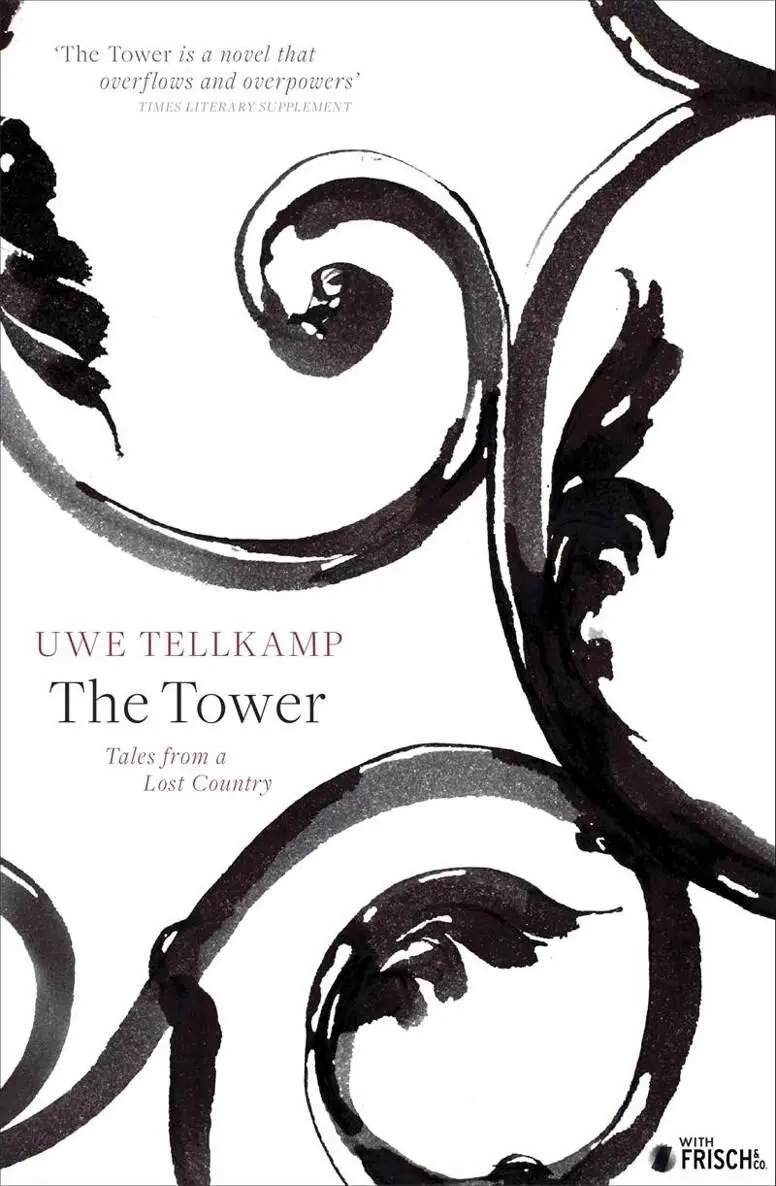
- Название:The Tower
- Автор:
- Издательство:Penguin
- Жанр:
- Год:2014
- ISBN:нет данных
- Рейтинг книги:5 / 5. Голосов: 1
-
Избранное:Добавить в избранное
- Отзывы:
-
Ваша оценка:
The Tower: краткое содержание, описание и аннотация
Предлагаем к чтению аннотацию, описание, краткое содержание или предисловие (зависит от того, что написал сам автор книги «The Tower»). Если вы не нашли необходимую информацию о книге — напишите в комментариях, мы постараемся отыскать её.
The Tower — читать онлайн бесплатно полную книгу (весь текст) целиком
Ниже представлен текст книги, разбитый по страницам. Система сохранения места последней прочитанной страницы, позволяет с удобством читать онлайн бесплатно книгу «The Tower», без необходимости каждый раз заново искать на чём Вы остановились. Поставьте закладку, и сможете в любой момент перейти на страницу, на которой закончили чтение.
Интервал:
Закладка:
‘Thank you, Karlfriede Sinner-Priest. The next speaker is Herr Altberg.’
‘Ladies and gentlemen, I have not brought a prepared speech with me since I only became aware of the subject of our annual general meeting here and the same could be the case for most of you. True, the unusual firmness of the invitation caused me agitation and a sense of foreboding. Seeing many faces among you that I have not seen in our Association before, I wonder whether they belong to authors and, if so, what they can have published. I have a suspicion it’s about obtaining a majority in a vote. Is it about literature as well? Literature is not the maid of politics, the illustrator of what happens to be the current mode. Only idiots or people making malicious insinuations equate a character’s opinion with that of the author — well, there are characters out there in the world that I don’t like but whom I must interest myself in, if I don’t want to portray the world solely through characters that are acceptable to me. Only simpletons think that Judith Schevola’s grey hair or the number of hairs on Georg Altberg’s nasal wart would say anything at all about their books. It doesn’t, does it? Literature is poetry, drama, the essay, the novel; it is not the interview. There are some colleagues whose interview activity far outweighs their literary production, and often not merely in volume. They know about anything and everything, they have no inhibitions about expressing an opinion on space flight and disarmament, women’s rights and cultural policy; but their novels and poems are thin affairs, lacking in life, in world. We, whose task is with language, with words, should not climb on the colourful merry-go-round of opinions. That is for actors, politicians and sportsmen. Please do not misunderstand me. It is a popular exercise in this country to dismiss those who work with words as publicity-mad jack-in-the-boxes when they address certain problems that, in the opinion of certain officials, should be swept under the carpet and left there. That is denunciation. But it is in my opinion also denunciation, my dear David, to respond to Herr Mellis with — just a moment, I’ve noted it down — “anyone who ended up in the wrong uniform, under the wrong flag, in the wrong camp”. You said, “I do not need to be ashamed of my past.” I say: I do. And I think Günter Mellis does so as well. We have both had to pay dearly for the errors and delusions of our youth, and the nightmare of the past is something that haunts me every night. Every one of us has to cope in his own way with what he has or has not done, every one of us has skeletons in the cupboard — and should refrain from confronting others as someone who knows best or even as one entitled to judge them. We will all be judged — but in another place.
‘Toleration — the word that, I believe, has remained unsaid today. There is the law and there are people, but the law is made for people, not people for the law. I know that my words will fall on deaf ears for some, they are those who believe the losses are unavoidable and at times — some of these people, I hope it is not too many — perhaps even hope it will happen because they think their own reputations will rise if others are out of the running. You don’t have to like Judith Schevola but she is one of the most talented writers in the East, along with one who is working clearing the tables in a restaurant out in the country. Do we have so many talented writers that we can afford to drive them away? Are defamation, intolerance, narrow-mindedness the appropriate way of dealing with talented people? Does our society not have to learn, if it is to remain attractive to people, to tolerate its critics?
‘Colleagues, I call on you, I implore you, not to vote for exclusion. It would be a disaster with unforeseeable consequences if our colleagues were to be excluded. You all realize that they would lose their livelihood, that it would be almost impossible for them to continue working in their profession here. Exclusion would not be the end of our problems, just the beginning of the next turn of the screw.’
‘I call on Eduard Eschschloraque to speak.’
‘’Tis hard to speak the truth when / falsehood rules the world. / Who would seek the sun that scorches? / Desert with no shade and no oasis, / the pure and unresponding slate, / the mirror whose reflection’s just a void? / One thing alone is meaningless and sad, / two it takes for question and response, / each to fortify the other’s weakness. / Now I will play the devil’s advocate / and in this gath’ring pose some awkward questions, / such as: What is freedom / when all barriers fall? / For does not Goethe say about the law: / That it alone can give us freedom? / What is our constitution that, like a ring of iron, / binds both tongues and human flesh, / that ages and expires? / What is the boundless ocean for the ship / that’s guided by the hand / of the figurehead atop the prow?’
‘Wow! Off by heart.’
‘ “They are bad people — and yet good musicians,” / Brentano said, inverting the set phrase in Ponce de Leon . / And did we not begin / to get on with each other / but then: “What do you think of him … between ourselves? / A gem-encrusted toad but decomposing. / There he is, watch out. — Eschschloraque, my friend, / it long has been my wish to tell you how / deeply I admire your sh— … shows, / your bravery as well to see / the spirit of the age as water in the loo / and all that floats thereon worth being flushed away.” / — Hypocrisy, for instance. / In my hands you see a catalogue / of class enemies and nicely printed / by a nasty publisher in the West. There / among them is our dear own Günter Mellis / and others of the fauna of our state. / They should be punished, yes. / But I demand the same for Mellis and his ilk / for swine are those who call another swine / and have themselves their snouts deep in the trough.’
‘Outrageous! Off! Off!’
‘The time is out of joint / but faithful I remain unto our fathers’ ways, / hold close to the laws, which makes our dreams unbounded / and people in accord. / Sweet honey often comes from bitter combs! / Order must have order of its own, / discord ne’er was by discord o’erthrown. — By the way, Herr Schade, you should check your German. “A weapon that planes out pencil shavings” — language like that is a monkey with fleas picking at it.’
‘Herr Rohde, Herr Groth, as chairman of this meeting it is my duty to point out that it is our minutes secretaries who are taking everything down in shorthand. After Herr Eschschloraque’s contribution, that was, as ever, both witty and helpful, the last person to speak before the break will be Judith Schevola. After that the buffet will be set out at the rear entrance.’
46. Hispano-Suiza
Dietzsch, the sculptor, kicked the lock, one of the rifle-brown, bug-shaped pieces ‘from the good old days’ such as were occasionally available for special customers from Iron-Feustel’s by Rothenburger Strasse; a lock with a shackle as thick as your finger that only snapped open after the fourth or fifth blow with a cross-pein hammer, ‘like a crocodile’s jaw that has just overcome the resistance of some chewing gum,’ Dietzsch said; Richard thought the comparison childish and enjoyed it; the painter clicked the lock open and shut a few times, it must be a good feeling, security, quality, parts that smoothly fitted together; some people became prison guards for that feeling. Stahl had gone back a little way, which surprised Richard — wasn’t he interested in what Dietzsch wanted to show them and that they’d driven several kilometres to see? The quarry was in Lohmen, a small place near Pirna. Dietzsch had made a great fuss about it and adopted the expression of someone who decides he’s really going to show people something; ‘I know about your hobby, Dr Hoffmann, and you did a great job operating on that carpal-tunnel thing; I think I’ve got something for you.’ Now Stahl was watching two sculptors working at the other end of the quarry. ‘Jerzy, our Pole, and Herr Büchsendreher,’ Dietzsch called out to him, pointing to a rock above them on which bearded faces had been painted.’ Jerzy’s work, art is a weapon, but he wouldn’t harm a fly.’
Читать дальшеИнтервал:
Закладка:
Похожие книги на «The Tower»
Представляем Вашему вниманию похожие книги на «The Tower» списком для выбора. Мы отобрали схожую по названию и смыслу литературу в надежде предоставить читателям больше вариантов отыскать новые, интересные, ещё непрочитанные произведения.




Обсуждение, отзывы о книге «The Tower» и просто собственные мнения читателей. Оставьте ваши комментарии, напишите, что Вы думаете о произведении, его смысле или главных героях. Укажите что конкретно понравилось, а что нет, и почему Вы так считаете.