Uwe Tellkamp - The Tower
Здесь есть возможность читать онлайн «Uwe Tellkamp - The Tower» весь текст электронной книги совершенно бесплатно (целиком полную версию без сокращений). В некоторых случаях можно слушать аудио, скачать через торрент в формате fb2 и присутствует краткое содержание. Год выпуска: 2014, Издательство: Penguin, Жанр: Современная проза, на английском языке. Описание произведения, (предисловие) а так же отзывы посетителей доступны на портале библиотеки ЛибКат.
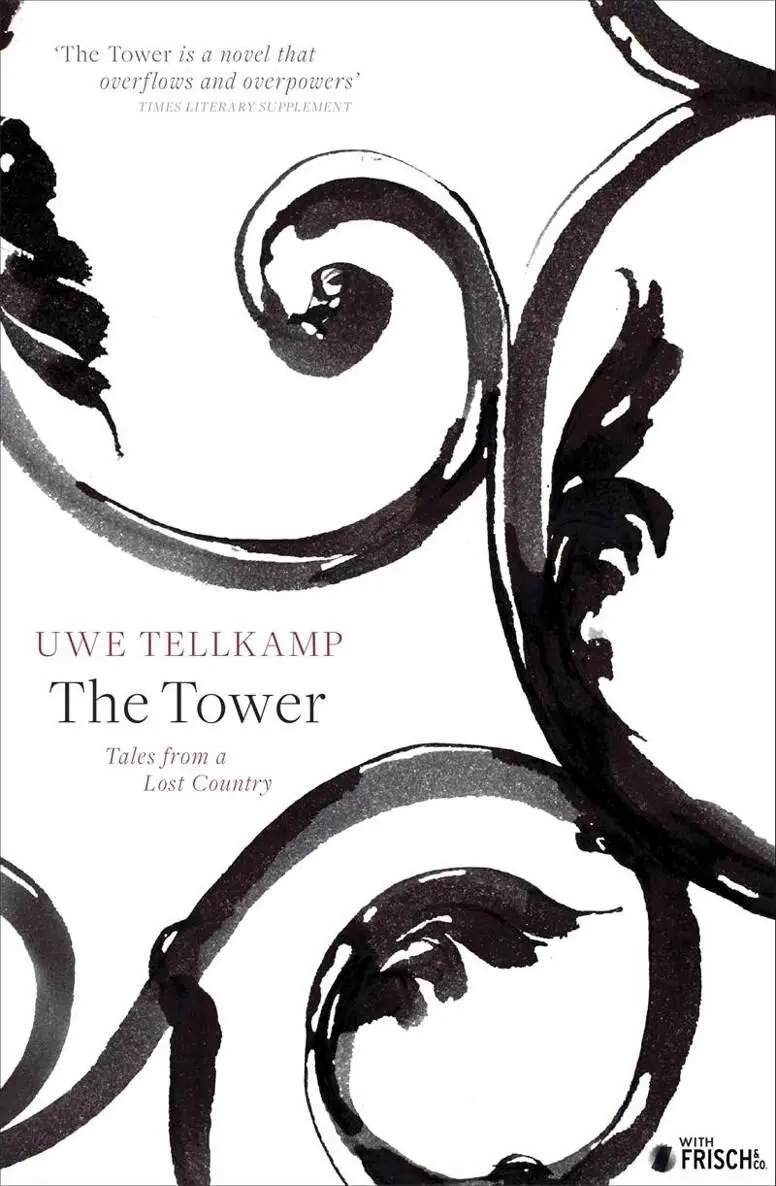
- Название:The Tower
- Автор:
- Издательство:Penguin
- Жанр:
- Год:2014
- ISBN:нет данных
- Рейтинг книги:5 / 5. Голосов: 1
-
Избранное:Добавить в избранное
- Отзывы:
-
Ваша оценка:
The Tower: краткое содержание, описание и аннотация
Предлагаем к чтению аннотацию, описание, краткое содержание или предисловие (зависит от того, что написал сам автор книги «The Tower»). Если вы не нашли необходимую информацию о книге — напишите в комментариях, мы постараемся отыскать её.
The Tower — читать онлайн бесплатно полную книгу (весь текст) целиком
Ниже представлен текст книги, разбитый по страницам. Система сохранения места последней прочитанной страницы, позволяет с удобством читать онлайн бесплатно книгу «The Tower», без необходимости каждый раз заново искать на чём Вы остановились. Поставьте закладку, и сможете в любой момент перейти на страницу, на которой закончили чтение.
Интервал:
Закладка:
‘Colleagues, we have heard the resolution, that is, the report, the draft resolution the committee has put before the general assembly. Now we come to the discussion. A number of members have indicated their wish to speak, so I would ask you to keep your contributions brief. We are happy to allow others who wish to do so to speak. First I call upon David Groth.’
‘Herr Mellis’s report with its attacks on my colleagues and me was in Neues Deutschland , our national newspaper, below a letter our esteemed colleague Lührer addressed to the Comrade Chairman of the State Council in which he chose to call his colleagues Schevola, Blavatny, Rieber and Groth harmful pests and damaged individuals. I hereby demand that the Association committee see to it that my voice and the voices of our colleagues who have been attacked with me are also printed in Neues Deutschland and that we can defend ourselves just as publicly as we have been attacked.
‘In this country we, the critical voices, are subjects on sufferance. Critical means that we dare to contradict the one and only true Party in places where it, in our opinion, does not tally with reality. You, my dear colleague, say that it is entirely possible to speak one’s own opinion in our country. Yes, that is what it says in article 27 of the Constitution, which grants all citizens, and therefore authors, the right to express their opinions freely. But what I am asking is whether this corresponds to reality. Unless one is completely corrupt or blind, the answer to that can only be no. It is unfortunately the case that certain problems we have are not discussed in the media here, that certain books are not published. Do you dispute that? Do not make yourself a laughing stock. Not one single time have I been able to read in one of our newspapers a response to the kind of abuse Herr Lührer deems necessary, not one single time have I seen on TV News a report on actual conditions in our factories, on environmental problems, the increasingly brutal nature of our society. Or is it your opinion that all that does not exist? Then you’re looking with your blind spot and all I can do is congratulate you on that skill, it is unheard of in the history of science. You, my dear Herr Mellis, object to my seeing a connection between censorship and criminal law. Now it is true that any author who would like to publish a book that has not been authorized in our country must automatically run up against the currency laws. Fräulein Schevola and I have committed an offence by seeking a publishing house in the West for our books that were not allowed to appear here. I think it is criminal that our actions are criminal offences. The purpose of such an interlinking of censorship and criminal law can only be to muzzle authors who will not acquiesce in lies and will call them lies. Or will they at last allow authors in the GDR to write about subjects that have always been — or are now once more — considered taboo? Will they, instead of hauling critical authors in front of a tribunal and heaping insults on them, deal with the conditions that have been criticized? — And may I conclude with a personal comment. It is not my business nor is it in my character to try to teach you a lesson in morality. You suggest it is immoral to want to publish in the West. All I have to say about that is that there is no other way left to authors who are to be silenced here. Our tormented colleagues in the Soviet Union or Romania do not have that way. It is not being published over there that is immoral, it is being censored here. Furthermore, anyone who ended up in the wrong uniform, under the wrong flag, in the wrong camp would do well not to go on a crusade against people who, in those days, fought in the right uniform, on the right side, for the right cause. I do not need to be ashamed of my past, it was not because of my “Jewish” nose alone that I was persecuted. No, the truth is that this is not about currency fraud or the like. It is about preventing writers from producing a certain kind of literature, namely one that will have nothing to do with rose-tinted spectacles. Today the annual general meeting has to vote on the expulsion of some colleagues from the Association. You are all aware that before this meeting many of you were brought together and it was made very clear what depended on the way you voted: trips to the West and bursaries, publications and performances, film versions and prizes. I will not hold it against anyone if, in consideration of such advantages, they vote in favour of the expulsion of our other colleagues and myself from the Association.’
‘That’s beyond belief! What do you think you’re saying? Stop!’
‘I will do you and myself that favour in a few moments. May your sense of shame and guilty conscience when you get back home not make you feel too depressed. Just remember, when you cast your vote, that there is such a thing as time and that what appears to be fixed and unchangeable can change, sometimes more quickly that you would think possible. It could be that one day you will have to account for your actions to your children; or to people in whose name some of our colleagues here claim to be speaking. It could be that you will be asked, “What did you do, master of the word, when the time came to stand up and be counted?” ’
‘I call on Karlfriede Sinner-Priest to speak.’
‘Thank you, colleague. David Groth: I remember a man who came through the gates of Buchenwald, in American uniform, and who looked into the faces of two colleagues here, Paul Schade’s and mine, into my ugly face, I had no hair and hardly any teeth from scurvy and the beatings. He looked into the faces of the prisoners, sat down and took off his helmet. David Groth: I remember an author who wrote moving books, full of life, about the difficult beginning of the new times and some of the contradictions that marked them. The times that were as a little child and have still not properly grown up yet, for social processes do not count in human years. Forgive me for introducing this personal note into the discussion, but I wonder what time, and perhaps also fame, have made of the David Groth I used to know as an ardent champion of our cause, as a man who fought for a better, fairer world, against fascism and imperialism. Yesterday I sat down and went through letters he wrote to me, read articles in old newspapers, read passages from his earlier books. I will never forget the author of Soldiers and Dawn , the advocate of the “Bitterfeld Way” and of harsh but appropriate words against forces I will not name so that they will not pollute the minutes of this meeting. The author of Trotsky is, as has already been said, a writer of muck-raking trash for whom no calumny, no trick is too cheap if it promises to serve his purposes; what these purposes are I do not know, I avoided them when I read the book for I simply could not believe what I was reading and checked the title page several times to see whether it was just a nasty joke and someone had submitted a trashy novel under David Groth’s name. Unfortunately certain stylistic vanities and infelicities, which were always there but compensated for by the substance of his books, taught me otherwise. Not everyone who beats the moral drum is a good writer; not everyone who plays the honest dissident in the West is, looked at honestly, an author worthy of that name. I compared the times after the war to a child. Most of us will probably have children. Do you tell your child all the time that it’s ugly? Do you only see what is ugly in your child? Or are you simply proud and happy at that great gift? There are things that are wrong and ugly about the child that is socialism but it doesn’t need moaners and misery-guts rubbing its nose in it all the time: its legs are too bandy, its arms too short, its body too thin, its voice is husky, its lips are twisted and thin, its intellectual abilities weak … Those are the glasses that only let you see what is bad and ugly in everything, dismiss the good things as trivial or unimportant. The fact is, we have our constitution and one has to stick to it if one wants to remain a member of the Association. David Groth, you and a number of other authors, including Fräulein Schevola, with whom I am above all disappointed, I would have expected better of her — you do not stick to it. You complain that you are not allowed to speak but bring in the Western media before contacting us. We made allowances about that and proceeded on our side according to the requirements of the constitution in article III.7: that the committee should have discussions to see if the qualifications for membership still obtain. You say that you are so profoundly concerned about our socialist cultural policy that you no longer regard the Western media as the instrument of the class enemy but as assistance in changing these allegedly terrible conditions. You say you want to express your criticism but you don’t come to Association meetings where you are free to do so. David Groth: it was not an easy decision to take. I have had sleepless nights. Yet everything has already been decided. By you and by those other authors who decry us. It is not we who are withdrawing from you — you are withdrawing from us. You and your colleagues: you have excluded yourselves.’
Читать дальшеИнтервал:
Закладка:
Похожие книги на «The Tower»
Представляем Вашему вниманию похожие книги на «The Tower» списком для выбора. Мы отобрали схожую по названию и смыслу литературу в надежде предоставить читателям больше вариантов отыскать новые, интересные, ещё непрочитанные произведения.





Обсуждение, отзывы о книге «The Tower» и просто собственные мнения читателей. Оставьте ваши комментарии, напишите, что Вы думаете о произведении, его смысле или главных героях. Укажите что конкретно понравилось, а что нет, и почему Вы так считаете.