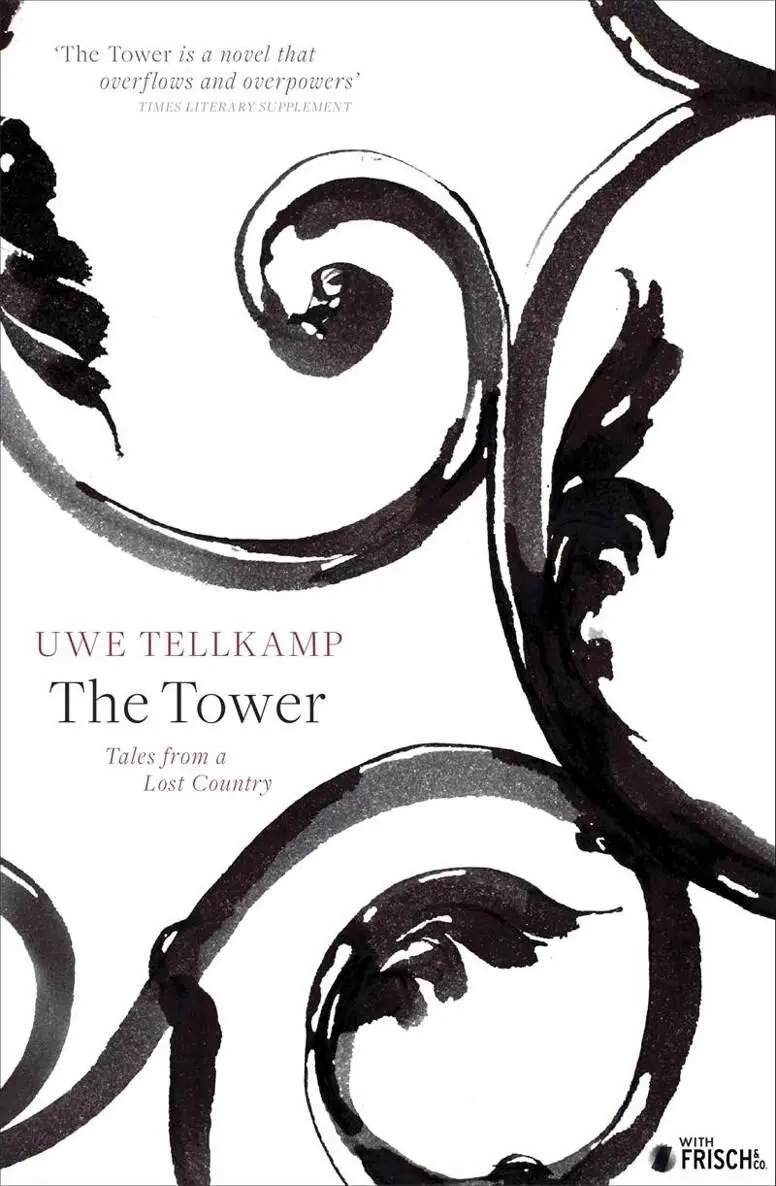
Uwe Tellkamp - The Tower
Здесь есть возможность читать онлайн «Uwe Tellkamp - The Tower» весь текст электронной книги совершенно бесплатно (целиком полную версию без сокращений). В некоторых случаях можно слушать аудио, скачать через торрент в формате fb2 и присутствует краткое содержание. Год выпуска: 2014, Издательство: Penguin, Жанр: Современная проза, на английском языке. Описание произведения, (предисловие) а так же отзывы посетителей доступны на портале библиотеки ЛибКат.
- Название:The Tower
- Автор:
- Издательство:Penguin
- Жанр:
- Год:2014
- ISBN:нет данных
- Рейтинг книги:5 / 5. Голосов: 1
-
Избранное:Добавить в избранное
- Отзывы:
-
Ваша оценка:
The Tower: краткое содержание, описание и аннотация
Предлагаем к чтению аннотацию, описание, краткое содержание или предисловие (зависит от того, что написал сам автор книги «The Tower»). Если вы не нашли необходимую информацию о книге — напишите в комментариях, мы постараемся отыскать её.
The Tower — читать онлайн бесплатно полную книгу (весь текст) целиком
Ниже представлен текст книги, разбитый по страницам. Система сохранения места последней прочитанной страницы, позволяет с удобством читать онлайн бесплатно книгу «The Tower», без необходимости каждый раз заново искать на чём Вы остановились. Поставьте закладку, и сможете в любой момент перейти на страницу, на которой закончили чтение.
Интервал:
Закладка:
‘We thank you for your firm, clear exposition, Comrade Mellis. I would also like once more to extend a particularly warm welcome to our guests: our Minister for Books, Comrade Samtleben, and Comrade Winter from the Cultural Section of the Central Committee of the Socialist Unity Party. But before I invite Comrade Schade to speak in his function as First Secretary of the Regional Association, perhaps I may be permitted a few words. The class war is intensifying. There are voices making themselves heard in Federal Germany saying: the class war is a thing of the past and we belong in a museum. In a museum, comrades! And colleagues. But it is precisely these pernicious tirades that prove that it is not at all wrong to talk of class warfare. The achievements of our Republic are under attack, the very existence of our Republic called into question. But what do these attacks on us mean? I did an apprenticeship with a forester and one thing I learnt was that when a tree is dying, it puts all its remaining strength into producing its fruit, its seed. And what we have here is a social system that is going to seed, and the things that are thrown at us are the blossoming fears of the last stage of imperialism, the fruits of anger at being part of a social system in terminal decline, the seeds of death. They dig and dig and are not satisfied until they have found some defect. And this poison keeps seeping through the gaps of our tolerance, our friendliness! Certain people and forces give the impression that their so-called concern for the development of our Republic is in truth nothing other than the untiring and, as such, actually pathological search for defects and things that call that development into question. You don’t need to shake your head, Herr Eschschloraque, and you, Fräulein Schevola, should stay in the hall so that when it’s your turn you will not twist our words. Our policies as a whole, and thus our cultural policy as well, have stood the test of time. The cultural policy in this country is not subject to fluctuations, to temporary changes; we are not riders of the boom-or-bust wave who spread their lies according to the law of the capitalist jungle. There are certain people who are always talking about truth. Pointing accusing fingers at us. But what is the truth we are talking about? About the large number of copies of the books of our colleague, Herr Groth, that are published thanks to our tireless commitment — commitment not only to his well-being but to the well-being of all members of our Association? And that both here and on the other side? Is he not allowed out of the country? Last year you, Herr Rieber, applied for six journeys to non-socialist countries — were any of them turned down? I am saying that because there were certainly serious misgivings about allowing you to travel. Your appearances over there were dominated by clichés and feelings of resentment; you kept repeating the old story of the repression of art and artists over here. And you were so repressed as to be able to do that with our hard currency, armed with a visa that is popularly known among writers as a “flying suitcase” … Is that not hypocrisy? But to put it in a nutshell: all our decisions, all assessments of political events should be based on one fundamental question: who against whom? Bertolt Brecht, “The Song of the Class Enemy”, the last verse, yes, let us stand, comrades, improvisations are not on the agenda but they refresh us; I’m sure most of us can join in Brecht’s words: “However much your painter paints / The gap will open anew / One must yield while one remains / And it’s either me or you / Whatever else I may learn / This simple lesson will be / Never will I share anything / With the cause of the class enemy / The word has not been found / That can ever unite us two: / The rain falls down on the ground / And my class enemy is you.” Now Paul Schade has the floor.’
‘That was clear, Comrade Bojahr! You almost took the wind out of my sails a little. But only a little. Ladies and gentlemen, colleagues. I spent this morning drying out the manuscript of my latest long poem, “Buchenwald”, sheet by sheet with the hairdryer. The heavy showers yesterday meant I had a rude awakening. The rain had come in through the window with the floral pattern in my study, made its way tortuously but unerringly to my poems and dripped on them. As I set about clearing things up I was immediately struck by the uncanny symbolic meaning of the event: on the one hand there was my window with the flowers — my political illusions that could not withstand the storms of socialism as an existent reality; on the other my poems — my own past and that of many comrades. I had written them in Barock iron-gall ink, for I didn’t want scholars two hundred years hence to be irritated at my faded manuscripts and was, as I read the soaked lines, more deeply moved than usual. How could the mishap have occurred? I established that the rain, instead of coming as usual from the west had, exceptionally, assailed my poet’s cell directly from the east. What a mess! What did the rain think it was doing to my manuscript? Did Moscow have a hand in it? West German television, that I am parodying so perfectly here, would certainly have asked how the poet, Paul Schade, could show such a lack of character and still not curse the rain. I say: in the interest of the flowers in the garden. In the interest of the rhubarb and cabbage beds. Of my wife’s beds with pansies. In the interest of my outdoor cucumbers and tomatoes. Joking aside, colleagues, I didn’t choose this introduction to my topic by chance for, truly, I feel more like crying than laughing. As if we hadn’t experienced that several times already. As if the methods of our internal and external enemies were new. As if we didn’t know how we have to counter these methods. You know me, I was never in favour of a few half-hearted words of encouragement for dangerous animals. “Buchenwald” is the name of my poem. We who were there know what fascism means and we know that it is the siren tones of monopoly capitalism that keep making the eternal snake of Nazism raise its venomous head. We who survived fascism and the concentration camps swore an unbreakable oath with the comrades of the Red Army of liberation never again to allow such a crime. But the womb out of which it crept is still fertile. That is my clear standpoint, the standpoint of a communist who has dedicated his whole life to the fight against revanchism, revisionism and the manifold endeavours of the aggressor to destroy us — armed with a weapon that spits out cartridge shells and with a weapon that planes out pencil shavings. Oh, I understand very well what the aim is of some of those present even if they have attentive and apparently friendly expressions. They want us to take a decision that fits in with the cliché people have of us; to do something today that we are forced to do but that for certain people in the Western media will only confirm the things they impute to us anyway. Should we really make it so easy for these individuals? On the other hand, should we make it easy for ourselves by leaving things as they are? Sometimes we must have the courage to do what is expected of us. Sometimes we must have the strength to be predictable. For that reason I propose that, after our discussion, our meeting agree to the following resolution —’
‘How is it that the resolution comes before the discussion, Herr Schade?’
‘That is only a draft resolution, Herr Blavatny. The resolution is: “The annual general meeting of the Writers’ Association discussed the behaviour of a number of members who have contravened their duty as members of the Association and impaired the reputation of the Association. In so doing the meeting accepts the proposal of the Central Committee of the Writers’ Association to have, on the basis of the constitution of the Association, a fundamental discussion about their positions with those members mentioned by Günter Mellis in his report. The facts presented by Comrade Mellis in his report prove that these members have acted contrary to their duty, anchored in the constitution, to work positively to further our Developed Socialist Society, have found it right and proper to attack, in a foreign country, our socialist state, the cultural policy of the Party and the government, and our socialist system of justice. By so doing they have served the anti-communist campaign against the GDR and socialism. By so doing they have clearly contravened the Association constitution, in particular articles I.1, II, III.2 and IV.2, and shown themselves unworthy of membership of the Writers’ Association of the GDR. The meeting therefore sees itself compelled to draw the necessary consequences from this behaviour. It passes the resolution to exclude Judith Schevola, David Groth, Karlheinz Blavatny and Jochen Rieber from membership of the Writers’ Association of the German Democratic Republic.” ’
Читать дальшеИнтервал:
Закладка:
Похожие книги на «The Tower»
Представляем Вашему вниманию похожие книги на «The Tower» списком для выбора. Мы отобрали схожую по названию и смыслу литературу в надежде предоставить читателям больше вариантов отыскать новые, интересные, ещё непрочитанные произведения.




Обсуждение, отзывы о книге «The Tower» и просто собственные мнения читателей. Оставьте ваши комментарии, напишите, что Вы думаете о произведении, его смысле или главных героях. Укажите что конкретно понравилось, а что нет, и почему Вы так считаете.