Uwe Tellkamp - The Tower
Здесь есть возможность читать онлайн «Uwe Tellkamp - The Tower» весь текст электронной книги совершенно бесплатно (целиком полную версию без сокращений). В некоторых случаях можно слушать аудио, скачать через торрент в формате fb2 и присутствует краткое содержание. Год выпуска: 2014, Издательство: Penguin, Жанр: Современная проза, на английском языке. Описание произведения, (предисловие) а так же отзывы посетителей доступны на портале библиотеки ЛибКат.
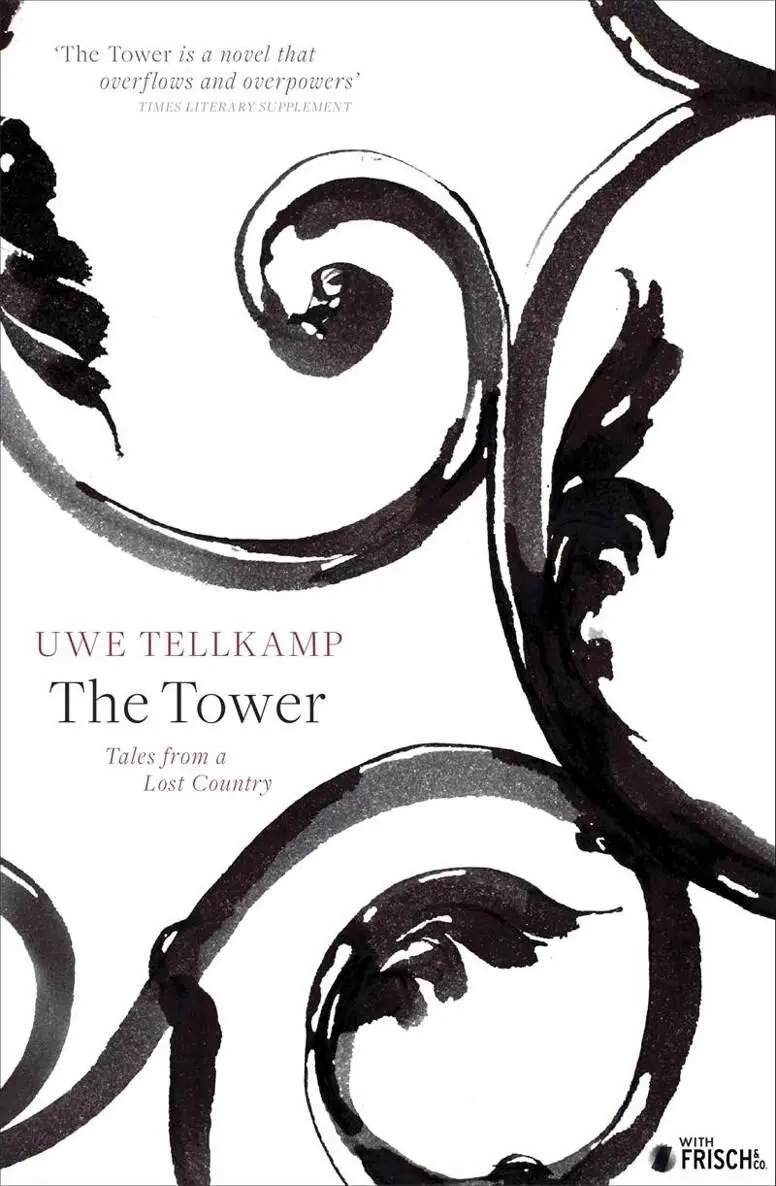
- Название:The Tower
- Автор:
- Издательство:Penguin
- Жанр:
- Год:2014
- ISBN:нет данных
- Рейтинг книги:5 / 5. Голосов: 1
-
Избранное:Добавить в избранное
- Отзывы:
-
Ваша оценка:
The Tower: краткое содержание, описание и аннотация
Предлагаем к чтению аннотацию, описание, краткое содержание или предисловие (зависит от того, что написал сам автор книги «The Tower»). Если вы не нашли необходимую информацию о книге — напишите в комментариях, мы постараемся отыскать её.
The Tower — читать онлайн бесплатно полную книгу (весь текст) целиком
Ниже представлен текст книги, разбитый по страницам. Система сохранения места последней прочитанной страницы, позволяет с удобством читать онлайн бесплатно книгу «The Tower», без необходимости каждый раз заново искать на чём Вы остановились. Поставьте закладку, и сможете в любой момент перейти на страницу, на которой закончили чтение.
Интервал:
Закладка:
50. And if you have worries or problems
Class comrade — give the order. Class comrade — carry it out. The same desire. A common goal. That leads to trust.
What It Means to be a Soldier
When autumn came, the ash came. When November came, the rains and the new recruits came to Grün. During the last ten days of their service anyone who tried to rouse Rogalla and Ruden from their cheerful and yet, in the afternoon, impatient and despairing drunken rest was shown an aluminium spoon that had been rolled flat and made to look like a railway baton, holding up first the side painted red, then the one painted green: Stop. Departure. The discharge candidate’s ‘measure’ of his last months of service, self-made out of a brass grenade case containing a 150 cm tailor’s tape measure sticking out through a slit (was there not a VEB somewhere, Christian wondered, that could proudly announce it had realized its planned targets for these tape measures?) was shortened by one centimetre each day.
Sometimes, when the room and section cleaning was over and the polishing brushes were no longer clattering along the corridor, Christian, together with Burre, would go to fetch coal, that was one of the earholes’ tasks. Burre, whose first name was Jan — Christian never used his nickname — would lumber along, a clumsy bear cub in his black overalls, grasping the rubber handgrips firmly in his work-mittens, muttering and humming, trundling the wheelbarrow with its pneumatic tyres over the cobbles of the road that, years ago, had been tarmacked, past the med centre, from which the bedridden soldiers in brown camouflage uniforms shouted snide comments, the maintenance unit, the tailoring workshop, and swung round, singing by now, towards headquarters, behind which, screened off by a few low-rise sheds and the swimming pool, lay the regiment’s coal supply. The piles were covered in rampant weeds — the coal had to be ordered far in advance and was delivered in the spring; skinny cats had dug out hollows for themselves (the coal was mainly slack, tiny lumps and dust rather than briquettes), crows were arguing over scraps of food: the kitchen dust bins, which never shut properly, stood, immersed in their own kind of melancholy, next to the piles of coal. Whenever Burre and Christian saw men with wheelbarrows from 1st and 3rd Battalions they would start to run and, if no one had got there before them, choose the best places and begin to shovel like mad — those who got the best coal had the hottest stoves and boilers. The full wheelbarrows weighed a good hundredweight and Christian would never have thought that he, the spoilt son of the educated middle classes who’d stayed on at senior high school, would be able to lift such a weight, never mind push it forward over greasy wooden planks between the grassy mounds and obstacles that made the coal in the cart, which looked like an upturned dissected frog, bounce merrily up and down. In addition to that, it was impossible to keep the load in the optimum position, on their tyres that weren’t properly pumped up the barrows wobbled this way and that, and those pushing them staggered like drunks; Christian had the feeling he was trying to transport an ox on a ruler. On the way back Burre would sing even louder, his muttering would become a droning and rhythmical ‘da-da-da’. At such times Christian felt so sorry for him he had to stop for a moment to fight down the sadness that swirled up inside him like an unrestrained garden hose. The birch trees shimmered, from the square in front of headquarters they heard the officer shout, ‘Mount guard!’ Squirrels, fiery red, weightless little fellows, scampered along the barracks wall, overhung by elms. And yet, at such moments Burre was perhaps happy; he seemed to be in a world of his own, kept his head bowed, singing and muttering to help him forget the obstinate wheelbarrow, the evening noises of the barracks, his dripping nose that was a shining black from the coal dust. Christian thought of the slug-yellow paste full of gritty bits they’d have to rub all over their face, neck and hands; he didn’t want to but couldn’t help thinking of the lumps of black snot the size of broad beans they’d blow out of their noses, followed by a dry cough and shivers of horror at the things coming out of their bodies and into the washroom outflow. Burre was staggering and there was a regular occurrence when they drew level with the repair shop of the maintenance unit: there was a speed bump he tried to take at a run — the shovel lying across the barrow jumped up and to one side, lumps of coal squirted up and fell onto the road. Burre, trying to keep his balance, swerved like a figure-skater fighting the centripetal force of the ice in order to prepare another jump, braced himself, still singing, ever more desperately against the wheelbarrow’s determination to topple over and finally jumped aside to let it have its own, mindless way. Then Burre would start to laugh and Christian suspected that at that moment he saw himself from outside, that he burst out laughing at his own uselessness and the film-cartoon-like inevitability of the overturning, in a wobbly fit of shamefaced amusement that was as much a mystery to Christian as the fact that Nip would never allow them to fetch the coal before cleaning the rooms and section. They had to take it up the stairs and for that there was nothing apart from the ‘pig trough’ as they called the sledge, originally painted army green and presumably constructed from an ammunition case resting on two stringers, between the scraped planks of which, irrespective of the panting, the cursing, the gasped instructions from the ‘earhole’ in front and the ‘earhole’ behind, brown coal powder trickled out, leaving a trail on the stairs and the freshly polished wooden floor of the corridor.
Burre came from Grün. He and his mother — his father had walked out on them when Burre’s little sister had drowned in the emergency water pond one winter — had two rooms in one of the tumbledown half-timbered houses behind the market; one evening he had pushed some photos under the dividing wall in the toilets: there, in one of the four stinking WC bays with their iridescent flypapers, was the only place you could have time for yourself, undisturbed, although naturally the more senior soldiers were aware of this and Musca liked to jump up the door, as if it were an assault wall, to see what was going on behind it.
Burre’s mother worked shifts as an adjuster in the Grün metal works. Every two weeks she sent her son a parcel, a tedious (the post office was at the other end of the little town) and expensive way of circumventing the unreliable guards at the barracks checkpoint, to whom she had at first given the parcels — Burre was never given a pass, Nip didn’t like him because, as the staff sergeant indicated, he was one of those who ‘ruin the company’s record’.
‘Injustice is the spice of life,’ Tank Driver Popov said, regarding his toes, which needed some attention, calmly sticking his cap on his head and a turnover in his mouth: Company 4 was on guard duty, five days before the discharge of the soldiers in their third and the NCOs in their sixth half-year. Christian saw Burre’s mother sitting with Musca, Costa and a few drivers who were not on duty; she spoke falteringly, mumbling, Christian was amazed at the similarity in timbre to her son (Burre also had that colourless voice of indeterminate register), the similarity in their features, while at the same time finding it depressing, and as he handed his machine pistol to Ruden, who locked it in a weapons cupboard, as he took off cap and belt (a minor pleasure every time), he tried to remember something that was connected with that feeling of depression; but it only came back to him when he ran his fingers through his shorn hair: ‘The Hoffmanns’ hair whorl,’ his clock grandfather had said, ‘my father had it, I have it, your father has it and if you have children, Christian, you’ll find it on them, as faithful as ever … perhaps you’ll soon understand how funny and sad that is, you laugh and feel resigned. — Upbringing?’ He made a dismissive gesture. Christian had remembered that, although its meaning had remained unclear. Burre’s mother was dressed up in her Sunday best and Christian quickly realized she had come to plead for her son.
Читать дальшеИнтервал:
Закладка:
Похожие книги на «The Tower»
Представляем Вашему вниманию похожие книги на «The Tower» списком для выбора. Мы отобрали схожую по названию и смыслу литературу в надежде предоставить читателям больше вариантов отыскать новые, интересные, ещё непрочитанные произведения.



Обсуждение, отзывы о книге «The Tower» и просто собственные мнения читателей. Оставьте ваши комментарии, напишите, что Вы думаете о произведении, его смысле или главных героях. Укажите что конкретно понравилось, а что нет, и почему Вы так считаете.