Uwe Tellkamp - The Tower
Здесь есть возможность читать онлайн «Uwe Tellkamp - The Tower» весь текст электронной книги совершенно бесплатно (целиком полную версию без сокращений). В некоторых случаях можно слушать аудио, скачать через торрент в формате fb2 и присутствует краткое содержание. Год выпуска: 2014, Издательство: Penguin, Жанр: Современная проза, на английском языке. Описание произведения, (предисловие) а так же отзывы посетителей доступны на портале библиотеки ЛибКат.
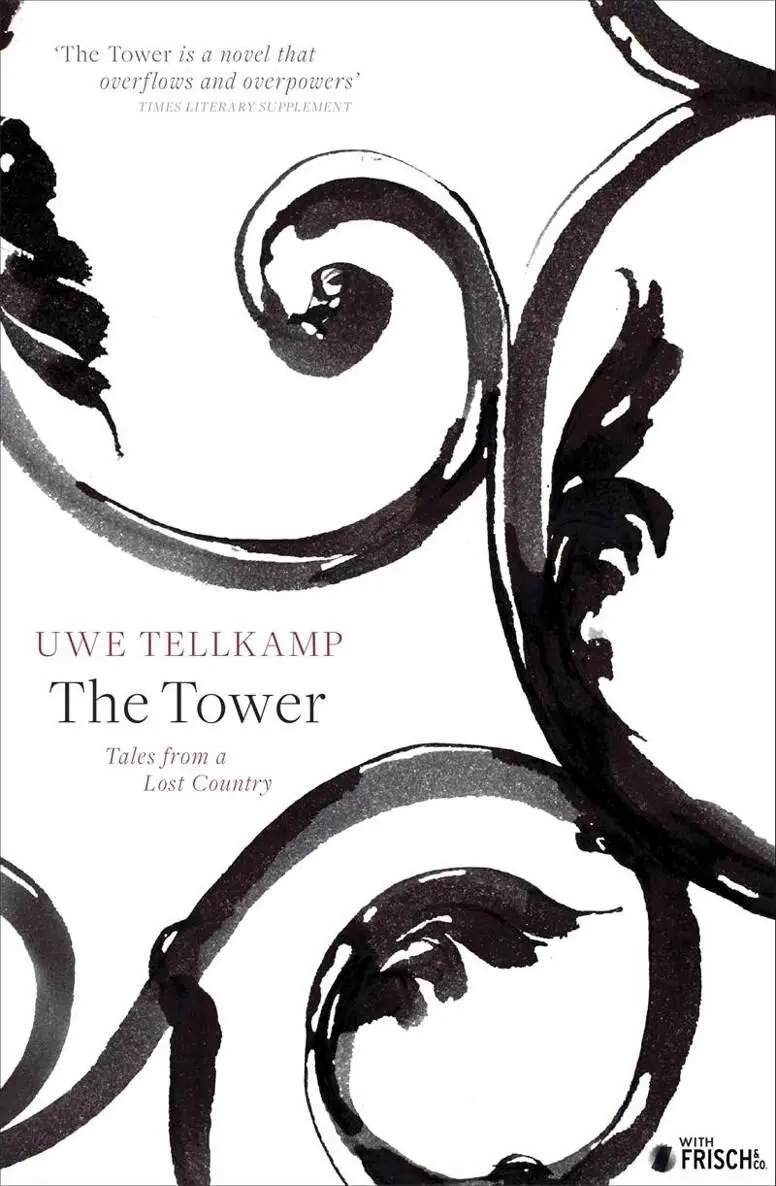
- Название:The Tower
- Автор:
- Издательство:Penguin
- Жанр:
- Год:2014
- ISBN:нет данных
- Рейтинг книги:5 / 5. Голосов: 1
-
Избранное:Добавить в избранное
- Отзывы:
-
Ваша оценка:
The Tower: краткое содержание, описание и аннотация
Предлагаем к чтению аннотацию, описание, краткое содержание или предисловие (зависит от того, что написал сам автор книги «The Tower»). Если вы не нашли необходимую информацию о книге — напишите в комментариях, мы постараемся отыскать её.
The Tower — читать онлайн бесплатно полную книгу (весь текст) целиком
Ниже представлен текст книги, разбитый по страницам. Система сохранения места последней прочитанной страницы, позволяет с удобством читать онлайн бесплатно книгу «The Tower», без необходимости каждый раз заново искать на чём Вы остановились. Поставьте закладку, и сможете в любой момент перейти на страницу, на которой закончили чтение.
Интервал:
Закладка:
‘Our father, who art in heaven.’
Richard resolved to ask about Wernstein’s family; the wedding party seemed to consist of just the Rohde wing and a few of Wernstein’s colleagues from the Academy and his student days.
‘Plizz lukk at liddel gold-finsh, plizz sink she fly naow, you smile.’ Outside the church door, in the damp light of a returning sun, Malivor Marroquin was adjusting their positions for the photo. Kurt Rohde kissed Ina on both cheeks, looked Wernstein up and down, turning his face either way as he did so, gave him a brief but hearty pat on the shoulder; Meno thought: he likes him, all the rest is embarrassment. Typical Tower-dweller. They do have the big emotions but they play them down, they prefer to make them look ridiculous rather than admit to them; to show them all too openly would seem like an affront to them, indiscreet, an infringement of the inviolable inner sphere. To speak the secrets out loud is to lose them, anyone who is lavish with the big emotions doesn’t respect them; they avoid kitsch and prefer to tone down the grand gesture; they are afraid of the things that are important to them being sold off cheaply. Marroquin held up his light meter, adjusted the three thumbscrews on the wooden tripod legs that looked like propellers which were about to join forces to lift the scratched, bulky camera case with its brass-bound lens and black cloth up into the air, leaving the baffled photographer standing there with the torn-off cable release in his hand. Marroquin had closed off the street with two warning triangles (‘Photography in progress’). He wasn’t put off when cars started to hoot, waggled a warning index finger at them as he threw his red flag of a scarf in a challenging gesture over his coat, the pockets of which, added by Lukas, the tailor, according to Marroquin’s instructions, were crammed with pieces of photographic equipment and accessories that might turn out useful in the usual kind of session (‘What do you think, how is it to be? — No idea, you’re the expert’): false noses, paper chrysanthemums, for children a Makarov cap-pistol. Marroquin wore a beret with a badge pinned to it over his long white hair that was engaged in philosophical discussion with the bewitching May breezes; on the badge were the words ‘ No pasarán’ between exclamation marks, one inverted, one normal, that looked to Meno like two quarrelling fists and had a strangely ironic effect (why two exclamation marks, wasn’t one enough?); at least he couldn’t repress a smile when he imagined Party slogans between the belligerent punctuation marks.
‘Do you want peepul to see liddel gold-finsh or not?’ Marroquin came out from under the black pharaoh’s cloak and pointed to Ina’s belly. ‘Then plizz lukk at home of stirrup of imperialism.’
Magenstock’s response was a bored raising of the eyebrows.
‘Hold breath. Ready … Two liddel brrats have stuck tongues out — once more? But that will cost extra.’ Wernstein and Ina declined with a wave of the hand, despite Barbara’s objections and the fact that Traudel Hoppe hadn’t been able to repress a sneeze. The bride’s posy was caught by Kitty Stenzel.
The party was to be held in the House with a Thousand Eyes. Two days before the wedding, demijohns with kvass that Ulrich had started had burst in the house; he had been impatient, had placed heaters beside them, the pressure of fermentation had sent circular discs of glass, that looked as if they’d been cut with a glazier’s diamond pencil, shooting out of the bottles. The Afghan rugs, the Tibetan runners and the big Persian carpet from Vietnam, Barbara’s walking tour of distant lands and daily vacuumed pride, were soaked through and sticky; Meno and Ulrich took them out into the garden and dipped them in tin bathtubs filled with hot water. The kvass had seeped through into the apartment below — they had to get a device to draw the dampness out of the walls (Herr Kothe, who was sitting on his balcony dunking a biscuit in a glass of tea as the carpets splashed about in the garden like colourful seals, knew someone who knew someone); a team of painters had to be arranged and courage screwed up for a contrite ring on the bell of a firmly closed door: would the Scholzes be prepared to accept an invitation to the wedding as interim compensation? Now Herr Scholze was standing on the washing area in front of the balustrade with the eagle exchanging tips about the preparation of sucking pig with Pedro Honich. He favoured le porcelet farci but Honich could not find a butcher who could supply the ingredients for stuffing the piglet (‘Boiled ham? A hundred and fifty grams? No chance!’), a shop that had fifty chestnuts in stock in May, nor a dairy that sold Parmesan or mature Comté cheese, and you couldn’t get saffron, not even in Delikat shops. Pedro Honich stuck by Serbian (he said ‘Yugoslavian’) sucking pig. Helmut Hoppe and Noack joined them, made wise comments and bore the responsibility as Honich prepared sausage meat, sliced peppers, rubbed salt on the inside of the piglet, warmed up Puszta sauce and beer. Meno kept apart. The Kaminski twins were away and had locked their apartment, otherwise all the doors in the house were open. In the shed Meno and Stahl had set up one table with bread and one with a cold buffet from the Felsenburg; Adeling, the waiter, and Reglinde’s friend who now had a job in the Felsenburg were serving dumplings in Danish sauce.
A smell came from Arbogast’s chemical laboratory, at first of peaches, then of slurry. Christian looked for Fabian and Muriel but couldn’t see them, their parents weren’t there either, but had sent a camera (K16 model, Christian knew it from his period of work experience with Pentacon) that was on a table with the other wedding presents in the summerhouse; Alois and Libussa had put them there in case it rained. Records, books (historical pigskin-bound medical tomes from Ulrich’s collection, a complete Treatment of Fractures by Lorenz Böhler, all the surgeons present envied Wernstein for it); then a dkk refrigerator with a two-star freezer compartment from Anne, Richard and Meno; from the Hoppes a perambulator and baby clothes (‘A Baby-Chic nappy makes any mother happy’); Barbara had made both a winter and a summer suit for her son-in-law; Kurt and Ulrich had given a voyage (on MS Arkona to Cuba, Ina had been beside herself with joy); Christian saw a washing machine, vouchers for furniture (the Tietzes; Niklas had added one of his St Petersburg stethoscopes); from Noack, the furrier, a marten fur muff ‘for Madame’ (a suggestion of a kiss on the hand), a lambskin coat collar ‘for Sir’ (sketching a bow); a canoe from Wernstein’s colleagues.
Compared with all these useful things, his present … Christian, not knowing quite how to put it, recalled the hours looking at the saturniid moths in Caravel with Meno: an awkward, somewhat clumsy but touching child in the company of grown-ups — that’s what the green jug he’d bought, without a long search, in a potter’s studio in Neustadt seemed to be; he’d only had two hours between arriving at the station and the start of the marriage ceremony in the registry office and he’d wasted a good hour, desperate and undecided, in a second-hand shop, nudged by greedy elbows, jostling his way from an unusable tailor’s iron to a television set in need of repair (and still priced with three zeros after the 2). The jug had been surrounded by rolls of wallpaper and buckets of emulsion paint, brushes were being kept soft in it. — ‘No, that jug, if it’s for sale,’ he’d said to the potter, who was wiping her hands on her apron in astonishment and was offering to show him what she had on display. The jug wasn’t one of hers but she wasn’t insulted, even though Christian had expressed a desire to buy it without hesitation; perhaps she was impressed by his insistence, his spontaneous decision, perhaps by his explanation that he was going to his cousin’s wedding (he was wearing walking-out dress); she took the brushes out of the jug, washed it and wrapped it up in a smudged copy of Union ; Christian had paid the price she asked without hesitation. Most of all he would have liked to keep the jug for himself. The green was the green of holly leaves, the rich, dark tone immediately appealed to him, also the simple, ancient jug shape with subtle asymmetry; there was something about it that had said, I’m for you, I’m a part of you in another world. Christian was struggling with himself; when the houses on Lindwurmring were already in sight he recalled that Meno had once said to him that presents you give should be precisely those you can least bear to be parted from. He had handed the jug to Ina exactly as it was, still wrapped in the smudged newspaper.
Читать дальшеИнтервал:
Закладка:
Похожие книги на «The Tower»
Представляем Вашему вниманию похожие книги на «The Tower» списком для выбора. Мы отобрали схожую по названию и смыслу литературу в надежде предоставить читателям больше вариантов отыскать новые, интересные, ещё непрочитанные произведения.





Обсуждение, отзывы о книге «The Tower» и просто собственные мнения читателей. Оставьте ваши комментарии, напишите, что Вы думаете о произведении, его смысле или главных героях. Укажите что конкретно понравилось, а что нет, и почему Вы так считаете.