Uwe Tellkamp - The Tower
Здесь есть возможность читать онлайн «Uwe Tellkamp - The Tower» весь текст электронной книги совершенно бесплатно (целиком полную версию без сокращений). В некоторых случаях можно слушать аудио, скачать через торрент в формате fb2 и присутствует краткое содержание. Год выпуска: 2014, Издательство: Penguin, Жанр: Современная проза, на английском языке. Описание произведения, (предисловие) а так же отзывы посетителей доступны на портале библиотеки ЛибКат.
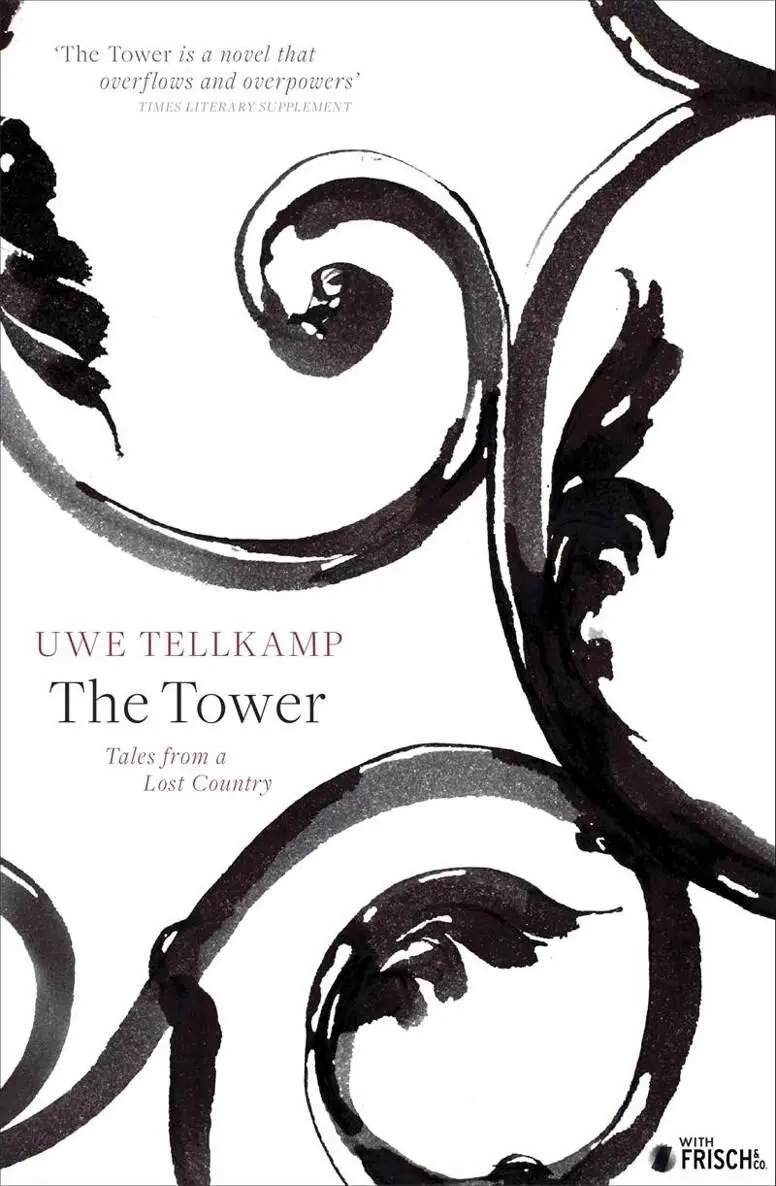
- Название:The Tower
- Автор:
- Издательство:Penguin
- Жанр:
- Год:2014
- ISBN:нет данных
- Рейтинг книги:5 / 5. Голосов: 1
-
Избранное:Добавить в избранное
- Отзывы:
-
Ваша оценка:
The Tower: краткое содержание, описание и аннотация
Предлагаем к чтению аннотацию, описание, краткое содержание или предисловие (зависит от того, что написал сам автор книги «The Tower»). Если вы не нашли необходимую информацию о книге — напишите в комментариях, мы постараемся отыскать её.
The Tower — читать онлайн бесплатно полную книгу (весь текст) целиком
Ниже представлен текст книги, разбитый по страницам. Система сохранения места последней прочитанной страницы, позволяет с удобством читать онлайн бесплатно книгу «The Tower», без необходимости каждый раз заново искать на чём Вы остановились. Поставьте закладку, и сможете в любой момент перейти на страницу, на которой закончили чтение.
Интервал:
Закладка:
Christian was standing at the window of the summerhouse listening to the sounds coming from below and out of the house, a drizzle of voices, bursts of laughter, music from the gardens on the other side of the park. The rain had freshened the colours and restless waves of the still-new green of the beeches and maples mingled with the blossom of almond trees and rhododendrons at the upper edge of the steep park. Soft, loud; wedges of melancholy in between. He wanted to be alone. If he closed his eyes he could see images of the barracks in Grün, hear the tread of boots in the endless corridors, listen to the slow, mournful dance of the polisher’s barbels that, at the turn just before they hit the walls, made a characteristic noise: the bearings at the end of the rods clicked against the cross-guides of the polishing brushes, pulling them back; again and again he was astonished at this crudely controlled elegance, similarly at the regularity with which the arched ceiling of the corridors reappeared in the evening, in the light of unshaded bulbs, strip by strip in the wooden floor, after all the boots that had trampled on it during the day. Down below someone must have told a joke, he heard Adeling’s bleating laugh, Alois Lange said in a clear voice, the Danish sauce was very good. Noack’s white hair was sucked into a cloud of plum blossom as he bent over the buffet to insert his fork into the glittering knitwork of all the other forks, the faces over them had hungry expressions, the eyes commanding the hands to perform swift, begrudging thrusts. Suddenly all these things had nothing to do with him; the house, the people: everything seemed alien to him. The civilian clothes he was wearing seemed something forbidden, something he wasn’t entitled to — it would never have occurred to him to judge others according to whether they were worthy to wear civilian clothes; yet earlier on, when he had been standing next to Herr Honich, watching the guests toasting the bride and groom, he’d caught himself automatically assessing each one according to whether he or she was worthy of being there, of laughing, eating, enjoying themselves with the others and wearing clothes the choice of which was entirely dependent on them (and on what the stores had in stock), they didn’t have to account for them to anyone. If his mother approached, he slipped away. Ezzo and Robert, Niklas and Ulrich, were talking about football, Wembley, the final at the Wankdorf Stadium; Ulrich explained a Fritz Walter goal, the famous Leipzig shot, the overhead backheel; it seemed trivial to Christian, he couldn’t understand why Ulrich tried to copy it and shot the previous year’s Golden Delicious past Herr Adeling into the shed (Ulrich supported himself on his hands and slipped down, face first, into a bed of rhubarb); Christian walked away sadly. Children were playing by the tin bath, supervised by Babett Honich; the Stahls were sitting at the iron table and waved him over, but he shook his head. Now he was here, in the conservatory, touching the plants as if they might disappear, looking for Chakamankabudibaba in his hiding place in the sago palm, bending down, placing his hand on the chessboard floor, which was cool. Motes of dust in the light, the shadows of leaves like grey fish swimming through it, the slow movement of currents, that calmed, pleased him. Before anyone could come, he went into the park.
One of those Ulrich things, Meno thought as his brother wiped his face with a handkerchief dipped in eau de Cologne and spread his arms wide, beaming with delight: shot on target, he would later say, holding Malivor Marroquin’s photo; the Chilean had been standing around patiently with his finger on the shutter release of a Praktika and had caught both the flying Golden Delicious and Ulrich’s landing; his plate camera was keeping an eye on Meno’s balcony. Another thing was that Ulrich was thinking about sending his dentist a card on New Year’s Eve. ‘No one wishes their dentist a Happy New Year. But then no one knows how much he suffers. I always say, give a flower seller flowers and a dentist a smile for New Year. Why not? Even if it’s one of his own. And even if he’s called Frau Doktor Knabe.’ When, as now, he had sat down at the head of a table laden with good food where there was a big enough audience, he liked to impart, in tones of utter conviction, knowledge that was at best patchy and would not have withstood serious examination; but although doubt would appear on some of the faces, Ulrich’s self-assured body language, his expression of certainty that suggested that there was more to what he was saying, was convincing enough to keep any scepticism unexpressed. People withdrew into themselves, were no longer quite sure, were afraid of making fools of themselves — how could one dare to cast doubt on an authority such as the eldest of the Rohdes, the Technical Director of one of the most important firms in Dresden (making typewriters, low-power engines and springs, the latter everything from mattress springs to coach springs for railway carriages), a ‘Hero of Work’ (Ulrich had spent part of the 10,000 marks that went with it on their trip to Cuba) with intimate knowledge of the ups and downs (and, above all, the to-ings and fro-ings) of the planned economy; they didn’t dare and held their tongues, but checked up when they got home, smirked or slapped their thigh, annoyed with themselves and determined to expose Ulrich the next time. Gudrun, however, did not remain silent. ‘That’s interesting, Uli. You sound very convincing, you could easily take the part of a director in a play about, let’s say, a socialist high-speed bricklayer. It’s almost a pity that your rock-solid certainties are mistaken. For example, the Garrison Church in Dresden is called just that, the Garrison Church and not the Garrison’s Church, even though to be correct it ought to be called that. Otherwise it would be a church in the form of a garrison, wouldn’t it? But good for you, Uli, you’ve got a natural gift for it, we have to grant you that, and you’ll go far, perhaps even as far as a high-speed bricklayer.’
At that Ulrich would pause for thought, check the effect her intervention had had on his audience, make some remark about the notorious unworldliness of workers in the cultural sphere, then just carry on. As well as that there was Uncle Shura. Neither Anne nor Meno had ever seen him, Kurt would just shrug his shoulders when asked about this dubious uncle; Ulrich insisted he had known him since childhood and even now (he was a very influential man in Moscow, he said, but one who worked behind the scenes) ‘did business with him’. It was from this Uncle Shura that Ulrich claimed to have all sorts of recipes that he described as ‘truly authentic’ and as coming to us ‘from the depths of the Russian people’, for example instructions on how to make pickled cucumbers that Uncle Shura had from his babushka, who had been given them by the witch Baba Yaga herself. His babushka had given Uncle Shura the recipe on her deathbed, as she breathed her last, her voice scarcely audible, after she’d kissed the icon and crossed herself; and Uncle Shura had then passed it on to him, his friend from his earliest years, under the seal of strictest secrecy and to promote friendship among the nations (if not on his deathbed). Similarly a recipe for kvass and the ‘ultimate method’ of repairing bicycle tyres. The vodka too, under the influence of which Helmut Hoppe was gradually becoming merry, had its source in the unfathomable depths of Russia, with which Uncle Shura was in mysterious intuitive contact.
‘Come on, Uli boy, tell us.’
‘It would be a sin, if I were to reveal it to you. It comes from Grandmother’s deathbed, that’s an obligation you accept, you don’t give it away.’
‘I can unnerstand that. But we’re your relatives, yer own flesh an’ blood! You refuse to share it with us, you wanna keep it all for yersel’, shame on you, my friend, shame on you. I’d never have thought it of you, no I wouldn’t.’
Читать дальшеИнтервал:
Закладка:
Похожие книги на «The Tower»
Представляем Вашему вниманию похожие книги на «The Tower» списком для выбора. Мы отобрали схожую по названию и смыслу литературу в надежде предоставить читателям больше вариантов отыскать новые, интересные, ещё непрочитанные произведения.





Обсуждение, отзывы о книге «The Tower» и просто собственные мнения читателей. Оставьте ваши комментарии, напишите, что Вы думаете о произведении, его смысле или главных героях. Укажите что конкретно понравилось, а что нет, и почему Вы так считаете.