Uwe Tellkamp - The Tower
Здесь есть возможность читать онлайн «Uwe Tellkamp - The Tower» весь текст электронной книги совершенно бесплатно (целиком полную версию без сокращений). В некоторых случаях можно слушать аудио, скачать через торрент в формате fb2 и присутствует краткое содержание. Год выпуска: 2014, Издательство: Penguin, Жанр: Современная проза, на английском языке. Описание произведения, (предисловие) а так же отзывы посетителей доступны на портале библиотеки ЛибКат.
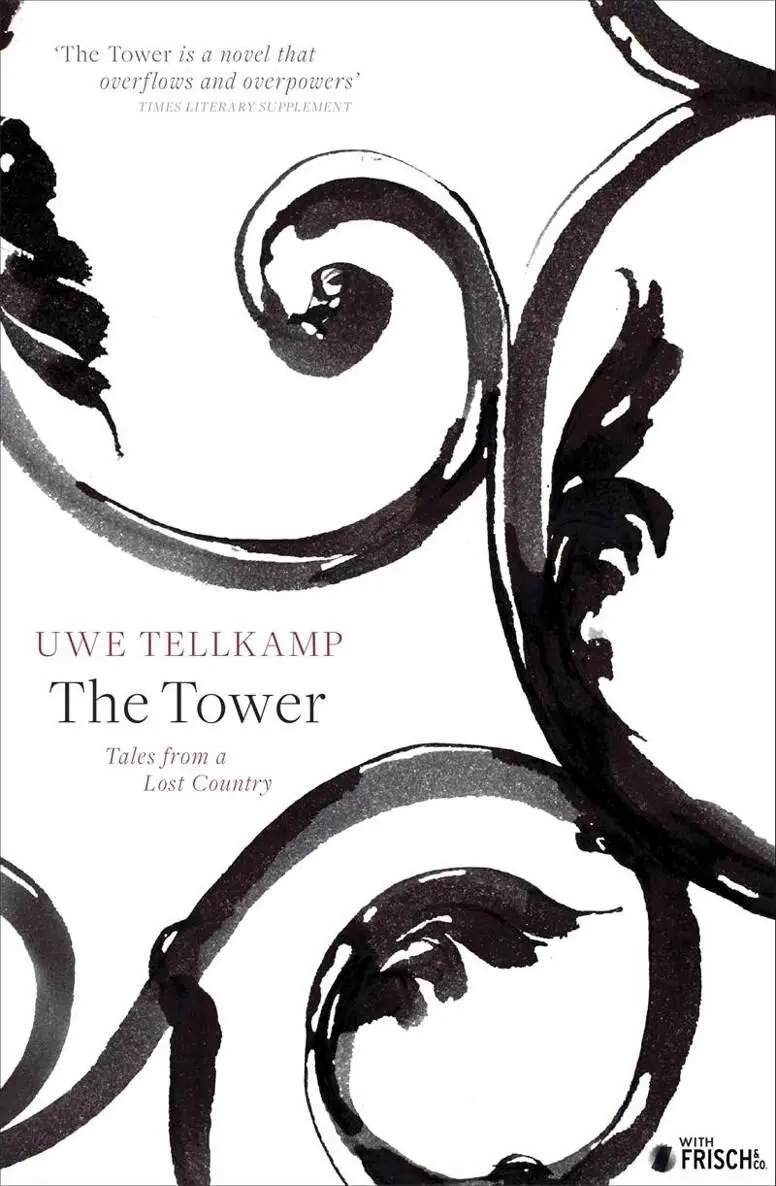
- Название:The Tower
- Автор:
- Издательство:Penguin
- Жанр:
- Год:2014
- ISBN:нет данных
- Рейтинг книги:5 / 5. Голосов: 1
-
Избранное:Добавить в избранное
- Отзывы:
-
Ваша оценка:
The Tower: краткое содержание, описание и аннотация
Предлагаем к чтению аннотацию, описание, краткое содержание или предисловие (зависит от того, что написал сам автор книги «The Tower»). Если вы не нашли необходимую информацию о книге — напишите в комментариях, мы постараемся отыскать её.
The Tower — читать онлайн бесплатно полную книгу (весь текст) целиком
Ниже представлен текст книги, разбитый по страницам. Система сохранения места последней прочитанной страницы, позволяет с удобством читать онлайн бесплатно книгу «The Tower», без необходимости каждый раз заново искать на чём Вы остановились. Поставьте закладку, и сможете в любой момент перейти на страницу, на которой закончили чтение.
Интервал:
Закладка:
‘Take them something to eat.’
‘But they’re Russians.’
‘They get cold too. Come with me, Mo, I can’t carry it all myself.’
They went to the Mitropa café, bought tea, potato soup with sausage and rolls; Meno and a grumbling waiter with cigarette burns in his snow-white jacket carried the teapot. The soldiers were standing by an outside track on the other side of the station. Suspicious, almost fearful, they felt for their Kalashnikovs when Anne showed them the bowls they’d brought. Meno said in Russian that they’d brought them something to eat, tea to warm them up. The soldiers, children’s faces with shaven heads and caps pushed back, looked longingly at the tea, but were hesitant about coming closer; one ran to the front of the train where an officer had jumped down from a carriage and was knocking the dust off his flat-peaked cap. They conferred. A second officer appeared, clearly of a higher rank than the first, for he reported to him. The second officer took his cap off, scratched his head, turned his hat in his hand for a while, went back, knocked on the carriage. After a while a third officer appeared, to whom the second reported this time.
‘Well, I’ll get back to my place of work,’ the waiter said. ‘I simply can’t believe it. And anyway, I’ve just got over a cold. No offence meant.’
He stuck his hands in his pockets and strolled off. The three Soviet officers exchanged glances. The soldier facing Meno and Anne stood, motionless, with neutral, apprehensive expressions, now and then giving the bowls, Anne’s coat, Meno’s shoes a quick glance. The waiter returned, walking between two tracks. ‘What’s going on here, citizens?’
Silent and unannounced, a train arrived at Regine’s platform. Anne put the bowls down on the ground and was about to run over.
‘Stop!’ one of the policemen shouted, fiddling with his revolver belt. ‘Where are you going, citizen?’
‘Our friends are over there … the train —’
‘That’s the through train to Munich,’ the other policeman said. ‘What business is it of yours?’
‘We were accompanying our friends —’
‘And were going to try to emigrate illegally, I presume.’
‘What?!’ Meno exclaimed, completely baffled. The superior Soviet officer went over to the policemen and pointed at the bowls, the pot of soup, the tea.
‘What a load of nonsense!’ The waiter threw up his hands in despair.
‘We must ask you to follow us.’ The first policeman went in front of Meno and Anne, the second grasped the arm of the waiter, who was laughing. Across the station Regine and Hans were shouting and waving. When a whistle sounded they set off running, stumbling and encumbered with their thirteen pieces of luggage, Hans stopped once to put Philipp, on his shoulders, who, as far as Meno could tell, was merrily directing them with his little arms.
‘We will investigate what your true intentions in the vicinity of the Soviet armed forces were. Move!’ the first policeman ordered.
43. A wedding
The Hoffmanns’ barometer indicated ‘changeable’. The first three days of May were cold. There was hail and snow, then the sun appeared, pale and still half asleep; suddenly, as if it had come to an abrupt decision, it climbed out of bed, full of energy. On the fourth the bees started to swarm. Waves of dandelions broke over the gardens on the slope above the Elbe. Bird cherry and sweet cherry blossomed. On the thirteenth Meno entered plum and pear in Libussa’s spring calendar, two days later the Cellini apples. When Meno looked out towards Pillnitz from the Langes’ conservatory, the white blossom covering the still winter-dark trees was like down from thousands of torn pillows.
One Sunday in the middle of May a wedding party was standing outside Pastor Magenstock’s church waiting for the bride and groom to appear. After a glance at her watch, one at Pastor Magenstock’s calming gesture, one at the sky, Barbara wailed that there was a jinx on the wedding: where were the two of them? And now the first drops were starting to fall, thick and soft as slugs, on Ulmenleite.
‘Doesn’t matter,’ Niklas said, opening the Tietzes’ family umbrella with demonstrative casualness over Gudrun and Reglinde; his own aristocratic pepper-and-salt thatch, still giving off the scent of Wiener’s birch hair lotion (it made Meno think of a Russian track across the fields with exultant larks and the obligatory horse-drawn cart), he sheltered under the porch, from which a blob occasionally spattered down. Pastor Magenstock was proud of the birds’ nests and all the spiders’ webs. They were all God’s creatures, he’d insisted to Barbara, to which Barbara had retorted that the Lord would do better to think of the dressmakers and their wearisome wedding preparations and did it not bother him that the stuff stuck to the soles of your shoes and was thus trodden in all over the church? His Reverence had made a slight bow. Pastor Magenstock, as Meno was aware, had his own ideas about caring for his flock and what it meant to be a shepherd in difficult times. The ship of Christianity was heading for dangerous depths and sometimes when, in the dark of the night, Pastor Magenstock turned to the picture of Brother Luther — his countenance afire, the hammer of the fenceposts, lion of the Scriptures and flail of disputes — seeking a draught from the spirit of his strength, all he could hear was the familiar clatter of the loose shutters and the breathing of his seven loved ones.
Ulrich shook back the sleeve over his wristwatch, spread his arms wide, startling Josta and her husband (a fellow student of Wernstein’s, Richard had learnt, who was staring at a saint looking up in improbably mild ecstasy in the aisle of the church), rubbed his chin that, like all the male chins in the wedding party (even Robert’s and Ezzo’s, Ulrich had insisted because of the photos), had been shaved by Lajos Wiener himself with a heavy, blue-ground Solingen blade, stropped on Russia leather. All Ulrich said was ‘Oh, for Heaven’s sake’ (he wasn’t wearing his Party badge, Meno had established) spat out through clenched teeth, at which Barbara’s teacher Noack, the white-haired furrier from the Brühl, exchanged looks of concern with Barbara’s brother, Helmut Hoppe, a pastry cook at Elbflorenz, and pointed to the sky as a first rumble of thunder was heard.
‘But it’s true’ — Ulrich looked up at the sky with a shrug of the shoulders — ‘can’t stand criticism, eh?’
‘But surely Herr Kannegiesser will make it?’ Anne’s question sank into the unfathomable discretion of Pastor Magenstock’s face. Who knew whether the organist/choirmaster’s F9 could still manage the climb from the Mordgrund, past the Soviet army hospital and up to Turmstrasse?
‘I’m going to get in the car and go to meet them.’ Ulrich, furious, jutted out his chin and squeezed his key ring in his fist. ‘They must be somewhere. But I don’t suppose it would occur to your daughter and our son-in-law to find a telephone kiosk and call us?’
‘You never give us a call when you’re late. — Perhaps they’ve secretly run off.’ She’d seen a thing or two herself, Barbara said in horrified tones, in her life in and around Dresden.
‘Of course.’ Helmut Hoppe took out a hip flask. ‘Just you have a sip of egg liqueur, sister. Made it ourselves, it tastes better than the stuff from the other side. The eggs come straight from the farmer to our Rationalization Department and if it’s a long day, and it’s always a long day in the Rationalization Department, they rationalize this tasty little sauce.’
‘Here they are,’ Christian said. The fact that he was there was due to a promise he’d been able to give, after correspondence with Meno, to the sergeant in his new unit who dealt with requests for leave. ‘Private Hoffmann,’ Staff Sergeant Emmerich, known as Nip, said, ‘you’re an earhole in the second six months of your term and earholes don’t actually go on leave, but if you happen to have a Polski Fiat exhaust manifold …’ Meno had provided one.
Читать дальшеИнтервал:
Закладка:
Похожие книги на «The Tower»
Представляем Вашему вниманию похожие книги на «The Tower» списком для выбора. Мы отобрали схожую по названию и смыслу литературу в надежде предоставить читателям больше вариантов отыскать новые, интересные, ещё непрочитанные произведения.






Обсуждение, отзывы о книге «The Tower» и просто собственные мнения читателей. Оставьте ваши комментарии, напишите, что Вы думаете о произведении, его смысле или главных героях. Укажите что конкретно понравилось, а что нет, и почему Вы так считаете.