Uwe Tellkamp - The Tower
Здесь есть возможность читать онлайн «Uwe Tellkamp - The Tower» весь текст электронной книги совершенно бесплатно (целиком полную версию без сокращений). В некоторых случаях можно слушать аудио, скачать через торрент в формате fb2 и присутствует краткое содержание. Год выпуска: 2014, Издательство: Penguin, Жанр: Современная проза, на английском языке. Описание произведения, (предисловие) а так же отзывы посетителей доступны на портале библиотеки ЛибКат.
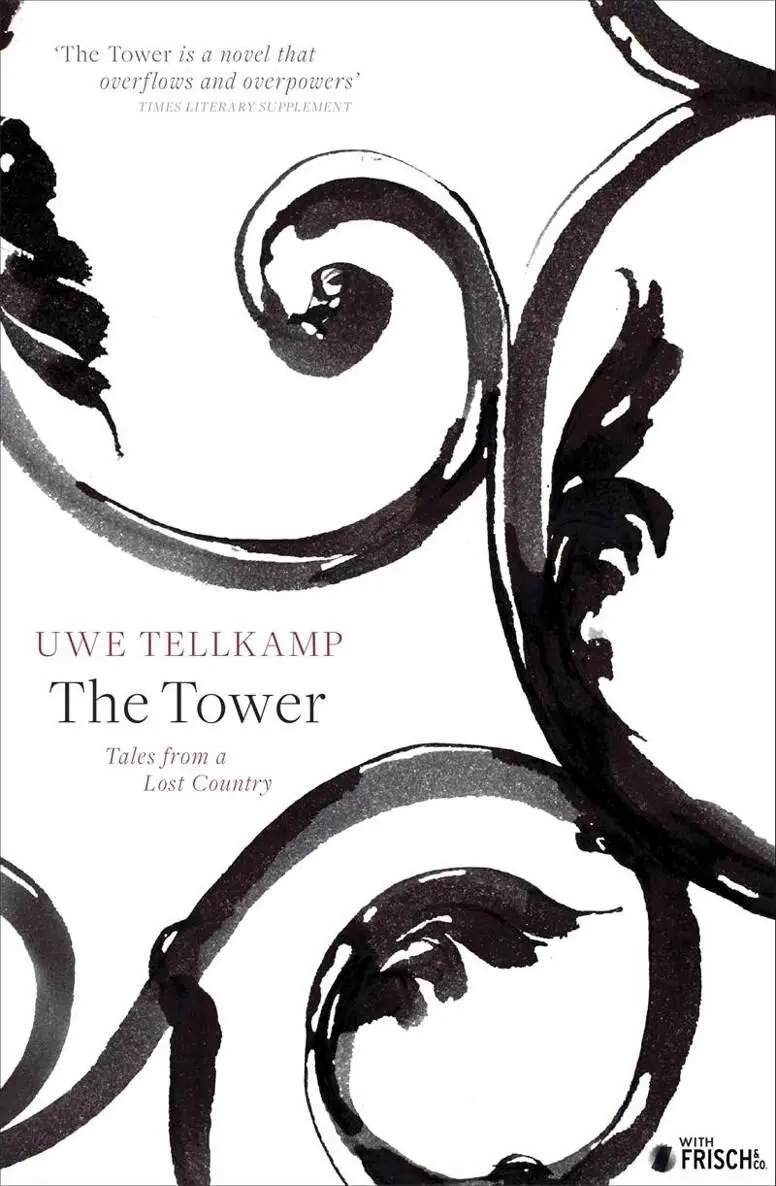
- Название:The Tower
- Автор:
- Издательство:Penguin
- Жанр:
- Год:2014
- ISBN:нет данных
- Рейтинг книги:5 / 5. Голосов: 1
-
Избранное:Добавить в избранное
- Отзывы:
-
Ваша оценка:
The Tower: краткое содержание, описание и аннотация
Предлагаем к чтению аннотацию, описание, краткое содержание или предисловие (зависит от того, что написал сам автор книги «The Tower»). Если вы не нашли необходимую информацию о книге — напишите в комментариях, мы постараемся отыскать её.
The Tower — читать онлайн бесплатно полную книгу (весь текст) целиком
Ниже представлен текст книги, разбитый по страницам. Система сохранения места последней прочитанной страницы, позволяет с удобством читать онлайн бесплатно книгу «The Tower», без необходимости каждый раз заново искать на чём Вы остановились. Поставьте закладку, и сможете в любой момент перейти на страницу, на которой закончили чтение.
Интервал:
Закладка:
Ina got out of the car, laughing. Wernstein and Dreyssiger, his best man, looked like dyers; both were stripped to their vests and shivering, despite the heat; their arms were smeared black up to the elbows. Ina was carrying their white shirts and tails.
‘For Heaven’s sake, child, what’s happened?’
‘Engine fault, mother-in-law.’
‘How stupid can you be! You should have left the car and taken a taxi.’
‘We tried, there were none available. And hitching a lift didn’t work either, there weren’t any cars to hitch.’
‘And what do you look like?! Can the pair of them get washed here, Herr Magenstock?’
‘We’ve only got cold water in the church. We’ll slip over to my house.’
Christian watched Ina as the three of them, followed by Magenstock, came back out of the parsonage; she still hadn’t calmed down and had to hold on to the fence to give her exhausted body a few moments to gather strength such as happens in ripples between contractions or after the relief of vomiting in cases of gastroenteritis. Then she lifted her head and looked Barbara in the face: in moments of great agitation it resembled a horrified jackdaw. Limp and groaning, she raised her right hand and put it to her forehead, then she was once more shaken by convulsive laughter. Wernstein and Dreyssiger each hooked an arm under hers, Pastor Magenstock tried to hold an umbrella over the bride. The organist’s wife had rung up while they were in the parsonage to say her husband was ill, Dr Fernau, who was still with her, had said he must stay in bed, but she’d spoken with Herr Trüpel, who was already on his way to the church with a selection of records.
‘And there he is now, our sunshine man.’ Ulrich grinned.
‘A good thing we’ve got these excellent umbrellas. Do we feel smug! Magnificent.’ Helmut Hoppe licked a drop of egg liqueur off the rim of his hip flask and observed with interest Rudolf Trüpel as he fluttered along towards them in the now pouring rain like a water rail, bent under the weight of his case of records.
Many times before when Kannegiesser was ill, the owner of the Philharmonia record shop had helped to provide a solemn setting for weddings, baptisms and funerals. Meno remembered Christmas services with toccatas and fugues struck up by a player who sought release in music and showed no consideration for a parish choir on a Silbermann or Arp Schnitger organ in a hurricane of thunderous sound that aroused sinners’ consciences the moment Rudolf Trüpel, with quiet satisfaction and educational aggression, let them resound from the Japanese hi-fi equipment donated by members of a twinned parish in Hamburg with a concern for quality. Meno recalled his father telling him when he was a child about the Abode of Rest, as if Rest were a woman with a tenancy agreement and a list of the house rules, and when he remembered the domes of St Basil’s Cathedral on Red Square, he thought that was where she lived and not in the Arbat district and not in the office of the director of the Lubyanka where a telephone screamed even when silent. The onion dome of St John’s in Schandau had had the same effect on him; now, however, in Ulmenleite the chain of associations broke off. The wedding party outside the church was getting restless (Barbara with discontentedly furrowed brow), for one of Bach’s funeral chorales after another was ringing out with the force of an alpenhorn blown next to the ear of a sleeping infant.
‘Great choir,’ Niklas said, ‘could be the Thomaskirche. It’s the Gewandhaus orchestra, the violins speak Saxon, but not that of Dresden.’
A further attempt brought melancholy, obstinacy and God with open arms.
‘Some marriages are like that,’ Helmut Hoppe said. ‘Anyone it makes think of egg liqueur is a rogue.’
‘You and your suggestive remarks,’ Helmut Hoppe’s wife Traudel sighed. ‘Can’t you keep them to yourself, at least at your niece’s wedding.’
‘Nah. It’d be nice if the wedding could get going. Oh look over there now. There’s a man shrugging his shoulders and spreading his arms. I know that from work. It means we’ll just have to improvise.’
The congregation was waiting inside the church while Herr Trüpel conferred with Pastor Magenstock. As far as Meno understood, Trüpel’s son must have swapped the contents of the record cases (baptism, wedding, funeral) round. Magenstock nodded, thought, adjusted his spectacles. Reglinde shook her head categorically. She had graduated from the school of church music but not taken up a post as organist/choirmaster. At the moment she was working in the zoo as an assistant keeper. Robert had an idea and as the wedding party entered the church, after the bride and groom and Pastor Magenstock, a choir, singing in canon, improvised Mendelssohn’s ‘Wedding March’ from the gallery: Trüpel conducted, Niklas’s bass imitated the organ, Gudrun the high voices, Ezzo and Christian hummed delicate arabesques while two of Ina’s fellow students and Robert intoned the melody. Pastor Magenstock welcomed the bridal couple, family and friends. ‘We now begin this service in the name of the Father, the Son and the Holy Ghost.’
‘Amen.’
‘Let us pray with the words of psalm thirty-six: Thy mercy, O Lord, is in the heavens and thy faithfulness reacheth unto the clouds …’
‘So there’s nothing doing under water, you can lie as much as you like down there,’ Helmut Hoppe whispered to Barbara, who was sitting in front of Meno.
‘I don’t believe in it myself, but enoeff. Blaspheming in church brings bad luck.’
‘… in thy light shall we see light. Glory be to the Father, and to the Son, and to the Holy Ghost. As it was in the beginning, is now, and ever shall be, world without end.’
‘Amen.’
Pastor Magenstock gave the choir a sign. A safe stronghold our God is still, a trusty shield and weapon — Trüpel conducted with feeling and zest. The voices of Noack, the furrier, and the Stenzel Sisters rose up, thin and quavering. Richard kept his eyes on the ground. Meno knew that he only went to church services as a favour to Anne and, that day, his niece. Kurt Rohde would come later and wait outside for Malivor Marroquin, who was to take the wedding photos. The hymn began to die away in embarrassed tatters; Trüpel brought the choir in again to bolster up the tailing off in the pews below and bring it to a conclusive end. Pastor Magenstock went up into the pulpit and began his sermon on the text chosen for the wedding ceremony. ‘But he that doeth truth cometh to the light, that his deeds may be made manifest, that they are wrought in God.’
Richard observed Lucie. She had scattered flowers with other children. Now she was sitting between Josta and the husband he didn’t know, surreptitiously dangling her legs. Daniel was lounging next to Josta, blowing bubbles with his chewing gum, and kept turning his head round.
‘What a badly behaved boy,’ Anne whispered. ‘Why does he keep grinning at you? Do you know him?’
‘No. Perhaps a patient’s son.’
Richard listened to the sermon for a while, then let it go in one ear and out the other when Magenstock brought in his third parable: the kingdom of heaven was like unto a net that was cast into the sea, and gathered of every kind; the good were gathered into vessels, the bad were cast away. That made Richard think. Wasn’t there a hymn that said: Whatever thou may be, come to Him and He will welcome thee? So the kingdom of heaven had to fish out its own inhabitants … Did that mean the little fish felt no desire to swim into heaven and had to be dragged up out of their stupidity and into paradise? But if it was so splendid up there why did the fish not go of their own accord? All that seemed familiar to him. He watched Magenstock, who was in the pulpit, preaching with joyful fervour. It also brought back the scene in the forest when Wernstein, Dreyssiger and he had tried to steal a Christmas tree. A hymn started, he didn’t join in; too proud to pretend. He didn’t know any of these hymns and Ina, he thought irritably, hadn’t thought of making copies of the words for those who didn’t know them. And, of course, there weren’t even enough hymn books. Ulrich seemed to be able to keep up pretty well … Interesting. The Stenzel Sisters didn’t need a hymn book. They stood up straight in their row giving those beside them, doctors from the Academy, their noses plodding along the lines of a shared hymn book, looks of restrained puzzlement. As Ina Wernstein was putting the ring on her husband’s finger (with a grin, as Richard could tell from his view diagonally behind her: Wernstein’s fingernails were still dirty from the engine oil), Barbara shouted for help, scrabbling around wildly in her cleavage; a scorpion had fallen on her, she said, running out of the church, Ulrich behind her. ‘An earwig,’ he whispered when they came back.
Читать дальшеИнтервал:
Закладка:
Похожие книги на «The Tower»
Представляем Вашему вниманию похожие книги на «The Tower» списком для выбора. Мы отобрали схожую по названию и смыслу литературу в надежде предоставить читателям больше вариантов отыскать новые, интересные, ещё непрочитанные произведения.







Обсуждение, отзывы о книге «The Tower» и просто собственные мнения читателей. Оставьте ваши комментарии, напишите, что Вы думаете о произведении, его смысле или главных героях. Укажите что конкретно понравилось, а что нет, и почему Вы так считаете.