Uwe Tellkamp - The Tower
Здесь есть возможность читать онлайн «Uwe Tellkamp - The Tower» весь текст электронной книги совершенно бесплатно (целиком полную версию без сокращений). В некоторых случаях можно слушать аудио, скачать через торрент в формате fb2 и присутствует краткое содержание. Год выпуска: 2014, Издательство: Penguin, Жанр: Современная проза, на английском языке. Описание произведения, (предисловие) а так же отзывы посетителей доступны на портале библиотеки ЛибКат.
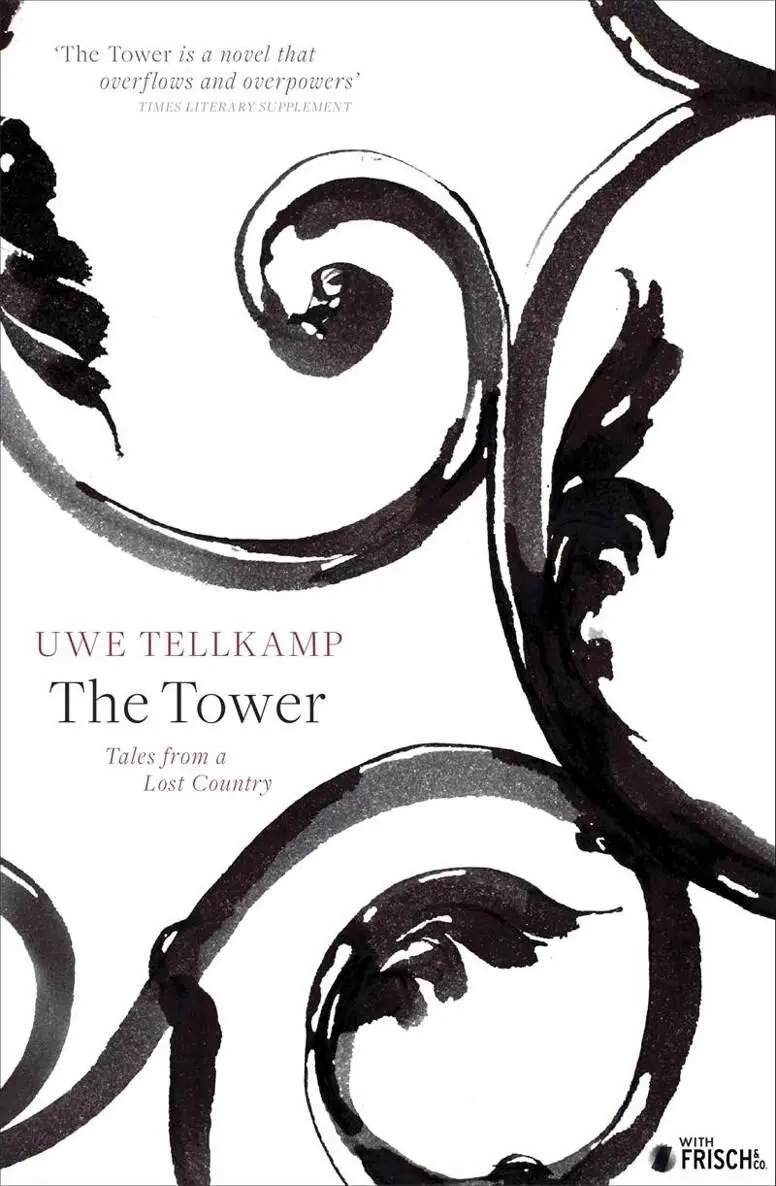
- Название:The Tower
- Автор:
- Издательство:Penguin
- Жанр:
- Год:2014
- ISBN:нет данных
- Рейтинг книги:5 / 5. Голосов: 1
-
Избранное:Добавить в избранное
- Отзывы:
-
Ваша оценка:
The Tower: краткое содержание, описание и аннотация
Предлагаем к чтению аннотацию, описание, краткое содержание или предисловие (зависит от того, что написал сам автор книги «The Tower»). Если вы не нашли необходимую информацию о книге — напишите в комментариях, мы постараемся отыскать её.
The Tower — читать онлайн бесплатно полную книгу (весь текст) целиком
Ниже представлен текст книги, разбитый по страницам. Система сохранения места последней прочитанной страницы, позволяет с удобством читать онлайн бесплатно книгу «The Tower», без необходимости каждый раз заново искать на чём Вы остановились. Поставьте закладку, и сможете в любой момент перейти на страницу, на которой закончили чтение.
Интервал:
Закладка:
‘May I?’ Sperber, the lawyer, pointed to the empty chair beside Richard that was usually reserved for the theatre doctor’s partner. ‘Your wife’s not coming, of course.’
‘How do you know?’
‘One knows one’s cases, one knows one’s colleagues cases,’ Sperber said with a smirk. ‘And one’s friends’ problems. You discussed Frau Neubert’s case with me … Oh, that’s not a breach of client confidentiality. A certain exchange of information is necessary, we have to work together if we want to have material we can use against the prosecuting counsels — what do you think of it?’ Sperber’s gesture took in the whole auditorium, which was gradually filling up; people were standing at the balustrades, craning their necks in the stalls, expectant faces filled with pride; many had handkerchiefs in their hand. ‘Is that not something special our little country’s managed to achieve?’ Sperber asked without waiting for an answer. The standard expression was ‘our state’ or ‘our socialist GDR’ (an odd adjective, Richard thought, as if there were another one); at ‘our little country’ Richard pricked up his ears.
‘If you like, you can come and visit us sometime. The invitation includes your wife too, of course,’ the lawyer hastened to add. ‘We would be delighted to have the opportunity to get to know you better. One moment.’ He fished a visiting card out of his little leather handbag and pressed it into the right hand Richard, nonplussed, held open. ‘The Freischütz isn’t really my thing, all that Romanticism and merrymaking at the shooting competition on the village green. A beautiful dream for which we’re gathered here and every one of us will understand in their own way. But the music’s admirable and for our lord and master’ — Sperber nodded cautiously in the direction of the official box — ‘it’s probably just the right thing. Only last Saturday he shot a twelve-pointer. Will you excuse me for a few minutes.’
Sperber went off, appearing up in the VIP box a few moments later, where a prolonged session of handshaking began.
The train was late; now, after all the rush, they were standing on the platform, waiting. This would have been the time to say farewell but the station announcement had talked of an hour’s delay. The light in the Mitropa café was pale, slimy; cockroaches scuttled across the tables as if caught in the act. On the menu was soup as green as weathered copper, mixed-vegetable stew, schnapps and beer. Hans felt nauseated, wanted to go out again. Meno bought a packet of Marie biscuits. ‘Do you like reading?’ he asked Hans outside.
‘It all depends. Most of all Karl May.’
‘Here, take this. You might get bored on the journey.’ He handed him a volume of Poe’s stories, illustrated by Vogelstrom.
‘I’m sure I won’t, but thanks.’ Hans took the book and stuck it in the inside pocket of his coat.
‘Isn’t it cold?’ Regine moaned when they came back. ‘I hope nothing goes wrong now.’
‘Do you know why there’s a delay?’ Meno asked. Regine, in tears again, turned away.
‘Frozen points. The train’s coming from Rostock,’ Anne replied. They’d made a kind of bed on the suitcases for Philipp, covering him with various articles of clothing, but he wasn’t asleep, he was staring up at the arched ceiling with little spikes of crusty ash hanging down, intestinal hairs of a Gulliver in the land of Lilliput; hundreds of pigeons were roosting on the crossbeams, heads under their wings, packed close to each other so that none could be a danger to the others during the night, Meno thought, they probably kept each other warm as well. The loudspeakers over the platform crackled, a woman’s voice in broad Saxon extended the delay into an indefinite period. Regine put her hand over her mouth and leant forward, it looked as if she were covering a yawn, but she was screaming into her hand. Hans took Regine to one side, they walked up and down. There was no one apart from them waiting on the platform. Railway police were checking a few drunks on platforms some way away.
‘Scream, if you want,’ Anne said, ‘it won’t bother me, let people hear it.’
‘So that they can arrest us after all?’
‘Hans,’ Regine begged him softly.
‘I didn’t mean it like that.’ There was steam coming out of Anne’s mouth, Meno looked at his sister closely. She’d pulled her orange scarf right up to her eyes, perhaps out of embarrassment; she was wearing a chapka Barbara had made and buttoned down the earflaps. Meno filled his pipe. Now Anne took Regine’s arm, they were walking round and round, discussing how to deal with her effects. The Vietnamese tea chests could be sent to Jürgen’s address in Munich; Anne was to take the money for it from the sale of the furniture Regine had had to leave behind.
‘What did you have in mind?’
Regine turned to face Meno, who was sniffing the strong vanilla smell of his tobacco. A suspicious expression appeared on Hans’s face, though Meno had only asked out of curiosity and to pass the time. ‘Doesn’t matter.’
‘Richard thinks that as soon as you’re over there you should bring an action against the state for confiscating your paintings, even though there’s no chance of success, of course.’
‘The paintings have gone, Anne, and Jürgen’s sculptures too. That’s the price we had to pay.’
‘Ebony.’ Sperber examined the grandfather clock beside the lacquered door and the two delicate chairs where Arbogast and Joffe were sitting chatting. ‘What do you, as an expert, say?’ he asked, turning to Richard, who was standing beside him, glancing uneasily now and then at the door with the shining ‘Box’ over it. ‘I often went to see your father in Glashütte. He has an excellent collection and was so kind as to advise me on the purchase of various pieces. You admired some of them the last time you came to see me.’
The door was opened, the General Secretary let Barsano and the ex-Federal Chancellor go in first. Richard looked at the buffet, there were servants in ceremonial livery, frozen in bows. On the tables with damask cloths were butter knives with rounded blades. Looking at the butter knives, then the Comrade Chairman’s brightly shining face and his neck, stiffened by a snow-white, starched collar, Richard started in horror as it occurred to him how well suited to being cut through or hanged such necks seemed, even those of the ex-Chancellor and Barsano; yet they consisted of the same substance — vulnerable human flesh — as the necks of so-called ordinary people and Richard automatically started looking for a mark that branded them. Perfidious, forbidden thoughts!
‘I’m familiar with that look you have on your face at the moment, half pleasure, half horror,’ Sperber whispered. ‘It’s the expression associated with crime.’
‘Is that intended as a joke, Herr Sperber?’
‘I like to think I have some knowledge of human nature’ — the lawyer gave a brief smile — ‘and you get a thrill out of taking risks. There’s some attraction in having a conversation like this here. And I have to say such thoughts are not unknown to me. It’s the fear of the crime they might commit that drives young people into my profession. I’m interested in the depths people can sink to. I have quite a collection.’
‘How do you collect them?’
‘Not in the form of deep-sea charts or sections of the seabed, as you might assume. — Don’t shake his hand, if you’re introduced to him. He doesn’t particularly like that, and he’s the one who determines the degree of familiarity.’
‘You feel sorry for them.’ Anne nodded in the direction of soldiers standing guard by a tank transport train.
‘What are you going to do?’ Regine asked as Anne looked in her purse.
Читать дальшеИнтервал:
Закладка:
Похожие книги на «The Tower»
Представляем Вашему вниманию похожие книги на «The Tower» списком для выбора. Мы отобрали схожую по названию и смыслу литературу в надежде предоставить читателям больше вариантов отыскать новые, интересные, ещё непрочитанные произведения.




Обсуждение, отзывы о книге «The Tower» и просто собственные мнения читателей. Оставьте ваши комментарии, напишите, что Вы думаете о произведении, его смысле или главных героях. Укажите что конкретно понравилось, а что нет, и почему Вы так считаете.