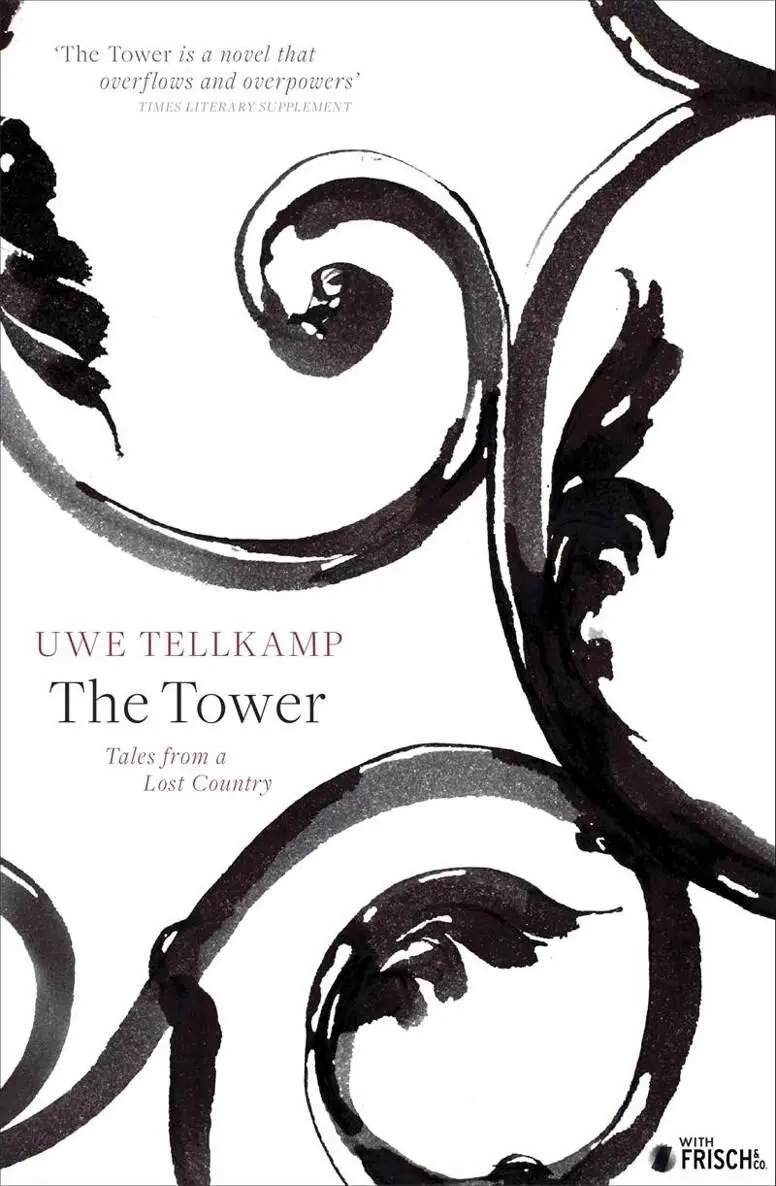
Uwe Tellkamp - The Tower
Здесь есть возможность читать онлайн «Uwe Tellkamp - The Tower» весь текст электронной книги совершенно бесплатно (целиком полную версию без сокращений). В некоторых случаях можно слушать аудио, скачать через торрент в формате fb2 и присутствует краткое содержание. Год выпуска: 2014, Издательство: Penguin, Жанр: Современная проза, на английском языке. Описание произведения, (предисловие) а так же отзывы посетителей доступны на портале библиотеки ЛибКат.
- Название:The Tower
- Автор:
- Издательство:Penguin
- Жанр:
- Год:2014
- ISBN:нет данных
- Рейтинг книги:5 / 5. Голосов: 1
-
Избранное:Добавить в избранное
- Отзывы:
-
Ваша оценка:
The Tower: краткое содержание, описание и аннотация
Предлагаем к чтению аннотацию, описание, краткое содержание или предисловие (зависит от того, что написал сам автор книги «The Tower»). Если вы не нашли необходимую информацию о книге — напишите в комментариях, мы постараемся отыскать её.
The Tower — читать онлайн бесплатно полную книгу (весь текст) целиком
Ниже представлен текст книги, разбитый по страницам. Система сохранения места последней прочитанной страницы, позволяет с удобством читать онлайн бесплатно книгу «The Tower», без необходимости каждый раз заново искать на чём Вы остановились. Поставьте закладку, и сможете в любой момент перейти на страницу, на которой закончили чтение.
Интервал:
Закладка:
Richard nodded, still a little breathless and abashed. Arbogast mentioned the letter he’d written to Heinsloe, the senior manager at the hospital, that Richard had put on one side then forgotten. Arbogast talked about oxygen and the healing of wounds. ‘Breathe, Herr Hoffmann! Anyone who wants to live must breathe!’ he declared, clearly in jovial mood, giving Richard a cautious and comradely pat on the back. ‘Perhaps we can tackle cancerous tumours with oxygen. People at my Institute are working on the problem …’ He went to the window, waving Richard over. A large crowd had gathered in the square. A platform had been set up, the police had drawn a cordon round it. Barsano was speaking but no one seemed to be listening to him, the eyes of all those gathered there were fixed on the Opera, admiring the richly decorated, flame-catching building.
‘Oh yes, our dear Dresdeners,’ Arbogast mused, ‘they only want to go back. Neo-Gothic, Neo-Renaissance, Neo-Monarchies. Their greatness is when they can have something “back”, can rebuild it … Their style is a purloined mishmash, eclectic, not primary … and yet overall it does have something of its own and it’s charming too. Perhaps that’s the way art will go in the future: doing something again, though paying tribute to time, thus making what has been into something secretly new, its depths perhaps now revealed, something, therefore, that can be truly appreciated. An art of translation, so to speak … You understand? Translators are the most precise readers, or so your brother-in-law has told me. Who’s interested in reality when we can wish … This whole opera house here’s a dream: something that has no purpose, no necessity, given shape in bricks and mortar. And, as ever, not cheap at that. Hundreds of millions for — bubbles …’
‘But very beautiful bubbles,’ Richard ventured to object.
‘Yes, very, very beautiful’ — Arbogast cleared his throat — ‘bubbles.’ Then, with a nod of the head, he left Richard on his own.
What a strange guy! He watched Arbogast go. The Baron’s walking stick rat-tat-tatted on the floor, as if he were checking the soundness of what was underneath.
Anne was tired, Meno poured her a third cup of coffee from the vacuum flask; she gulped it down, impatiently flashing her headlights when cars coming in the opposite direction left it too long dipping theirs. The regular ‘ba-bum’ every time the Lada went over an asphalt join between the concrete slabs had sent Philipp to sleep, he had his head in Regine’s lap and didn’t even wake up when they jolted over one of the many potholes, each time making Anne quietly swear.
Meno felt restless too. He felt oppressed by the dark countryside all round, the occasional lights in the villages seemed like periscopes from undersea zones staring out over a leaden, misty ocean; but they were abandoned, or so it seemed to Meno, they were part of a fleet drifting in the darkness of the polar sea, the crews, stuck like Cartesian divers to breathing tubes, benumbed with sleep. What had happened to this country, what illness had infected it …? The hands on the clocks trundled the hours along, time seemed to flow like cold treacle. Philipp Londoner was worried, there were vague and contradictory rumours coming from Moscow, the Kremlin seemed to be in turmoil, the General Secretary of the Soviet Communist Party was said to be in his death throes in the government hospital … Meno came to with a start when Anne hooted the horn: they were driving behind a convoy of timber lorries, the overtaking lane was blocked by a motorbike escort. After a few minutes they were waved past imperiously. A motorbike escort for timber lorries? Meno had a closer look as they drove past: cylindrical shapes, tapering at the front, could be made out under the tarpaulins; at the wheel of the articulated lorries were soldiers of the Soviet army.
‘Rocket transport,’ Hans said, breaking the silence, ‘those are SS-20 rockets, camouflaged as loads of uncut timber.’ He knew that from a friend at school, he said.
‘ Davai, davai ,’ one of the motorcyclists shouted.
They overtook and lapsed into silence again. Meno was thinking of the Honichs, who had brought strife and something like nudist-beach easy-going ways into the House with a Thousand Eyes … Things were certainly pretty noisy. Herr Honich did early-morning exercises with the window open to booming folk music (‘I love to go a-wandering …’), knocked at Meno’s door to invite him to join in the keep-fit session (as soon as he switched the radio on that was the end of Meno’s ability to concentrate), he needed it, he said, spending all the day in a sitting position; morning exercises strengthened one’s concentration and woke one up … Herr Honich seemed unconcerned at Meno’s rejection that grew more pointed with every day. But the woman got on Meno’s nerves even more. She claimed to be entitled to use the balcony, rang at the most inconvenient times and protests could not stop her flinging the balcony door open, thus allowing the warmth in his living room to pour out. Meno had rearranged the furniture and bookshelves to compensate for the reduction in space in his apartment but the little nooks and crannies that created aroused Frau Honich’s curiosity, no muttered curse could keep her away; she knocked on the bookcase, squeezed through, asked if she might come over when she was already standing by his desk, smiled at Meno, who, with a pained look, quickly hid his manuscripts. What was he doing, she wanted to know. Working. But what on? On poetry perhaps? Oh yes, on poems, of course; but he didn’t need to hide them from her, she thought poems were suuuper (she drew out the ‘u’ like a rubber band; at this adolescent expression Meno had to bend down to keep his fury under control), perhaps he could … Oh yes! she exclaimed, he was an expert, he knew all about that, she was sure he could teach her how to write poems! It was something she’d been longing to do for ages and now she’d met someone and someone who lived right next door into the bargain, if that didn’t mean something, she said teasingly, shaking her finger roguishly at him. She wanted to learn how to do it.
The next day Meno rang Coal Island and complained. However: according to such and such a regulation, they explained, Citizen Honich had the right to use the balcony in his apartment and he could not lock her out of his apartment if she wished to make use of that right. Why were the tenants of 2 Mondleite always making difficulties? They had no time for that kind of thing.
Stahl thought they should fight back and regularly took out the Honichs’ fuses. Then they sat in the dark and the pop music (Oberhofer Bauernmarkt, Regina Thoss, Dorit Gàbler) died away. Herr Honich countered this by threatening to report Stahl because he listened to West German radio and had repeatedly responded to repeated requests that he participate in socialist competition with comparisons from the animal kingdom; his wife Babett was a witness.
‘Penny for them, Mo.’
‘Oh, this and that.’
‘Problems?’
‘Not particularly. How about you?’
‘They’ve lengthened our shifts. One doctor and one nurse have left the country. There are intrigues going on in Richard’s section. One of the doctors, the Party Secretary, seems to be spying on him. He has to train him. They don’t like it when knowledge is beyond their control and in hand surgery they’d have problems finding someone to replace Richard, at least in Dresden. Robert has a girlfriend. He’s a bit young, I think. But he does know all about the birds and the bees. Barbara has her head full of wedding preparations. Ina already has something on the way, it seems. Look, over there.’ She pointed to a line of windmills, turning in the empty countryside in front of a blue-green strip of bright sky, as if in slow motion, with flocks of crows silently drifting up and down round them. Regine said nothing. Meno looked out of the window.
Читать дальшеИнтервал:
Закладка:
Похожие книги на «The Tower»
Представляем Вашему вниманию похожие книги на «The Tower» списком для выбора. Мы отобрали схожую по названию и смыслу литературу в надежде предоставить читателям больше вариантов отыскать новые, интересные, ещё непрочитанные произведения.




Обсуждение, отзывы о книге «The Tower» и просто собственные мнения читателей. Оставьте ваши комментарии, напишите, что Вы думаете о произведении, его смысле или главных героях. Укажите что конкретно понравилось, а что нет, и почему Вы так считаете.